Flexible Coupling Helps PU Sandwich Panel Line Reduce Cost And Increase Efficiency
In the modern construction and industrial fields, PU sandwich panels have become an indispensable material due to their excellent thermal insulation, light weight, structural stability, and environmental friendliness. These panels, composed of two outer facing materials and a rigid PU foam core, are widely used in external walls, roofs, cold storage facilities, prefabricated buildings, and various industrial workshops, driving the continuous development and upgrading of the PU sandwich panel production industry. The PU sandwich panel production line is a complex integrated system that involves multiple consecutive processes, including uncoiling of facing materials, roll forming, preheating, PU foaming, lamination, curing, and cutting. Each link requires precise and stable power transmission to ensure the consistency of product quality and the smooth operation of the entire production process. Among the numerous components that make up the transmission system of the production line, flexible coupling plays an irreplaceable role. Its unique structural design and excellent performance not only solve many pain points in the operation of the production line but also effectively reduce production costs and improve production efficiency, becoming a key factor in promoting the high-quality development of the PU sandwich panel production industry.
To understand the important role of flexible coupling in reducing cost and increasing efficiency of PU sandwich panel production lines, it is first necessary to clarify the working characteristics of the production line and the core challenges faced by its transmission system. A modern PU sandwich panel production line is a continuous and automated production system that integrates mechanical, electrical, hydraulic, and chemical reaction technologies. It requires the coordinated operation of multiple subsystems, such as the uncoiling system, roll forming system, foaming system, double-belt lamination system, cutting system, and conveying system. Each subsystem is driven by a separate power source, and the power needs to be transmitted to various executing components accurately and stably to ensure that the entire production line operates in a synchronized manner. The transmission system of the production line is faced with several key challenges: first, the installation and layout of each subsystem are often not on the same axis due to the limitations of the production process and the overall structure of the equipment, resulting in angular, radial, and axial deviations between the driving shaft and the driven shaft; second, during the long-term continuous operation of the production line, the equipment will generate vibration and thermal expansion, leading to changes in the relative position of the shafts, which requires the transmission component to have a certain compensation capacity; third, the production process of PU sandwich panels has strict requirements on the stability of power transmission, and any slight fluctuation in transmission speed or torque will affect the thickness of the panel, the uniformity of the foam core, and the adhesion between the core and the facing materials, resulting in product defects; fourth, the long-term high-load operation of the production line will inevitably cause wear and tear of transmission components, which requires frequent maintenance and replacement, increasing production costs and affecting production efficiency. It is against this background that flexible coupling, with its unique advantages, has become the preferred component for the transmission system of PU sandwich panel production lines.
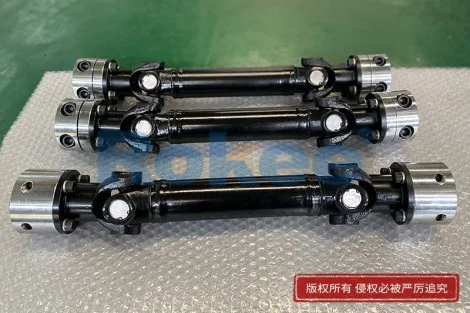
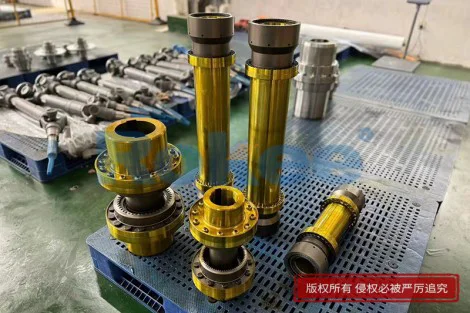
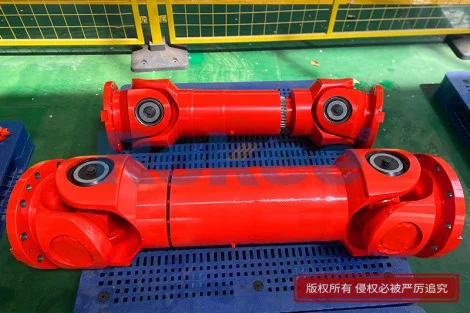
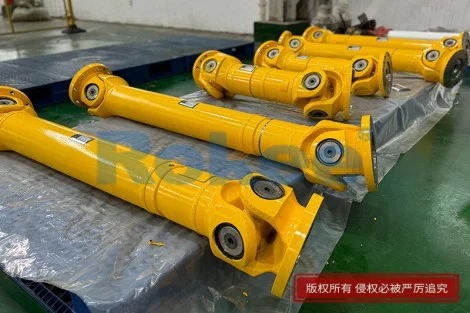
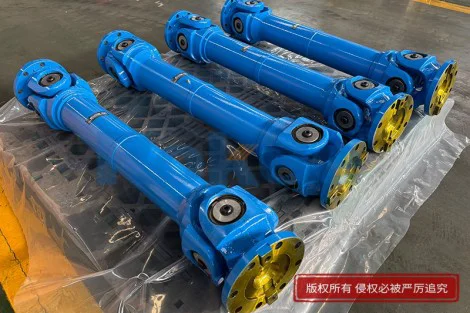
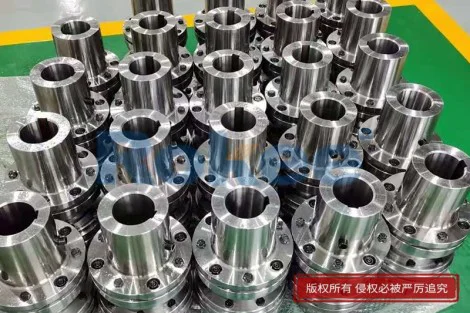
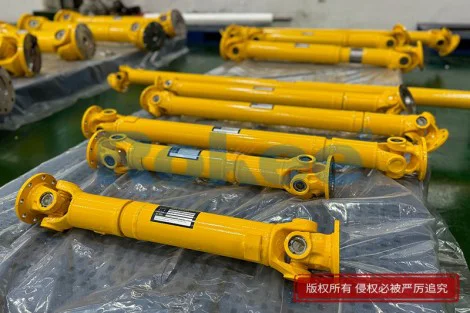
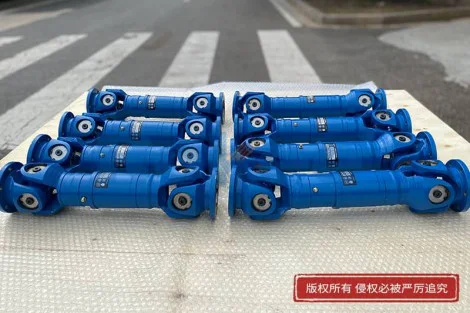
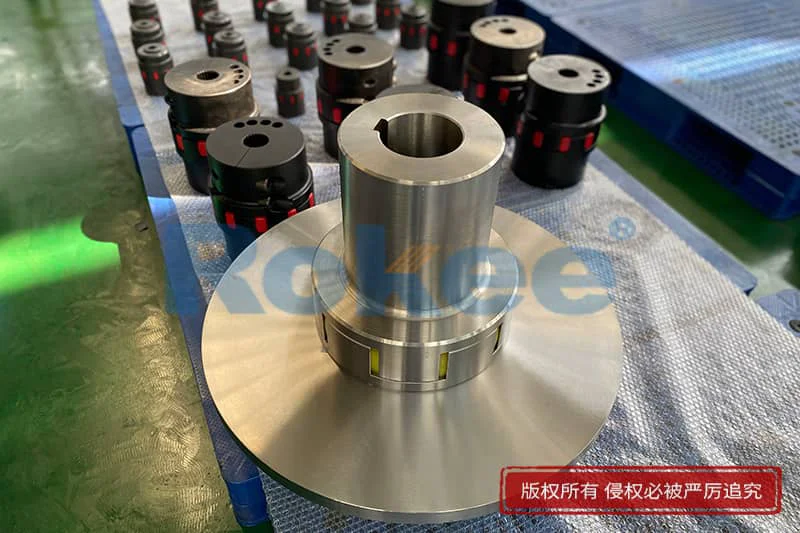
Flexible coupling is a mechanical device used to connect two shafts together while allowing for some degree of misalignment and movement between them. Unlike rigid coupling, which requires strict coaxial alignment between shafts and has no ability to compensate for deviations, flexible coupling relies on its internal flexible elements to achieve torque transmission and deviation compensation. The flexible elements can be made of rubber, polyurethane, metal bellows, or multi-layer stainless steel diaphragms, and their elastic deformation enables the coupling to accommodate small amounts of angular, radial, and axial misalignments between the driving shaft and the driven shaft. This design not only ensures the smooth transmission of power but also effectively solves the problems caused by shaft misalignment in the PU sandwich panel production line, laying a solid foundation for the stable operation of the production line. In the PU sandwich panel production line, the flexible coupling is mainly used to connect the motor, reducer, conveyor, roll forming machine, cutting machine, and other key equipment, realizing the efficient transmission of power between each device and ensuring the coordinated operation of the entire production line.
One of the core contributions of flexible coupling to the PU sandwich panel line is reducing production costs, which is reflected in multiple aspects such as reducing equipment wear, reducing maintenance costs, and reducing energy consumption. First, flexible coupling can effectively reduce the wear of key equipment in the production line. In the traditional transmission system using rigid coupling, due to the inability to compensate for shaft misalignment, the misalignment will cause additional load and vibration during the transmission process, which will accelerate the wear of bearings, gears, shafts, and other components, leading to frequent replacement of these components. In contrast, flexible coupling can absorb and dampen torsional vibrations and shock loads, shift resonance frequencies in the driveline below idle speed, and compensate for various deviations between shafts, thereby reducing the additional load on the transmission system and the wear of related components. For example, in the roll forming process of the PU sandwich panel production line, the roll forming machine needs stable power transmission to ensure the flatness and accuracy of the facing material. The use of flexible coupling can avoid the vibration caused by shaft misalignment, reduce the wear of the roll and the bearing, extend the service life of the roll forming machine, and reduce the cost of replacing wearing parts. According to practical application data, the use of flexible coupling can extend the service life of key transmission components by 30% to 50%, thereby significantly reducing the cost of purchasing and replacing components.
Second, flexible coupling can reduce the maintenance cost of the production line. The maintenance of the transmission system is an important part of the daily operation cost of the PU sandwich panel production line. Traditional rigid coupling requires strict alignment during installation and use, and once misalignment occurs, it needs to be adjusted manually, which is time-consuming and labor-intensive. Moreover, the wear of rigid coupling and related components is fast, requiring frequent disassembly, inspection, and replacement, which not only increases the labor cost of maintenance but also affects the normal operation of the production line. In contrast, flexible coupling has a simple structure, is easy to install and maintain, and does not require strict alignment during installation. Its flexible elements have good wear resistance and fatigue resistance, and the service life is long, which can reduce the frequency of maintenance and replacement. Some types of flexible couplings, such as metal diaphragm flexible couplings, do not require lubrication during operation, avoiding the cost of lubricating oil and the labor cost of lubrication maintenance, and also preventing oil pollution to the production environment and products. In addition, the modular design of some flexible couplings allows for quick replacement of damaged flexible elements without disassembling the entire transmission system, further reducing maintenance time and labor costs. For large-scale PU sandwich panel production lines, the reduction in maintenance frequency and time can save a lot of labor and material costs every year, bringing significant economic benefits to enterprises.
Third, flexible coupling can reduce energy consumption of the production line, thereby reducing energy costs. The PU sandwich panel production line consumes a lot of energy in the processes of preheating, foaming, lamination, and power transmission. The efficiency of the transmission system directly affects the energy consumption of the entire production line. Flexible coupling has high transmission efficiency, generally reaching 98% to 99.5%, and some high-performance flexible couplings, such as metal diaphragm couplings, have a transmission efficiency of up to 99.86%, which is close to that of rigid coupling. However, unlike rigid coupling, flexible coupling can reduce energy loss caused by vibration and misalignment. In the transmission process of rigid coupling, the vibration caused by misalignment will lead to additional energy consumption, while flexible coupling can absorb and dampen vibration, reduce energy loss, and improve the energy utilization rate of the transmission system. In addition, the light weight of flexible coupling (compared with some traditional rigid couplings) can also reduce the load of the motor, thereby reducing the power consumption of the motor. For example, in the conveying system of the PU sandwich panel production line, the use of flexible coupling to connect the motor and the conveyor can reduce the vibration of the conveyor, reduce the friction between the conveyor belt and the roller, and thus reduce the energy consumption of the conveying system. According to practical statistics, the use of flexible coupling can reduce the energy consumption of the PU sandwich panel production line by 5% to 10%, which is a considerable energy saving for enterprises with large-scale production.
In addition to reducing production costs, flexible coupling also plays a key role in improving the production efficiency of the PU sandwich panel production line. Efficiency improvement is mainly reflected in ensuring the stability of production, reducing downtime, and improving product qualification rate. First, flexible coupling can ensure the stable operation of the production line, thereby improving production efficiency. The PU sandwich panel production line is a continuous production system, and any interruption of the production process will affect production efficiency. The flexible coupling can compensate for various deviations between shafts, absorb vibration and shock loads, and ensure the smooth transmission of power, so that each subsystem of the production line can operate in a coordinated and stable manner, avoiding production interruptions caused by transmission failures. For example, in the PU foaming process, the foaming machine needs stable power transmission to control the foaming speed and foam density. The use of flexible coupling can avoid the fluctuation of transmission speed caused by vibration, ensure the uniformity of foam density, and avoid the shutdown caused by unqualified foam. In addition, the flexible coupling can adapt to the thermal expansion and contraction of the shaft during the long-term operation of the equipment, prevent the transmission system from jamming or damage due to thermal expansion, and ensure the continuous operation of the production line. The continuous and stable operation of the production line can effectively improve the production capacity per unit time, thereby improving the overall production efficiency.
Second, flexible coupling can reduce the downtime of the production line, which is an important factor in improving production efficiency. As mentioned earlier, the maintenance frequency of flexible coupling is low, and the maintenance time is short, which can reduce the downtime caused by maintenance. In addition, the flexible coupling has good reliability and long service life, which can reduce the number of failures of the transmission system. Compared with the traditional transmission system using rigid coupling, the failure rate of the transmission system using flexible coupling can be reduced by 40% to 60%, thereby reducing the downtime caused by transmission failures. For example, in a large PU sandwich panel production line, if the transmission system fails once, it may take several hours or even one or two days to repair, resulting in huge economic losses. The use of flexible coupling can effectively reduce the occurrence of such failures, ensure the normal operation of the production line, and improve production efficiency. Moreover, when a failure occurs in the flexible coupling, the replacement of the flexible element is simple and fast, which can minimize the downtime and reduce the impact on production.
Third, flexible coupling can improve the product qualification rate of the PU sandwich panel production line, which indirectly improves production efficiency. The quality of PU sandwich panels is closely related to the stability of the production line. The vibration and power transmission fluctuation caused by the transmission system will affect the product quality, resulting in unqualified products such as uneven panel thickness, inconsistent foam density, poor adhesion between the core and the facing materials, and cutting deviation. Flexible coupling can absorb vibration and shock, ensure the stable transmission of power, and make each process of the production line operate in a stable state, thereby improving the product qualification rate. For example, in the roll forming process, the stable power transmission provided by flexible coupling can ensure the flatness and dimensional accuracy of the facing material, avoid the deformation of the facing material caused by vibration, and lay a good foundation for the subsequent lamination and foaming processes. In the cutting process, the stable transmission speed can ensure the cutting accuracy of the panel, avoid the waste caused by cutting deviation. The improvement of product qualification rate can reduce the waste of raw materials and the cost of rework, and at the same time, reduce the time spent on handling unqualified products, indirectly improving production efficiency. According to practical application feedback, the use of flexible coupling can improve the product qualification rate of the PU sandwich panel production line by 8% to 15%, which brings significant economic benefits to enterprises.
The application of flexible coupling in the PU sandwich panel production line also has strong adaptability and versatility, which can meet the needs of different production scenarios and further promote the improvement of production efficiency and cost reduction. PU sandwich panel production lines have different production scales and product specifications, and the requirements for transmission systems are also different. Flexible coupling has a variety of types and specifications, such as elastomeric couplings, metallic membrane couplings, and mechanical flexible couplings, which can be selected according to the specific needs of the production line. For example, for small and medium-sized production lines with low load and low speed, elastomeric couplings with simple structure and low cost can be selected; for large-scale production lines with high load, high speed, and high precision requirements, metallic membrane couplings with high transmission efficiency, good stability, and strong deviation compensation ability can be selected. In addition, flexible coupling can adapt to different working environments, such as high temperature, low temperature, and dusty environments, which is suitable for the working environment of the PU sandwich panel production line. For example, some flexible couplings use high-temperature resistant elastic elements, which can work stably in the preheating and curing processes of the production line, ensuring the normal operation of the transmission system. The adaptability and versatility of flexible coupling make it can be widely used in various types of PU sandwich panel production lines, providing reliable support for the cost reduction and efficiency increase of enterprises.
It is worth noting that the role of flexible coupling in reducing cost and increasing efficiency of the PU sandwich panel production line cannot be separated from the scientific selection and correct use. When selecting flexible coupling, enterprises need to comprehensively consider the load, speed, shaft deviation, working environment, and other factors of the production line, select the appropriate type and specification of flexible coupling, so as to ensure its performance and effect. In the process of use, enterprises need to carry out regular inspection and maintenance of the flexible coupling, such as checking the wear of the flexible element, the tightness of the connection bolt, and the operation state of the coupling, so as to find and solve potential problems in time, extend the service life of the flexible coupling, and ensure its stable performance. In addition, the installation of flexible coupling also needs to follow the relevant specifications, ensure the correct installation position and connection method, avoid the impact of incorrect installation on the performance of the coupling and the transmission system.
With the continuous development of the PU sandwich panel industry, the requirements for production efficiency and product quality are getting higher and higher, and the role of flexible coupling in the production line will become more and more important. In the future, with the progress of material science and manufacturing technology, flexible coupling will be further optimized in terms of structure, performance, and material, with higher transmission efficiency, longer service life, and lower maintenance cost. For example, the application of new high-performance composite materials will further improve the wear resistance and fatigue resistance of flexible elements; the combination of intelligent technology will enable flexible coupling to realize real-time monitoring of its operation state, predict potential failures, and further reduce maintenance costs and downtime. These improvements will make flexible coupling play a more significant role in reducing cost and increasing efficiency of the PU sandwich panel production line, helping enterprises improve their core competitiveness in the market.
In conclusion, flexible coupling, as a key component of the transmission system of the PU sandwich panel production line, plays an important role in reducing production costs and improving production efficiency. It solves the pain points of the traditional transmission system by compensating for shaft deviation, absorbing vibration, reducing equipment wear, reducing maintenance costs, and improving energy utilization rate, ensuring the stable operation of the production line, improving product qualification rate, and bringing significant economic benefits to enterprises. In the context of the increasing competition in the PU sandwich panel industry, enterprises should pay more attention to the application of flexible coupling, select and use flexible coupling scientifically, give full play to its advantages of cost reduction and efficiency increase, and promote the high-quality and sustainable development of the enterprise.