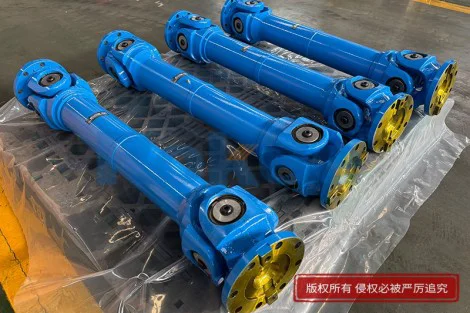
Universal Driveshaft
The universal driveshaft stands as one of the most fundamental and indispensable mechanical transmission components in modern mechanical engineering and power transmission systems, serving as a vital connecting link that bridges power output ends and power input ends across diverse mechanical equipment and vehicle transmission layouts. Also commonly referred to as cardan shaft or propeller shaft in mechanical engineering practice, this mechanical component is uniquely engineered to address the core mechanical challenge of stable and efficient power transmission between two rotating shafts that are not arranged in a coaxial straight line, allowing for reasonable angular deviation, axial displacement and radial offset during the continuous operation of mechanical equipment. Unlike rigid transmission shafts that can only work efficiently under strict coaxial installation conditions and flexible coupling parts that are limited by low torque bearing capacity and small displacement compensation range, the universal driveshaft perfectly balances structural rigidity for torque transmission and mechanical flexibility for displacement adaptation, enabling it to maintain stable power delivery under complex working conditions involving vibration, equipment operation deviation, component thermal expansion and contraction, and dynamic position changes during mechanical movement. Its existence lays a solid mechanical foundation for the normal operation of various mobile engineering machinery, road transport vehicles, industrial production equipment and special mechanical devices, becoming an irreplaceable core part in the whole power transmission chain of numerous mechanical systems.
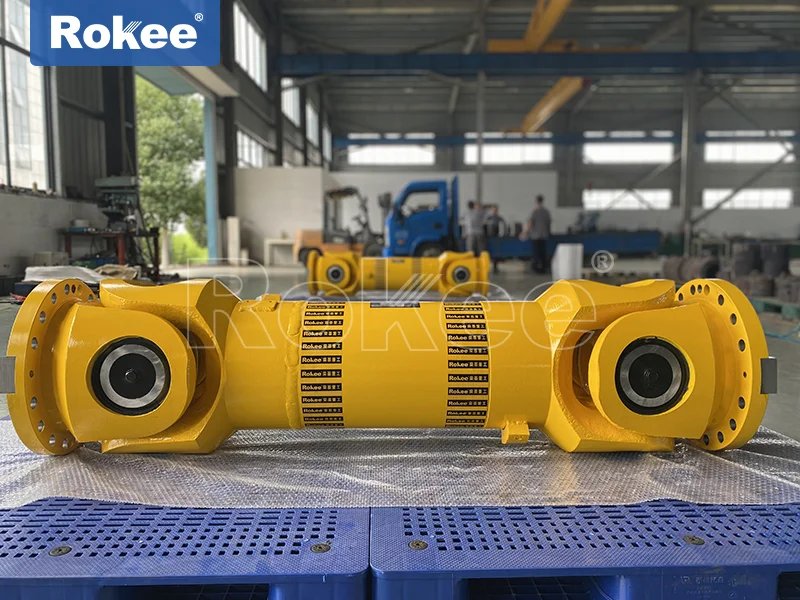
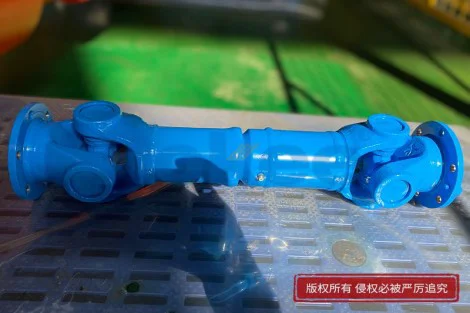
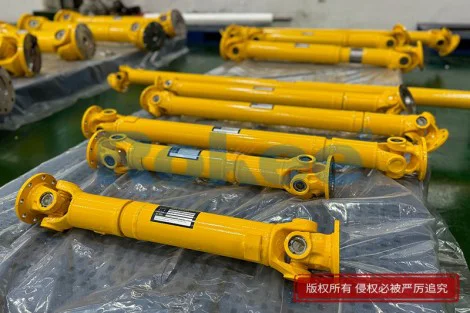
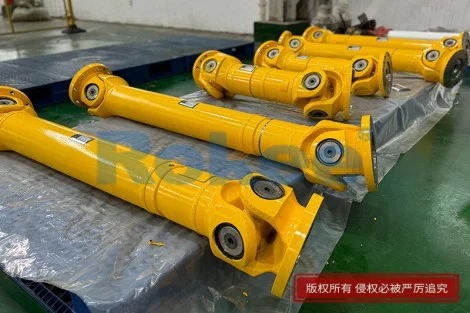
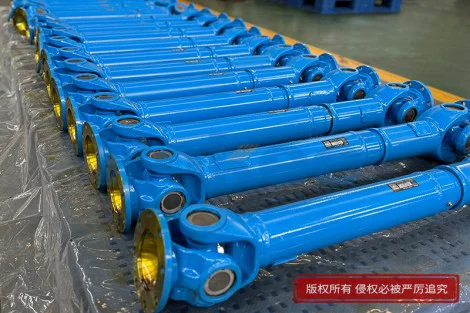
The basic structural composition of a standard universal drive shaft follows a mature and optimized mechanical design logic after long-term engineering iteration, with every structural part designed to meet the dual core demands of reliable torque transmission and flexible displacement compensation under different working conditions. The overall structure of a complete universal driveshaft mainly consists of three core functional parts and multiple matching auxiliary connecting components, including universal joint assemblies responsible for angular rotation and flexible connection, a middle tubular shaft body undertaking main torque transmission and structural connection, and telescopic spline components realizing automatic axial length compensation during equipment operation. The universal joint assembly, as the most core functional unit of the entire universal driveshaft, is generally composed of precision forged fork heads, cross-shaped spider shafts and high-strength bearing assemblies, where the fork heads are fixedly connected with the power input end and power output end respectively, and the cross-shaped spider shaft acts as the middle hinge connection structure between the two groups of fork heads. The bearing assemblies installed at the four ends of the cross-shaped spider shaft are mostly needle roller bearing structures, which can effectively reduce the friction resistance during the relative rotation of the fork heads and the cross shaft, while bearing the shear force and torque load generated during power transmission, ensuring the flexibility of angular rotation and the stability of force transmission at the joint. The middle tubular shaft body is usually made of high-strength alloy steel through integral forging or seamless steel pipe processing, with a hollow thin-wall structural design adopted in most mainstream models; this design not only effectively reduces the overall self-weight of the driveshaft and reduces the additional rotational inertia during operation, but also ensures sufficient structural rigidity and torsional resistance to withstand instantaneous impact torque and long-term cyclic torque load. The telescopic spline part is arranged at the connection position between the middle shaft body and the universal joint assembly, composed of internal splines and external splines matched with each other, which can freely stretch and slide axially within a certain range. This structural design can well adapt to the axial distance change between the power source and the driven part caused by mechanical vibration, component wear, thermal expansion and contraction of metal materials and elastic deformation of the equipment frame during the operation of mechanical equipment, avoiding structural deformation, shaft body bending or component damage caused by rigid tension and compression of the driveshaft.
The core performance characteristics of universal drive shafts are formed by the organic combination of structural design advantages and material mechanical properties, covering multiple key performance dimensions such as torque transmission efficiency, angular displacement adaptability, operational stability, structural durability and environmental adaptability, all of which determine the applicable working conditions and service life of the driveshaft in different mechanical scenarios. First of all, excellent torque transmission performance is the most basic core attribute of universal driveshafts. Made of high-strength forged alloy steel and processed with precision matching technology for key force-bearing parts, the driveshaft can bear continuous high torque and instantaneous peak impact torque generated during equipment start-up, load change and sudden operation adjustment, achieving high-efficiency power transmission with low energy loss. In the whole power transmission process, the mechanical energy loss caused by the rotation and hinge movement of the universal joint assembly and the telescopic sliding of the spline part is extremely low, ensuring that most of the power output by the power source can be accurately transmitted to the driven mechanical parts without obvious power attenuation, which is crucial for improving the overall operating efficiency of mechanical equipment and reducing energy consumption. Secondly, outstanding angular misalignment adaptability is the most distinctive performance advantage that distinguishes universal driveshafts from other rigid transmission shafts. The universal joint structure can allow a certain angular deviation between the input shaft and the output shaft during operation, with the allowable working angle varying according to different structural types and application requirements; within the designed angular range, the driveshaft can still maintain continuous and stable rotating power transmission without stuck rotation or power transmission interruption. This performance enables mechanical equipment to still work normally even if there is installation deviation during assembly, position offset during long-term operation or angular change of parts caused by terrain and working environment changes.
In addition to torque transmission capacity and angular adaptability, good operational dynamic stability is another key performance of qualified universal driveshafts. During high-speed rotation and variable load operation, the driveshaft needs to maintain stable rotating state without obvious vibration, shaking or abnormal noise, and avoid resonance phenomenon that may cause structural damage to the equipment. The optimized structural balance design of the middle shaft body and the precision assembly process of the universal joint and spline parts effectively reduce the unbalanced centrifugal force generated during rotation, ensuring smooth operation under both low-speed heavy-load and high-speed light-load working conditions. Meanwhile, excellent structural durability and fatigue resistance enable the universal driveshaft to adapt to long-term cyclic operation and complex alternating load working environments. Mechanical equipment often faces frequent start and stop, load fluctuation and continuous vibration during operation, and the driveshaft needs to withstand long-term cyclic torsional fatigue and mechanical friction wear; through reasonable material selection and surface heat treatment processing, the key wear-resistant and force-bearing parts have high hardness and wear resistance, effectively slowing down the wear of bearing parts and spline matching surfaces, reducing the probability of structural fatigue fracture, and extending the overall service cycle of the driveshaft. Moreover, good environmental adaptability allows universal driveshafts to work normally in various harsh working environments, including high-temperature working conditions generated by long-term operation of mechanical equipment, low-temperature outdoor working environments, dusty construction sites, and humid and corrosive industrial production environments. The surface anti-corrosion treatment and closed protective structure design can effectively isolate dust, moisture and corrosive substances, prevent structural rust and component corrosion, and ensure the stability of mechanical performance and structural integrity in complex environments.
According to differences in structural configuration, joint combination form and power transmission working principle, universal driveshafts can be divided into several mainstream categories, each with unique structural characteristics, performance advantages and targeted applicable working scenarios, meeting the differentiated power transmission needs of different types of mechanical equipment. The first and most widely used basic type is the single universal joint driveshaft, also known as the basic Hooke’s joint driveshaft, which adopts a single set of cross-shaft universal joint structure for power connection and transmission. This type of driveshaft has the simplest overall structure, fewer matching parts, low manufacturing and maintenance difficulty, and strong economical practicability, with basic angular displacement compensation capacity and medium torque bearing performance. Due to the simple structural design, the single universal joint driveshaft is compact in overall size and convenient for installation and layout, making it suitable for mechanical equipment with small angular deviation, low and medium transmission speed and stable load change. However, this type of driveshaft has an inherent structural limitation in mechanical operation: when working at a certain angular deviation, the instantaneous angular velocity of the input end and the output end will have periodic small fluctuations, which may cause slight vibration during high-speed operation, so it is mostly used in low-speed mechanical transmission scenarios with low requirements for transmission stability and no high-precision power transmission demand.
The second mainstream type is the double universal joint driveshaft, which is composed of two sets of single universal joint assemblies and a middle connecting shaft body in series, effectively optimizing and improving the inherent velocity fluctuation defect of the single universal joint structure. Through the reasonable symmetrical layout of the two universal joints and the equal angular deviation design at both ends, the periodic angular velocity fluctuation generated by the first universal joint in the power transmission process can be completely offset by the second universal joint, realizing approximate constant angular velocity power transmission between the input shaft and the output shaft. Compared with the single universal joint type, the double universal joint driveshaft has higher transmission stability, lower operation vibration and noise, larger allowable angular deviation range and stronger torque bearing capacity, and can adapt to variable load and high-speed operation working conditions. Its overall structural design is relatively moderate in complexity, taking into account both transmission performance and economical efficiency, so it has become the most widely used type in vehicle transmission systems and general industrial mechanical equipment. It is especially suitable for mechanical systems where the distance between the power source and the driven part is relatively long, the working angular deviation is large, and the requirements for transmission smoothness are high, effectively solving the power transmission problem under dynamic position change and complex load conditions.
The third important classification is the constant velocity universal driveshaft, which adopts specially optimized constant velocity joint structures instead of traditional cross-shaft universal joints, realizing real constant angular velocity power transmission under any allowable working angle. Different from the velocity compensation principle of the double universal joint driveshaft relying on structural symmetry, the constant velocity universal driveshaft relies on the special internal structural design of the joint itself to ensure that the rotational angular velocity of the input end and the output end remains completely synchronous at any time without any periodic fluctuation or speed difference. This type of driveshaft has the highest transmission precision and operational stability, extremely low vibration and noise during operation, and can adapt to large angular deviation and high-speed rotating working conditions, with excellent dynamic response performance. However, the structural design of the constant velocity universal driveshaft is more complex, the processing and assembly precision requirements of parts are higher, and the manufacturing and maintenance costs are relatively increased, so it is mainly used in high-precision mechanical transmission scenarios and high-end mobile equipment with strict requirements for transmission stability and power response accuracy. In addition, there is a heavy-duty special universal driveshaft designed for extreme working conditions, which adopts thickened and reinforced structural parts, larger-size cross-shaft and bearing assemblies and high-strength special alloy materials, with ultra-high torque bearing capacity and impact resistance. This type of driveshaft is specially optimized for heavy-load, high-impact and harsh working environments, with strong structural anti-fatigue performance and wear resistance, suitable for large engineering machinery, heavy industrial production equipment and special heavy-duty mechanical systems that need to bear ultra-large load and frequent impact.
The practical application scope of universal drive shafts covers almost all fields involving mechanical power transmission with non-coaxial connection conditions, realizing efficient power connection and transmission for various types of mechanical equipment and ensuring the stable operation of the whole mechanical system. In the field of road transportation vehicles, universal driveshafts are the core key components of rear-wheel drive and four-wheel drive vehicle transmission systems, responsible for transmitting the power output by the vehicle transmission to the rear axle differential or the drive axles of each wheel. During the driving process of the vehicle, the relative position and angle between the transmission and the drive axle will change constantly with the jolt of the vehicle body, the deformation of the suspension system and the change of road conditions; the universal driveshaft can well adapt to these dynamic position and angular changes, ensuring continuous and stable power transmission during vehicle driving, acceleration and climbing, and avoiding power transmission interruption or mechanical component damage caused by vehicle body vibration and position offset. Whether in ordinary passenger vehicles, light commercial vehicles or heavy-duty transport vehicles, universal driveshafts play an irreplaceable role in ensuring vehicle power performance and driving stability.
In the field of engineering and construction machinery, universal drive shafts are widely used in various large-scale operation equipment such as excavators, loaders, cranes, road rollers and bulldozers. This kind of engineering machinery often works in harsh construction environments with complex terrain, uneven ground and frequent load changes, and the internal power transmission system of the equipment needs to bear large impact load and violent vibration during operation. The heavy-duty and double universal joint driveshafts adopted by engineering machinery have high torque bearing capacity and strong vibration resistance, which can adapt to the severe working conditions of frequent start and stop, sudden load change and violent mechanical vibration, and stably transmit power to each working mechanism of the equipment, ensuring the normal completion of construction operations such as excavation, loading, hoisting and road compaction. At the same time, the good displacement compensation performance of the driveshaft can also adapt to the structural deformation and part position offset of engineering machinery during long-term heavy-load operation, reducing the failure rate of mechanical transmission parts and improving the overall operation reliability of construction equipment.
In the field of industrial production and manufacturing equipment, universal driveshafts are applied to various mechanical production lines, transmission equipment, processing machinery and conveying devices, including rolling mills in metallurgical industry, conveying machinery in mining industry, processing machine tools in mechanical manufacturing industry and pumping and compression equipment in chemical industry. In industrial production scenarios, many mechanical equipment need to realize power transmission between distributed power sources and multiple driven working parts, and there are often installation position deviation, structural thermal expansion and contraction and continuous cyclic operation load during equipment operation. Universal driveshafts can realize stable power transmission between non-coaxial mechanical parts, ensure the synchronous and stable operation of each link of the production line, avoid production interruption caused by power transmission failure, and improve the continuity and efficiency of industrial production. In addition, in the field of agricultural machinery and equipment, universal driveshafts are also used in various farming, harvesting and tillage machinery, adapting to the complex field operation environment and uneven ground conditions, transmitting power to the working parts of agricultural machinery, and ensuring the smooth progress of agricultural production operations such as ploughing, sowing and harvesting.
With the continuous progress of mechanical engineering technology and the continuous upgrading of various mechanical equipment, the structural design and performance optimization of universal drive shafts are also constantly developing and improving. The future development direction of universal driveshafts focuses on lightweight structural design, higher transmission efficiency, stronger environmental adaptability and longer service life, adapting to the increasingly stringent working condition requirements of new energy vehicles, intelligent engineering machinery and high-precision industrial equipment. Through the application of new high-strength lightweight alloy materials, optimized structural simulation design and precision intelligent processing technology, universal driveshafts will further reduce self-weight and energy consumption, improve transmission stability and durability, and expand their application scope in more emerging mechanical fields. As an essential basic mechanical transmission component, the universal driveshaft will always occupy an important position in the development of mechanical engineering, providing reliable basic support for the stable operation and performance upgrading of various mechanical equipment with its unique structural advantages and excellent transmission performance.