Core Role Of Universal Driveshaft In PU Sandwich Panel Line
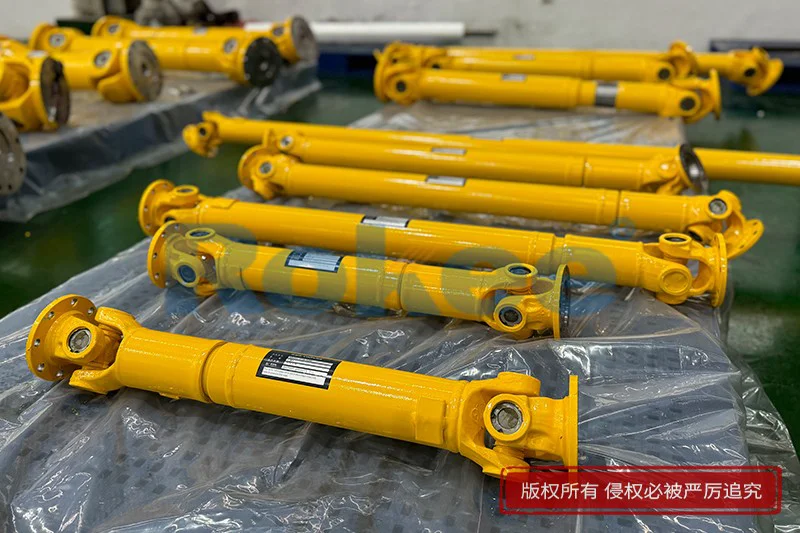
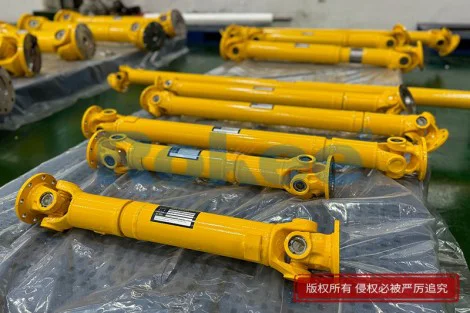
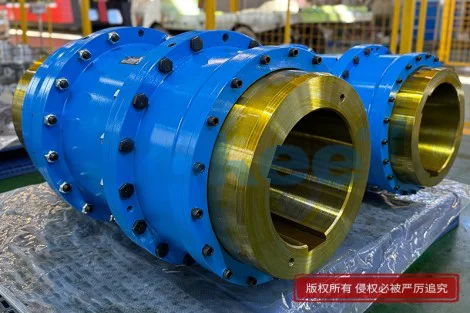
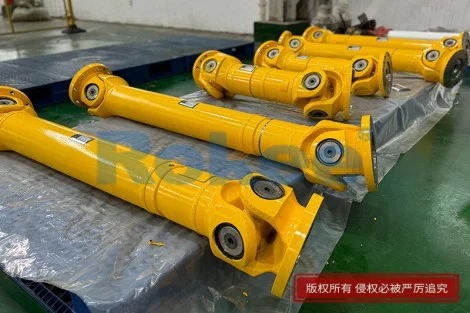
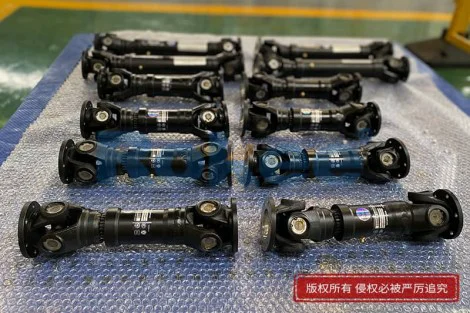
The continuous production of PU sandwich panels relies on the coordinated operation of multiple mechanical subsystems, where every transmission link determines the overall operational stability and processing consistency of the entire production line. Among numerous mechanical components, the universal driveshaft stands as an indispensable core transmission part, undertaking the fundamental task of transmitting torque and rotational power between discrete mechanical units throughout the production process. Unlike rigid transmission components that demand precise coaxial alignment and fixed operating angles, the universal driveshaft features a flexible structural design with unique misalignment compensation capabilities, enabling it to adapt to the complex dynamic operating conditions inherent in PU sandwich panel manufacturing. This adaptive transmission performance not only ensures the synchronous operation of all production modules but also lays a solid foundation for stable long-term production, consistent product quality, and reduced mechanical operation failures in continuous industrial manufacturing scenarios.
PU sandwich panel production is a highly integrated and uninterrupted industrial process, covering raw material uncoiling, surface leveling, PU foam filling, roll forming, continuous pressing, fixed-length cutting, and finished product conveying. Each processing link is closely connected, and the start, stop, speed adjustment, and load change of any single module will generate linkage effects on the entire production line. In such a compact and dynamically changing mechanical system, the spatial position and operating angle of driving and driven shafts cannot maintain absolute fixed coaxial alignment all the time. Factors including mechanical installation errors, structural deformation under long-term high-load operation, thermal expansion and contraction of metal components during continuous operation, and fine position adjustment of processing modules will lead to angular, axial, and radial deviations between connected transmission shafts. Rigid transmission structures are unable to adapt to these subtle dynamic deviations, which easily cause transmission jitter, torque loss, component wear, and even sudden transmission interruption, seriously affecting the continuity of production and the uniformity of panel processing. The universal driveshaft perfectly solves this industry pain point by virtue of its articulated universal joint structure, realizing stable and efficient power transmission under non-coaxial and variable-angle operating conditions, and becoming the key guarantee for the synchronous linkage of all functional modules of the PU sandwich panel production line.
The core structural advantages of the universal driveshaft are reflected in its flexible torque transmission and multi-dimensional deviation compensation capabilities. Composed of precision-processed universal joints and high-strength shaft bodies, the component can effectively offset various spatial deviations generated during equipment operation. In the daily operation of PU sandwich panel line, the height adjustment of pressing rollers, the position calibration of forming dies, and the dynamic vibration of conveying mechanisms will continuously produce tiny axis offset changes in the transmission system. The universal joints inside the driveshaft can freely adjust the transmission angle within a reasonable range according to actual operating conditions, ensuring that torque can be stably and completely transmitted from the power source to each execution mechanism without power attenuation or transmission lag. This flexible transmission mode eliminates the mechanical stress concentration caused by shaft misalignment, reduces the rigid friction and impact between transmission components, and greatly improves the operational smoothness of the entire transmission system. Compared with traditional fixed-angle transmission parts, the universal driveshaft has stronger environmental adaptability and operational tolerance, which can maintain consistent transmission efficiency under long-term variable-load operation and avoid frequent equipment debugging caused by minor mechanical deviations.
In the actual production flow of PU sandwich panels, the universal driveshaft plays a decisive role in multiple key processing links, directly linking mechanical operation status to final product quality. In the raw material feeding and conveying stage, the driveshaft transmits stable rotational power to the uncoiling device and conveying rollers, ensuring that metal sheet substrates and auxiliary materials are fed at a uniform and constant speed. Uniform feeding speed is the primary premise for consistent PU foam pouring and laminating; any speed fluctuation caused by unstable transmission will lead to uneven foam filling density and inconsistent substrate lamination clearance, resulting in defective products with uneven surface flatness and unstable structural strength. The universal driveshaft maintains ultra-stable power output in high-frequency continuous operation, effectively suppressing speed jitter caused by mechanical vibration and load changes, ensuring that the feeding speed matches the foam reaction and forming rhythm in real time, and laying a foundation for the uniform internal structure of sandwich panels.
In the core forming and pressing stage of PU sandwich panels, the functional value of the universal driveshaft is further highlighted. The continuous pressing system requires multiple groups of pressing rollers to operate synchronously with consistent pressure and speed, so that the PU foam material can fully react, expand and bond between the upper and lower substrates, forming a compact and integrated composite structure. The transmission system of the pressing mechanism needs to bear high torque load for a long time, and the slight structural deformation of the frame under load will cause axis deviation of the pressing roller transmission shafts. The universal driveshaft can accurately compensate for these dynamic deviations, ensuring that each pressing roller maintains synchronous rotational speed and uniform pressing force. Stable transmission enables the foam material to complete solidification and forming under uniform pressure distribution, avoiding local hollowing, delamination, and uneven thickness of the panel caused by inconsistent roller operation. This precise transmission control directly optimizes the bonding strength and overall flatness of PU sandwich panels, realizing batch consistency of product structural performance.
The fixed-length cutting and finished product output links also rely heavily on the stable operation of universal driveshafts to achieve high-precision processing. The cutting mechanism of the PU sandwich panel line needs to complete reciprocating horizontal movement and high-speed rotary cutting according to the set length, and the coordination accuracy of movement speed and cutting angle determines the dimensional accuracy and section flatness of finished panels. The universal driveshaft connects the power motor and the cutting execution component, stably outputting torque to ensure constant rotating speed of the cutting blade and accurate synchronization of horizontal displacement. It can offset the transmission errors caused by the frequent start-stop and reciprocating motion of the cutting mechanism, avoiding length deviation and rough section burrs of panels caused by transmission lag or speed fluctuation. At the same time, in the finished product conveying link, the driveshaft ensures the stable operation of the rear-end conveying equipment, realizing seamless docking between cut finished products and conveying output, preventing panel surface scratch and position offset caused by unstable conveying, and improving the overall yield of finished products.
Beyond optimizing production accuracy and product quality, the universal driveshaft also brings significant advantages in improving production efficiency and reducing equipment operating costs. PU sandwich panel manufacturing belongs to typical continuous batch production, and any equipment pause and failure will lead to production line shutdown, reducing production efficiency and increasing production loss. Traditional rigid transmission components are prone to accelerated wear, deformation and even damage under long-term variable-angle and high-load operation, requiring frequent inspection, maintenance and replacement, which seriously affects production continuity. The structural design of the universal driveshaft disperses mechanical stress through flexible connection, greatly reducing the wear and fatigue loss of transmission components. It can adapt to long-term uninterrupted industrial operation, effectively reducing the frequency of sudden equipment failures caused by transmission system problems, and maximizing the continuous operation time of the production line. For industrial production scenarios that pursue high efficiency and high continuity, this stable and durable transmission performance directly improves the overall operational efficiency of the production line and reduces ineffective production downtime.
In terms of equipment maintenance and service life optimization, the universal driveshaft also shows unique application value. The modular structure of the driveshaft makes daily inspection and maintenance more convenient, and the independent universal joint and shaft body structure enables targeted maintenance and partial replacement without disassembling the entire transmission system, greatly reducing maintenance time and labor costs. More importantly, its deviation compensation function can protect other core equipment components in the transmission system. The mechanical impact and stress caused by shaft misalignment are buffered and eliminated by the universal driveshaft, avoiding long-term eccentric wear of motors, reducers, rollers and other key equipment, effectively extending the overall service life of the production line equipment. In the long-term equipment operation cycle, this protective effect can significantly reduce equipment depreciation costs and subsequent renovation and replacement expenses, bringing stable economic benefits for continuous production operations.
With the continuous upgrading of PU sandwich panel production technology towards high speed, high precision and high automation, the operational requirements for transmission systems are becoming increasingly stringent. Modern production lines pursue higher production speed while requiring more precise processing accuracy and more stable batch production consistency, which puts forward higher standards for the flexibility, stability and durability of transmission components. The universal driveshaft, as a mature and efficient flexible transmission component, can perfectly adapt to the upgrading trend of production equipment. It can match the high-speed operation rhythm of upgraded production lines, maintain stable torque transmission under higher operating frequency and variable load conditions, and continuously meet the precise transmission requirements of high-precision panel forming and processing. Whether it is conventional standard panel production or special specification panel processing with adjusted mold positions and processing strokes, the universal driveshaft can adapt to diverse production conditions through its flexible transmission characteristics, realizing the universal matching of transmission performance in different production scenarios.
In the entire mechanical system of PU sandwich panel production lines, the universal driveshaft is not a marginal auxiliary component, but a core transmission unit that runs through the whole production process and restricts the overall equipment performance. Its flexible transmission capability, dynamic deviation compensation performance, long-term operational stability and excellent load resistance jointly build the stable operation foundation of the entire production line. It solves many industry pain points such as easy failure of rigid transmission, poor production continuity, unstable product quality and high maintenance cost, and provides reliable mechanical transmission support for high-efficiency and high-quality production of PU sandwich panels. In the field of building material industrial manufacturing that focuses on production stability, product consistency and operational economy, the unique core value of universal driveshafts in PU sandwich panel production lines is irreplaceable, and it will continue to play a key basic supporting role in the iterative upgrading and efficient operation of panel production equipment.