Emergency Treatment Of Universal Driveshaft Failure In PU Sandwich Panel Line
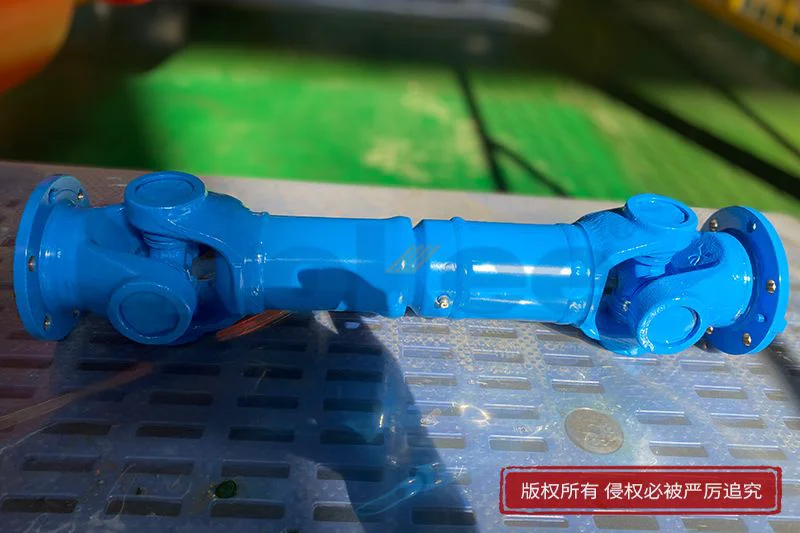
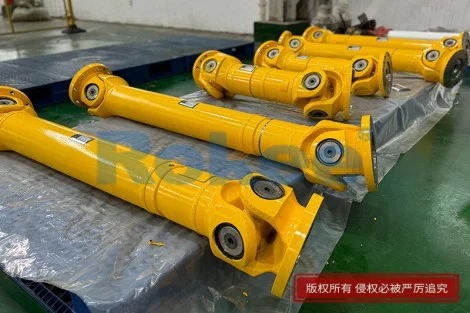
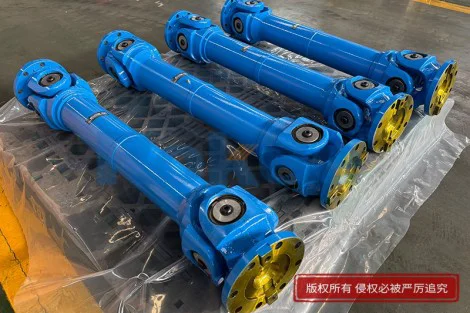
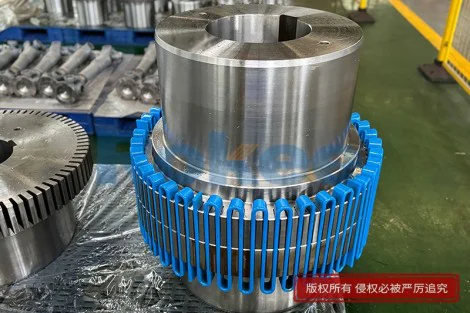
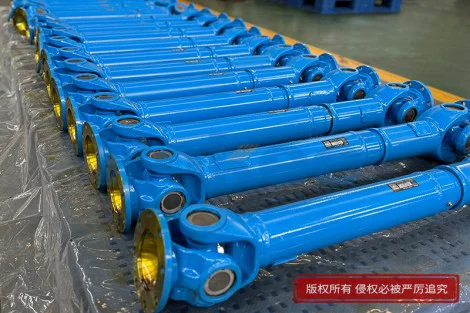
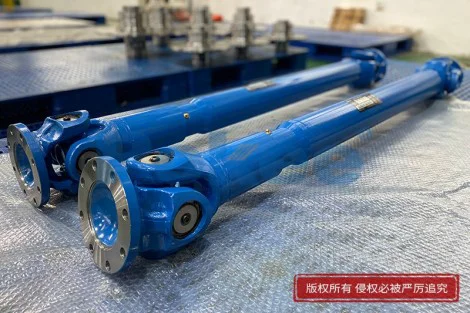
The stable operation of mechanical transmission components is the core guarantee for the continuous and efficient production of PU sandwich panel lines, among which the universal driveshaft undertakes the key task of transmitting torque between different functional units of the production line. This component can adapt to minor deviations in installation angle and axial displacement during the operation of the sandwich panel production equipment, ensuring the synchronous operation of feeding, foaming, pressing, and cutting processes. However, under long-term high-load operation, frequent start-stop cycles, and harsh production environment conditions, the universal driveshaft is prone to abnormal wear, component fatigue, structural fracture and other failures. Once a failure occurs, the transmission system will be out of sync, leading to production line jamming, panel forming defects, and even secondary damage to adjacent mechanical structures. Timely and standardized emergency treatment can effectively control fault expansion, reduce production downtime, and avoid unnecessary mechanical losses, which is crucial for maintaining the operational stability of PU sandwich panel production lines.
Most universal driveshaft failures in PU sandwich panel line do not occur suddenly without early signs. In actual production scenarios, subtle abnormal states will appear in the early stage of component damage, which can be used as important basis for judging potential faults and implementing early emergency intervention. During the continuous operation of the production line, abnormal vibration with irregular frequency often appears in the transmission part of the driveshaft. This vibration is different from the regular mechanical vibration of normal equipment operation. It is mainly caused by uneven wear of the universal joint cross shaft, loose matching of spline pairs, or slight deformation of the driveshaft tube body. When the fault continues to deteriorate, obvious abnormal noise will accompany the vibration, including intermittent friction noise and impact noise during torque transmission. In addition, local overheating of the driveshaft assembly is also a typical early fault feature. Long-term insufficient lubrication will increase the friction resistance between internal components, and abnormal load operation will cause heat accumulation, leading to a significant rise in the surface temperature of the driveshaft, which can be obviously perceived through real-time equipment operation monitoring and regular manual inspection. In the late stage of fault development, the transmission torque of the driveshaft will be insufficient, resulting in asynchronous operation of each station of the sandwich panel line, deviation in panel conveying speed, and irregular thickness and surface flatness of formed PU sandwich panels. In severe cases, the driveshaft will be stuck or fractured directly, causing the production line to stop abruptly.
The occurrence of universal driveshaft failures is affected by multiple production and equipment factors, and analyzing the root causes is the premise of accurate emergency treatment and subsequent fault prevention. Long-term high-load operation is the primary cause of component failure. The PU sandwich panel production line usually implements continuous batch production mode. The driveshaft bears stable and high torque for a long time, and the repeated alternating load will cause fatigue damage to the metal structure of the cross shaft, bearing and shaft tube. Over time, micro cracks will form inside the components and gradually expand until structural failure occurs. Improper lubrication management is another key inducement. The universal driveshaft relies on lubricating media to reduce internal friction and buffer mechanical impact. Insufficient lubricating oil filling, aging and deterioration of lubricants after long-term use, or failure to replace lubricants according to operation cycles will lead to dry friction between moving parts, accelerating component wear and reducing the service life of the driveshaft. Meanwhile, irregular installation and daily calibration will also trigger frequent failures. In the daily operation of the production line, the displacement of the equipment base and the deviation of the installation angle of the driveshaft will cause the operating angle of the universal joint to exceed the reasonable range, resulting in uneven force on each component during operation, local stress concentration and accelerated damage.
In addition, the production environment of PU sandwich panel lines also exacerbates driveshaft failure risks. A small amount of foam dust, raw material residues and humid air in the production workshop will adhere to the surface of the driveshaft and penetrate into the internal matching gaps of the universal joint, causing corrosion and abrasive wear of precision components. Frequent start and stop of the production line and irregular load changes in the production process will produce instantaneous impact torque, which will cause fatigue damage to the driveshaft structure repeatedly. Moreover, long-term lack of standardized daily inspection and maintenance will make minor early faults unable to be detected and eliminated in time. Small problems such as loose fastening bolts and slight component wear will gradually evolve into major faults such as driveshaft fracture and transmission failure, bringing greater hidden dangers to production safety and equipment operation.
When the universal driveshaft failure signal is detected during the operation of the PU sandwich panel line, the first priority is to implement standardized emergency shutdown and safety protection procedures to prevent fault expansion and secondary accidents. Operators need to immediately trigger the equipment emergency stop device to cut off the power transmission of the entire production line, terminate the operation of all functional units such as feeding, foaming and molding synchronously. It is forbidden to continue forced operation of the equipment with faults, because abnormal operation will cause the damaged driveshaft components to collide and rub with adjacent transmission structures, resulting in bending and deformation of other connecting parts, and even damaging the main transmission motor and reduction equipment. After the equipment is completely shut down, it is necessary to cut off all energy supply of the faulty equipment, including power supply and hydraulic power supply, and set up obvious fault warning signs around the equipment to prevent irrelevant personnel from approaching and touching the faulty mechanical parts by mistake, avoiding mechanical extrusion and collision injuries. After completing the safety protection work, the on-site operation and maintenance personnel shall conduct preliminary on-site investigation and confirm the specific fault location and damage degree of the universal driveshaft in the shortest time.
The preliminary fault diagnosis shall follow the inspection principle from outside to inside and from simple to complex to quickly locate the fault type. First, check the external connection state of the driveshaft, confirm whether the fastening bolts at each connection interface are loose or fallen off, whether the shaft tube has obvious bending, deformation and fracture marks, and whether the external protective sleeve is damaged and displaced. Then observe the operating clearance of the universal joint, check whether there is abnormal jamming and excessive gap during manual rotation, and preliminarily judge the wear degree of the internal cross shaft and bearing components. For faults with obvious external characteristics such as bolt looseness and slight structural deviation, temporary correction and fastening can be carried out on site to eliminate hidden dangers. For abnormal noise, vibration and power transmission failure without obvious external damage, it is necessary to conduct in-depth disassembly inspection to check the internal wear, fatigue crack and lubrication failure of the driveshaft assembly. According to the on-site inspection results, the fault level is divided to formulate targeted emergency treatment schemes. Minor wear and loose connection faults can be repaired on site quickly to resume production; while severe faults such as component fracture, severe deformation and overall structural damage need to adopt replacement maintenance schemes to ensure the stability of subsequent equipment operation.
For repairable minor universal driveshaft faults in PU sandwich panel lines, standardized on-site emergency repair operations shall be carried out to realize rapid production recovery. When it is detected that the fastening bolts are loose and cause abnormal vibration, professional tools shall be used to fasten all connecting bolts in sequence, and the fastening tightness shall be kept consistent to avoid uneven local stress. For slight wear of universal joint components and insufficient lubrication, clean the residual deteriorated lubricant and surface dust and impurities inside the joint completely, and fill with clean and qualified lubricating media according to the equipment operation requirements to ensure that all friction parts are fully covered by lubricants and reduce operating friction resistance. After the repair operation is completed, manual trial rotation of the driveshaft is required to check whether the rotation is smooth, whether there is jamming and abnormal resistance, and confirm that the minor faults are completely eliminated.
In view of severe driveshaft faults that cannot be repaired on site, such as cross shaft fracture, bearing damage, shaft tube deformation and fatigue failure of the overall assembly, the emergency replacement process shall be started immediately. Before replacement, professional support tools shall be used to fix the connected equipment to avoid displacement and shaking of the equipment during the disassembly process, which will affect the installation accuracy of new components. Then, all fastening structures connecting the faulty driveshaft and the equipment are disassembled in a standardized order, and the damaged driveshaft assembly is slowly removed to avoid scratching the matching interface of the equipment during the disassembly process. Before installing the new driveshaft, the connecting interface of the equipment shall be thoroughly cleaned to remove residual impurities and rust, ensuring the flatness and cleanliness of the matching surface. The new driveshaft assembly shall be installed in strict accordance with the equipment transmission installation standards, adjusting the installation angle and coaxiality of the driveshaft to ensure that the operating angle of the universal joint is within the reasonable range, and all fastening bolts are locked symmetrically and evenly to avoid installation deviation caused by one-sided excessive fastening.
After the completion of emergency repair and replacement construction, strict equipment debugging and performance testing must be carried out before the formal resumption of production to ensure that the hidden faults are completely eliminated and the equipment operation meets production standards. First, conduct no-load trial operation of the production line, start the equipment at a low speed, and continuously observe the operating state of the universal driveshaft, focusing on checking whether there is abnormal vibration, noise and local overheating during the no-load operation process, and verifying the stability of power transmission. The no-load operation time shall not be less than the standard inspection cycle, so as to fully observe the potential abnormal state of the repaired parts. After the no-load test is qualified, carry out load debugging according to the actual production parameters of PU sandwich panels, simulate the normal production load state, check the synchronous operation accuracy of each station of the production line, and confirm that the conveying speed and forming accuracy of the sandwich panel meet the production requirements. During the debugging process, if any minor abnormal state is found, the equipment shall be shut down immediately for secondary adjustment and correction, and the production can only be resumed after all performance indicators are up to standard.
After the emergency treatment of the universal driveshaft failure is completed and the production line resumes normal operation, standardized post-fault management and long-term preventive maintenance measures must be implemented to avoid repeated faults. First, complete the fault file recording work in detail, including the fault occurrence time, fault phenomenon, root cause, emergency treatment process, replacement parts and debugging results, so as to provide data support for subsequent equipment maintenance and fault analysis. On this basis, optimize the daily maintenance mechanism of the driveshaft, formulate a regular inspection plan, and conduct comprehensive inspection on the fastening state, lubrication condition, component wear and operating angle of the driveshaft every fixed production cycle. Timely replace aging and worn parts, and regularly update the lubricating medium to ensure the long-term stable lubrication state of the transmission components.
In addition, it is necessary to standardize the equipment operation behavior of on-site staff, strengthen professional operation training, prohibit overload operation, frequent arbitrary start-stop and irregular load adjustment of the production line, and reduce the instantaneous impact load on the universal driveshaft in the production process. Regularly calibrate the installation coaxiality and operating angle of the driveshaft, use professional calibration tools to correct minor installation deviations in time, and avoid long-term eccentric operation causing component fatigue damage. At the same time, do a good job in the environmental management of the production workshop, regularly clean the production dust and raw material residues around the transmission equipment, keep the surface and internal structure of the driveshaft clean, and reduce abrasive wear and corrosion damage of components caused by environmental impurities.
In the daily production and operation of PU sandwich panel lines, the universal driveshaft, as a key transmission component, has a direct impact on production efficiency, product quality and equipment safety. Most driveshaft failures are caused by the accumulation of minor problems in daily operation and maintenance. Scientific and standardized emergency treatment can quickly respond to sudden faults, effectively control fault losses, and restore production order in the shortest time. Perfect daily preventive maintenance can fundamentally reduce the occurrence probability of driveshaft failures, extend the service life of transmission components, and ensure the long-term stable and efficient operation of PU sandwich panel production lines. The combination of efficient emergency disposal mechanism and standardized daily maintenance system is an important guarantee to solve the hidden dangers of universal driveshaft faults and realize sustainable and stable production of sandwich panel equipment.