Grid Coupling
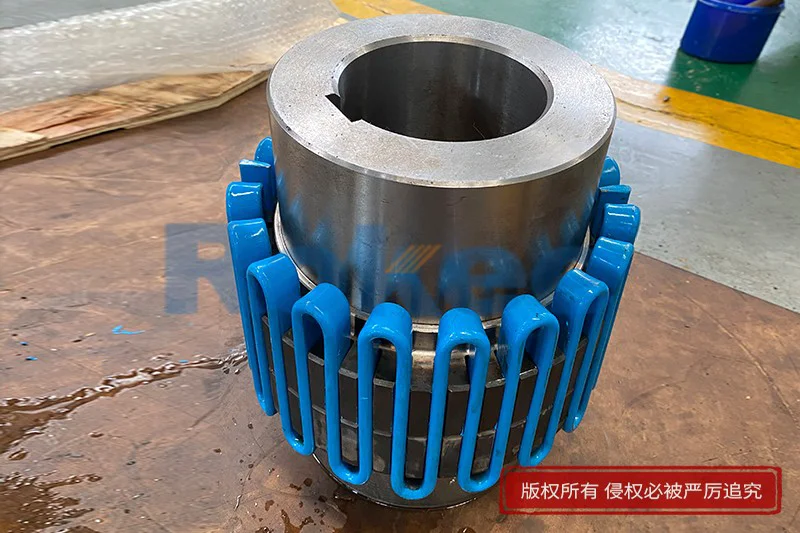
Grid coupling is a widely adopted flexible mechanical transmission component designed to connect rotating shafts and achieve stable torque transfer in industrial mechanical systems. Distinct from rigid coupling structures, it relies on a continuous elastic grid element to bridge two slotted hubs, integrating the advantages of high torque transmission capacity and flexible deformation compensation. This core structural feature enables the device to effectively absorb instantaneous mechanical shocks, dampen torsional vibrations, and compensate for minor axial, radial, and angular misalignments between connected shafts during equipment operation. As a key intermediate component of power transmission, it solves common operational problems such as mechanical stress concentration, component wear acceleration, and transmission efficiency decline caused by shaft deviation and load fluctuation. It is universally applicable to various medium and heavy-duty mechanical transmission scenarios, delivering stable, durable, and low-loss power transmission performance for industrial equipment while reducing the overall operating failure rate of mechanical systems.
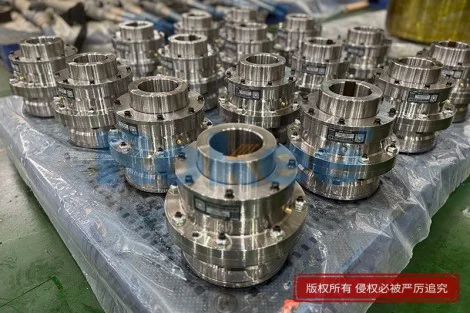
The basic structural composition of grid coupling is simple and precise, with each component cooperating closely to realize complete power transmission and flexible protection functions. The core components mainly include two symmetrical slotted hubs, a flexible metal grid spring, and a protective sealing cover. The two hubs are respectively fixed on the driving shaft and the driven shaft, with uniformly arranged curved grooves on the inner side, which perfectly fit the curved structure of the grid spring. The continuous serpentine grid spring is the most critical functional part, undertaking the dual tasks of torque transmission and flexible buffering. The external sealing cover can isolate internal components from the external operating environment, preventing dust, moisture, and corrosive substances from invading while locking internal lubricants to maintain stable internal operation. All structural parts adopt integrated mechanical design, avoiding loose assembly gaps. The overall structure is compact and does not occupy excessive installation space, which facilitates matching and installation of various mechanical equipment, and lays a solid structural foundation for long-term stable operation of the coupling.
The working principle of grid coupling is based on elastic distributed deformation and synchronous torque transmission, realizing efficient and buffered power transmission. When the driving shaft starts to rotate and output torque, the hub fixed on the driving shaft drives the embedded grid spring to move synchronously. The grid spring will produce uniform micro elastic deformation along its serpentine structure under the action of torque, and transmit the rotational power to the driven hub through multi-point contact with the hub grooves, so as to drive the driven shaft to rotate and complete power transmission. Different from traditional coupling’s concentrated force transmission mode, the grid structure disperses torque on multiple contact surfaces, avoiding local stress overload. When the equipment encounters unstable load, mechanical vibration or shaft misalignment during operation, the elastic deformation of the grid spring can adaptively offset the displacement deviation and absorb impact energy, converting instantaneous rigid impact into mild elastic deformation force, thus protecting the shaft, bearing and other core equipment components from damage caused by abnormal load impact.
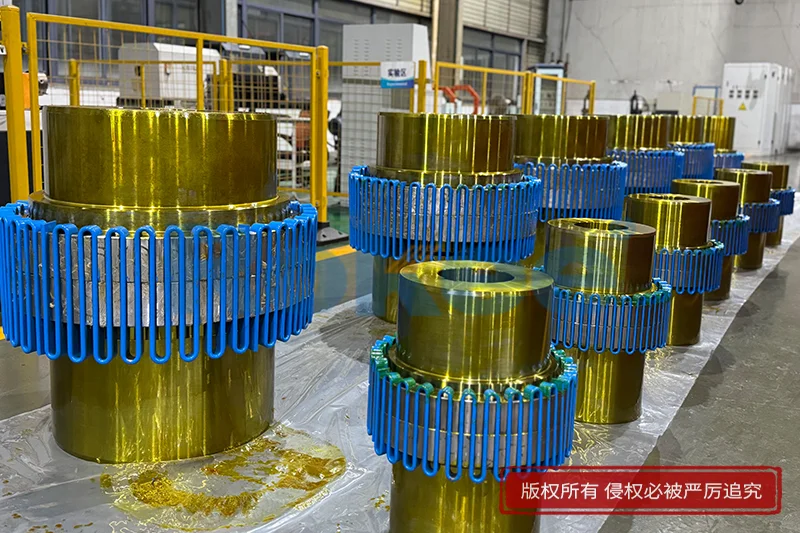
Grid coupling shows outstanding performance advantages in load adaptability, making it suitable for complex and variable industrial operating conditions. Its unique grid elastic structure endows it with excellent shock resistance and vibration damping capabilities, which can effectively suppress torsional vibration generated during equipment start-stop, variable speed operation and alternating load work. For frequent start-stop working scenarios that are easy to cause mechanical fatigue, the coupling can buffer instantaneous peak load and reduce fatigue loss of mechanical components. In terms of misalignment compensation, it can adaptively tolerate small-range axial stretching, radial offset and angular deflection of the two connected shafts, eliminating additional mechanical stress caused by installation errors or equipment operation deviation. Meanwhile, it maintains high torque transmission efficiency under normal working conditions, with small power loss during operation. Compared with elastomer couplings, it has stronger load-bearing capacity and higher structural rigidity, and compared with rigid couplings, it has better flexible protection performance, achieving a balance between transmission efficiency and equipment protection.
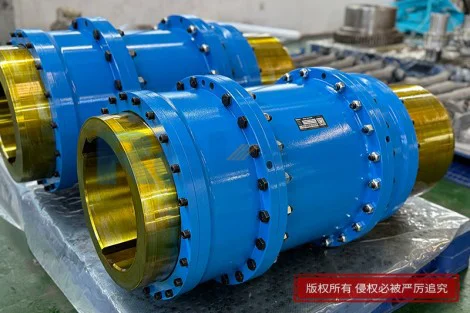
According to different installation forms and structural characteristics, grid couplings can be divided into multiple types to meet differentiated industrial application needs. The most common general-purpose grid coupling adopts a standard horizontal installation structure, with moderate torque bearing capacity and stable comprehensive performance, which is suitable for most conventional mechanical transmission scenes such as fans, pumps and conveying equipment. The vertical grid coupling is specially optimized for vertical shaft installation scenarios, with improved structural stability and anti-deformation ability under vertical load, adapting to the operation requirements of vertical lifting equipment and vertical transmission mechanical systems. In addition, flexible enhanced grid couplings are designed for high-frequency impact and severe vibration working conditions, optimizing the grid spring structure to improve elastic deformation tolerance and fatigue resistance. Spacer-type grid couplings reserve assembly spacing between hubs, facilitating equipment disassembly, maintenance and shaft alignment adjustment. Diversified structural types enable grid couplings to cover light, medium and heavy-duty working conditions, realizing targeted matching with different mechanical equipment.
Material selection is the core factor determining the service performance and service life of grid coupling, and each component has strict material matching standards. The hub is mostly made of high-strength alloy steel with good rigidity, wear resistance and pressure resistance, which can bear long-term torque load and avoid deformation or wear failure in the process of frequent operation. The core grid spring is made of high-quality spring steel with excellent elastic fatigue resistance, which can maintain stable elastic deformation performance after tens of thousands of times of stretching and compression, and will not produce elastic failure or fracture due to long-term alternating load. The protective cover is usually made of high-strength cast iron or engineering plastic, which has good sealing performance and impact resistance, and can resist external mechanical collision and environmental erosion. All materials undergo standardized heat treatment and surface treatment to improve overall hardness, corrosion resistance and oxidation resistance. Scientific material matching enables grid couplings to maintain stable working performance in high-speed operation, variable load and harsh environmental conditions, and extend the overall service cycle of equipment transmission systems.
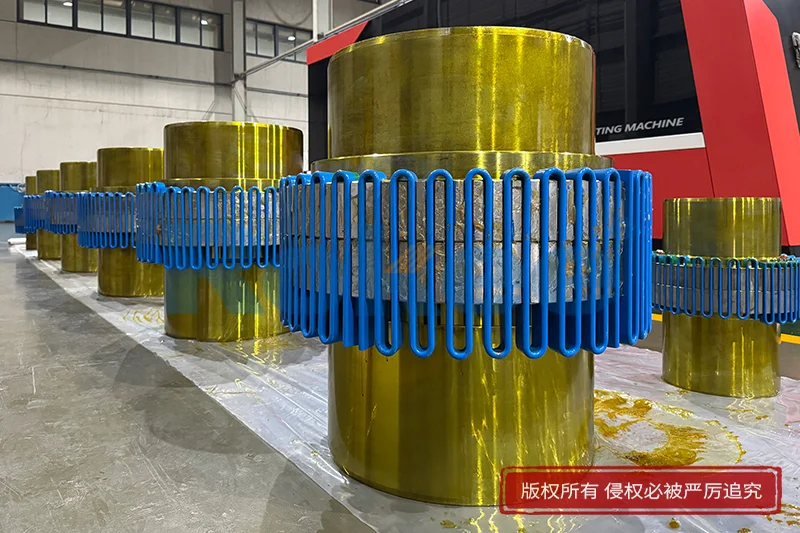
Grid coupling has extremely convenient daily maintenance characteristics, which greatly reduces the operating cost of industrial equipment. Its structural design adopts modular assembly, with few overall parts and simple assembly and disassembly steps, and professional tools are not required for routine inspection and replacement. The internal grid spring and lubricating parts are vulnerable parts with independent replaceable structures, so there is no need to disassemble the overall mechanical transmission system during replacement, which shortens equipment maintenance downtime. In terms of lubrication maintenance, the sealed protective cover can lock lubricating grease for a long time, avoiding frequent oil supplement caused by lubricant loss. Regular maintenance only needs to check the tightness of the protective cover, the wear degree of the grid spring and the fixation of the hub, and clean the internal dust and impurities. Compared with other high-precision transmission couplings that require regular calibration and complex maintenance, grid couplings have lower maintenance difficulty and longer maintenance cycle, which can effectively improve the continuous operation efficiency of industrial production lines and reduce manual maintenance investment.
In industrial practical application, grid coupling shows strong environmental adaptability and can operate stably in various harsh working environments. It can adapt to conventional indoor and outdoor industrial environments, and maintain stable transmission performance in dusty, dry and humid working conditions. The surface anti-corrosion and anti-oxidation treatment of components can resist mild corrosive gas and liquid erosion, avoiding component rust and performance degradation. For high-speed continuous operation scenarios, its uniform stress distribution structure can avoid local overheating caused by excessive friction, ensuring stable long-term high-speed operation. In low-temperature working environments, the selected spring steel materials can maintain good elastic performance without brittle failure, and in medium-temperature environments, they will not produce thermal deformation that affects transmission accuracy. Whether it is conventional processing and production equipment or heavy-duty industrial transmission equipment working continuously for a long time, grid couplings can adapt to environmental changes, reduce equipment failure caused by environmental factors, and improve the overall stability of mechanical systems.
The transmission stability of grid coupling directly affects the overall operating accuracy of mechanical equipment, and its unique structural advantage ensures consistent transmission precision. In the process of power transmission, the multi-point contact fit between the grid spring and the hub grooves makes the torque transmission more uniform, avoiding the rotation jitter and transmission deviation caused by single-point stress. Even in the state of slight shaft misalignment, the adaptive elastic deformation of the grid can correct the transmission angle in real time, ensuring the synchronous rotation consistency of the driving and driven shafts. For precision mechanical transmission equipment that requires stable speed and accurate torque output, this stable transmission characteristic can effectively avoid equipment operation deviation and product processing errors caused by transmission fluctuation. In addition, the vibration damping performance of the coupling can reduce the resonance amplitude of the mechanical system, avoid component fatigue damage caused by long-term vibration, and maintain the long-term operating accuracy of the equipment. This stable and precise transmission performance makes it an ideal choice for medium-precision industrial transmission systems.
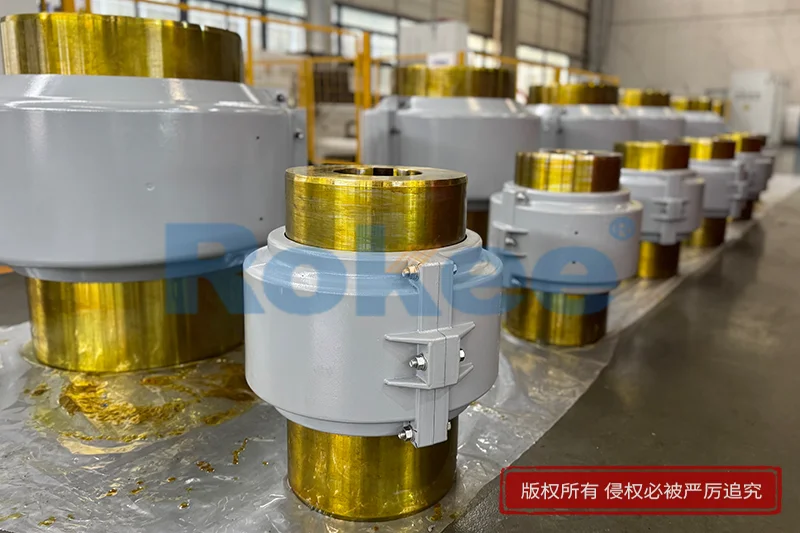
Grid coupling plays an irreplaceable protective role in the safe operation of mechanical systems, effectively reducing equipment failure and loss. In the process of equipment start-up and load mutation, the elastic buffer structure of the grid spring can absorb instantaneous impact load, avoid rigid collision between shaft components, and prevent shaft bending, bearing damage and gear tooth breakage. When the equipment is overloaded accidentally, the grid spring will preferentially produce elastic deformation to release overload pressure, forming a natural overload protection mechanism, which avoids irreversible damage to core mechanical components. The vibration damping function can reduce the vibration noise of equipment operation and avoid structural loosening of mechanical parts caused by long-term vibration. At the same time, it reduces the friction loss between transmission components, slows down the wear speed of parts, and prolongs the service life of the entire mechanical transmission system. This passive protection mechanism does not require additional control systems, realizing automatic protection during equipment operation, greatly improving the safety and reliability of industrial equipment operation.
With the continuous upgrading of industrial mechanical equipment, the optimization direction of grid coupling is more inclined to high efficiency, durability and intelligence. In structural optimization, the grid spring curve and hub groove fit structure are continuously optimized to make stress distribution more uniform, further improving torque transmission efficiency and elastic deformation compensation ability. In material innovation, new high-strength fatigue-resistant alloy materials are applied to improve the extreme working condition adaptability of couplings, enabling them to adapt to higher load and higher speed operation scenarios. In terms of structural lightweight, while ensuring load-bearing performance, the overall structural volume and weight are reduced to meet the lightweight and compact design requirements of modern precision mechanical equipment. In addition, combined with industrial operation needs, sealed and dust-proof structures are further upgraded to adapt to more harsh industrial environments. The continuous technological optimization enables grid couplings to keep pace with the development of modern industrial equipment and expand its application scope in high-end mechanical transmission fields.
As a mature and efficient flexible transmission component, grid coupling has wide application value and broad development prospects in the industrial field. It covers almost all medium and heavy-duty mechanical transmission scenarios, including industrial conveying equipment, power ventilation equipment, mechanical processing equipment and general industrial power transmission systems, providing stable basic support for industrial production and mechanical operation. Its comprehensive advantages of simple structure, stable performance, convenient maintenance and strong protection ability make it have higher application cost performance than many other types of couplings. With the continuous improvement of industrial equipment automation and continuous upgrading of mechanical transmission requirements, the market demand for high-performance grid couplings is constantly increasing. In the future, with the continuous innovation of materials science and mechanical structure design, grid coupling will achieve further breakthroughs in transmission accuracy, extreme environment adaptability and service life, and will be more widely used in more sophisticated and high-load industrial mechanical systems.