Teeth Coupling Is More Suitable of Special Transmission Component For Polyurethane Sandwich Panel Production Line

The polyurethane sandwich panel production line represents a typical high-efficiency, continuous and heavy-duty industrial production system, which integrates material feeding, foaming, compounding, pressing, cutting and finished product conveying into a complete automated production process. In the whole production workflow, the stability, continuity and accuracy of power transmission directly determine the forming quality, dimensional consistency and production efficiency of polyurethane sandwich panels. As a core special transmission component connecting various mechanical units of the production line, the performance of transmission couplings plays a decisive role in restraining the overall operating state of the equipment. Compared with traditional transmission couplings such as flange couplings, sleeve couplings and elastic couplings, teeth coupling shows unparalleled adaptability and application advantages in the complex working conditions of polyurethane sandwich panel production lines, becoming the most reliable special transmission component for supporting long-term stable operation of panel production equipment.
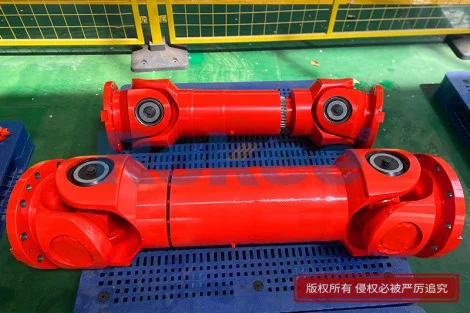
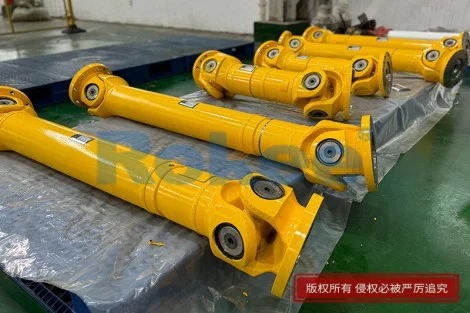
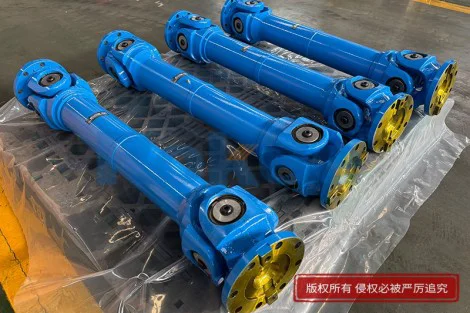
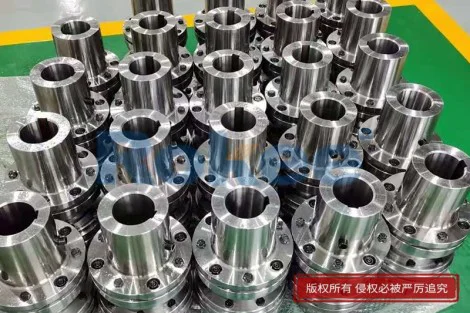
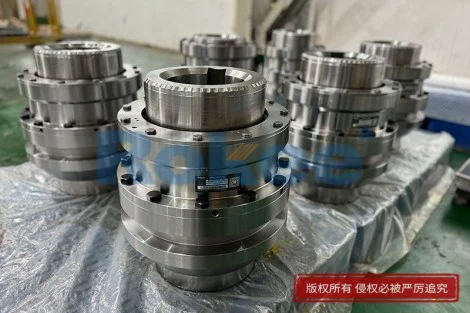
The basic structural design and working mechanism of teeth coupling lay a solid foundation for its excellent industrial transmission performance. As a movable rigid transmission component, teeth coupling mainly relies on the precise meshing of internal and external gear teeth to realize torque and rotational motion transmission between driving shafts and driven shafts. The overall structure is composed of inner gear ring, outer gear hub and sealing and lubricating components, featuring compact layout and high structural integration. This unique structural form enables the teeth coupling to occupy extremely limited axial and radial installation space while bearing large torque loads, which perfectly adapts to the compact mechanical layout of modern polyurethane sandwich panel production lines. The production line equipment integrates multiple functional modules in a limited space, and the internal transmission structure is densely arranged, leaving little redundant space for the installation and operation of transmission components. The small-size and high-load characteristics of teeth coupling just solve the space limitation problem of production line equipment, avoiding the structural interference and space waste caused by oversized transmission components, and realizing efficient matching with the integrated mechanical structure of panel production equipment.
The core working principle of teeth coupling is based on positive gear meshing transmission, which fundamentally avoids the power loss and transmission slippage problems existing in friction-based transmission couplings. In the operating process of polyurethane sandwich panel production line, the driving equipment drives the outer gear hub to rotate, and the meshing action between outer gear teeth and inner gear ring converts the rotational power of the driving end into the stable operating power of the driven end, realizing synchronous operation of each transmission shaft and functional module. Different from flexible couplings that rely on elastic deformation for power transmission, the gear meshing transmission mode of teeth coupling has extremely high transmission rigidity and power transmission efficiency, which can ensure almost lossless transmission of torque and rotational speed. For polyurethane sandwich panel production, the continuous and stable transmission of power is the key to ensure uniform foaming density, consistent plate thickness and flat composite surface of sandwich panels. Slight power fluctuation or transmission speed deviation in the production process will lead to uneven material extrusion, inconsistent foaming reaction speed and deviation in plate forming size, resulting in unqualified product quality. The high-precision and low-loss transmission characteristics of teeth coupling effectively eliminate such production quality risks, maintaining the long-term stability of equipment operating parameters and ensuring the uniformity and consistency of batch-produced polyurethane sandwich panels.
Excellent axis deviation compensation performance is another key advantage of teeth coupling adapting to polyurethane sandwich panel production line working conditions. In the long-term continuous operation of panel production equipment, affected by mechanical vibration, equipment thermal expansion, foundation slight settlement and component wear, the connecting shafts of various functional modules are prone to produce certain axial, radial and angular deviations. Ordinary rigid couplings cannot adapt to such shaft displacement changes, which will cause additional mechanical stress on the transmission system, aggravate component wear, and even lead to equipment vibration, noise and intermittent operation failure. In contrast, the tooth profile gap design of teeth coupling enables relative sliding and adaptive adjustment between meshing tooth surfaces during operation, which can automatically compensate for various slight shaft deviations generated in the operation of production line equipment. This adaptive compensation function does not affect the accuracy and stability of power transmission, but also effectively releases the additional mechanical stress of the transmission system, reduces the operating load of bearings, shafts and other matching components, and greatly improves the overall operational stability and service life of the production line equipment.
Polyurethane sandwich panel production belongs to long-cycle continuous industrial production, and the equipment needs to maintain uninterrupted operation for a long time, which puts forward extremely high requirements on the load resistance, fatigue resistance and operational reliability of transmission components. Teeth coupling has outstanding heavy-load resistance and fatigue resistance due to its reasonable gear force-bearing structure and high-strength integral molding process. The gear tooth profile is precisely processed with smooth surface and uniform stress distribution, which can disperse the instantaneous impact load and continuous alternating load generated during equipment operation. In the processes of raw material feeding, high-pressure foaming, heavy-pressure composite molding and finished product cutting of polyurethane sandwich panel production, the equipment will generate periodic impact load and variable load changes. Traditional elastic couplings are prone to elastic fatigue and deformation failure under long-term alternating load, while flange couplings are easy to loose connection and produce transmission gap under impact vibration. Teeth coupling can maintain stable meshing state and accurate power transmission under long-term heavy load and frequent impact working conditions, without deformation, failure or transmission failure, ensuring the continuous and uninterrupted operation of the automated production line.
Good sealing performance and lubrication retention capability make teeth coupling highly adaptable to the on-site production environment of polyurethane sandwich panels. The production site of polyurethane sandwich panels will inevitably produce fine dust, foam debris and tiny material particles in the processes of raw material mixing, foaming and plate cutting. These impurities are easy to enter the interior of transmission components, causing tooth surface wear, clamping stagnation and transmission jitter, and affecting the operating accuracy of equipment. Teeth coupling is equipped with professional sealing and lubricating structure, which can form a closed lubrication space inside the coupling. On the one hand, it can store lubricating media stably, ensure continuous and effective lubrication of meshing tooth surfaces, reduce friction and wear between gear teeth, and lower equipment operating noise and heat generation. On the other hand, the reliable sealing structure can effectively isolate external dust, debris and humid air, prevent external impurities from invading the meshing area, and avoid corrosion, abrasion and clamping stagnation failure of internal transmission structures. This excellent environmental adaptability enables teeth coupling to maintain stable working performance in the complex and slightly harsh production environment of polyurethane sandwich panels, reducing the failure rate of transmission components and lowering the frequency of equipment shutdown maintenance.
In terms of equipment operation and maintenance cost control, teeth coupling also has obvious comprehensive advantages over other types of couplings. The structural design of teeth coupling is simple and reasonable, with fewer overall components and strong structural stability, which is not easy to produce structural damage and performance attenuation in long-term operation. Its core wear parts are meshing gear teeth, and the regular maintenance only needs to check the lubrication state and supplement lubricating media regularly, without frequent replacement of parts and complex disassembly and debugging work. For polyurethane sandwich panel production lines that pursue high production efficiency and low operating cost, the low maintenance characteristics of teeth coupling can effectively reduce equipment downtime caused by transmission component failure, improve the overall operating rate of the production line, and reduce the manual maintenance cost and component replacement cost of enterprises. In addition, the long service life of teeth coupling further optimizes the long-term operating cost of production equipment, creating higher economic benefits for continuous industrial production.
The matching flexibility of teeth coupling makes it suitable for different functional units of polyurethane sandwich panel production lines. The production line includes low-speed heavy-load modules such as pressing and composite molding, as well as medium and high-speed stable operation modules such as material conveying and finished product cutting. Teeth coupling can adapt to different speed and load working conditions through optimized tooth profile design and structural parameter matching, realizing accurate power transmission for each functional module. In the low-speed heavy-load working state, its large torque bearing capacity ensures sufficient power output of the pressing and composite mechanism, ensuring the firm composite bonding of sandwich panel core material and surface material; in the medium and high-speed operation state, its high-precision synchronous transmission performance ensures the stable operation of the conveying system and the accurate cutting of finished plates, avoiding dimensional errors caused by transmission speed fluctuation. This wide working condition adaptability enables teeth coupling to become a universal special transmission component for the whole polyurethane sandwich panel production line, realizing unified and standardized configuration of equipment transmission parts.
In the actual industrial application of polyurethane sandwich panel production, the application effect of teeth coupling has fully verified its superior performance. Production line equipment equipped with teeth coupling shows more stable operating state, smaller equipment vibration and noise, and more consistent product forming quality in long-term continuous production. The failure rate of the transmission system is significantly reduced, the equipment maintenance cycle is effectively prolonged, and the overall production efficiency is steadily improved. Compared with the production line using traditional transmission couplings, the production line equipped with teeth coupling has fewer product quality problems such as uneven plate thickness, unsmooth plate surface and inconsistent core material density caused by unstable power transmission, and the product qualification rate is significantly increased. At the same time, the stable operation of the transmission system also reduces the abnormal wear of other mechanical parts of the equipment, prolongs the overall service life of the production line equipment, and brings stable and long-term production benefits for enterprise production.
In conclusion, teeth coupling integrates compact structure, high transmission efficiency, strong load resistance, excellent axis deviation compensation ability, good environmental adaptability and low maintenance characteristics, which perfectly fits the continuous, high-precision and heavy-duty working characteristics of polyurethane sandwich panel production lines. Its unique gear meshing transmission mechanism makes up for the performance defects of traditional transmission components in industrial continuous production, and can fully meet the strict requirements of polyurethane sandwich panel production on transmission stability, accuracy and reliability. With the continuous upgrading of automated and intelligent polyurethane sandwich panel production equipment, the application value of teeth coupling in the field of panel production will be further highlighted, becoming the most suitable special transmission component for modern polyurethane sandwich panel production lines, and providing reliable core transmission guarantee for the high-quality and efficient production of sandwich panel products.