Efficient Cardan Driveshaft Helps Improve The Capacity Of Insulation Sandwich Panel Production Machine
In the modern industrial production landscape, the demand for insulation sandwich panels continues to grow steadily, driven by the global emphasis on energy conservation, environmental protection, and the rapid development of the construction and cold chain logistics industries. These panels, known for their excellent thermal insulation, sound insulation, and structural strength, have become indispensable materials in various fields, from industrial warehouses and commercial buildings to residential constructions and cold storage facilities. As the market demand expands, manufacturers of insulation sandwich panels are facing increasing pressure to improve production efficiency, reduce downtime, and ensure consistent product quality. Among the numerous components that make up an insulation sandwich panel production machine, the cardan driveshaft stands out as a critical element that directly impacts the machine’s operational efficiency, stability, and overall production capacity. An efficient cardan driveshaft not only ensures the smooth transmission of power but also addresses many of the challenges faced by traditional transmission systems, thereby significantly enhancing the performance and productivity of insulation sandwich panel production machines.
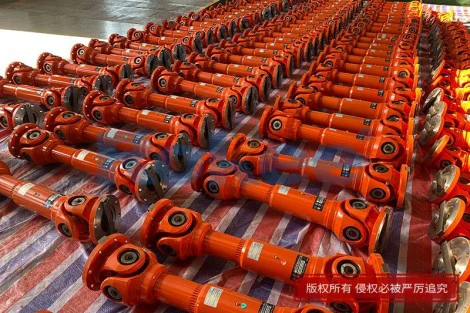
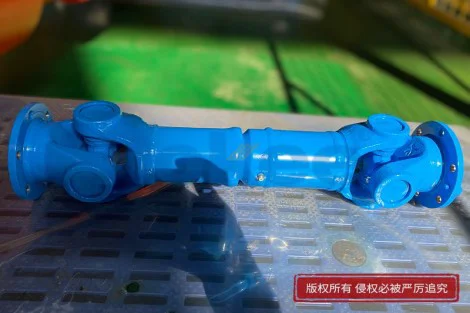
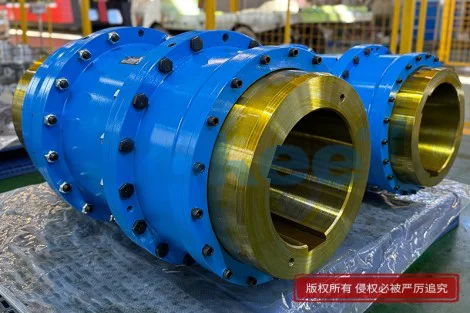
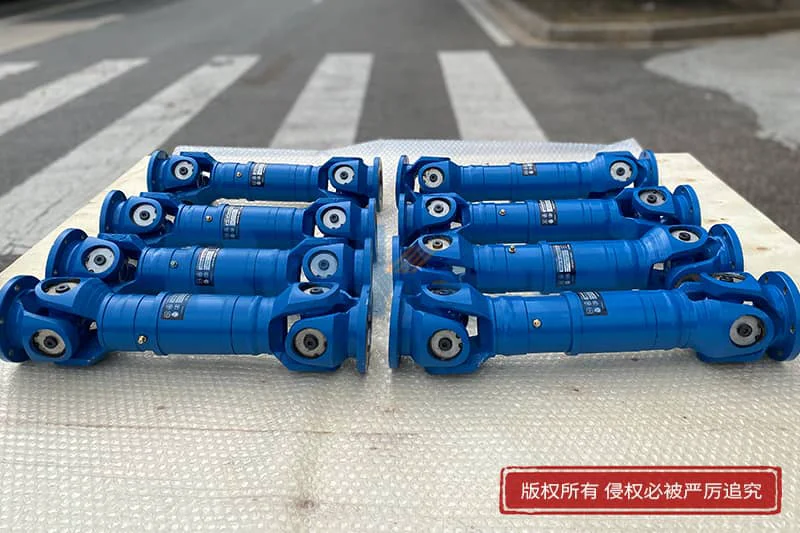
To understand how an efficient cardan driveshaft improves the capacity of insulation sandwich panel production machines, it is first necessary to grasp the basic working principle of both the cardan driveshaft and the insulation sandwich panel production process. A cardan driveshaft, also known as a universal joint shaft, is a mechanical component designed to transmit torque between two shafts that are not perfectly aligned. Unlike rigid transmission shafts that require precise alignment to function properly, the cardan driveshaft can accommodate angular misalignment, radial displacement, and axial movement, making it ideal for complex industrial equipment where perfect alignment is difficult to achieve or maintain. The core structure of a cardan driveshaft typically includes universal joints at both ends, a shaft body, and connection flanges or yokes, which work together to ensure smooth and reliable power transmission even under demanding operating conditions. The universal joints, often composed of cross shafts and needle bearings, allow the driveshaft to bend at various angles while transferring rotational power, reducing stress on connected components and minimizing wear and tear.
The insulation sandwich panel production process is a complex, continuous operation that involves multiple stages, including uncoiling of surface materials, forming, glue coating, core material feeding, composite pressing, cutting, and stacking. Each of these stages relies on the seamless transmission of power from the main motor to the respective components, such as the uncoiling rollers, forming machines, conveyor belts, and cutting tools. Any disruption in power transmission, such as vibration, misalignment, or power loss, can lead to production delays, inconsistent product quality, and increased downtime. Traditional transmission systems, such as rigid shafts or belt drives, often struggle to meet the demands of this continuous production process. Rigid shafts require strict alignment, which is difficult to maintain over long periods due to machine vibration, thermal expansion, and mechanical wear. Belt drives, on the other hand, are prone to slipping, stretching, and wear, leading to power loss and inconsistent speed transmission. These issues not only reduce production efficiency but also increase maintenance costs and the risk of equipment failure.
An efficient cardan driveshaft addresses these challenges by offering superior flexibility, reliability, and power transmission efficiency, thereby directly improving the capacity of insulation sandwich panel production machines. One of the key advantages of an efficient cardan driveshaft is its ability to accommodate angular misalignment between the driving and driven shafts. In insulation sandwich panel production machines, the main motor is often mounted at a different angle or position relative to the components it drives, such as the forming rollers or conveyor systems. This misalignment can occur due to the machine’s design, installation errors, or thermal expansion during operation. A high-quality cardan driveshaft can compensate for these misalignments, typically allowing an allowable angle between the two connected shafts ranging from 5° to 45° depending on the design, ensuring that power is transmitted smoothly without excessive stress or vibration. This flexibility eliminates the need for strict alignment, reducing installation time and maintenance efforts, and allowing for more versatile machine designs that can adapt to different production requirements.
Another critical benefit of an efficient cardan driveshaft is its ability to transmit high torque with minimal power loss. Insulation sandwich panel production machines require significant torque to drive heavy components, such as the forming rollers that shape the surface metal sheets and the pressing systems that bond the core material to the surface layers. A poorly designed or inefficient driveshaft can lose a significant amount of power during transmission, leading to reduced machine performance and lower production capacity. Efficient cardan driveshafts are engineered using high-strength materials, such as heat-treated alloy steel, which ensures structural integrity and enables them to handle high torque loads without deformation or failure. The precise machining of the universal joints and shaft body minimizes friction, further reducing power loss and ensuring that the maximum amount of power from the motor is transferred to the working components. This efficient power transmission allows the machine to operate at higher speeds while maintaining stability, directly increasing the production rate of insulation sandwich panels.
Vibration reduction is another key factor through which an efficient cardan driveshaft improves the capacity of insulation sandwich panel production machines. Vibration is a common issue in industrial machinery, especially in continuous production lines, and can have a detrimental impact on both machine performance and product quality. Excessive vibration can cause wear and tear on machine components, leading to frequent breakdowns and increased downtime. It can also result in inconsistent product dimensions, uneven glue application, and poor bonding between the core material and surface layers, leading to rejected products and increased material waste. Efficient cardan driveshafts are designed with balanced shaft bodies and precision universal joints, which minimize vibration during operation. The use of high-quality bearings and lubrication systems further reduces friction and vibration, ensuring smooth and stable operation. By reducing vibration, the cardan driveshaft extends the service life of machine components, reduces maintenance frequency, and improves product quality, all of which contribute to higher production capacity.
The durability and low maintenance requirements of efficient cardan driveshafts also play a crucial role in improving the capacity of insulation sandwich panel production machines. In industrial production environments, downtime due to maintenance or component failure can significantly reduce production capacity and increase costs. Traditional transmission systems, such as belt drives, require frequent replacement of worn belts and pulleys, while rigid shafts may need regular alignment and repair. Efficient cardan driveshafts, however, are designed to withstand harsh operating conditions, including high loads, temperature fluctuations, and exposure to dust and debris. The use of high-strength materials and protective coatings enhances their resistance to corrosion, fatigue, and wear, extending their service life. Additionally, modern cardan driveshafts often feature low-maintenance designs, such as sealed universal joints and self-lubricating bearings, which reduce the need for frequent lubrication and inspection. This reduces maintenance time and costs, ensuring that the production machine operates continuously for longer periods, thereby increasing overall production capacity.
The adaptability of efficient cardan driveshafts to different production requirements also contributes to improved capacity. Insulation sandwich panels come in various sizes, thicknesses, and configurations, requiring the production machine to be flexible and adjustable. An efficient cardan driveshaft can be customized to meet specific torque, speed, and alignment requirements, making it suitable for different types of insulation sandwich panel production machines. For example, in machines producing thick, heavy panels, the cardan driveshaft can be designed to handle higher torque loads, while in machines producing thin, lightweight panels, it can be optimized for higher speeds. This customization allows manufacturers to adapt their production lines to changing market demands, producing a wider range of products without significant modifications to the machine. Furthermore, the modular design of modern cardan driveshafts facilitates easy replacement of worn components, reducing downtime and ensuring that the machine can quickly resume operation in the event of a component failure.
In addition to these direct benefits, an efficient cardan driveshaft also contributes to energy efficiency, which indirectly improves the capacity of insulation sandwich panel production machines. Energy efficiency is a critical consideration in modern industrial production, as it reduces operational costs and minimizes environmental impact. Efficient cardan driveshafts reduce power loss during transmission, ensuring that more of the energy consumed by the motor is used to drive the machine’s working components. This not only reduces energy consumption but also allows the machine to operate at higher efficiency, further increasing production capacity. For example, a cardan driveshaft with minimal power loss can enable the motor to drive the forming rollers and conveyor systems at a higher speed without increasing energy consumption, resulting in a higher production rate of insulation sandwich panels.
To fully leverage the benefits of an efficient cardan driveshaft, it is important to consider factors such as material selection, manufacturing precision, and proper maintenance. The material used in the cardan driveshaft directly impacts its strength, durability, and performance. High-strength alloy steel is commonly used due to its excellent tensile strength, fatigue resistance, and ability to withstand high temperatures. Precision machining is also essential to ensure that the universal joints, shaft body, and connection components are properly aligned and fitted, minimizing friction and vibration. Additionally, proper lubrication and regular inspection are necessary to maintain the performance of the cardan driveshaft. Regular lubrication of the universal joints and bearings reduces friction and wear, while periodic inspection helps identify potential issues, such as worn bearings or misalignment, before they lead to equipment failure.
The impact of an efficient cardan driveshaft on the capacity of insulation sandwich panel production machines is further evident in real-world applications. Many manufacturers that have upgraded their production machines with efficient cardan driveshafts have reported significant improvements in production efficiency. For example, a manufacturer producing rock wool insulation sandwich panels experienced a 20% increase in production capacity after replacing traditional belt drives with efficient cardan driveshafts. The reduction in vibration and downtime, combined with improved power transmission efficiency, allowed the machine to operate continuously for longer periods, producing more panels per hour. Another manufacturer producing polyurethane insulation sandwich panels reported a 15% reduction in maintenance costs and a 10% increase in product quality after upgrading to efficient cardan driveshafts, resulting in higher overall production capacity and profitability.
As the demand for insulation sandwich panels continues to grow, the role of efficient cardan driveshafts in improving production capacity will become even more important. Manufacturers are increasingly recognizing the value of investing in high-quality cardan driveshafts to enhance the performance and reliability of their production machines. With ongoing technological advancements, cardan driveshafts are becoming more efficient, durable, and adaptable, further contributing to the improvement of insulation sandwich panel production capacity. For example, the development of lightweight yet high-strength materials has led to the creation of cardan driveshafts that are both more efficient and easier to install, while advanced balancing techniques have further reduced vibration and improved power transmission efficiency.
In conclusion, an efficient cardan driveshaft is a critical component that plays a vital role in improving the capacity of insulation sandwich panel production machines. Its ability to accommodate angular misalignment, transmit high torque with minimal power loss, reduce vibration, and offer durability and low maintenance requirements directly addresses the challenges faced by traditional transmission systems. By enhancing power transmission efficiency, reducing downtime, improving product quality, and adapting to different production requirements, an efficient cardan driveshaft significantly increases the production capacity of insulation sandwich panel production machines. As the insulation sandwich panel industry continues to evolve, the adoption of efficient cardan driveshafts will be essential for manufacturers to remain competitive, meet growing market demand, and achieve sustainable production.