Cardan Driveshaft And Sandwich Panel Production Machine Combination To Suitable
In the modern industrial landscape, the integration of mechanical components and production equipment has become a key driver of efficiency, reliability, and adaptability. Among the various combinations that have emerged, the pairing of cardan driveshafts with sandwich panel production machines stands out as a particularly effective synergy, addressing the unique challenges of continuous, high-precision manufacturing in the construction materials sector. This combination is not merely a matter of attaching one component to another; it is a strategic integration that leverages the inherent strengths of each system to overcome operational limitations, enhance performance, and ensure consistent output quality. As the demand for sandwich panels continues to grow—fueled by the global shift toward green, modular, and prefabricated construction—the need for optimized production processes has never been more critical. The cardan driveshaft, with its exceptional ability to transmit power across misaligned components, and the sandwich panel production machine, with its requirement for precise, synchronized operation across multiple stages, form a partnership that addresses the evolving needs of manufacturers seeking to improve productivity while maintaining high standards.
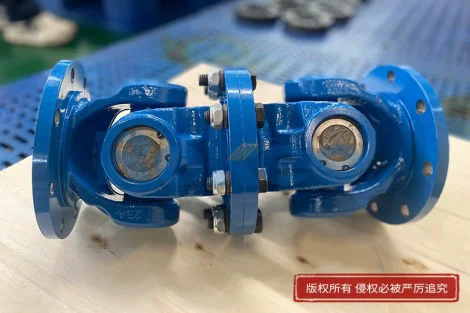
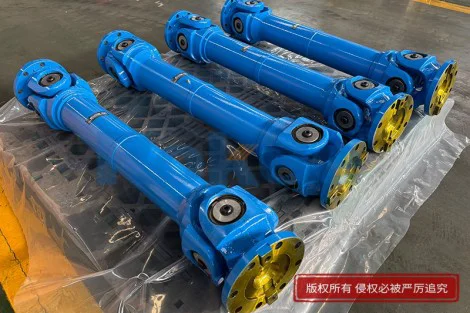
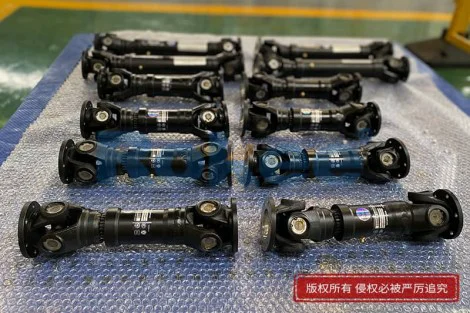
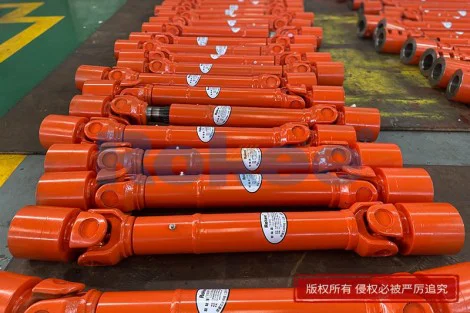
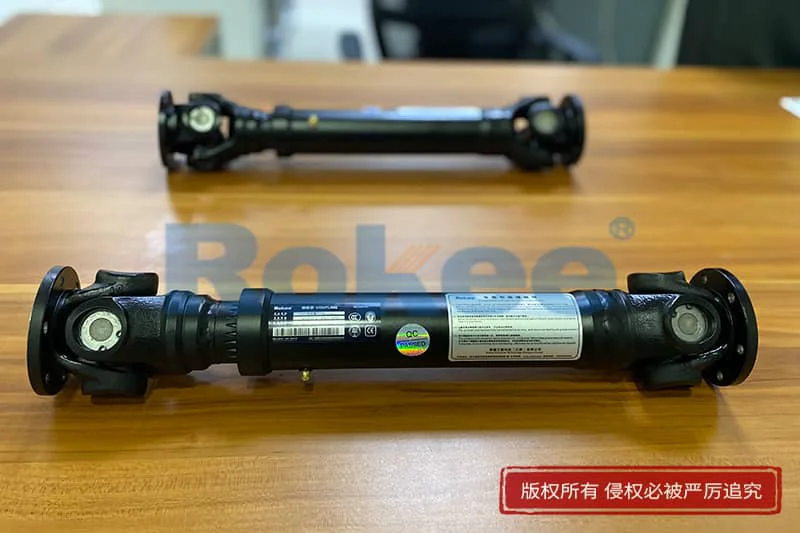
To understand the suitability of this combination, it is first essential to examine the core functions and operational characteristics of each component independently. A cardan driveshaft, also known as a universal joint shaft, is a mechanical component designed to transmit rotational power and torque between two shafts that are not perfectly aligned or are separated by a distance. Unlike rigid couplings, which demand precise coaxial alignment, the cardan driveshaft incorporates universal joints at both ends, often with a splined section in the middle to compensate for length variations. This design allows it to accommodate angular, radial, and axial misalignments—common in complex industrial machinery—while maintaining smooth, consistent power transmission. The universal joints, typically constructed with cross shafts or cage structures, enable the driveshaft to operate efficiently even when the driving and driven shafts are deflected by angles ranging from 5° to 45°, depending on the design. Additionally, cardan driveshafts are engineered to withstand high torque loads and harsh operating conditions, thanks to their robust construction using heat-treated alloy steels, advanced bearing systems, and specialized lubrication mechanisms. These features make them ideal for applications where reliability, flexibility, and durability are paramount, such as in heavy machinery, industrial production lines, and material handling systems.
On the other hand, sandwich panel production machines are complex, automated systems designed for the continuous manufacturing of composite panels consisting of two outer facing materials (such as color steel plates, aluminum sheets, or fiber cement boards) and a core material (including polyurethane foam, rock wool, or glass wool). These machines integrate multiple interconnected processes—from raw material feeding and unwinding to forming, foaming, lamination, curing, cutting, and stacking—into a seamless workflow. The efficiency and quality of a sandwich panel production line depend heavily on the synchronized operation of each subsystem, as any disruption or inconsistency in power transmission can lead to defects such as uneven panel thickness, poor adhesion between layers, or irregular cutting. Modern sandwich panel production machines operate at varying speeds, often adjustable based on the type of core material and desired panel specifications, and require stable power delivery to each component—including uncoiling systems, roll forming units, foaming machines, double-belt conveyors, and cutting mechanisms. The challenge lies in ensuring that power is transmitted accurately and smoothly across these components, many of which are not aligned on the same axis due to the layout constraints of the production process.
The compatibility between cardan driveshafts and sandwich panel production machines stems from their complementary strengths, addressing the specific operational challenges of panel manufacturing. One of the primary advantages of integrating cardan driveshafts into sandwich panel production lines is their ability to compensate for misalignments between the various subsystems. In a typical production line, the uncoiling system, roll forming unit, and foaming machine are often positioned at different angles or heights to accommodate the workflow, resulting in misaligned driving and driven shafts. A rigid coupling would struggle to transmit power efficiently in such scenarios, leading to vibration, premature wear, and inconsistent performance. The cardan driveshaft, however, can easily bridge these misalignments, ensuring that torque is transmitted evenly without compromising speed or precision. This flexibility not only simplifies the layout design of the production line but also reduces the need for expensive and time-consuming alignment adjustments during installation and maintenance.
Another key benefit of this combination is the cardan driveshaft’s ability to handle dynamic loads and fluctuations in torque, which are common in sandwich panel production. The foaming and lamination processes, for example, require varying levels of power depending on the viscosity of the core material and the pressure needed to bond the layers together. Similarly, the cutting mechanism may experience sudden spikes in torque when cutting through thicker panels or harder core materials. Cardan driveshafts are designed to absorb these fluctuations, maintaining stable power transmission even under dynamic conditions. Their robust construction—using high-grade, heat-treated steels—ensures that they can withstand the high torque requirements of the production line without deformation or failure. This durability reduces downtime caused by component breakdowns, allowing for continuous, uninterrupted production—a critical factor in meeting the growing demand for sandwich panels in the construction industry.
Precision is another area where the combination of cardan driveshafts and sandwich panel production machine excels. Sandwich panels require strict adherence to thickness, density, and dimensional specifications to ensure their structural integrity and performance in applications such as building exteriors, roofs, cold storage facilities, and prefabricated homes. Even minor inconsistencies in the production process—such as uneven feeding of surface materials or irregular foaming—can result in defective panels that fail to meet industry standards. The cardan driveshaft contributes to precision by ensuring that each subsystem operates in perfect synchronization. By transmitting power smoothly and consistently, it helps maintain uniform speed across the uncoiling, forming, and conveyor systems, ensuring that the surface materials are fed correctly, the core material is evenly distributed, and the panels are cut to the exact specified length. The ability of the cardan driveshaft to minimize vibration is particularly important in this regard, as vibration can disrupt the foaming process, leading to uneven density in the core and poor adhesion between layers. By reducing vibration, the driveshaft helps maintain the stability of the production line, resulting in higher-quality panels with consistent properties.
The adaptability of cardan driveshafts also makes them well-suited for integration with sandwich panel production machines, which often need to accommodate a wide range of panel sizes, thicknesses, and material types. Manufacturers may switch between producing wall panels, roof panels, and cold storage panels, each requiring different production parameters and power requirements. Cardan driveshafts can be easily adjusted or customized to fit these changing needs, thanks to their modular design and ability to handle varying torque and speed combinations. For example, when switching from a thin wall panel to a thicker roof panel, the production line may require higher torque to drive the roll forming unit and foaming machine. The cardan driveshaft can accommodate this increase in torque without requiring major modifications, ensuring that the production line remains flexible and adaptable to market demands. Additionally, the modular design of modern cardan driveshafts allows for easy replacement of worn components, reducing maintenance costs and minimizing downtime.
In practical applications, the integration of cardan driveshafts into sandwich panel production lines has proven to deliver tangible benefits for manufacturers. For instance, in continuous production lines that operate 24 hours a day, the reliability of the cardan driveshaft ensures that the line can run without frequent interruptions, increasing overall productivity. The ability to compensate for misalignments also reduces wear on other components, such as bearings and gears, extending the lifespan of the entire production system and lowering maintenance costs. In regions where labor shortages are a challenge, the efficiency gains from this combination allow manufacturers to produce more panels with fewer operators, improving cost-effectiveness and competitiveness.
The environmental benefits of this combination should not be overlooked either. As the construction industry moves toward more sustainable practices, sandwich panels have gained popularity due to their energy efficiency, lightweight design, and recyclability. The cardan driveshaft contributes to this sustainability by improving the energy efficiency of the production line. By transmitting power more efficiently, it reduces energy waste, lowering the carbon footprint of the manufacturing process. Additionally, the durability of cardan driveshafts means that they have a longer service life, reducing the need for frequent replacements and the associated waste of materials. This aligns with the growing emphasis on circular economy principles in industrial manufacturing, where reducing waste and extending the lifespan of components are key goals.
To ensure the optimal performance of the cardan driveshaft and sandwich panel production machine combination, proper installation, maintenance, and alignment are essential. During installation, it is important to ensure that the driveshaft is correctly sized for the torque and speed requirements of the production line, and that the universal joints are properly lubricated to minimize friction and wear. Regular maintenance, including inspection of the driveshaft for signs of damage, replacement of worn bearings, and re-lubrication of universal joints, is critical to preventing breakdowns and ensuring long-term reliability. Additionally, periodic alignment checks can help identify and correct any misalignments that may develop over time, ensuring that the driveshaft continues to transmit power efficiently and smoothly.
As the sandwich panel industry continues to evolve, with advancements in materials, technology, and production methods, the role of cardan driveshafts in optimizing production processes will only become more important. The growing demand for customized panels, higher production speeds, and improved energy efficiency will drive the need for more flexible and reliable power transmission solutions. Cardan driveshafts, with their ability to adapt to changing conditions, handle dynamic loads, and maintain precision, are well-positioned to meet these evolving needs. Whether in small-scale production facilities or large, automated factories, the combination of cardan driveshafts and sandwich panel production machines offers a practical, efficient, and cost-effective solution for manufacturers seeking to stay competitive in a rapidly changing market.
In conclusion, the combination of cardan driveshafts and sandwich panel production machines is a highly suitable pairing that addresses the unique challenges of modern sandwich panel manufacturing. By leveraging the flexibility, durability, and precision of cardan driveshafts, manufacturers can enhance the efficiency, reliability, and quality of their production lines, while adapting to the changing demands of the construction industry. This integration not only improves productivity and reduces costs but also contributes to more sustainable manufacturing practices, aligning with global trends toward green and modular construction. As technology continues to advance, the synergy between these two components will likely be further optimized, leading to even greater efficiency gains and innovation in the production of sandwich panels. For manufacturers looking to improve their operations and stay ahead of the competition, the integration of cardan driveshafts into sandwich panel production machines is a strategic investment that delivers long-term value.