Cardan Driveshaft Transmission Helps Sandwich Panel Machines Run Stably
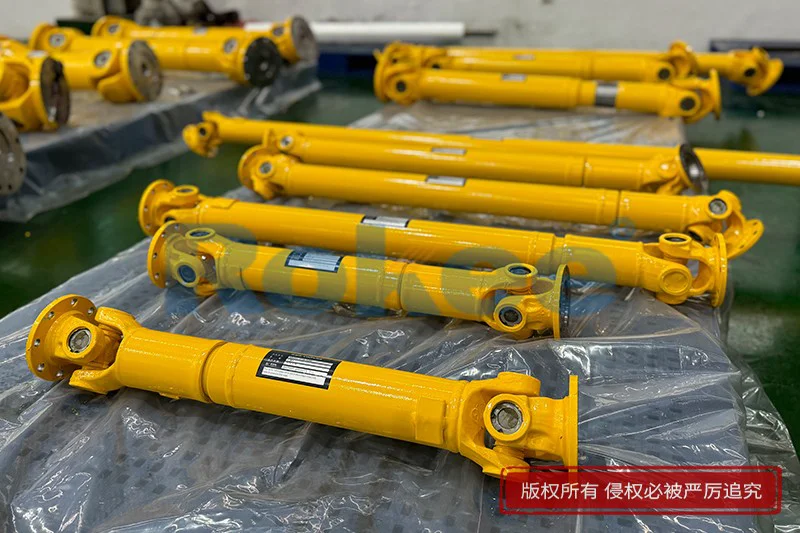
In the realm of modern industrial manufacturing, sandwich panel machines play an indispensable role in producing high-quality composite panels that are widely used in construction, refrigeration, and various other industries. These machines operate continuously for long hours, requiring precise coordination between multiple components to ensure consistent product quality and efficient production. Among the numerous mechanical parts that constitute a sandwich panel machine, the cardan driveshaft transmission system stands out as a core component that directly influences the stability, reliability, and performance of the entire equipment. Unlike rigid transmission systems that demand perfect alignment between driving and driven shafts, the cardan driveshaft transmission offers unparalleled flexibility and adaptability, making it an ideal choice for sandwich panel machines that often have complex structural layouts and varying operational requirements.
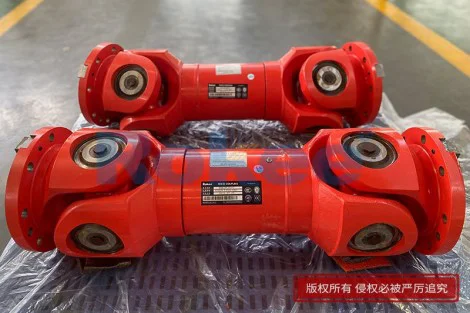
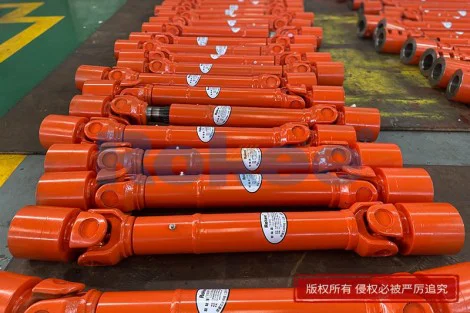
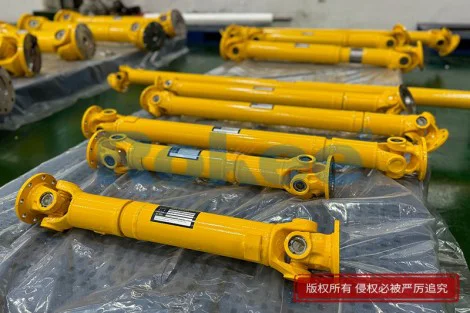
To understand how cardan driveshaft transmission contributes to the stable operation of sandwich panel machines, it is first necessary to grasp the basic working principle of cardan driveshafts and the operational characteristics of sandwich panel machines. A cardan driveshaft, also known as a universal joint driveshaft, is a mechanical device designed to transmit rotational motion and torque between two shafts that are not perfectly aligned—either at an angle, offset parallelly, or with axial displacement. Its core structure consists of universal joints (also called U-joints) at both ends and a shaft body, which work together to compensate for misalignments while maintaining continuous and smooth power transmission. The universal joint, a key component of the cardan driveshaft, typically comprises two shaft yokes positioned at right angles and a cross shaft that connects them, allowing the shafts to rotate freely within a certain angular range without disrupting torque transfer. This unique design enables the cardan driveshaft to adapt to the dynamic changes in the relative positions of machine components during operation, a feature that is particularly critical for sandwich panel machines.
Sandwich panel machines are complex automated systems that integrate multiple functional units, including uncoiling, roll forming, foaming, laminating, cutting, and stacking. Each of these units operates with specific speed and torque requirements, and they must work in perfect synchronization to ensure the production of high-quality sandwich panels. For instance, the uncoiling unit needs to feed metal coils at a steady rate, the roll forming unit must shape the metal sheets into the desired profile with consistent precision, the foaming unit requires uniform mixing and distribution of foam materials, and the cutting unit must make accurate, clean cuts without damaging the panel structure. Any disruption in the power transmission between these units—such as vibration, torque fluctuation, or misalignment—can lead to defects in the final product, such as uneven panel thickness, poor bonding between core and facing materials, or irregular cutting edges. This is where the cardan driveshaft transmission system excels: it provides a reliable, flexible link between the power source (usually an electric motor) and each functional unit, ensuring that power is transmitted smoothly and consistently, even when the shafts are not perfectly aligned.
One of the primary reasons why cardan driveshaft transmission is essential for the stable operation of sandwich panel machines is its ability to compensate for various types of misalignments. In practical industrial settings, it is nearly impossible to achieve perfect coaxial alignment between the motor and the driven components of a sandwich panel machine. Factors such as manufacturing tolerances, equipment installation errors, thermal expansion during operation, and structural deformation over time can all lead to angular, parallel, or axial misalignments between shafts. Rigid transmission systems, such as direct shaft couplings, are highly sensitive to these misalignments and can suffer from excessive wear, vibration, or even failure when misalignment occurs. In contrast, cardan driveshafts can easily accommodate angular misalignments of up to 45 degrees (depending on the design) and significant parallel or axial displacements, ensuring that power transmission remains smooth and efficient regardless of these deviations. This adaptability reduces the stress on other machine components, such as bearings and gears, thereby extending their service life and minimizing the risk of unexpected breakdowns.
Another key advantage of cardan driveshaft transmission is its ability to maintain constant torque and speed during operation, which is crucial for the consistent performance of sandwich panel machines. Sandwich panel production requires precise control over the speed and torque of each functional unit; even slight fluctuations can have a significant impact on product quality. For example, if the roll forming unit experiences sudden changes in speed, the metal sheets may be formed unevenly, leading to panels with inconsistent dimensions or weak structural integrity. Similarly, fluctuations in the torque supplied to the foaming unit can result in uneven foam density, which affects the insulation, strength, and durability of the final panel. Cardan driveshafts are designed to transmit torque uniformly, even when operating at varying angles or under dynamic loads. The universal joints minimize speed fluctuations by allowing the shafts to rotate at a constant rate, ensuring that each functional unit of the sandwich panel machine receives a steady supply of power. This stability in power transmission directly translates to consistent product quality, reducing the number of defective panels and improving overall production efficiency.
The robust construction of cardan driveshafts also contributes to the long-term stability of sandwich panel machines. Sandwich panel machines often operate in harsh industrial environments, exposed to dust, debris, temperature variations, and high mechanical loads. These conditions can take a toll on mechanical components, leading to premature wear and failure. Cardan driveshafts are typically manufactured using high-strength materials, such as heat-treated alloy steel, which provides excellent resistance to wear, corrosion, and fatigue. The universal joints are equipped with durable bearings—often needle roller bearings or sliding bearings—that are designed to withstand high loads and operate smoothly even in dirty or dusty conditions. Additionally, modern cardan driveshafts feature advanced sealing systems that prevent contamination by dust, moisture, and other debris, further extending their service life. This robustness ensures that the cardan driveshaft transmission system can operate continuously for long hours without requiring frequent maintenance, reducing downtime and improving the overall reliability of the sandwich panel machine.
Vibration control is another critical aspect of ensuring the stable operation of sandwich panel machines, and cardan driveshaft transmission plays a vital role in minimizing vibration. Excessive vibration in sandwich panel machines can cause a range of problems, including reduced product quality, increased wear on components, and even noise pollution in the workplace. Vibration often occurs when there is misalignment between shafts, unbalanced rotating components, or fluctuations in power transmission. Cardan driveshafts are designed to minimize vibration through their balanced structure and flexible universal joints. The cross shaft and yoke design of the universal joint helps to absorb and dampen vibrations, preventing them from being transmitted to other parts of the machine. Additionally, proper alignment of the cardan driveshaft—ideally keeping the two ends of a double U-joint driveshaft within 1 to 2 degrees of each other—further reduces vibration and extends the life of the universal joints. By minimizing vibration, the cardan driveshaft transmission system ensures that the sandwich panel machine operates smoothly, reducing the risk of component failure and improving the quality of the finished panels.
In practical applications, the cardan driveshaft transmission system is integrated into various key parts of sandwich panel machines, each time contributing to stable operation. For example, in the roll forming unit, the cardan driveshaft connects the motor to the roll forming rollers, transmitting torque evenly to ensure that the metal sheets are formed into the desired profile with consistent precision. The ability of the cardan driveshaft to compensate for misalignments between the motor and the rollers is particularly important here, as the rollers are often arranged in a complex configuration that makes perfect alignment difficult. In the foaming unit, the cardan driveshaft drives the mixing equipment, ensuring that the foam materials are mixed uniformly and distributed evenly between the facing sheets. This uniform mixing is essential for achieving consistent foam density, which directly affects the insulation and structural performance of the sandwich panels. In the cutting unit, the cardan driveshaft provides the necessary torque to the cutting blade, ensuring clean, accurate cuts at the desired length. The stability of the cardan driveshaft transmission ensures that the cutting blade operates at a constant speed, preventing jagged edges or uneven cuts that would compromise the quality of the panels.
Furthermore, the flexibility of cardan driveshaft transmission allows for greater design flexibility in sandwich panel machines. Manufacturers can design the machine with a more compact or complex layout, as the cardan driveshaft can transmit power between components that are not in a straight line. This flexibility enables the development of more efficient and versatile sandwich panel machines that can produce a wider range of panel types and sizes. For example, some sandwich panel machines are designed to produce both wall panels and roof panels, requiring different configurations of the functional units. The cardan driveshaft transmission system can easily adapt to these different configurations, ensuring that power is transmitted reliably to each unit regardless of its position. This adaptability also makes it easier to maintain and repair the machine, as components can be accessed more easily without disrupting the entire transmission system.
Despite the numerous advantages of cardan driveshaft transmission, proper maintenance is still essential to ensure its long-term performance and the stable operation of sandwich panel machines. Regular inspection and lubrication of the universal joints and bearings are critical, as inadequate lubrication can lead to increased friction, wear, and vibration. Industry reports indicate that around 40% of all shaft problems stem from poor or absent lubrication practices, so establishing a regular lubrication schedule is essential. Additionally, checking for signs of wear or damage—such as excessive vibration, unusual noises (like clunking or squeaking), or visible wear on the universal joints—can help identify potential issues before they escalate into major failures. For example, a worn universal joint may cause the cardan driveshaft to vibrate excessively, which can damage other components of the sandwich panel machine. By addressing these issues promptly, operators can ensure that the cardan driveshaft transmission system continues to operate smoothly, maintaining the stability and efficiency of the machine.
In conclusion, the cardan driveshaft transmission system is an indispensable component that plays a pivotal role in ensuring the stable operation of sandwich panel machines. Its unique ability to compensate for misalignments, maintain constant torque and speed, minimize vibration, and withstand harsh industrial conditions makes it ideal for the complex operational requirements of sandwich panel production. By providing a reliable, flexible link between the power source and the various functional units of the machine, the cardan driveshaft transmission ensures consistent product quality, reduces downtime, and extends the service life of the equipment. As the demand for high-quality sandwich panels continues to grow, the importance of cardan driveshaft transmission in optimizing the performance of sandwich panel machines will only increase. Manufacturers and operators who recognize the value of this critical component and invest in proper maintenance will benefit from improved efficiency, reduced costs, and a competitive edge in the industry. The cardan driveshaft transmission is not just a mechanical part; it is a key enabler of stable, efficient, and high-quality sandwich panel production, supporting the growth and development of various industries that rely on these versatile composite panels.