High-precision Teeth Coupling Helps Polyurethane Sandwich Panel Production Line Improve Quality And Efficiency

Polyurethane sandwich panels have become indispensable lightweight thermal insulation and structural materials in modern construction, cold chain logistics, and industrial manufacturing, thanks to their excellent thermal insulation performance, high structural strength, and convenient installation characteristics. The overall performance of polyurethane sandwich panel production line directly determines the flatness, dimensional accuracy, bonding uniformity, and surface finish of finished panels, while the stability and precision of mechanical power transmission serve as the core foundation for standardized and high-efficiency production. In the continuous and high-load operation scenario of sandwich panel production lines, traditional transmission connection components often expose prominent defects such as unstable torque transmission, poor shaft deviation compensation ability, and easy vibration and noise during long-term operation, which easily cause inconsistent panel thickness, uneven foaming bonding, edge warping, and frequent equipment shutdown maintenance problems. High-precision teeth couplings, relying on their optimized gear meshing structure, efficient torque transmission mechanism and excellent adaptive operation performance, effectively solve the common pain points of traditional transmission systems in polyurethane sandwich panel production, comprehensively optimizing production stability, finished product quality and overall operational efficiency of the production line.
The production process of polyurethane sandwich panels is a continuous and integrated mechanical operation process, involving multiple links such as raw material feeding, continuous rolling, high-pressure foaming, composite pressing, constant-temperature curing, fixed-length cutting and finished product conveying. All functional links rely on coordinated power transmission between multiple sets of rotating shafts and transmission equipment, and the synchronization accuracy and operational stability of each transmission unit directly affect the final molding effect of the sandwich panels. In the rolling and composite pressing stage that determines the core dimensional accuracy of the panels, the production line requires the pressing rollers and conveying rollers to maintain constant rotating speed and stable torque output at all times. Slight jitter, speed fluctuation or asynchronous operation of the transmission shaft will lead to uneven extrusion force on the polyurethane foam layer and the metal surface layer, resulting in inconsistent thickness of local panels, weak bonding between the core material and the surface plate, and even foaming voids and delamination defects in severe cases. In the fixed-length cutting and finished product conveying links, unstable transmission will cause positioning deviation of the plates, resulting in irregular cutting edges and inconsistent overall dimensions of finished products, greatly reducing the qualified rate of products and increasing subsequent trimming and rework costs.
Most traditional transmission couplings used in early sandwich panel production lines adopt ordinary sleeve or flexible connection structures, which have simple structures but obvious functional limitations in high-precision and continuous industrial production scenarios. Such traditional components have low torque transmission accuracy and poor rigidity, and are prone to elastic deformation and rotation gap under long-term high-load operation, resulting in continuous speed fluctuation of the production line transmission shaft. Meanwhile, their ability to compensate for radial, axial and angular deviations of the shaft system is extremely limited. In the long-term operation of the production line, mechanical wear, equipment foundation slight settlement and thermal expansion and contraction of operating parts will inevitably cause tiny misalignment between the driving shaft and the driven shaft. Traditional couplings cannot adapt to such subtle deviations, which will generate continuous mechanical vibration and alternating load during operation. On the one hand, this vibration will be directly transmitted to the pressing and conveying system of the production line, destroying the stable molding environment of polyurethane sandwich panels and inducing various quality defects of finished products. On the other hand, long-term alternating mechanical load will accelerate the wear of transmission parts, shorten the service life of equipment accessories, and lead to frequent equipment failure and shutdown maintenance, seriously restricting the continuous production efficiency of the production line.
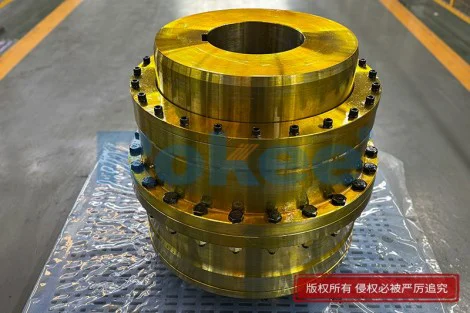
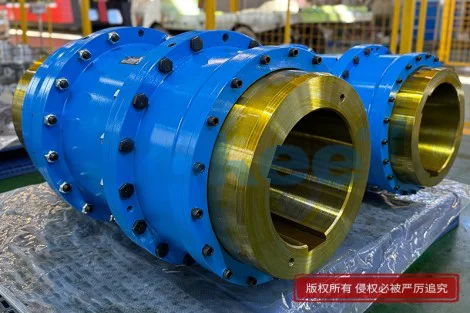
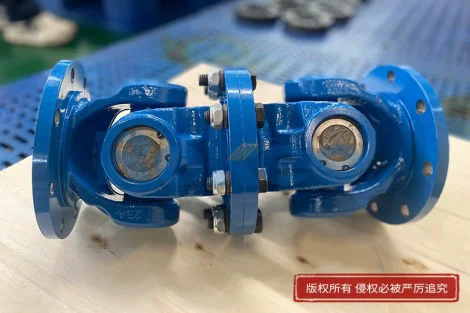
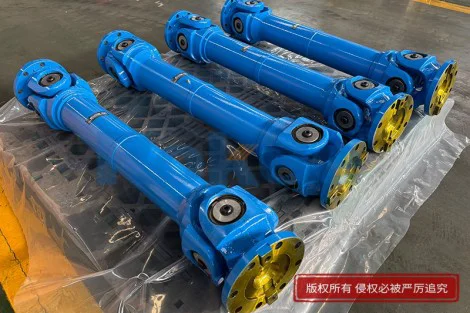
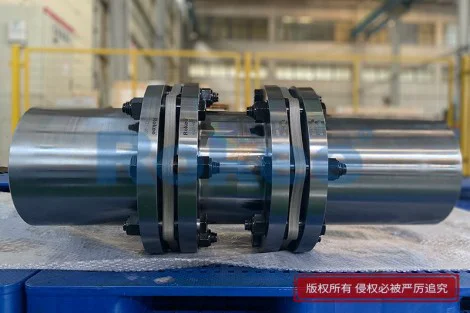
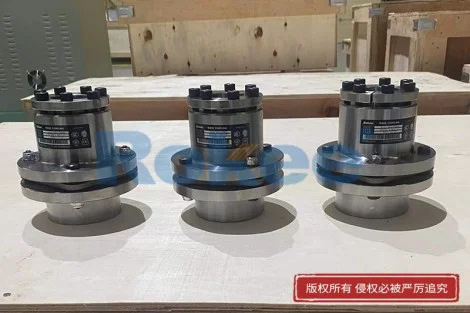
High-precision teeth couplings abandon the defective structural design of traditional transmission components, and take precise internal and external gear meshing as the core transmission principle, forming a highly efficient and stable power transmission system suitable for continuous industrial production. The core structure of the coupling consists of an external gear hub fixed on the driving shaft and an internal gear sleeve matched with the driven shaft. Through the precise meshing of modified tooth profiles, it realizes zero-clearance torque transmission and synchronous rotation between the shaft systems. Different from ordinary straight-tooth structures, the optimized crowned tooth profile design enables the gear teeth to form uniform surface contact during meshing, avoiding local stress concentration and edge contact wear. This structural feature allows the coupling to maintain stable and accurate torque output under long-term high-load and continuous operation, completely eliminating the rotation gap and speed fluctuation common in traditional transmission structures, and providing a constant and reliable power guarantee for the stable operation of each functional unit of the polyurethane sandwich panel production line.
The excellent multi-dimensional deviation compensation performance is another key advantage of high-precision teeth couplings to improve the production quality of sandwich panels. In the actual operation of polyurethane sandwich panel production lines, the shaft misalignment problem caused by mechanical vibration, equipment aging and temperature changes is unavoidable. High-precision teeth couplings rely on the reasonable matching clearance between internal and external gear teeth and the flexible adaptive characteristics of the tooth profile structure, which can automatically compensate for tiny radial displacement, axial displacement and angular deflection between the driving and driven shafts within the allowable range. This adaptive adjustment function avoids the rigid friction and stress accumulation caused by shaft misalignment, effectively suppresses mechanical vibration and operating noise during the operation of the production line transmission system. The stable and low-vibration operating environment ensures that the extrusion pressure, conveying speed and molding state of the sandwich panel remain consistent in the whole production process, fundamentally reducing the quality problems such as uneven panel thickness, inconsistent bonding strength and surface wrinkles caused by transmission vibration.
The improvement of transmission accuracy and operational stability brought by high-precision teeth couplings has realized qualitative optimization in the finished product quality of polyurethane sandwich panels. In the foaming and composite pressing stage, the stable torque and constant-speed operation of the pressing roller system ensure that the polyurethane raw materials are evenly foamed and fully compounded under uniform pressure. The close fit between the core foam layer and the metal surface layer is more sufficient, effectively eliminating internal voids and delamination phenomena, and significantly improving the overall bonding firmness and structural uniformity of the sandwich panels. In the plate conveying and fixed-length cutting process, the synchronous and stable operation of the transmission system avoids positioning deviation and jitter displacement of the plates, making the cutting size of finished products more accurate and the edge finish smoother. The overall dimensional tolerance of the produced sandwich panels is effectively controlled within a tiny range, and the consistency of batch products is greatly improved, which meets the high-standard application requirements of construction engineering, cold chain warehouses and industrial purification workshops for sandwich panel quality.
While improving product quality, high-precision teeth couplings also comprehensively boost the operational efficiency and economic benefits of polyurethane sandwich panel production lines. Traditional transmission couplings are prone to wear and failure after long-term operation, requiring frequent shutdown inspection, accessory replacement and equipment debugging, which interrupts the continuous production rhythm and leads to low equipment operation rate. The high-precision tooth structure has high mechanical rigidity and wear resistance, and the uniform stress distribution of the tooth surface avoids rapid local wear. The closed structural design can effectively isolate external dust, foam debris and humid air in the production environment, prevent the internal meshing structure from being polluted and corroded, and maintain long-term stable transmission performance. This greatly reduces the frequency of equipment failure and routine maintenance workload, avoids production shutdown losses caused by accessory failure, and significantly improves the continuous operation rate and production capacity of the production line.
In addition, the efficient torque transmission efficiency of high-precision teeth couplings reduces power loss in the mechanical transmission process. Traditional flexible couplings have large elastic deformation during operation, which will cause partial power loss and increase equipment energy consumption. The precise meshing structure of teeth couplings realizes almost lossless power transmission, maximizes the utilization rate of equipment power, and reduces the comprehensive energy consumption of unit product production. For large-scale continuous sandwich panel production lines, this efficient energy-saving operation mode can effectively reduce long-term production costs. At the same time, the stable transmission state avoids product quality defects caused by abnormal equipment operation, reduces the rejection rate and rework rate of finished products, saves raw material waste and labor costs caused by defective products, and further improves the overall production efficiency and economic benefits of the production line.
In the actual industrial production of polyurethane sandwich panels, the long-term stable operation of high-precision teeth couplings also brings positive optimization effects on production process iteration and equipment service life. The low-vibration and low-stress operating environment reduces the impact of alternating mechanical load on the main equipment of the production line, slows down the aging and wear of key components such as rollers, bearings and transmission shafts, and prolongs the overall service life of production line equipment. The stable and accurate transmission foundation also creates conditions for the fine adjustment and intelligent upgrading of the production process. Production enterprises can carry out more precise parameter optimization for foaming density, pressing pressure and conveying speed according to stable equipment operation data, further improving the comprehensive performance of finished sandwich panels and enhancing the market competitiveness of products.
With the continuous upgrading of the polyurethane sandwich panel industry towards high precision, high efficiency and low energy consumption, the requirements for the operational stability and transmission accuracy of production line equipment are becoming increasingly stringent. Traditional transmission connection structures can no longer meet the batch standardized production needs of high-quality sandwich panels. As a high-performance transmission component, high-precision teeth couplings perfectly adapt to the continuous and high-precision production characteristics of polyurethane sandwich panel production lines by virtue of their precise meshing transmission, multi-dimensional deviation compensation, low vibration operation and long service life advantages. It not only solves many quality and efficiency bottlenecks existing in traditional production modes, but also provides a solid mechanical guarantee for the high-quality and high-efficiency batch production of polyurethane sandwich panels. In the future, with the continuous optimization of coupling structure and processing technology, high-precision teeth couplings will play a more important role in the intelligent and refined upgrading of sandwich panel production equipment, promoting the overall development level of the polyurethane building materials industry to continue to improve.