Detailed Model Parameters Of Universal Coupling For PUR Sandwich Panel Manufacturing Machinery

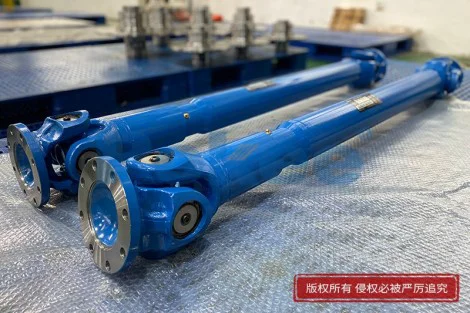
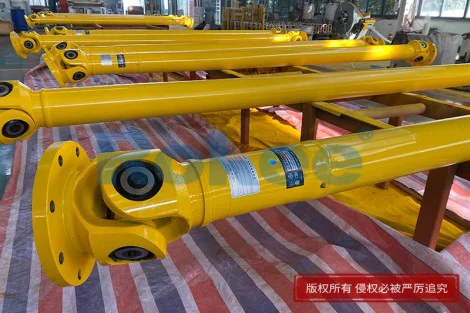
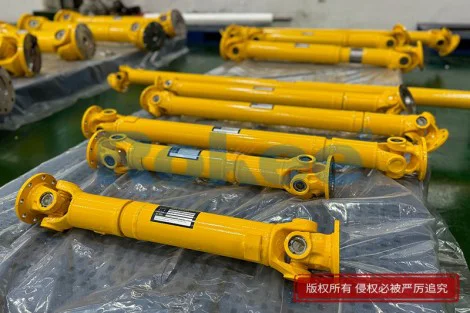
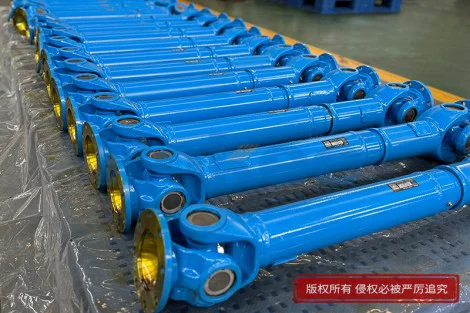
The operation of PUR sandwich panel manufacturing machinery relies heavily on stable and continuous power transmission across multiple interconnected mechanical sections, where universal couplings serve as indispensable core transmission components that bridge driving shafts and driven shafts under complex operating conditions with varying spatial positions and dynamic load fluctuations. Unlike general industrial universal couplings used in conventional light-duty mechanical equipment, those configured for PUR sandwich panel production lines need to match the continuous cyclic working mode, alternating load characteristics, and long-duration stable operation requirements of panel forming, foaming curing, roll forming, continuous conveying, and fixed-length cutting processes, making their detailed model parameters directly determine the overall transmission efficiency, operational stability, service life of the entire production machinery, and the surface flatness and dimensional accuracy of finished PUR sandwich panels. Every dimensional parameter, material mechanical performance parameter, load bearing parameter, motion adaptation parameter, and structural matching parameter of the universal coupling is precisely calibrated and optimized according to the structural layout and working rhythm of PUR sandwich panel manufacturing machinery, avoiding transmission vibration, shaft position deviation interference, torque transmission loss, and component fatigue wear that easily occur during long-term high-frequency continuous production, thus ensuring the whole production line maintains consistent operating status from raw material feeding to finished product stacking without intermittent shutdowns caused by transmission component failure.
The basic dimensional series parameters of universal couplings for PUR sandwich panel manufacturing machinery form the foundational matching basis for mechanical assembly and spatial installation adaptation, covering overall assembly outer diameter, effective transmission section length, telescopic stroke range, yoke structural size, cross shaft assembly outer dimension, and shaft hole matching aperture tolerance, all of which are designed to fit the compact internal structural layout of modern continuous PUR sandwich panel production lines. The overall outer diameter parameter is strictly controlled to adapt to the narrow installation space between the main drive motor reducer and the roll forming host machine, as well as between the foaming conveying drive shaft and the auxiliary tensioning roller shaft system, ensuring the coupling can be installed and arranged without interfering with surrounding mechanical components such as transmission gears, tensioning springs, and protective baffles. The effective transmission length parameter is set according to the center distance between adjacent transmission shafts of different functional sections of the production machinery, maintaining a reasonable length proportion that neither causes excessive transmission torsion deformation due to an overly short main body nor produces additional swing vibration during high-speed operation due to an overly long structural design. The telescopic stroke parameter is a key dimensional indicator reserved for the thermal expansion and contraction of mechanical shafts during long-term continuous operation and the fine position adjustment of equipment during daily debugging, allowing the coupling to automatically adapt to tiny axial displacement changes between driving and driven shafts without generating additional axial extrusion stress inside the transmission structure. The yoke structural width and thickness parameters are matched with the torque bearing demand of the core transmission area, with thickened yoke body design to enhance structural rigidity, preventing yoke deformation or fracture under long-term alternating torque impact during the continuous pressing and forming process of PUR sandwich panels. The shaft hole aperture tolerance parameter maintains high-precision machining accuracy to achieve tight fit assembly with the transmission shaft, eliminating relative rotation and friction between the coupling inner hole and the shaft body that would cause transmission gap and torque loss, and ensuring synchronous rotation consistency of the driving and driven ends at all operating speeds.
Material mechanical performance parameters are core fundamental parameters that determine the load resistance, wear resistance, fatigue resistance, and environmental adaptability of universal couplings in PUR sandwich panel manufacturing scenarios, including base material tensile strength, yield strength, impact toughness, surface hardness, wear resistance coefficient, and thermal deformation resistance index, all of which are formulated targeting the harsh continuous working environment of sandwich panel production lines. The main body and yoke components of the universal coupling adopt high-strength alloy steel as the base material, with tensile strength and yield strength parameters set to withstand peak instantaneous torque generated during equipment startup, sudden load fluctuation in the roll forming process, and impact load during fixed-length cutting operation, effectively avoiding plastic deformation or structural damage of coupling components under extreme load conditions. The cross shaft and needle roller bearing components inside the coupling are configured with enhanced surface hardness parameters after integral quenching and tempering treatment and local surface carburizing and quenching processing, reducing friction and wear loss between contact parts during high-frequency rotary motion and long-term angle deflection operation, and extending the continuous service cycle of key moving parts. The impact toughness parameter is optimized to adapt to the frequent startup and shutdown adjustment of the PUR sandwich panel production line and the alternating load impact caused by uneven raw material feeding, ensuring the coupling will not produce brittle fracture or internal structural cracks under repeated impact stress. The thermal deformation resistance parameter is specially adjusted for the production environment where the foaming and curing section of the production line generates continuous medium-temperature heat radiation, preventing the coupling from structural dimensional changes and transmission accuracy reduction due to long-term heat exposure, and maintaining stable transmission performance without thermal expansion jamming or rotation jitter. The wear resistance coefficient parameter is matched with long-term uninterrupted rotating friction working conditions, reducing daily wear and tear loss of components, lowering the frequency of equipment maintenance and parts replacement, and ensuring the continuous and efficient operation of the PUR sandwich panel manufacturing machinery for a long time.
Torque transmission performance parameters are the core functional parameters that directly define the working capacity of universal couplings in power transmission of PUR sandwich panel manufacturing machinery, involving rated continuous transmission torque, peak allowable overload torque, torque transmission efficiency under different rotating speeds, and torque attenuation coefficient under long-term cyclic operation. The rated continuous transmission torque parameter is calibrated according to the stable power demand of each functional section of the sandwich panel production line during normal continuous production, covering the basic power required for raw material decoiling, surface film laminating, preheating treatment, PUR material high-pressure foaming, panel solidification shaping, and finished product conveying and stacking, ensuring the coupling can stably transmit rated power without torque overload and transmission saturation during long-term uninterrupted operation. The peak allowable overload torque parameter reserves a sufficient safety margin for instantaneous impact torque generated during equipment cold startup, sudden load change, and occasional mechanical position adjustment, effectively preventing coupling structural damage or transmission failure caused by instantaneous torque surge, and avoiding unexpected shutdown of the entire production line. The torque transmission efficiency parameter is tested and set for the conventional operating speed range of the PUR sandwich panel production line, maintaining high transmission efficiency under both low-speed high-torque working conditions of heavy-load roll forming and medium-speed stable rotation working conditions of continuous conveying, minimizing power loss in the torque transmission process, reducing the energy consumption of the main drive motor, and improving the overall energy utilization rate of the production machinery. The torque attenuation coefficient parameter reflects the torque transmission stability of the coupling after long-term cyclic operation, with a low attenuation value ensuring no obvious reduction in transmission capacity and no fluctuation in power output after thousands of hours of continuous operation, thus maintaining the consistent processing accuracy of PUR sandwich panels and avoiding product quality defects such as uneven panel thickness and inconsistent surface flatness caused by unstable torque transmission.
Misalignment adaptation and motion compensation parameters are key characteristic parameters that distinguish universal couplings from ordinary rigid couplings, highly adapted to the complex shaft position deviation conditions existing in the structural layout of PUR sandwich panel manufacturing machinery, including allowable angular misalignment angle, parallel radial offset compensation range, axial displacement compensation capacity, and rotation angle synchronization error under deflection working conditions. The allowable angular misalignment angle parameter is designed according to the non-collinear shaft connection requirements between multiple transmission shafts of the production line, adapting to the angle deviation between the drive motor shaft and the reducer input shaft, and between the forming roller drive shaft and the auxiliary transmission shaft caused by mechanical installation errors and long-term equipment operation settlement, ensuring the coupling can still transmit torque smoothly under continuous angular deflection without additional transmission resistance and mechanical vibration. The parallel radial offset compensation range parameter can effectively compensate for tiny radial position deviation between driving and driven shafts generated by long-term mechanical vibration and equipment foundation settlement, avoiding additional radial stress on the transmission shaft and coupling components, and reducing component wear and transmission noise. The axial displacement compensation capacity parameter matches the axial thermal expansion of the transmission shaft during equipment heating operation and the fine axial position adjustment during production process debugging, realizing automatic telescopic compensation of the coupling without affecting the stability of torque transmission. The rotation angle synchronization error parameter ensures that even under the condition of maximum angular misalignment and radial offset, the rotation speed and angle of the driving end and driven end of the coupling remain highly synchronized, no rotation hysteresis or angle deviation occurs, ensuring the coordinated operation of each functional section of the PUR sandwich panel production line, and avoiding production line operation disorder and panel processing dimensional errors caused by asynchronous transmission.
Speed adaptation and dynamic operation parameters cover the maximum allowable continuous operating speed, vibration amplitude under rated speed operation, rotational inertia coefficient, and dynamic balance accuracy grade, all of which are optimized for the stable high-efficiency operation rhythm of modern high-speed continuous PUR sandwich panel production lines. The maximum allowable continuous operating speed parameter is matched with the conventional production operating speed of the sandwich panel production line, meeting the speed demand of both low-speed heavy-load forming process and medium-speed continuous conveying process, ensuring the coupling does not generate resonance and structural instability during long-term high-speed rotation. The vibration amplitude parameter under rated speed operation is strictly controlled within a low range, reducing mechanical vibration and resonance generated during torque transmission, avoiding vibration transmission to the roll forming and foaming curing sections that would affect the forming quality of PUR sandwich panels, and ensuring the surface smoothness and internal structural uniformity of finished panels. The rotational inertia coefficient is designed to be reasonably low, enabling the coupling to respond quickly during equipment startup, speed regulation, and shutdown, realizing rapid synchronization of shaft speed, avoiding speed regulation lag and transmission inertia impact, and improving the flexibility and accuracy of production line operation control. The dynamic balance accuracy grade parameter is determined through high-precision dynamic balance testing and correction during coupling processing and manufacturing, eliminating unbalanced mass generated in the rotation process, reducing centrifugal force and eccentric wear during high-speed operation, extending the service life of the coupling and matching transmission bearings, and reducing the maintenance frequency and operating cost of PUR sandwich panel manufacturing machinery.
Lubrication adaptation and long-term durability parameters include lubrication medium matching grade, lubrication cycle interval, internal sealing protection level, fatigue life cycle, and corrosion resistance performance index, which guarantee the long-term reliable operation of universal couplings in the complex production environment of PUR sandwich panel manufacturing. The lubrication medium matching grade is adapted to the temperature change range and continuous operation characteristics of the production line, matching with conventional industrial lubricating grease suitable for medium-temperature and heavy-load working conditions, ensuring good lubrication effect between the cross shaft, needle roller bearings, and friction contact parts inside the coupling, reducing friction heat generation and component wear. The lubrication cycle interval parameter is set according to the continuous working hours of the production line, extending the interval between regular lubrication maintenance, reducing manual maintenance workload, and ensuring the coupling maintains good lubrication state and stable transmission performance during long-term continuous production. The internal sealing protection level prevents external dust, PUR foam debris, and workshop moisture from entering the internal moving parts of the coupling, avoiding lubricant deterioration and internal component abrasion caused by impurity intrusion, and maintaining the long-term stable operation of the internal transmission structure. The fatigue life cycle parameter is calibrated based on long-term cyclic alternating load operation, ensuring the coupling can withstand millions of times of cyclic torque impact and rotary deflection motion without fatigue failure or structural damage, adapting to the long-term uninterrupted production mode of sandwich panel machinery. The corrosion resistance performance index enables the coupling to resist slight moisture and chemical volatile corrosion in the production workshop, preventing surface rust and component corrosion, maintaining the integrity of structural size and mechanical performance, and ensuring the long-term stable and reliable power transmission of PUR sandwich panel manufacturing machinery in various daily production working conditions.