Cardan Driveshaft Matching Transmission Scheme For Sandwich Panel Machines
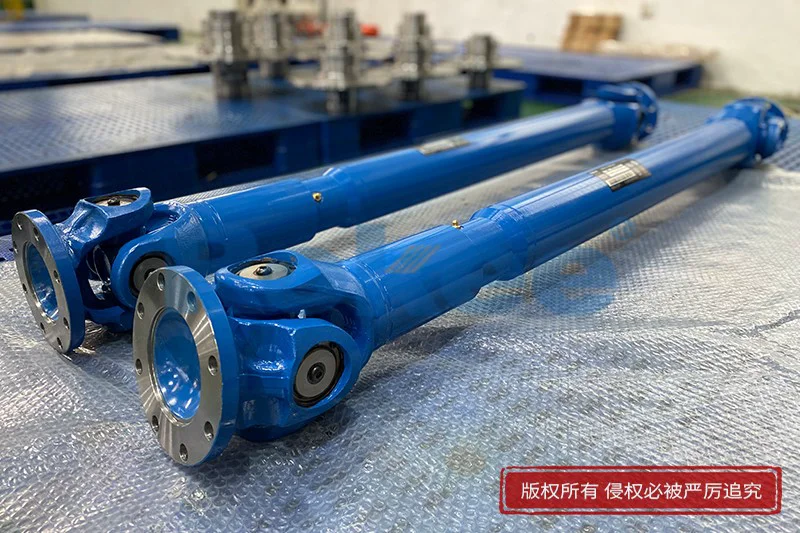
Sandwich panel production relies on continuous and stable mechanical transmission to coordinate multiple core processing procedures, including raw material unwinding, surface layer pressing, core material bonding, integral shaping, fixed-length cutting and finished product conveying, and the overall operational efficiency and processing stability of the entire production line are directly determined by the reliability of the power transmission connection between driving components and driven execution components. In the actual operation of sandwich panel machines, the traditional rigid transmission connection structures often face prominent application limitations, as the long-term mechanical vibration generated by high-load continuous operation, the minor position deviation of equipment installation and assembly, and the micro displacement of structural components caused by thermal expansion and cold contraction during long-time working will easily lead to excessive stress concentration on rigid transmission parts, accelerated wear of connecting structures, obvious transmission power loss, and even periodic jitter of production line operation, which will not only reduce the forming uniformity and surface flatness of sandwich panels, but also increase the frequency of equipment shutdown maintenance and shorten the overall service life of mechanical transmission components. Cardan driveshafts, as a flexible transmission component with mature structural principles and strong environmental adaptability, can effectively compensate for angular deviation, axial displacement and radial misalignment between driving shafts and driven shafts through the special articulated structure of universal joints and intermediate shaft bodies, realizing continuous and efficient torque and rotational motion transmission under non-coaxial installation and dynamic operation conditions, which makes them the core matching transmission component for optimizing the transmission system of modern sandwich panel production equipment. The scientific and reasonable matching of cardan driveshafts and sandwich panel machine transmission systems is not a simple selection of component specifications according to basic power parameters, but a systematic engineering work that needs to fully combine the structural characteristics of sandwich panel machines, actual production load characteristics, long-term continuous operation cycle requirements and on-site installation and working conditions, so as to ensure that the transmission system can maintain stable power output in the full production cycle, reduce mechanical impact and vibration, and realize the coordination and synchronization of all processing links of sandwich panel production.
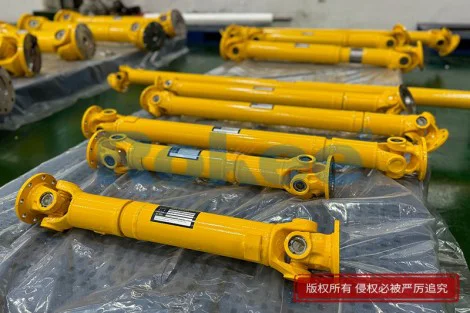
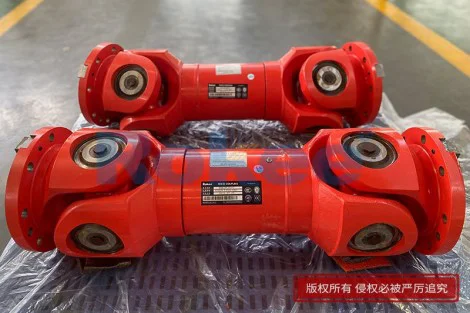
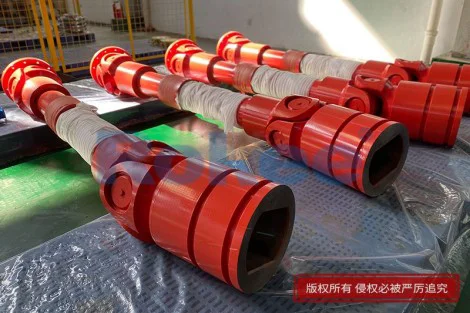
The basic working principle of cardan driveshafts lays a solid theoretical foundation for its reliable matching with the transmission system of sandwich panel machines, and the core transmission logic depends on the structural coordination of universal joint assemblies, cross shaft bearing parts, telescopic spline structures and intermediate shaft bodies. Each complete cardan driveshaft is equipped with two sets of universal joint yoke assemblies at both ends, which are connected by precision-processed cross shaft components and matching bearing structures, and the middle part is connected by a tubular or solid shaft body adapted to load demand, with a telescopic spline section reserved inside the shaft body to adapt to axial position changes between driving and driven equipment during operation. When the driving end of the equipment outputs rotational power, the cross shaft structure of the universal joint can realize flexible rotation within a certain angle range, allowing the driving shaft and the driven shaft to maintain continuous rotational motion transmission even if they are not on the same linear axis, and the double universal joint layout can effectively balance the periodic angular velocity fluctuation generated by single universal joint transmission, ensuring that the rotational speed and torque transmitted to the driven execution components remain stable and uniform without obvious dynamic deviation. In the daily production process of sandwich panel machines, the equipment will inevitably produce tiny structural deformation and position offset under the action of long-term high-load pressing force and continuous mechanical operation vibration, and the cardan driveshaft can automatically compensate for three-dimensional misalignment including angular, axial and radial directions through its flexible structural characteristics, avoiding the rigid extrusion and shear force between transmission components caused by position deviation. This inherent structural advantage makes cardan driveshafts fundamentally different from rigid coupling transmission structures, as it can not only reduce the installation precision requirements of sandwich panel machine equipment, simplify the on-site assembly and debugging process of the production line, but also effectively absorb instantaneous shock loads generated by equipment start-up, shutdown and load sudden changes, protecting key transmission and processing components from impact damage and maintaining the continuity and stability of the overall production transmission process.
To formulate a targeted and efficient cardan driveshaft matching transmission scheme for sandwich panel machines, it is first necessary to deeply analyze the unique transmission load characteristics and operational working conditions of sandwich panel production equipment, clarify the core performance indicators that the driveshaft needs to meet in actual operation. Sandwich panel production belongs to continuous industrial processing with non-stop long-cycle operation, and the transmission system needs to bear stable rated load for a long time and withstand occasional instantaneous impact load in the process of raw material feeding, pressing forming and finished product discharging. Different from intermittent operation mechanical equipment, sandwich panel machines have high requirements for transmission stability and rotational speed synchronization, and any slight transmission jitter or torque fluctuation will be directly transmitted to the plate forming link, resulting in uneven bonding of core materials, inconsistent thickness of finished plates, surface wrinkles and other product quality problems, affecting the overall yield of production. In addition, the internal space layout of sandwich panel production line is compact, the installation positions of driving motors, reduction gearboxes, pressing host machines and conveying execution mechanisms are distributed in a staggered manner, and there are inevitable height differences and horizontal offset angles between the connecting shafts of various equipment, which puts forward clear requirements for the angular compensation capacity and structural layout adaptability of matching cardan driveshafts. At the same time, the production workshop environment of sandwich panels usually has certain dust accumulation, and the equipment will generate continuous mechanical heat during long-term operation, which requires the matched cardan driveshafts to have good structural wear resistance and thermal stability, avoiding transmission failure caused by bearing wear, structural deformation and lubrication failure under harsh working conditions. In the process of matching design, it is necessary to take the rated operating torque, maximum instantaneous impact torque, rated operating rotational speed, effective transmission distance between driving and driven shafts, conventional angular deviation of equipment operation and axial displacement range as the core basic parameters, and exclude irrelevant performance indicators that do not match the actual working conditions, so as to avoid the problem of transmission mismatch caused by excessive redundant design or insufficient load-bearing capacity of the selected driveshaft.
The core link of cardan driveshaft matching transmission scheme design for sandwich panel machines lies in the scientific selection of key structural parameters and the optimal layout of transmission assembly, realizing the precise adaptation between driveshaft performance and equipment transmission demand. Firstly, the torque matching design should be carried out based on the actual power output of the sandwich panel machine driving system and the load demand of the execution end. The basic rated torque of the cardan driveshaft must be higher than the long-term stable operating torque required by the equipment, and a reasonable torque safety margin should be reserved according to the frequency of instantaneous impact load in the production process, so as to ensure that the driveshaft will not produce plastic deformation, structural fatigue damage and torque transmission attenuation under long-term high-load operation and occasional impact working conditions. Excessively low torque bearing capacity will lead to early wear of universal joint bearings and cross shaft fracture in severe cases, while excessively high torque design will increase the overall structural weight of the transmission system, increase the rotational inertia of operation, affect the transmission response speed and synchronization accuracy of the equipment, and cause unnecessary mechanical energy consumption. Secondly, the angular compensation angle and shaft body length matching should be accurately calibrated according to the installation layout and dynamic operation offset of the sandwich panel machine. The maximum allowable deflection angle of the selected cardan driveshaft universal joint needs to be greater than the maximum angular deviation generated by equipment installation error and operational dynamic displacement, ensuring that the driveshaft always operates within the optimal flexible transmission angle range and avoids transmission efficiency reduction and abnormal vibration caused by long-term operation at the limit deflection angle. The telescopic spline structure of the driveshaft needs to match the axial displacement range of the equipment during start-up, shutdown and thermal expansion and contraction, realizing automatic telescopic adjustment without blocking transmission motion and ensuring the stability of power transmission in the whole displacement cycle.
The rotational speed adaptability and dynamic balance performance of cardan driveshafts are also key matching factors that cannot be ignored in the transmission scheme design of sandwich panel machines. Sandwich panel machines need to maintain a stable and constant rotational speed in the production process to ensure the uniform feeding of raw materials and consistent pressing forming speed, and the cardan driveshaft, as the intermediate transmission connecting part, needs to have excellent dynamic balance performance to avoid centrifugal force imbalance caused by high-speed rotation, which leads to equipment vibration and transmission noise. In the matching process, it is necessary to select driveshaft components processed by precision dynamic balance calibration, ensure that the shaft body and universal joint assembly have low rotational runout and stable rotational speed output, and avoid periodic vibration interference to the plate forming process caused by unbalanced rotation. For the multi-section transmission structure of large-scale sandwich panel production lines, the phase angle matching of double universal joints should be reasonably optimized, so that the angular velocity fluctuation generated by a single universal joint in the transmission process can be mutually offset, ensuring that the rotational speed of the driven shaft is completely synchronized with the driving shaft, and realizing the coordinated operation of all processing links of the production line. In addition, the structural material selection of the cardan driveshaft should be matched according to the working environment and operation cycle of the sandwich panel machine. The shaft body and cross shaft bearing parts need to adopt high-strength and wear-resistant structural materials with good fatigue resistance, adapting to long-term continuous operation and dust and heat working environment, reducing the wear rate of transmission components, extending the service cycle of the driveshaft, and reducing the frequency of equipment shutdown maintenance and component replacement.
After completing the parameter selection and structural matching of the cardan driveshaft, the installation and debugging matching optimization in the actual application process is also an important part of the overall transmission scheme, which directly determines the final transmission effect and long-term operation stability. During the on-site installation of the cardan driveshaft for sandwich panel machines, the coaxiality basic calibration of the driving end and driven end flanges should be completed first to minimize the initial installation angular deviation and radial misalignment, reduce the long-term flexible deformation load of the driveshaft in daily operation, and slow down the fatigue wear of universal joint bearings and spline structures. The installation angle of the double universal joints should be strictly adjusted according to the transmission design requirements to ensure that the two universal joints maintain a reasonable phase angle relationship, avoid rotational speed synchronization deviation caused by installation angle error, and prevent periodic jitter of the production line transmission system. After the installation is completed, no-load trial operation and load debugging operation should be carried out in sequence. During the no-load trial operation, check whether the driveshaft has abnormal vibration, noise and jitter, adjust the installation position and angle in time to eliminate abnormal transmission phenomena; during the load debugging operation, simulate the actual production load state, detect the torque transmission stability and rotational speed synchronization of the driveshaft under working condition load, and fine-tune the matching state according to the operation data to ensure that the transmission system can meet the production process requirements of sandwich panels. In addition, the lubrication maintenance matching scheme of the cardan driveshaft should be formulated in combination with the production operation cycle of the sandwich panel machine, and regular lubrication and inspection of the universal joint bearings and telescopic spline parts should be arranged to keep the transmission parts in good lubrication state, reduce friction and wear, and ensure the long-term stable operation of the matched transmission system.
The scientific matching application of cardan driveshafts in the transmission system of sandwich panel machines can bring multiple practical optimization effects to production and equipment operation, effectively solving various transmission pain points existing in the traditional rigid transmission mode. After adopting the optimized cardan driveshaft matching transmission scheme, the power transmission efficiency of the sandwich panel production line is significantly improved, the power loss caused by transmission misalignment and structural rigid friction is reduced, the energy consumption of equipment operation is effectively controlled, and the production operation cost is reduced in the long-term production cycle. The flexible compensation performance of the cardan driveshaft avoids the stress concentration and impact damage of key equipment components caused by position deviation and load fluctuation, reduces the failure rate of transmission bearings, gears and processing host components, extends the overall service life of the equipment, and reduces the downtime loss and component replacement cost caused by equipment failure. More importantly, the stable and synchronous transmission effect brought by reasonable matching ensures the uniformity and stability of the sandwich panel production and processing process, effectively avoids product quality defects such as uneven plate thickness, poor bonding firmness and surface deformation caused by transmission jitter and rotational speed fluctuation, improves the qualified rate and overall quality level of finished sandwich panels, and enhances the continuous production capacity and market competitiveness of the production line. With the continuous upgrading of sandwich panel production technology and the continuous improvement of production line automation and high-efficiency operation requirements, the matching design of cardan driveshafts needs to be continuously optimized according to the iterative changes of equipment structure and production process parameters, always maintaining the high adaptation between transmission components and equipment operation demand, and providing reliable and stable mechanical transmission guarantee for the efficient and high-quality production of sandwich panels.