Flexible Coupling Improves Transmission Accuracy Of PU Sandwich Panel Production Line

The production of PU sandwich panels relies on a continuous and coordinated automated production process, where every link from raw material feeding, continuous foaming, composite pressing, fixed-size cutting to finished product conveying requires highly consistent and stable mechanical transmission performance. As the core thermal insulation and structural composite material widely used in building enclosure systems, cold storage engineering, industrial factory buildings and special facility construction, PU sandwich panels have extremely strict requirements for surface flatness, core material foaming uniformity, bonding compactness between layers and overall dimensional stability. Any subtle fluctuation or deviation in the transmission process of the production line will be directly transmitted to the forming and processing links of the panels, resulting in uneven thickness of finished products, inconsistent foaming density, deviation in cutting dimensions and weak composite bonding strength, which not only reduces the overall qualification rate of production products, but also increases subsequent rework costs and material waste, and even affects the structural safety and thermal insulation performance of the panels in actual engineering application scenarios. In the long-term operation of traditional PU sandwich panel production lines, rigid connection structures were mostly adopted for the shaft connection parts of driving motors, reduction gearboxes, pressing roller sets, conveying power rollers and cutting power mechanisms. Although this rigid connection mode can realize basic torque transmission in a short period of time, it cannot cope with various unavoidable mechanical deviations and operating vibration generated during long-term continuous industrial operation, gradually causing transmission dislocation, mechanical stress accumulation and component wear and tear, which fundamentally restricts the improvement of production accuracy and the stability of continuous production of the entire production line. The application of flexible coupling in the power transmission system of PU sandwich panel production line perfectly solves the inherent defects of rigid transmission connection, relying on its unique structural flexibility, multi-directional deviation compensation performance and excellent vibration and shock absorption characteristics, it realizes stable and accurate torque and motion transmission between various power components and execution equipment of the production line, eliminates the adverse impact of mechanical misalignment and operating vibration on panel forming processing, and comprehensively improves the overall transmission accuracy, production operation stability and finished product quality consistency of the PU sandwich panel production line.
In the actual industrial operation scenario of PU sandwich panel production lines, shaft misalignment between power drive components and driven execution components is an objective and unavoidable engineering problem, which is the core root cause of reduced transmission accuracy and unstable operation of most production lines. In the theoretical design stage of production line equipment, all transmission shafts are designed to be in a completely coaxial and parallel alignment state, ensuring that torque and rotational motion can be transmitted synchronously and efficiently without additional mechanical stress and motion deviation. However, in the actual equipment installation and commissioning process, affected by manufacturing tolerances of mechanical components, on-site installation foundation leveling errors and manual assembly operation differences, it is impossible to achieve absolute perfect alignment of all transmission shafts of the production line. With the extension of production operation time, the continuous mechanical vibration generated by high-load continuous operation of the production line, thermal expansion and contraction of mechanical components caused by long-term equipment heating, slight structural deformation of the equipment frame under long-term bearing load and gradual wear and tear of bearing parts will further exacerbate the axial, radial and angular misalignment between the driving shaft and the driven shaft of each transmission link. For the PU sandwich panel production line with integrated continuous processing procedures, even a tiny millimeter-level shaft misalignment will produce obvious additional radial force and axial tension and compression in the rigid transmission connection process. These abnormal mechanical stresses will not only cause abnormal vibration and noise during the operation of the transmission system, accelerate the wear of bearings, gears and other key wearing parts, shorten the service cycle of core equipment components, but also lead to asynchronous rotation speed and motion lag between the front and rear execution equipment of the production line. Taking the core composite pressing link of PU sandwich panels as an example, the inconsistent transmission speed of the upper and lower pressing roller sets caused by shaft misalignment will lead to different extrusion force on the two sides of the foaming core material, resulting in uneven foaming pore structure inside the PU core material, inconsistent bonding degree between the core material and the upper and lower metal surface plates, and even local degumming and hollowing defects of the finished panels. In the fixed-size cutting link at the later stage of production, the transmission motion deviation caused by misalignment will lead to inaccurate positioning of the cutting mechanism and unstable cutting feed speed, resulting in inconsistent length and width dimensions of the cut finished panels, irregular cutting edges, and great hidden dangers for subsequent installation and construction and engineering matching use. The rigid connection structure cannot automatically compensate and adjust these generated misalignments, and can only transmit all deviations and stresses to the entire transmission system and processing links, making the production line always run in a state of hidden mechanical stress and motion deviation, which makes it difficult to stabilize the production accuracy for a long time, and the product quality fluctuates frequently.
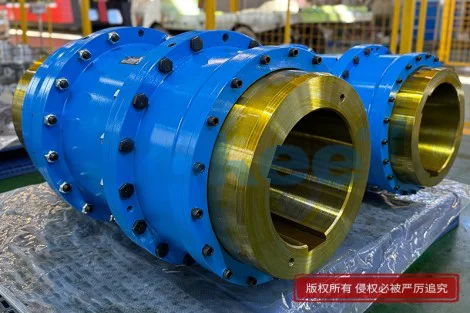
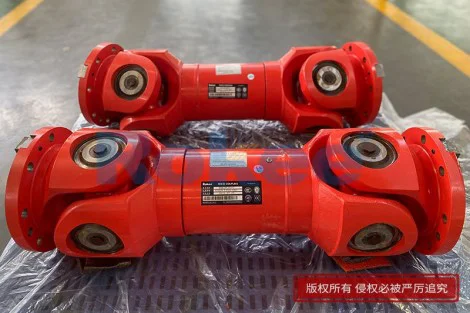
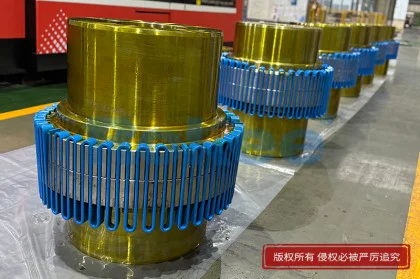
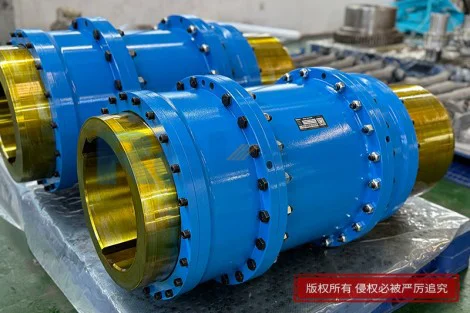
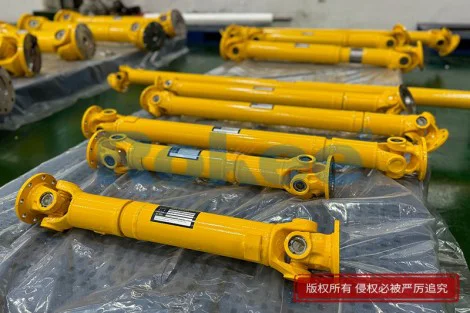
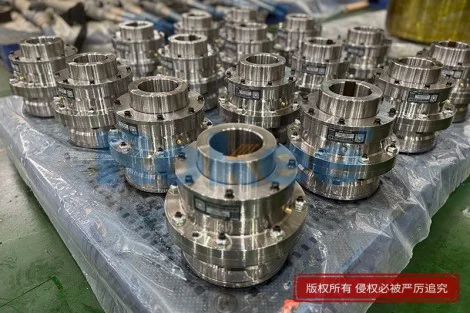
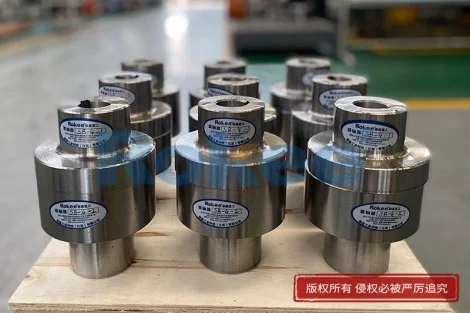
Flexible couplings are specially designed mechanical connection components for industrial transmission systems, which take into account efficient torque transmission and multi-dimensional misalignment compensation, and have become a key core accessory to improve the transmission accuracy of precision industrial production lines. Different from rigid connection parts that only pursue fixed connection and rigid torque transmission, flexible couplings rely on elastic deformation of internal elastic components or reasonable structural gap design to form an effective flexible buffer and adjustment area between the driving shaft and the driven shaft. On the premise of ensuring continuous and stable transmission of rotational torque and synchronous motion, it can automatically and dynamically compensate axial displacement, radial offset and angular deflection generated between the two connected shafts during equipment operation, without generating additional abnormal mechanical stress on bearings, shafts and other connected equipment components. The internal flexible structure of the coupling can effectively absorb the mechanical shock generated by the production line during startup, shutdown, load switching and sudden working condition changes, and dampen the high-frequency vibration generated by the high-speed operation of the transmission system, avoiding the resonance phenomenon between various mechanical components of the production line. This excellent vibration damping and shock absorption performance can keep the entire transmission system of the PU sandwich panel production line running in a smooth and stable motion state at all times, eliminate the motion jitter and speed fluctuation caused by vibration, and lay a solid foundation for the precise forming and stable processing of sandwich panels. In the actual operation of the production line, the flexible coupling does not change the original power transmission efficiency and power output parameters of the production line, but optimizes the transmission state from the mechanical connection root, solves the transmission accuracy attenuation problem caused by installation errors, operational deformation and component wear, and realizes long-term high-precision and high-stability operation of the transmission system without frequent manual debugging and maintenance.
The improvement effect of flexible couplings on transmission accuracy of PU sandwich panel production line runs through the whole process from raw material pretreatment to finished product output, and has the most prominent optimization effect on several core key processing links that determine the quality of sandwich panels. In the raw material feeding and metering conveying link of PU raw materials and metal surface plates, stable and accurate transmission speed is the key to ensure the precise ratio of foaming raw materials and consistent feeding amount of surface plates. The traditional rigid transmission connection is prone to speed jitter and intermittent motion deviation due to shaft misalignment and vibration, resulting in unstable conveying speed of PU foaming raw materials, inaccurate mixing ratio of polyether and isocyanate components, and insufficient or excessive local foaming of the core material. At the same time, the uneven conveying speed of metal surface plates will lead to deviation in the feeding position of the plates, resulting in inconsistent overlapping accuracy of the upper and lower plates in the composite pressing process. After the application of flexible couplings, the misalignment deviation of the feeding transmission shaft is dynamically compensated in real time, the vibration and jitter of the feeding transmission mechanism are effectively suppressed, the conveying speed of raw materials and surface plates remains constant and synchronized for a long time, the raw material metering ratio is always kept within the optimal process range, and the feeding position of metal plates is accurately positioned, which provides accurate preconditions for subsequent foaming composite processing. In the continuous foaming and composite pressing forming link, which is the core process determining the thermal insulation performance and structural strength of PU sandwich panels, the synchronous rotation and stable pressure control of the upper and lower pressing roller sets are crucial. The flexible coupling ensures that the driving motors of the multiple groups of pressing rollers maintain completely synchronous rotation speed and consistent torque output, avoids the pressure fluctuation on the sandwich panel caused by asynchronous operation of the pressing rollers, makes the foaming reaction of the PU core material proceed evenly and stably under constant pressure and constant speed conditions, the internal foaming pores are uniform and dense, the bonding interface between the core material and the metal plate is fully fitted and tightly bonded, and there are no quality defects such as local hollowing, degumming and uneven thickness.
In the fixed-size cutting and finished product conveying link at the later stage of PU sandwich panel production, the improvement of transmission accuracy by flexible couplings is directly reflected in the dimensional accuracy and appearance quality of finished products. The cutting mechanism of the production line needs to complete fixed-length fixed-speed cutting according to the production and processing standards, and the positioning accuracy and feed stability of the cutting tool are completely dependent on the precise transmission of the power transmission mechanism. The rigid transmission connection is easy to produce motion lag and positioning deviation due to long-term accumulated misalignment and mechanical wear, resulting in inaccurate cutting length and width of the sandwich panel, rough and uneven cutting section, and burrs on the edge of the panel, which not only affects the appearance quality of the product, but also brings troubles to subsequent on-site installation and splicing construction. After adopting flexible coupling connection, the transmission motion of the cutting power mechanism is more accurate and responsive, the positioning error generated by shaft misalignment is eliminated in real time, the cutting feed speed is stable and consistent, the dimensional error of the cut finished sandwich panel is controlled within a very small precision range, the cutting section is flat and smooth without burrs, and the overall appearance and dimensional compliance rate of the finished product are significantly improved. In the finished product conveying and stacking link, the stable transmission realized by flexible couplings also avoids the jitter and offset of the sandwich panel during conveying, ensures the neat stacking of finished products, reduces the collision and scratch damage of the panel surface during conveying, and further improves the overall yield and finished product quality of production.
In addition to directly improving the transmission accuracy and finished product quality of PU sandwich panel production lines, the application of flexible couplings also brings long-term stable operation benefits and cost-saving effects for production line operation and maintenance, and indirectly maintains the long-term consistency of transmission accuracy of the production line. In the traditional rigid transmission connection mode, shaft misalignment and vibration will cause severe wear of bearings, gears, transmission shafts and other key components, resulting in frequent equipment failure and shutdown maintenance. Each equipment shutdown and maintenance will not only affect the continuity of production and reduce production efficiency, but also require repeated debugging and calibration of transmission shaft alignment after each maintenance. After repeated disassembly, assembly and debugging, the transmission accuracy of the production line is difficult to return to the optimal state, and the production quality of sandwich panels fluctuates repeatedly. Flexible couplings effectively reduce the abnormal mechanical stress and friction wear on key transmission components through misalignment compensation and vibration damping functions, greatly reduce the wear degree of bearings and gears, extend the service life of core equipment components, reduce the frequency of equipment failure and shutdown maintenance, and ensure the long-term continuous and stable operation of the PU sandwich panel production line. At the same time, the flexible coupling has a simple and compact structural design, convenient installation and later maintenance, no complex debugging steps are required in the daily operation process, and it can automatically adapt to the slight structural deformation and component wear of the production line during long-term operation, without frequent shutdown for alignment calibration and parameter adjustment. This not only reduces the labor input and maintenance cost of equipment maintenance personnel, but also avoids the transmission accuracy attenuation and product quality fluctuation caused by repeated debugging, ensuring that the production line can maintain high-precision transmission and high-quality production state for a long time.
With the continuous upgrading of the construction industry's requirements for the performance and quality of PU sandwich panels, the PU sandwich panel production industry is gradually developing towards high-precision production, intelligent processing and stable continuous production. The market competition for sandwich panel products is increasingly fierce, and the product quality stability and dimensional accuracy have become the core competitive advantages of production enterprises. More and more production enterprises have begun to pay attention to the optimization and upgrading of the internal transmission system of the production line, realizing the fundamental improvement of product quality and production efficiency through optimizing basic mechanical connection components rather than only relying on the upgrading of large-scale main equipment. As a key basic component to optimize the transmission performance of the production line, flexible coupling does not need to transform the main structure of the production line and invest a lot of transformation costs, but can effectively solve the long-term hidden problems of low transmission accuracy and unstable operation of the traditional production line, and has a very high cost performance and practical application value. In the actual production and application process, selecting a reasonable flexible coupling type matching the operating load, rotation speed and working environment of the PU sandwich panel production line, and completing standardized installation and commissioning, can give full play to the advantages of misalignment compensation, vibration damping and stable transmission of the flexible coupling, continuously optimize the transmission coordination state of each link of the production line, and make every production process of PU sandwich panels always carried out under high-precision and stable transmission conditions.
In conclusion, the transmission system is the core power foundation for the stable operation and precision production of PU sandwich panel production lines, and the connection mode between transmission shafts directly determines the overall transmission accuracy and operation stability of the production line. The traditional rigid connection mode is difficult to adapt to the objective misalignment and vibration problems generated during the long-term operation of industrial production lines, resulting in insufficient transmission accuracy and unstable product quality of PU sandwich panel production. The application of flexible coupling fundamentally changes the transmission connection state of the production line, relies on its excellent multi-directional misalignment compensation, vibration and shock absorption and stable torque transmission performance, eliminates various adverse factors that restrict the improvement of transmission accuracy, ensures the synchronous and stable operation of each processing link of the production line, significantly improves the forming quality, dimensional accuracy and quality consistency of PU sandwich panel finished products. At the same time, it reduces equipment wear and maintenance costs, extends the service life of production line equipment, and realizes the dual improvement of production economic benefits and product quality level. With the continuous improvement of industrial production precision requirements, flexible couplings will become a standard and essential key component for all high-quality and high-efficiency PU sandwich panel production lines, providing reliable basic mechanical guarantee for the high-quality production of sandwich panels and the long-term stable development of the industry.