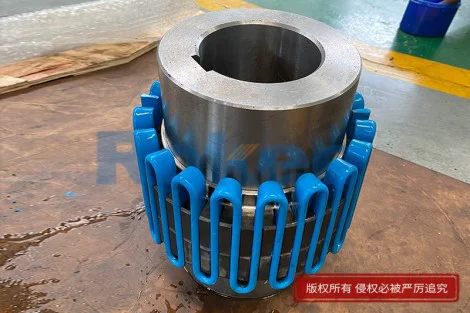
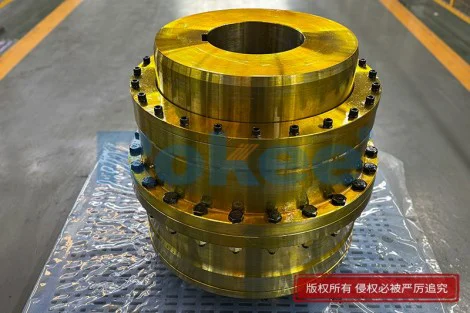
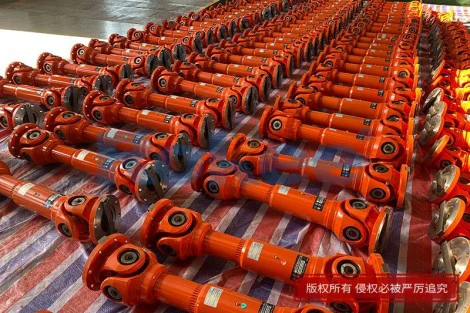
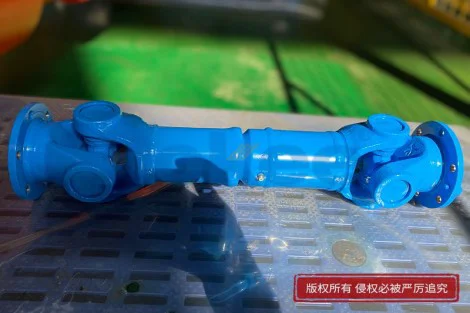
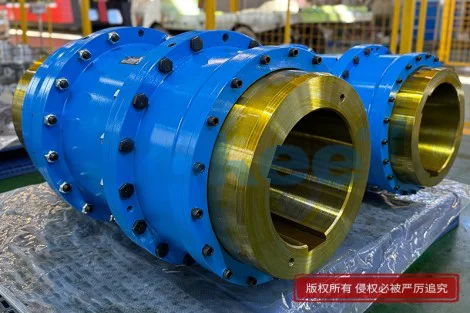
Universal Shaft Coupling Helps Automation Upgrade Of PU Sandwich Panel Line

The rapid advancement of industrial automation has comprehensively transformed the traditional manufacturing model of the construction material industry, pushing polyurethane (PU) sandwich panel production lines toward high efficiency, continuous operation, and intelligent precision control. As a core lightweight and thermal-insulating building material, PU sandwich panels are widely applied in modern construction, cold chain logistics, and industrial plant construction, driving the continuous upgrading of production technology and equipment performance. In the iterative optimization of automated production lines, the stability, synchronization, and continuity of mechanical power transmission directly determine the overall production efficiency, product quality consistency, and equipment operation stability. As a key flexible transmission component in mechanical systems, universal shaft couplings have gradually become an indispensable core part of the automated upgrading of PU sandwich panel line, effectively solving various transmission pain points in traditional production equipment and providing solid mechanical support for the full-process automation and intelligent iteration of panel production.
PU sandwich panel production is a typical continuous industrial manufacturing process that integrates multiple procedures including raw material feeding, high-pressure foaming, continuous laminating, fixed-size cutting, and finished product conveying. The entire production flow requires precise coordination and synchronous operation of multiple sets of driving equipment, and any slight transmission deviation or operational lag in any link will cause fluctuations in product thickness, uneven foaming density, inconsistent panel flatness, and even lead to frequent equipment shutdowns. Traditional PU sandwich panel production equipment mostly adopts rigid transmission connection structures, which have extremely high requirements for the coaxiality of connecting shafts and installation accuracy of equipment. In actual long-term production operation, mechanical vibration generated by high-speed operation, thermal expansion and contraction of equipment caused by long-time continuous heating, and tiny displacement of mechanical components due to operational aging will inevitably produce angle deviation and axial displacement between transmission shafts. Rigid transmission structures cannot adapt to these dynamic deviations, resulting in increased transmission resistance, local mechanical stress concentration, severe wear of transmission parts, and unstable power output, which seriously restrict the automation level and stable operation capacity of the production line.
The application of universal shaft couplings completely optimizes the inherent defects of traditional rigid transmission systems in PU sandwich panel production lines. Different from rigid connecting parts that rely on fixed coaxial transmission, universal shaft couplings have unique multi-directional displacement compensation performance, which can effectively adapt to angle deviation, axial offset, and radial displacement between driving shafts and driven shafts generated during equipment operation. This flexible transmission characteristic enables the power transmission system of the PU sandwich panel line to maintain stable and continuous torque output under complex operating conditions, eliminating power loss and transmission jitter caused by shaft misalignment. In the automated production link of PU sandwich panels, from the power output of the main drive motor and the speed regulation transmission of the reduction gearbox to the synchronous operation of the laminating roller group and the stable conveying of the finished product transmission mechanism, universal shaft couplings build a smooth and efficient power transmission bridge for each core equipment module of the production line, realizing seamless connection and synchronous linkage of each production procedure.
The automation upgrading of modern PU sandwich panel lines focuses on improving production intelligence, reducing manual intervention, and realizing full-process closed-loop control of production parameters, which puts forward higher requirements for the synchronization accuracy and operational stability of equipment transmission. In the traditional semi-automatic production mode, manual adjustment and auxiliary calibration are often required for the matching operation of each equipment unit, which not only increases labor input but also leads to unstable product quality due to inconsistent manual operation standards. After the introduction of universal shaft couplings, the overall linkage performance of the production line transmission system is significantly improved. The flexible compensation capability of the coupling can automatically adjust the tiny position changes of the transmission shaft system during long-term operation, ensuring that the operating speed and running rhythm of each station equipment remain highly consistent. This automatic synchronous adjustment function completely breaks the operation limitations of traditional equipment that relies on manual calibration, realizes fully automatic collaborative operation of the entire production line from raw material processing to finished product output, and greatly improves the automation integration level of the production line.
In the key foaming and laminating process of PU sandwich panel production, the stability of transmission operation is directly related to the core quality indicators of the product. The PU foaming reaction has strict requirements on material feeding speed and laminating pressure uniformity. Slight fluctuations in equipment operation speed will lead to uneven foaming of the polyurethane material, resulting in differences in the thermal insulation performance and structural strength of finished panels. The universal shaft coupling can maintain uniform and stable power transmission in high-frequency continuous operation, avoid instantaneous speed fluctuation and equipment jitter caused by transmission deviation, and ensure that the feeding system, foaming system, and laminating system operate at a constant and synchronous speed. This stable transmission state enables the polyurethane raw materials to complete uniform mixing and full foaming under set process parameters, and the composite laminating of panel core materials and surface materials is more flat and firm, effectively improving the dimensional accuracy, structural stability, and quality consistency of finished PU sandwich panels.
Equipment operation stability and service life are important indicators of automated production line upgrading, and universal shaft couplings play a key role in reducing equipment loss and lowering operation and maintenance costs. The rigid transmission structure of traditional PU panel production equipment is prone to stress accumulation during operation. Long-term stress concentration will cause fatigue wear of transmission shafts, bearings, and gear components, leading to frequent equipment failures and increased maintenance frequency. The flexible transmission design of universal shaft couplings can effectively absorb mechanical vibration and impact force generated during equipment operation, disperse local mechanical stress, and reduce the friction and wear of core transmission components. In the long-term continuous production state of the PU sandwich panel line, this buffering and protection performance greatly reduces the failure rate of the power transmission system, extends the service life of key equipment, and avoids unexpected production shutdowns caused by transmission component damage. For automated production lines that pursue long-term uninterrupted operation, the stable protection function of universal shaft couplings effectively improves the overall operation rate of the production line and reduces comprehensive production and maintenance costs.
With the continuous upgrading of industrial intelligent manufacturing, PU sandwich panel production lines are developing toward high-speed operation, multi-process integration, and precise intelligent control, and the functional advantages of universal shaft couplings in production line optimization are further highlighted. High-speed automated production puts forward stricter requirements for transmission efficiency and dynamic response speed. The excellent dynamic balance performance and low-resistance transmission characteristics of universal shaft couplings ensure that the equipment can maintain efficient power transmission under high-speed operating conditions, without power attenuation or operational lag, meeting the high-efficiency production needs of modern panel lines. At the same time, the structural adaptability of universal shaft couplings is strong, which can be perfectly matched with the optimized and upgraded mechanical structure of automated production lines. Whether it is the transformation of old production lines or the design and construction of new intelligent production lines, universal shaft couplings can adapt to complex shaft system layouts and diverse equipment installation environments, providing flexible and reliable transmission solutions for equipment upgrading and process optimization.
In addition to improving production efficiency and product quality, the application of universal shaft couplings also promotes the energy-saving and green upgrading of PU sandwich panel automated production lines. Unstable transmission of traditional equipment often leads to ineffective power loss, increasing the energy consumption of unit product production. The efficient and stable transmission mode of universal shaft couplings minimizes power loss in the torque transmission process, improves the energy utilization efficiency of production equipment, and reduces the comprehensive energy consumption of the production line. In the context of the industry's emphasis on green manufacturing and low-carbon production, this energy-saving optimization effect further enhances the comprehensive operational advantages of automated PU sandwich panel production lines, helping enterprises realize efficient production while reducing energy consumption and production costs.
In the whole process of the automation upgrade of PU sandwich panel production lines, universal shaft couplings are not only a simple mechanical connecting component but also a key functional part that restricts the overall performance of the production line. Its flexible compensation, stable transmission, vibration damping and wear-resistant characteristics solve many industry pain points such as poor synchronization of traditional production line equipment, unstable product quality, high equipment failure rate and high energy consumption. With the continuous development of building material manufacturing technology, the production process of PU sandwich panels will be more refined and intelligent, and the requirements for the precision and stability of production line transmission systems will continue to improve. The continuous optimization and innovative application of universal shaft coupling technology will further empower the iterative upgrading of PU sandwich panel automated production lines, promote the building material manufacturing industry to move toward higher efficiency, higher precision and lower consumption intelligent production mode, and provide strong technical support for the high-quality development of the industry.