Material Performance Comparison Of Universal Joint Coupling For PU Sandwich Panel Line
The continuous and high-precision operation of PU sandwich panel production lines relies heavily on the stable transmission performance of core connecting components, among which couplings play a decisive role in coordinating the operation of driving motors, reduction gearboxes and transmission rollers. The production process of PU sandwich panels involves continuous foaming, curing, rolling and cutting procedures, featuring long-term uninterrupted operation, slight dynamic vibration, micro displacement deviation of transmission shafts and complex on-site environmental interference. These harsh working conditions put forward strict requirements on the wear resistance, transmission stability, deviation compensation capability and fatigue resistance of coupling components. Universal joint couplings, as a multi-functional transmission connecting structure, have been widely applied in modern PU sandwich panel production lines due to their unique structural advantages, while traditional rigid couplings and ordinary flexible couplings still occupy a certain market share in low-end and old production equipment. In actual production scenarios, different types of couplings show significant differences in comprehensive performance, which directly affects the operating efficiency, product processing accuracy and service life of the entire production line. Conducting an in-depth performance comparison of universal joint couplings and other conventional couplings under the working conditions of PU sandwich panel line is of great practical significance for optimizing equipment configuration, reducing operating failure rates and improving continuous production capacity.
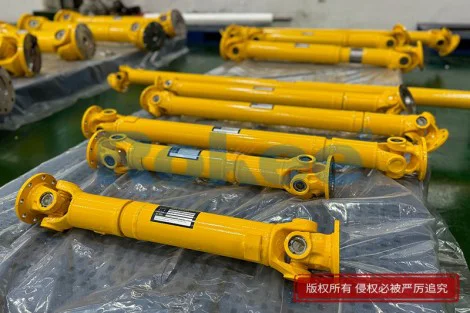
In terms of structural adaptability and shaft deviation compensation performance, universal joint couplings exhibit far superior comprehensive capabilities compared with rigid couplings. Rigid couplings adopt an integrated fixed connection structure, which can only be applied in working scenarios where the coaxiality of the two transmission shafts is completely consistent and there is no dynamic displacement. In the actual operation of PU sandwich panel production lines, long-term mechanical vibration, thermal deformation caused by foaming and curing temperature changes, and slight foundation settlement will inevitably produce tiny axial, radial and angular deviations between the driving shaft and driven shaft. Rigid couplings cannot buffer or compensate for these deviations, resulting in additional mechanical stress concentration at the shaft connection parts. This long-term stress accumulation will cause abnormal wear of shaft heads and bearings, increased transmission noise, and even shaft jamming and equipment shutdown in severe cases. In contrast, the unique hinge joint structure of universal joint couplings allows flexible rotation and angle adjustment between the connected shafts, which can effectively adapt to multi-dimensional micro deviations generated during the operation of PU sandwich panel production equipment. It can stably transmit power while eliminating additional stress caused by shaft misalignment, avoiding rigid friction and structural deformation of transmission components. For the multi-section linkage transmission structure of sandwich panel lines, which requires synchronous operation of multiple groups of rollers, the deviation compensation advantage of universal joint couplings can ensure the consistency of transmission speed of each component, laying a foundation for the flatness and dimensional accuracy of finished PU sandwich panels.
Transmission efficiency and energy consumption performance are core indicators that distinguish different couplings in the long-term operation of PU sandwich panel production lines. As a continuous industrial production equipment, the sandwich panel line usually operates for a long time with high load, and the power loss of transmission components directly determines the overall energy consumption level of the equipment. Rigid couplings have low flexibility in power transmission, and the rigid collision and friction caused by shaft deviation will cause continuous kinetic energy loss. In actual operation, the effective transmission efficiency of rigid couplings in PU sandwich panel lines is generally maintained between 85% and 90%, and the efficiency will further decrease with the increase of equipment operating time and component wear. Ordinary flexible couplings improve the flexibility of transmission through elastic elements, but the elastic deformation of internal structures will produce hysteresis loss during power transmission. Especially under high-speed and continuous load conditions, repeated compression and rebound of elastic materials will generate heat energy loss, leading to unstable transmission efficiency. Universal joint couplings adopt a precise mechanical hinge transmission mode, with almost no elastic hysteresis loss in the power transmission process. The optimized structural design reduces contact friction resistance between components, enabling the transmission efficiency to remain stable at a high level for a long time. Practical application data shows that compared with rigid couplings, universal joint couplings can reduce comprehensive energy loss by 5% to 10% in the full-load operation state of PU sandwich panel lines. For production lines that run continuously for more than ten hours a day, this efficiency improvement can form significant energy-saving benefits in long-cycle production, and effectively reduce the heat generation of transmission components, avoiding performance attenuation caused by high-temperature aging of parts.
In terms of wear resistance, fatigue resistance and service life, universal joint couplings show stronger environmental adaptability for the special production environment of PU sandwich panels. The on-site production environment of PU sandwich panels contains fine PU raw material dust, residual foaming agent particles and slight humid air generated by the curing process. These tiny impurities will adhere to the surface of transmission couplings and enter the connection gaps, forming abrasive and corrosive interference on moving parts. Rigid couplings have a simple and dense structure, but their surface wear resistance and corrosion resistance are weak. Long-term friction and dust abrasion will cause scratches and oxidation corrosion on the contact surface of the coupling, resulting in increased transmission gap, reduced coaxiality accuracy and gradual deterioration of transmission stability. Ordinary flexible couplings mostly use polymer elastic materials as the core connecting parts. Such materials are prone to aging, hardening and deformation under the influence of long-term vibration, temperature fluctuation and dust erosion. After a certain period of operation, the elastic elements will suffer fatigue damage, cracking and failure, leading to transmission jitter and power interruption. Universal joint couplings are mostly made of high-strength alloy materials with optimized surface treatment processes, which have excellent wear resistance and anti-aging properties. The movable hinge gap of the coupling is reasonably designed to reduce the adhesion and accumulation of dust impurities, and the structural strength can resist long-term cyclic load vibration and micro friction wear. Under the same PU sandwich panel production environment, the service life of universal joint couplings is significantly longer than that of rigid and ordinary flexible couplings, and the performance attenuation speed is slow, which can effectively reduce the frequency of equipment shutdown maintenance and part replacement, and improve the continuous operation rate of the production line.
Vibration buffering and operation stability are key performance indicators affecting the processing quality of PU sandwich panels. The production of PU sandwich panels requires stable transmission speed and uniform roller operation state. Slight transmission jitter and speed fluctuation will lead to uneven foaming thickness, inconsistent panel flatness and local delamination defects of finished products. Rigid couplings have no vibration buffering function. The mechanical vibration generated by motor operation and roller rotation will be directly transmitted along the rigid connection structure, forming resonance inside the transmission system. Long-term resonance will not only aggravate component wear, but also cause periodic jitter of the production line roller, affecting the molding quality of PU foam layers. Ordinary flexible couplings can absorb part of vibration energy through elastic deformation, but their vibration damping effect is limited and unstable. Under high-load continuous operation, the elastic elements are prone to excessive deformation, resulting in irregular speed fluctuation and poor synchronous coordination of multi-group transmission components. Universal joint couplings adopt a multi-hinge flexible connection structure, which can realize multi-directional vibration buffering and energy absorption while ensuring rigid power transmission. The structure can effectively weaken the vibration generated by the power end and the load end, avoid vibration resonance of the entire transmission system, and maintain stable and consistent operating speed of each roller of the PU sandwich panel line. This stable transmission performance ensures the uniformity of PU material foaming and curing, effectively reducing the product defect rate caused by transmission instability.
In terms of maintenance convenience and operational economy, universal joint couplings also have comprehensive advantages in the full-cycle operation of PU sandwich panel production lines. Rigid couplings have high installation and alignment requirements. Once shaft deviation occurs due to equipment aging or foundation changes, the whole coupling needs to be disassembled and recalibrated, with complex maintenance procedures and long shutdown time. Ordinary flexible couplings have low maintenance difficulty, but their vulnerable parts such as elastic elements have short service life and need frequent regular inspection and replacement, resulting in high daily maintenance costs. The structural design of universal joint couplings is modular and detachable, with simple installation and alignment procedures. Routine daily maintenance only requires regular cleaning of surface dust and appropriate lubrication of movable hinge parts, without frequent replacement of core components. Thanks to the excellent fatigue resistance and stable performance, universal joint couplings can maintain long-term stable operation in complex working conditions, greatly reducing the frequency of equipment failure shutdown and parts replacement. Although the initial configuration cost of universal joint couplings is slightly higher than that of traditional couplings, the comprehensive operating cost including maintenance, replacement and production loss caused by shutdown is significantly lower in the long-term operation cycle of PU sandwich panel production lines, with outstanding long-term economic benefits.
In practical application adaptability, universal joint couplings can meet the diversified transmission requirements of each process section of PU sandwich panel production lines. The PU sandwich panel production line includes feeding, foaming, laminating, rolling, cutting and other process units, and different process sections have different requirements for transmission torque, operating speed and synchronization accuracy. The feeding and rolling sections need high-torque stable transmission, while the cutting and finishing sections require high-precision synchronous operation. Rigid couplings can only adapt to single working conditions with fixed coaxiality and stable load, and are difficult to cope with the diversified transmission demands of multiple process sections. Ordinary flexible couplings are limited by the performance of elastic materials, and cannot bear high torque load and long-term high-speed operation, which are easy to deform and fail in high-load process sections. Universal joint couplings have strong working condition adaptability, which can meet the high-torque transmission demand of heavy-load rolling process and maintain high-precision synchronous transmission effect of high-speed cutting process. Moreover, the angle adjustment function of universal joints can adapt to the irregular shaft layout of some special-shaped sandwich panel production equipment, realizing flexible power transmission in complex installation spaces, which greatly expands the application scope and scene adaptability of the equipment.
In summary, universal joint couplings show comprehensive and outstanding performance advantages in terms of shaft deviation compensation, transmission efficiency, environmental adaptability, vibration stability, maintenance economy and working condition adaptability compared with traditional rigid couplings and ordinary flexible couplings, which are more in line with the continuous, high-precision and low-consumption operation requirements of modern PU sandwich panel production lines. Traditional couplings still have certain applicability in simple low-load and intermittent production equipment, but they are gradually unable to meet the high-standard production demands of high-end PU sandwich panels due to their inherent structural defects and performance limitations. With the continuous upgrading of PU sandwich panel production technology and the increasing requirements for equipment operation stability and product precision, universal joint couplings have become the mainstream configuration choice for new high-efficiency sandwich panel production lines. In the future, with the continuous optimization of coupling material formulas and structural designs, the wear resistance, transmission precision and energy-saving performance of universal joint couplings will be further improved, which will provide more reliable technical support for the efficient and stable operation of PU sandwich panel production equipment and the improvement of finished product quality.