Combination Of Polyurethane Sandwich Panel Production Line And Teeth Coupling to Cost-effective Choice

The continuous upgrading of modern construction insulation, cold chain logistics, and industrial enclosure industries has driven the rapid iteration of polyurethane sandwich panel manufacturing technology. As core composite building materials with lightweight, high thermal insulation, and strong structural stability properties, polyurethane sandwich panels have gradually become the preferred material for energy-saving building envelopes, industrial plant partitions, and low-temperature storage facilities. The market demand for stable-quality, low-cost, and long-service-life sandwich panel products continues to rise, which puts forward higher comprehensive requirements for the operational stability, production efficiency, and cost control level of supporting production lines. In the full-automatic continuous production system of polyurethane sandwich panels, the stability of mechanical transmission components directly determines the continuity of production processes, the consistency of product quality, and the long-term operating cost of equipment. The scientific matching of teeth coupling with polyurethane sandwich panel production lines has become a key cost-effective optimization scheme for modern panel manufacturing enterprises, which can effectively solve the problems of unstable transmission, frequent component wear, and high maintenance consumption existing in traditional production line operation, and create sustainable economic benefits for industrial mass production.
Polyurethane sandwich panel production line rely on a highly integrated automated process flow to realize one-step composite molding of panels, covering multiple core links including coil uncoiling, roller forming, precise polyurethane foaming, high-pressure lamination, constant-temperature curing, fixed-length cutting, and automatic stacking. The entire production process presents continuous, high-load, and high-precision operational characteristics, and each functional module needs to maintain synchronous and stable operating rhythm to avoid production gaps and quality fluctuations. In the traditional production configuration, ordinary connecting transmission components are often used to connect the driving and driven shafts of each equipment module. Under long-term high-speed operation and alternating load conditions, such components are prone to loose connection, transmission deviation, and local stress concentration. Slight shaft misalignment or transmission jitter will directly affect the uniformity of polyurethane foaming, the flatness of panel surface layers, and the accuracy of cutting dimensions, resulting in increased defective product rate and unstable batch product quality. At the same time, frequent transmission failure will force the production line to shut down for adjustment and maintenance, interrupting continuous production cycles, reducing effective production capacity, and indirectly raising the unit production cost of panels.
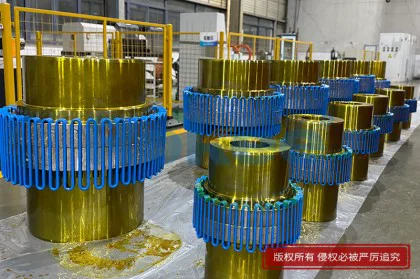
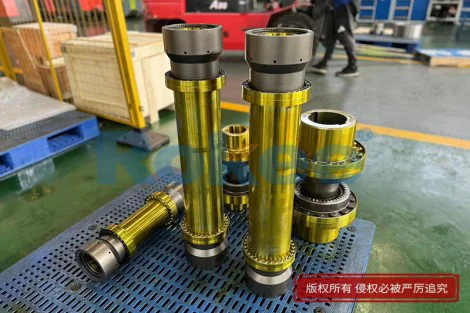
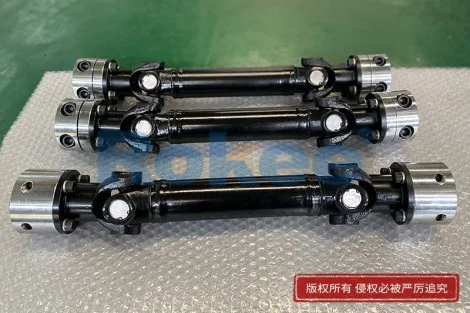
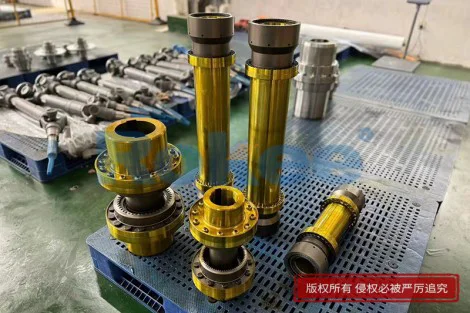
As a high-performance mechanical transmission component, teeth coupling adopts the internal and external gear meshing transmission principle, with unique structural advantages that perfectly fit the long-term continuous and high-load operation requirements of polyurethane sandwich panel production lines. The core structural design of teeth coupling lies in the precise machining of internal and external tooth profiles and reasonable tooth gap setting. The meshing fit between the hub external teeth and the sleeve internal teeth can efficiently transmit torque and rotational power, while allowing a certain range of axial, radial, and angular misalignment between the connecting shafts. This adaptive adjustment capability fundamentally solves the transmission jitter and equipment vibration problems caused by minor installation deviations, equipment aging deformation, and operational vibration of the production line transmission shaft system. Different from ordinary rigid couplings that are prone to rigid extrusion and local wear under misalignment conditions and flexible couplings that have insufficient torque transmission capacity, teeth coupling achieves a balanced combination of high rigidity and moderate flexibility, maintaining stable and efficient power output under long-term high-load operation without excessive energy loss or component fatigue damage.
The cost-effective advantages of matching teeth coupling with polyurethane sandwich panel production lines are first reflected in the improvement of production stability and product yield. In the polyurethane foaming and lamination stage, the production line requires extremely stable transmission speed and pressure balance. Slight fluctuations in operating speed will lead to uneven mixing of polyurethane raw materials, inconsistent foaming density, and gaps in the composite bonding interface between the core material and the surface layer. The stable torque transmission performance of teeth coupling ensures synchronous and uniform operation of the roller forming system, foaming spraying system, and lamination conveying system. The precise power output avoids running speed deviation of each equipment module, makes the polyurethane foaming reaction fully and evenly carried out in a constant-temperature and constant-speed environment, ensures consistent thickness, uniform density, and firm composite bonding of finished panels, and effectively reduces the defective and rework rate caused by transmission instability. The improvement of product yield directly reduces the waste of polyurethane raw materials, surface coil materials, and labor costs, and optimizes the unit material consumption level of panel production, bringing direct cost-saving benefits for enterprise production.
In terms of equipment operation and maintenance costs, the application of teeth coupling significantly reduces the long-term equipment loss and maintenance investment of polyurethane sandwich panel production lines. The tooth profile of teeth coupling is specially optimized and processed, usually with a crowned tooth structure, which makes the tooth surface contact evenly during meshing transmission, avoids stress concentration at the tooth tip and local excessive wear, and greatly improves the wear resistance and fatigue resistance of the component. The closed structural design of teeth coupling can form an independent lubrication space, which effectively isolates external dust, moisture, and industrial debris in the production workshop, prevents lubricant leakage and impurity invasion, and maintains a good long-term lubrication state of the meshing tooth surface. This structural advantage enables the teeth coupling to maintain stable transmission performance in the complex production environment of polyurethane foaming and processing, reducing the frequency of component failure and replacement. Traditional transmission components need frequent inspection, lubrication replacement, and parts renewal under continuous production conditions, with high daily maintenance labor and material costs, and frequent equipment shutdowns for maintenance will affect production continuity. In contrast, teeth coupling has a long service life and low failure rate, which reduces the number of daily maintenance operations and spare parts replacement frequency, cuts down the long-term equipment maintenance cost of the production line, and maximizes the effective operating time of the production equipment.
The compact structural characteristics of teeth coupling also bring implicit cost optimization space for the layout and operation of polyurethane sandwich panel production lines. Teeth coupling has a small overall installation volume and compact structural layout, which can adapt to the narrow installation space of each transmission node of the integrated sandwich panel production line without occupying excessive equipment layout space. This feature is conducive to the compact and orderly overall layout of the production line, optimizing the production workshop space utilization rate, and avoiding the need to adjust equipment layout or expand workshop space due to the large volume of transmission components, thus saving the fixed investment cost of production site transformation. At the same time, the efficient transmission efficiency of teeth coupling reduces power loss in the torque transmission process. In the long-term continuous operation of the production line, the reduction of invalid power loss can effectively lower the overall energy consumption level of the equipment, reduce the daily power consumption cost of panel production, and form a long-term energy-saving and cost-reducing advantage for enterprise mass production.
The combination of teeth coupling and polyurethane sandwich panel production lines also optimizes the flexible production capacity and equipment adaptability of the production system. Modern sandwich panel manufacturing enterprises often need to adjust production parameters according to different product specifications, such as adjusting panel thickness, production speed, and raw material ratio to meet the differentiated market demand. The teeth coupling has strong adaptive load capacity, which can maintain stable transmission state under different operating speeds and variable load conditions, and will not produce transmission failure or performance attenuation due to frequent parameter adjustment of the production line. This good adaptability enables the production line to switch flexibly between different production modes, improve the flexibility and versatility of production equipment, avoid the performance limitation of transmission components restricting product iteration and production adjustment, and enable enterprises to quickly respond to market demand changes. The improved production flexibility can enrich product categories, expand market service scope, and bring more potential economic benefits while ensuring the stable operation of existing production lines.
From the perspective of long-term equipment depreciation and asset utilization, the scientific matching of teeth coupling effectively prolongs the overall service life of polyurethane sandwich panel production lines. The transmission system is the core operating component of the production line, and the operating state of transmission components directly affects the service life of the main equipment. The buffer adjustment capability of teeth coupling can offset the mechanical vibration and impact load generated during the start-stop and variable-speed operation of the production line, reduce the rigid impact of torque fluctuation on the main equipment shaft system, roller system, and foaming system, and avoid structural fatigue and partial damage of the main equipment caused by long-term vibration impact. Protecting the core components of the production line reduces the aging and damage speed of the main equipment, prolongs the overall service cycle of the production line, and makes the fixed asset investment of enterprises obtain longer service benefit. The extension of equipment service life averts the frequent update and transformation of production line equipment, reduces the long-term fixed asset investment pressure of enterprises, and further improves the comprehensive cost performance of production operation.
In the current fiercely competitive sandwich panel market, product quality stability and production cost control ability are the core competitiveness of manufacturing enterprises. Many enterprises often focus on optimizing foaming formulas and automated control systems in production line upgrading and transformation, while ignoring the cost loss caused by backward performance and unstable operation of basic transmission components. The application of teeth coupling provides a low-input and high-return optimization scheme for the upgrading of polyurethane sandwich panel production lines. It does not need to carry out large-scale transformation and replacement of the main production equipment, but only realizes scientific matching of basic transmission components, which can significantly improve production stability, reduce defective product rate, cut maintenance and energy consumption costs, and optimize long-term equipment operation benefits. This incremental optimization mode with low transformation difficulty and obvious comprehensive benefits is very suitable for the iterative upgrading and cost control needs of medium and large-scale sandwich panel production enterprises.
In conclusion, the organic combination of polyurethane sandwich panel production line and teeth coupling forms a highly cost-effective industrial production configuration. The excellent torque transmission stability, adaptive misalignment adjustment capability, wear resistance and durability of teeth coupling perfectly fit the continuous, high-precision and high-load production characteristics of polyurethane sandwich panels. This matching mode not only solves many pain points in the operation of traditional production lines such as unstable transmission, easy equipment wear, high maintenance consumption and low product yield, but also realizes multi-dimensional cost optimization including material consumption saving, energy consumption reduction, maintenance cost reduction and service life extension. With the continuous development of the sandwich panel industry towards high efficiency, precision and low consumption, the reasonable application of high-performance basic transmission components represented by teeth coupling will become an important means for manufacturing enterprises to reduce comprehensive production costs, stabilize product quality and enhance market competitiveness. For modern polyurethane sandwich panel production systems, the combination of optimized production line process and high-performance transmission components is an inevitable trend of industrial upgrading, and also a core choice to realize sustainable and cost-effective production operation.