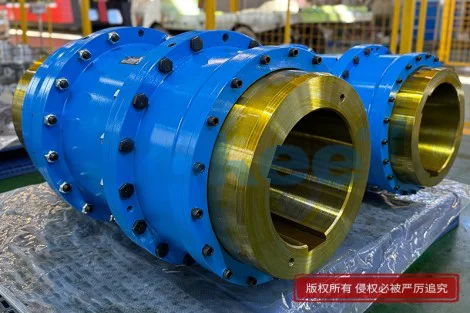
Flexible Power Connection Device Of Cardan Shaft Coupling For Sandwich Panel Machinery
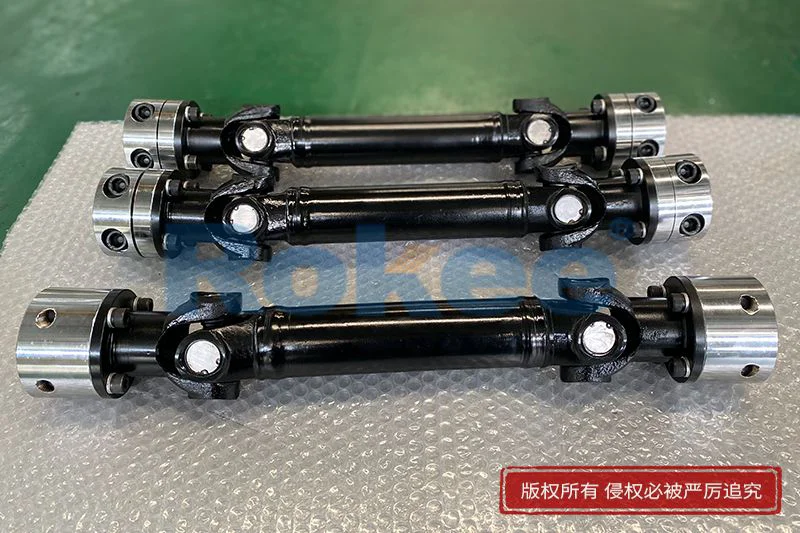
Sandwich panel machinery represents a highly integrated and continuous production system that undertakes the manufacturing of composite insulation panels widely applied in construction, industrial factory buildings, and cold chain facilities. The entire production process covers material uncoiling, surface rolling forming, core material filling and foaming, high-pressure lamination, fixed-length cutting and finished product conveying, requiring coordinated operation of multiple sets of transmission equipment. In such a complex continuous production scenario, the stability and flexibility of power connection directly determine the overall operating efficiency of the production line and the molding quality of sandwich panels. Rigid power connection structures adopted in traditional transmission systems often fail to adapt to the dynamic offset, angular deviation and axial displacement generated during the long-term operation of sandwich panel machinery, resulting in uneven torque transmission, frequent mechanical vibration, increased component wear and even intermittent shutdown of the production line. The flexible power connection device based on cardan shaft coupling is developed and optimized for the operating characteristics of sandwich panel production equipment, relying on its unique articulated flexible structure to realize stable and efficient torque and rotational power transmission under non-coaxial and dynamic variable working conditions, which effectively makes up for the structural defects of traditional rigid connection modes and becomes a core transmission component to ensure the continuous and reliable operation of sandwich panel machinery.
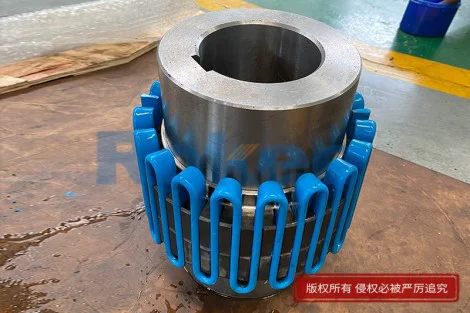
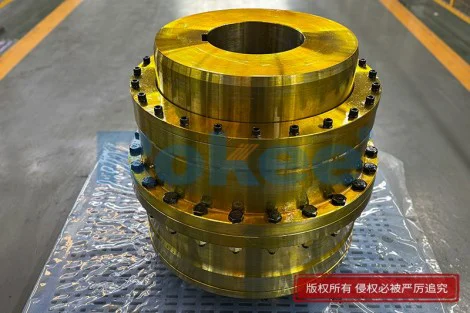
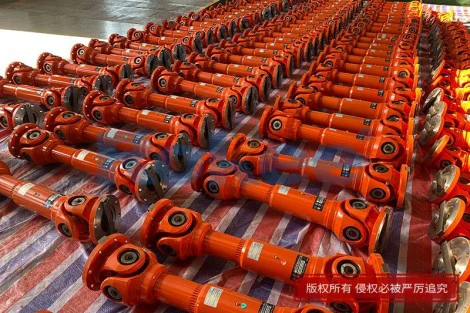
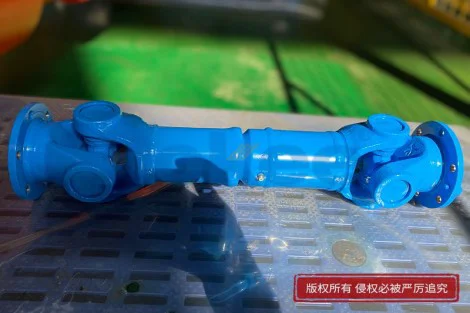
The core structural composition of the cardan coupling flexible power connection device is highly adapted to the heavy-load and continuous operation requirements of sandwich panel machinery, mainly consisting of double joint yokes, precision machined cross shaft and high-strength bearing assemblies, forming a multi-directional flexible hinge transmission system. Different from rigid couplings that rely on fixed bolt connection for single-axis transmission, the cross shaft structure of the device forms two mutually perpendicular flexible hinge pairs with the bearing groups on both sides of the joint yokes. Each journal of the cross shaft is matched with independent low-friction needle roller bearings, which can realize free rotational deflection in multiple spatial directions. This special structural design enables the device to break through the limitation of strict coaxial alignment of traditional transmission components, and can maintain effective power connection when there is angular deviation, parallel offset and axial displacement between the driving shaft and driven shaft of sandwich panel machinery. In the actual assembly state of the production line, the installation positions of various transmission components inevitably have tiny alignment errors due to equipment assembly tolerance, foundation settlement and long-term operational deformation. The flexible compensation capability of the cardan shaft coupling can automatically eliminate the transmission dead zone and stress concentration caused by these errors, ensuring that the power output of the power unit can be accurately and continuously transmitted to the execution components of each process link.
The working principle of the flexible power connection device follows the spatial kinematic law of universal hinge transmission, realizing stable power transmission under dynamic variable working conditions through the cooperative motion of double universal joint structures. In the operation process of sandwich panel machinery, the driving end connected with the power motor drives the active joint yoke to perform constant-speed rotational motion, and the torque and rotational kinetic energy are stably transmitted to the cross shaft through the bearing assembly. Relying on the flexible hinge connection between the cross shaft and the active and passive joint yokes, the cross shaft can generate adaptive rotational deflection according to the real-time offset state between the two shafts, and synchronously drive the passive joint yoke and the connected driven shaft to operate at a uniform speed. A single universal joint structure will produce periodic angular velocity fluctuation when transmitting power under angular deviation conditions, which is easy to cause slight vibration of the transmission system. The optimized double-section cardan shaft structure adopted by the device can effectively offset the angular velocity difference generated by single-joint transmission through phase matching, realizing constant-speed and stable power output of the driven shaft. This kinematic characteristic is particularly critical for sandwich panel machinery, because the lamination and forming process of sandwich panels requires extremely stable operating speed. Slight speed fluctuation will lead to uneven bonding of core materials and surface layers, resulting in defective products such as inconsistent plate thickness and local degumming.
Sandwich panel machinery has distinctive working condition characteristics of continuous heavy load, variable load impact and long-duration operation, which puts forward high requirements on the load resistance, fatigue resistance and dynamic adaptability of power connection components. In the full-cycle production process, the equipment will face instantaneous load impact caused by material feeding deviation, foaming material density fluctuation and mechanical operation switching. Traditional rigid connection parts are prone to local stress concentration under such impact loads, leading to bolt loosening, component deformation and even fatigue fracture after long-term accumulation. The cardan shaft coupling flexible power connection device has excellent buffer and energy absorption performance through its flexible hinge structure. When the production line generates instantaneous load fluctuation and vibration impact, the multi-directional deflection of the cross shaft and the flexible rotation of the bearing assembly can absorb and release the instantaneous impact force in time, avoid the direct transmission of impact load between the driving and driven shafts, and protect the core transmission components such as motors, reducers and transmission shafts from impact damage. At the same time, the overall structure of the device adopts high-strength integral forging and precision machining technology, which has excellent torsional rigidity and structural stability, and can stably bear the high-torque load required by the high-speed lamination and conveying links of sandwich panels, ensuring that no torsion deformation or power attenuation occurs during long-term heavy-load operation.
The outstanding application advantages of the flexible power connection device are fully reflected in the adaptability to the complex layout of sandwich panel production lines and the improvement of production stability. The production line of sandwich panels belongs to a three-dimensional multi-process integrated system, with staggered spatial layout of equipment in each process link, and the transmission shafts of different functional units often have spatial cross angles and axial distance differences. The cardan shaft coupling can adapt to the spatial transmission requirements of multiple angles and variable axial distances, and can normally transmit power when the shaft intersection angle reaches a certain range, which greatly reduces the difficulty of equipment layout and installation. For the segmented transmission structure of long-distance conveying and multi-station forming of sandwich panel machinery, the flexible connection characteristic of the device can unify the operating rhythm of each transmission section, avoid the asynchronous operation problem caused by local transmission deviation, and ensure the consistency of material conveying speed, pressing speed and cutting speed in the whole production line. This synchronous operation optimization effect directly improves the overall forming precision of sandwich panels, effectively reducing the rate of defective products caused by transmission instability in the production process.
In terms of long-term equipment operation and maintenance, the flexible power connection device of cardan shaft coupling also has significant practical value compared with traditional connection structures. The rigid transmission system needs regular precision calibration of shaft alignment during daily operation, and slight alignment deviation will lead to accelerated wear of gears, bearings and other components, increasing the frequency of equipment maintenance and replacement of wearing parts. The device relies on its inherent flexible compensation capability, which can tolerate reasonable installation errors and operational dynamic deviations, reducing the frequency of shutdown calibration and daily maintenance of the production line. The overall structural design is compact and reasonable, with standardized component matching, which is convenient for daily inspection and partial replacement of worn parts. In the long-term continuous production mode of sandwich panel machinery, this maintenance advantage can effectively reduce equipment downtime and maintenance cost, improve the overall operation rate of the production line, and create more stable production benefits for industrial production. In addition, the stable power transmission effect can reduce the mechanical vibration and friction noise generated during equipment operation, optimize the on-site production environment, and realize low-noise and high-efficiency operation of the production line.
With the continuous upgrading of sandwich panel manufacturing technology towards high precision, high efficiency and intelligent production, the production line equipment is developing in the direction of higher operating speed and more compact structural layout, which puts forward higher standard requirements for the flexibility, stability and durability of power connection devices. The traditional rigid transmission connection mode has been unable to adapt to the high-precision production demand of new-type sandwich panels, while the cardan shaft coupling flexible power connection device, with its excellent multi-dimensional compensation performance, stable heavy-load transmission capability and strong working condition adaptability, can perfectly match the upgrading and iteration of sandwich panel machinery. In the actual production and application of various types of sandwich panel production lines, including polyurethane foam panels, rock wool composite panels and glass wool insulation panels, the device can maintain stable operating state, effectively solve various transmission failure problems caused by dynamic working condition changes, and provide reliable power transmission guarantee for the full-automatic continuous production of sandwich panels.
In conclusion, the flexible power connection device of cardan shaft coupling forms a highly matched transmission solution for sandwich panel machinery based on its unique flexible hinge structure, reliable kinematic principle and excellent working condition adaptability. It not only solves many pain points of traditional rigid power connection in the application of sandwich panel production equipment, such as poor deviation adaptability, easy vibration and wear, and high maintenance frequency, but also effectively improves the overall operating stability, production precision and operational efficiency of the production line. As an indispensable core flexible transmission component in the field of sandwich panel machinery manufacturing, it plays an irreplaceable role in promoting the stable operation and technical upgrading of composite panel production equipment, and has broad application prospects and practical promotion value in the continuous and efficient production of building insulation composite materials.