Serpentine Spring Coupling
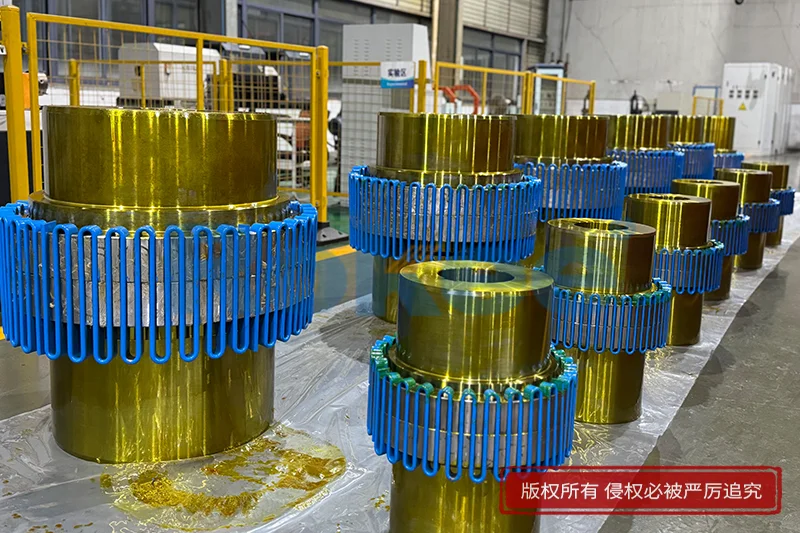
Serpentine spring coupling is a high-performance metal flexible transmission component widely applied in modern mechanical transmission systems, serving as a critical connecting part between driving and driven shafts. Distinct from traditional rigid and ordinary elastic couplings, it adopts a unique serpentine curved spring structure embedded in the tooth grooves of two symmetrical half couplings to realize torque transmission. This ingenious structural design integrates excellent torque transmission capacity, vibration absorption, impact resistance and shaft deviation compensation functions. It can effectively buffer instantaneous impact loads generated during equipment startup, operation and shutdown, reduce mechanical vibration and noise, and make up for minor axial, radial and angular deviations between connected shafts caused by installation errors or equipment operation wear. With outstanding fatigue resistance and stable elastic performance, it adapts to complex and variable working conditions, ensuring the stability, safety and service life of mechanical transmission systems in various industrial scenarios.
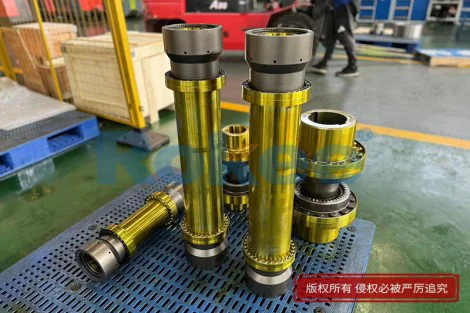
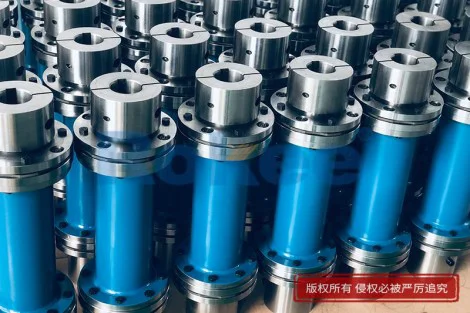
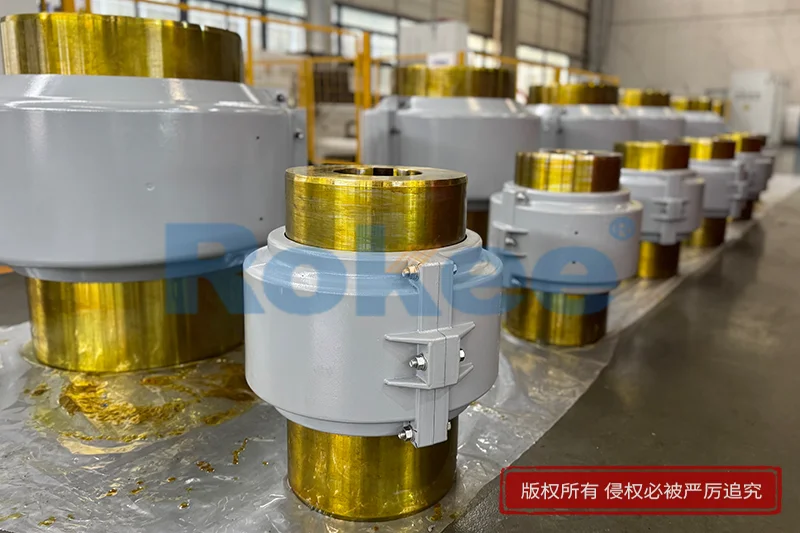
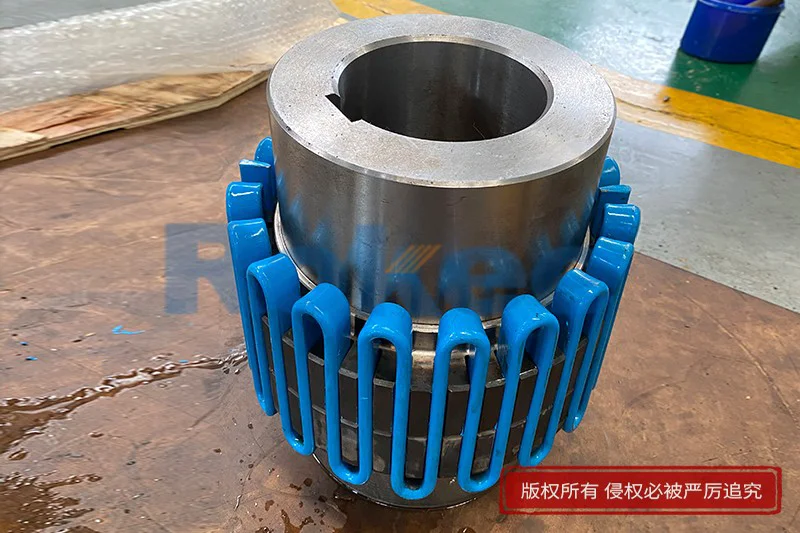
The core structural composition of serpentine spring coupling is simple and precise, mainly consisting of two half coupling hubs, a serpentine spring strip and a protective shell, with each component undertaking irreplaceable functional responsibilities. The two half coupling hubs are symmetrically arranged at both ends, and their inner circumferential surfaces are machined with regular arc tooth grooves, which are the key matching structures for fixing and supporting the serpentine spring. Made of high-strength alloy steel or premium cast materials, the hubs feature high rigidity, wear resistance and structural stability, capable of bearing long-term torque load without deformation or damage. The serpentine spring strip, as the core elastic transmission element, is processed into a continuous wave serpentine shape through precise cold pressing and heat treatment processes. It boasts uniform elasticity, excellent fatigue resistance and strong deformation recovery ability, which determines the coupling’s vibration damping and deviation compensation performance. The outer protective shell tightly wraps the internal structure, playing a vital role in isolating external dust, impurities and moisture, while locking lubricating grease inside to maintain long-term lubrication of the friction pair and avoid abnormal wear during operation.
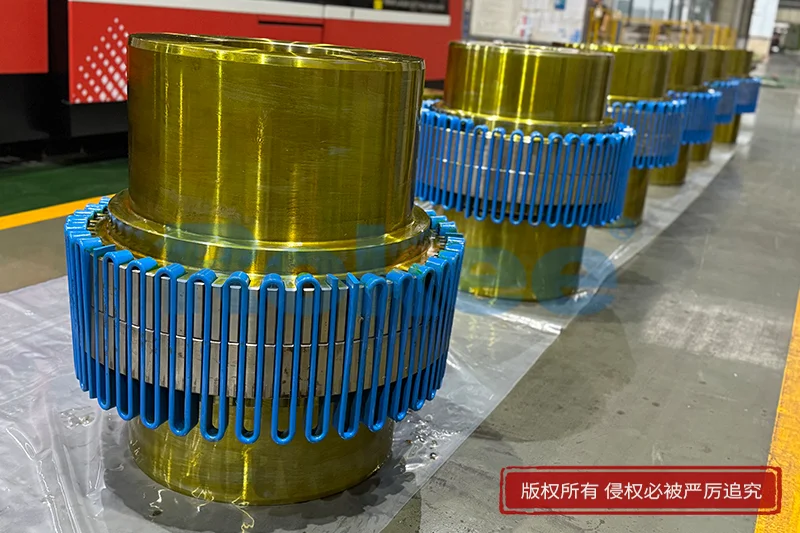
The working principle of serpentine spring coupling is based on elastic deformation and flexible force transmission, forming a unique variable-stiffness transmission mechanism different from conventional transmission parts. When the mechanical equipment starts and runs, the driving shaft drives the active half coupling to rotate, and the arc teeth on the active hub continuously push the embedded serpentine spring strip. The spring strip then transmits the rotational torque to the driven half coupling, realizing the synchronous operation of the two shafts. In the process of low-load operation, the spring produces slight elastic deformation, and the contact points between the spring and the tooth grooves remain relatively scattered, presenting low transmission stiffness to effectively buffer tiny vibration and operation jitter. When the transmission torque increases with equipment load changes, the serpentine spring deforms further along the arc tooth surfaces, making the force-bearing contact points between the spring and tooth grooves gradually converge. This structural change increases the overall transmission stiffness of the coupling, enabling it to stably bear higher torque loads while maintaining flexible buffering performance.
One of the most prominent advantages of serpentine spring coupling is its superior multi-directional deviation compensation capability, which solves many common operation problems caused by shaft misalignment in mechanical transmission systems. During equipment installation, it is inevitable to produce minor axial spacing errors, radial offset and angular deflection between the driving and driven shafts due to manual operation and equipment precision limitations. Long-term operation of misaligned shafts will cause additional transmission resistance, component wear and equipment vibration, seriously affecting the operation stability. The serpentine spring’s flexible deformation characteristics can adaptively compensate for these three types of shaft deviations. Its axial telescopic deformation offsets axial spacing changes during equipment operation, radial bending deformation adapts to radial offset of the two shafts, and torsional deformation corrects angular deflection errors. This flexible compensation mechanism avoids rigid friction and extrusion between shaft parts, greatly reducing the failure rate of transmission components and extending the overall service life of mechanical equipment.
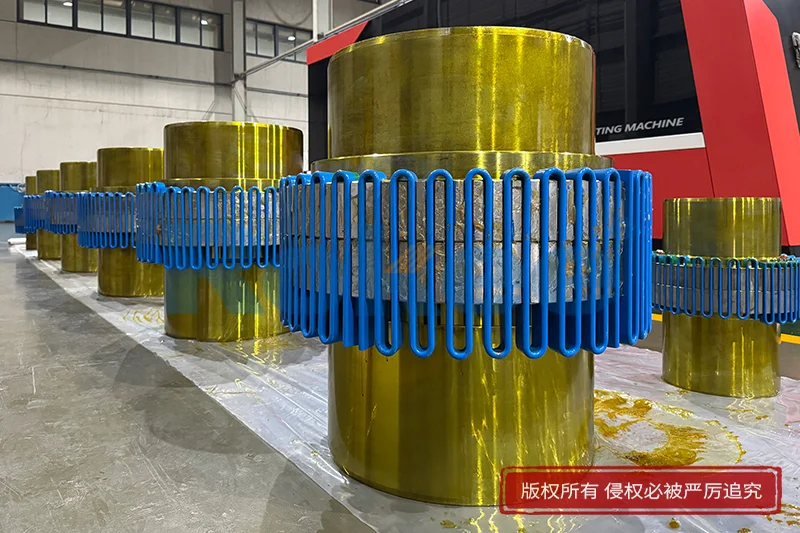
Serpentine spring coupling possesses excellent vibration damping and impact resistance, making it suitable for equipment with frequent startup, variable load and impact load working conditions. In industrial production, many mechanical devices will generate instantaneous impact torque during startup, sudden load increase or sudden stop. Rigid couplings cannot buffer such impact force, which will directly act on shafts, bearings and transmission components, easily causing fatigue damage and structural deformation. As a metal elastic flexible component, the serpentine spring can convert instantaneous impact kinetic energy into elastic potential energy through rapid elastic deformation, and slowly release the energy in the subsequent operation process. This process effectively weakens impact vibration, reduces transmission noise, and avoids resonance phenomena in the mechanical system. Compared with rubber elastic couplings, its metal spring structure has stronger bearing capacity and better high-temperature resistance, and will not age or deform rapidly under long-term high-load and high-temperature working environments, maintaining stable vibration damping performance for a long time.
The torque transmission performance of serpentine spring coupling is efficient and stable, achieving a perfect balance between high torque bearing capacity and flexible transmission. Benefiting from the special serpentine structure, the spring strip forms multi-point uniform contact with the tooth grooves of the two half couplings during torque transmission, which disperses the concentrated torque load effectively. This uniform force-bearing mode avoids local stress concentration common in traditional couplings, prevents local wear and fracture of transmission parts, and improves the overall torque transmission efficiency. The variable-stiffness transmission characteristic enables the coupling to adapt to dynamic load changes in equipment operation. It maintains flexible buffering under light load and ensures rigid and stable torque output under heavy load, without torque loss or transmission lag. In addition, the coupling has no reverse transmission clearance, which ensures high precision and sensitive response of power transmission, meeting the operation requirements of mechanical equipment with high transmission accuracy standards.
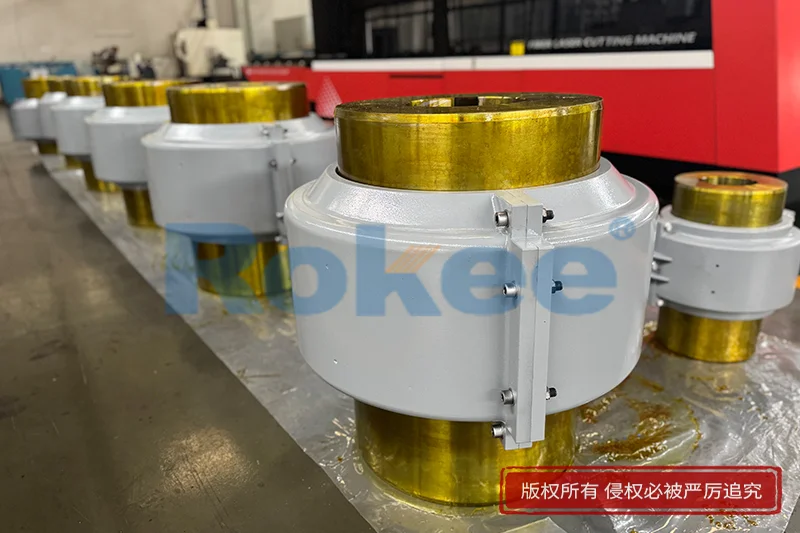
The material selection and processing technology of serpentine spring coupling determine its excellent durability and operational stability. The core serpentine spring is made of high-grade spring alloy steel, which undergoes strict quenching and tempering heat treatment to obtain uniform internal metal structure, high tensile strength and outstanding fatigue resistance. This material can withstand millions of times of elastic deformation without fatigue failure, adapting to long-term continuous operation of industrial equipment. The half coupling hubs adopt precision casting or integral forging molding technology, with fine and dense internal texture, no pores and cracks, ensuring high structural rigidity and wear resistance. The tooth groove surfaces are processed by precision grinding to ensure smooth matching with the spring strip, reducing friction and wear during relative movement. All structural parts undergo anti-rust and anti-corrosion surface treatment, which can resist the erosion of humid, dusty and weakly corrosive working environments, effectively delaying component aging and failure.
Serpentine spring coupling features a compact and reasonable structural design with high space utilization and convenient installation and maintenance. The overall structure is highly integrated, with no redundant auxiliary parts, realizing large torque transmission within a small volume, which is very suitable for mechanical equipment with limited installation space. Its assembly structure is simple and intuitive, requiring no complex professional tools for installation and disassembly. The split protective shell design facilitates staff to quickly inspect internal spring wear and lubrication status. In terms of daily maintenance, the coupling adopts a long-term fixed lubrication mode. After the initial filling of high-performance lubricating grease, the closed protective shell can lock the lubricant stably, avoiding grease volatilization and contamination. It does not need frequent oil replenishment and maintenance, greatly reducing daily operation and maintenance workload, saving human and time costs for industrial production, and improving the continuous operation efficiency of equipment.
The adaptability of serpentine spring coupling to working conditions is extremely wide, covering various conventional and special industrial operation scenarios. It can operate stably in a wide temperature range, with stable structural elasticity and transmission performance unaffected by normal low and high temperature changes, avoiding the performance attenuation problem of non-metallic couplings in extreme temperature environments. It adapts to continuous stable operation of low-speed and high-torque heavy-duty equipment, and also meets the high-speed rotating transmission requirements of precision mechanical equipment. Whether it is steady load operation in conventional production lines, frequent variable load operation in processing equipment, or intermittent impact load operation in engineering machinery, the coupling can maintain stable working performance. Meanwhile, its closed structural design can adapt to harsh working environments such as dust, humidity and slight vibration, with strong environmental adaptability and low failure rate in complex working conditions.
In practical industrial applications, serpentine spring coupling plays a key role in protecting mechanical equipment and reducing operation costs. The flexible transmission and vibration damping performance can effectively filter out vibration and impact in the transmission process, avoid vibration fatigue damage of shafts, bearings, gears and other core components, and greatly reduce the failure probability of key equipment parts. Stable transmission performance reduces equipment operation jitter and transmission error, improves the overall operation precision and production stability of mechanical systems, and helps enterprises reduce product defective rates caused by equipment operation instability. Its long service life and maintenance-free characteristics reduce the frequency of equipment shutdown maintenance and part replacement, improve the continuous operation rate of production lines, and effectively reduce the long-term operation and maintenance costs of industrial equipment, bringing good economic benefits to production activities.
Compared with other types of flexible couplings, serpentine spring coupling has comprehensive performance advantages and broader application prospects. Rubber and plastic elastic couplings rely on non-metallic materials for buffering, but are prone to aging, deformation and failure under high temperature, high load and long-term operation, with limited torque bearing capacity. Grid couplings have single vibration damping effect and poor deviation compensation ability, while gear couplings have large transmission rigidity and poor impact buffering performance. In contrast, serpentine spring coupling combines the high rigidity and high torque resistance of metal transmission parts with the flexible buffering performance of elastic components, realizing the integration of high efficiency, stability, durability and low maintenance cost. With the continuous upgrading of modern industrial mechanical equipment towards high speed, high precision and high load, this coupling has gradually become the preferred transmission connecting part in more industrial fields.
With the continuous development of mechanical manufacturing technology, the performance of serpentine spring coupling is constantly optimized and upgraded, and its application scope is further expanded. Modern precision processing and heat treatment technologies further improve the structural precision, elastic stability and fatigue resistance of the coupling, making it more adaptable to high-precision and high-efficiency modern mechanical transmission systems. Continuous optimization of structural design makes its volume more compact and installation matching more flexible, which can meet the personalized matching needs of various new mechanical equipment. As industrial production puts forward higher requirements for equipment operation stability, energy conservation and service life, serpentine spring coupling, with its comprehensive and excellent performance, will continue to play an irreplaceable role in industrial transmission fields, and become an important basic component to promote the stable and efficient operation of modern mechanical systems.