Analysis Of Cardan Shaft Coupling As Core Component Of PUR Sandwich Panel Machinery
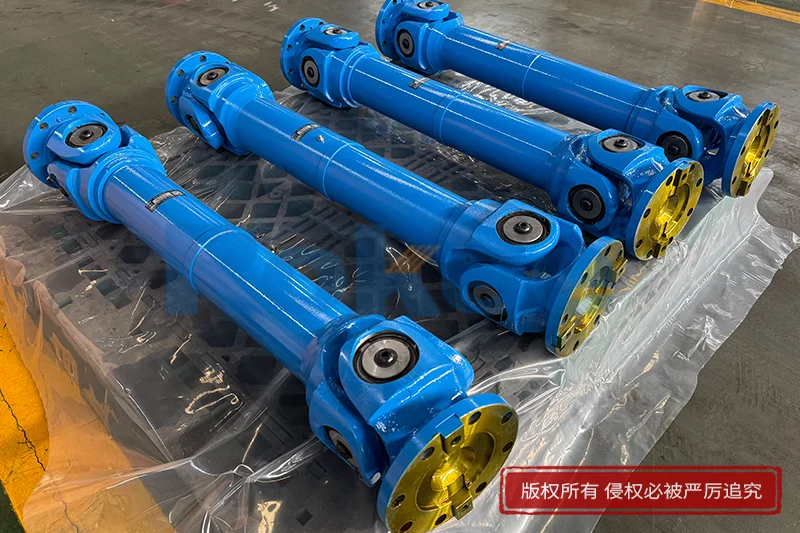
The manufacturing and continuous production of PUR sandwich panels rely entirely on the stable coordinated operation of the entire set of special mechanical equipment, where power transmission accuracy, operational motion stability and structural load-bearing adaptability directly determine the forming quality, production continuity and long-term operational efficiency of finished sandwich panels. PUR sandwich panel production machinery belongs to heavy-duty continuous industrial processing equipment, integrating raw material feeding, polyurethane high-pressure foaming, panel composite pressing, continuous traction conveying, fixed-length cutting and finished product discharging into one integrated production line. Each functional module in the production line needs to maintain synchronous rotational speed and stable torque output during long-cycle uninterrupted operation, and any slight deviation in power transmission or unstable motion operation will directly lead to uneven foaming density of PUR core materials, inconsistent bonding strength between upper and lower metal panels and core layers, dimensional deviation of finished panel specifications, and even frequent shutdown maintenance of the entire production line, causing unnecessary production stagnation and production efficiency loss. In the overall mechanical structure configuration of PUR sandwich panel machinery, various mechanical connecting and transmission components undertake different basic operational functions, among which the cardan shaft coupling stands out as an indispensable core transmission component, undertaking the key task of connecting driving power components and driven working components and realizing efficient and stable torque and rotational motion transmission under complex operating conditions. Unlike ordinary rigid transmission connecting parts that require extremely high installation alignment accuracy and cannot adapt to operational structural displacement, the cardan shaft coupling relies on its unique articulated mechanical structure design, which can effectively compensate for angular deviation, axial displacement and radial misalignment between connected shafts generated during equipment installation and long-term operation, ensuring continuous and consistent power transmission even when the relative position of each transmission shaft of PUR sandwich panel machinery changes dynamically, and becoming a fundamental guarantee for the long-term stable and reliable operation of the entire production line equipment.
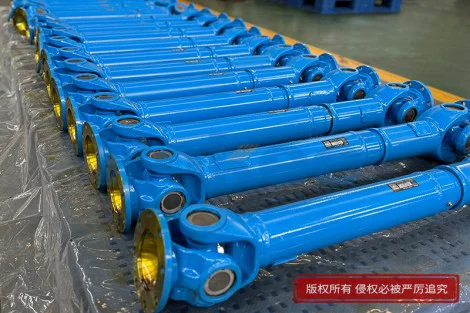
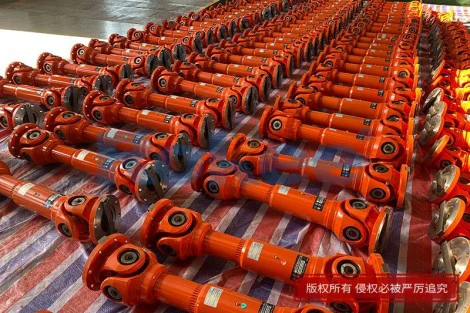
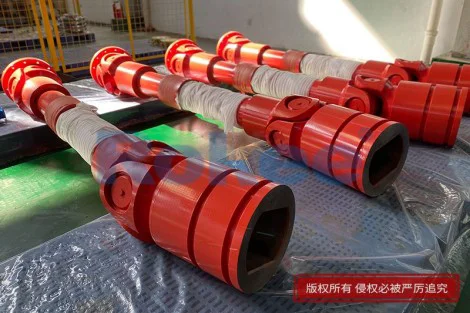
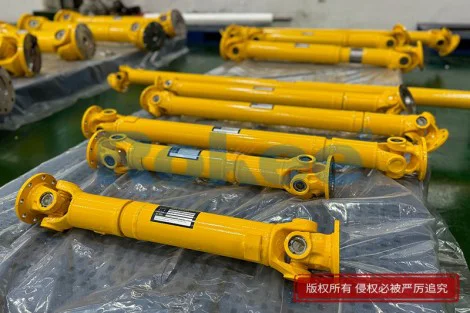
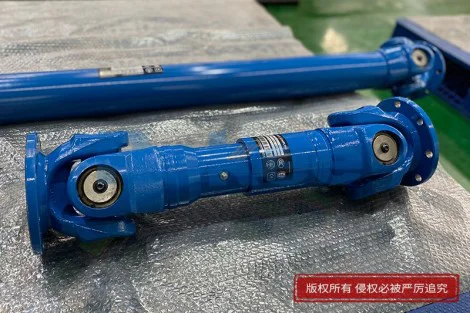
The basic structural composition and working mechanism of cardan shaft couplings lay a solid mechanical foundation for their reliable application in PUR sandwich panel production machinery. A standard cardan shaft coupling is a precision forged and processed mechanical assembly mainly composed of two fork-shaped joint bodies, a central cross shaft and matched low-friction bearing components, with no complex auxiliary transmission structures or redundant functional accessories, and the simple and durable structural form enables it to adapt to harsh continuous industrial production working environments for a long time. The two fork-shaped joints are respectively connected to the driving shaft end of the power drive device and the driven shaft end of the working execution part of the sandwich panel machinery, and the central cross shaft is used as the core force-bearing and connecting component to realize the flexible hinged connection between the two fork-shaped joints. When the driving shaft starts to rotate and output torque, the fork-shaped joint connected to the driving end drives the central cross shaft to perform synchronous rotational motion, and the cross shaft further transmits rotational power and torque to the fork-shaped joint at the driven end, thereby driving the normal operation of the driven working shaft and completing the basic power transmission process. The core operational advantage of this structural design lies in its unique deflection adaptation function; the cardan shaft coupling can allow the connected driving and driven shafts to form a certain angle deflection within a reasonable range while maintaining uninterrupted power transmission, and the typical adaptable deflection angle can meet the daily operational deviation requirements of heavy-duty industrial machinery. For single-section cardan shaft couplings, they can stably cope with small-angle misalignment changes in the transmission process, while the double-section combined structural form can further balance the angular velocity difference generated during rotation, ensuring that the input and output rotational speeds remain consistent and avoiding periodic vibration and torque fluctuation caused by uneven rotational speed in the transmission process.
In the actual assembly and long-term operation process of PUR sandwich panel machinery, various unavoidable misalignment and displacement problems between transmission shafts are inevitable, which makes the adaptive compensation performance of cardan shaft couplings irreplaceable in the equipment transmission system. During the equipment installation and commissioning stage of the sandwich panel production line, due to the large overall structural scale of the machinery, the heavy weight of a single functional module and the slight structural deformation of the base frame after long-term load-bearing placement, it is impossible to achieve complete absolute coaxial alignment between the driving shaft of the power motor and reducer and the driven shafts of subsequent traction rollers, pressing rollers and conveying mechanisms. Ordinary rigid couplings cannot tolerate any slight installation misalignment, and forced assembly under misalignment conditions will cause huge additional mechanical stress on the shaft body, bearings and connecting parts, leading to rapid wear of parts, shaft body deformation and even early equipment failure after a short period of operation. In addition to installation deviation, during the continuous high-load production operation of PUR sandwich panel machinery, the equipment will generate continuous mechanical vibration due to long-term rotational operation and material extrusion and pressing work; meanwhile, the mechanical structure will produce subtle thermal expansion and contraction displacement under the influence of operating temperature changes and continuous load-bearing stress accumulation. These dynamic changes will cause real-time changes in the relative position and angle between each transmission shaft of the equipment. The cardan shaft coupling can effectively absorb and compensate for angular deviation, axial telescopic displacement and radial parallel misalignment generated in these scenarios through its flexible hinged structure, eliminate additional mechanical stress caused by misalignment transmission, protect key mechanical components such as transmission shafts and bearings from abnormal impact and wear, and greatly extend the overall service life and stable operation cycle of the entire sandwich panel production equipment.
The operational stability and transmission efficiency of cardan shaft couplings are directly related to the product processing quality and production operational stability of PUR sandwich panels, and their reliable working performance runs through every key production link of the entire panel manufacturing process. In the PUR sandwich panel production line, the continuous traction and conveying mechanism is responsible for stably pulling the metal surface panels and composite semi-finished panels forward at a constant speed, and the uniformity of the traction speed directly determines the thickness uniformity of the PUR foaming core layer and the bonding tightness between the panel and the core material. If the power transmission of the traction mechanism is unstable and the rotational speed fluctuates periodically, the traction speed will be fast and slow intermittently, resulting in uneven foaming expansion time of polyurethane materials, local insufficient foaming or excessive foaming of the core layer, and inconsistent overall structural density of the finished sandwich panels, which seriously affects the mechanical strength and thermal insulation performance of the final products. The cardan shaft coupling can maintain highly consistent torque and rotational speed transmission under continuous variable load and dynamic misalignment conditions, avoid rotational speed fluctuation and power loss in the transmission process, ensure that the traction conveying mechanism runs at a constant and stable speed for a long time, and provide a stable production operating condition for the uniform foaming and firm composite bonding of PUR materials. In the composite pressing link of the production line, the pressing roller group needs to maintain stable rotational torque and uniform pressing pressure to ensure that the upper and lower metal panels and the PUR foaming core layer are closely bonded without gaps and local depressions. The cardan shaft coupling can withstand the high torque load generated during the pressing operation, realize stable power output without jitter and stagnation, ensure the synchronous operation of each pressing roller, and effectively avoid product quality defects such as panel deviation, core layer delamination and uneven pressing thickness caused by asynchronous operation of mechanical components.
Compared with other types of transmission coupling components applied in industrial machinery, cardan shaft couplings show more targeted application advantages and higher operational adaptability matching the working characteristics of PUR sandwich panel machinery. Rigid couplings, although simple in structure and low in initial matching cost, have extremely harsh requirements for shaft body alignment, cannot compensate for any installation and operation misalignment, and are prone to severe vibration, part wear and transmission failure in the long-term continuous operation of heavy-duty sandwich panel production equipment, requiring frequent shutdown inspection and replacement, which seriously affects production continuity and increases later maintenance labor and time costs. Elastic couplings rely on elastic components for buffer transmission, which can alleviate part of vibration and impact, but their torque bearing capacity is limited, and they are easy to age and deform under long-term high-load and high-frequency operating conditions, unable to meet the high torque transmission demand of heavy-duty PUR sandwich panel pressing and traction mechanisms, and the aging failure of elastic parts will also lead to unstable transmission accuracy and affect product processing quality. In contrast, cardan shaft couplings are made of high-strength alloy materials through forging, heat treatment and precision machining processes, with high overall structural rigidity, strong torque bearing capacity and good wear resistance and fatigue resistance, suitable for long-term uninterrupted heavy-duty industrial working conditions. Its unique flexible hinged transmission mode not only retains high-precision and high-efficiency power transmission performance, but also has excellent misalignment compensation and vibration buffering effects, which can adapt to the complex and changeable operating state of sandwich panel machinery, balance the dual needs of high-load transmission and dynamic displacement adaptation, and achieve a long-term stable operation state that other coupling types cannot match.
The daily maintenance management and reasonable structural matching selection of cardan shaft couplings are crucial to giving full play to their core transmission performance and maintaining the long-term efficient operation of PUR sandwich panel machinery. In the actual production and operation management process, the basic maintenance work of cardan shaft couplings is concentrated in regular lubrication maintenance and regular structural inspection; the bearing and hinge matching parts inside the coupling need to be kept in a good lubrication state for a long time, which can reduce the friction coefficient of relative moving parts, avoid dry friction wear and part heating damage, and maintain stable transmission efficiency and flexible deflection adaptation performance. Regular inspection of the structural connection tightness of the fork-shaped joints and cross shaft components can prevent structural loosening caused by long-term vibration operation, avoid transmission gap increase and rotational speed jitter caused by loose connection parts, and ensure the stability and accuracy of power transmission. In terms of model and structural matching selection, it is necessary to reasonably select the structural form and specification parameters of the cardan shaft coupling according to the actual operating torque, rotational speed, deflection angle range and load change characteristics of different functional transmission parts of PUR sandwich panel machinery. For the main power transmission position of the pressing and traction mechanism with high torque and large load change, it is necessary to select a reinforced cardan shaft coupling structure with higher load-bearing capacity and stronger fatigue resistance; for the auxiliary transmission position with small torque and stable load, a conventional standard structural form can be selected to meet the transmission demand, realizing the matching coordination between component performance and equipment operating conditions, avoiding performance waste caused by over-specification selection or equipment failure caused by under-specification selection.
In the overall development trend of PUR sandwich panel manufacturing industry towards high-efficiency continuous production, high-precision product processing and long-term stable operation of equipment, the core supporting role of cardan shaft couplings in special sandwich panel machinery will become more prominent. With the continuous upgrading of building energy-saving insulation material standards, the market has higher and higher requirements for the dimensional accuracy, structural stability and thermal insulation performance of PUR sandwich panels, which also puts forward stricter technical requirements for the transmission stability and operational reliability of sandwich panel production machinery. As the core transmission component connecting all key power and working parts of the equipment, the cardan shaft coupling is not only a simple mechanical connecting part, but also a key guarantee to stabilize the production process, control product quality and reduce equipment operation and maintenance costs. Its excellent misalignment compensation performance, stable high-load transmission capacity and long service life can effectively reduce the failure rate of the transmission system of PUR sandwich panel machinery, reduce unnecessary production shutdown losses, and help sandwich panel production enterprises realize continuous, efficient and high-quality standardized production. In the follow-up equipment upgrading and mechanical optimization design of PUR sandwich panel production lines, attaching importance to the performance optimization and reasonable matching application of cardan shaft couplings, and combining the actual working characteristics of production machinery to carry out targeted maintenance and management, will always be an important part to ensure the stable operation of production equipment and improve the comprehensive production and operation benefits of the industry.