Universal Driveshaft Improves Production Efficiency Of PU Sandwich Panel Line
The continuous advancement of modern building material manufacturing technology has put forward higher requirements for the stability, continuity and high efficiency of automated production lines. PU sandwich panels, as a core lightweight thermal insulation and structural material widely used in construction, cold chain logistics and industrial enclosure projects, rely heavily on the stable operation of fully automated continuous production lines to ensure product consistency and output scale. In the full-process operation of PU sandwich panel production, power transmission stability is the core foundation that restricts the overall operating efficiency of the line. Slight vibration, power transmission delay or running deviation in the transmission link will trigger a series of production problems such as inconsistent panel foaming density, uneven surface flatness and intermittent line shutdowns, which seriously hinder continuous production capacity. As a flexible and efficient power transmission component, the universal driveshaft fundamentally optimizes the operating state of the PU sandwich panel production line by solving the common pain points of rigid transmission structures in traditional production equipment, and realizes comprehensive improvement in production continuity, product yield and overall operational efficiency of the production line.
PU sandwich panel production is a highly integrated continuous processing process, which integrates multiple sequential processes including raw material feeding, continuous foaming, high-pressure laminating, fixed-size cutting and automatic stacking. All production links are driven by a unified power transmission system, and the synchronous operation of front and rear equipment directly determines the production rhythm and product quality. Traditional PU sandwich panel line mostly adopt rigid fixed-axis transmission structures, which can only adapt to ideal coaxial operating conditions. However, in actual long-term industrial production, affected by equipment installation errors, mechanical vibration, thermal expansion and contraction of equipment components during high-temperature operation, and slight structural deformation after long-term load operation, the transmission axes of various processing equipment on the production line are prone to angular deviation and axial displacement. This non-coaxial operating state will cause rigid transmission parts to bear eccentric load and alternating torque during operation, resulting in periodic vibration, power transmission fluctuation and mechanical friction loss. In the foaming and laminating stage of PU sandwich panels, unstable transmission speed will lead to uneven raw material mixing ratio and inconsistent laminating pressure, resulting in defective products such as partial hollowing, uneven thickness and poor thermal insulation performance of the panels. In severe cases, excessive friction and vibration will cause rapid wear of transmission parts, frequent equipment failures and forced shutdowns for maintenance, greatly reducing the effective operating time of the production line and restricting the improvement of production efficiency.
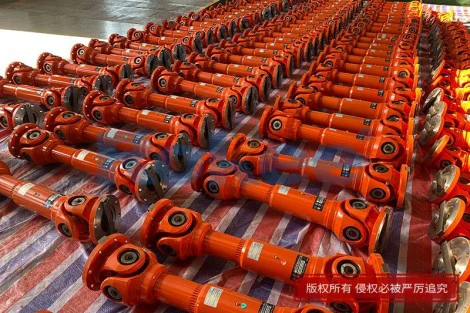
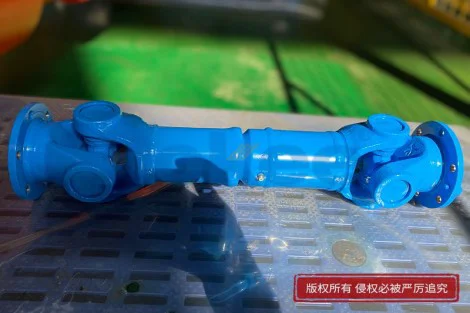
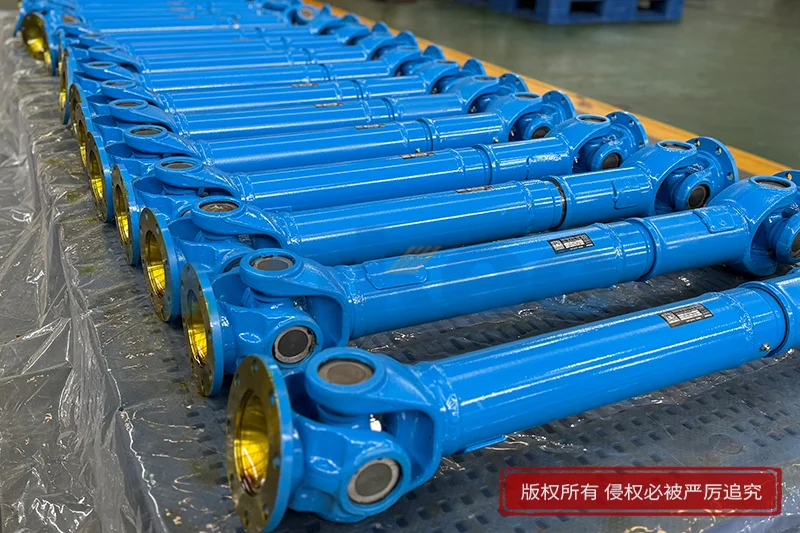
The universal driveshaft abandons the limitations of rigid transmission structures and realizes flexible power transmission based on the mechanical kinematics principle of universal joint hinge connection. The core structure is composed of cross-shaped spider, double-end yokes and telescopic sliding components, which can adapt to multi-dimensional dynamic displacement changes such as angular deflection and axial offset between driving shaft and driven shaft. Different from rigid shafts that can only transmit power under coaxial conditions, the universal driveshaft can maintain stable and continuous torque output even when the connected equipment shafts produce regular or irregular angle changes and position deviations during operation. This flexible transmission characteristic perfectly matches the actual operating state of PU sandwich panel production lines, which are prone to minor axis deviation during long-term continuous operation. In the high-speed continuous production scenario of PU sandwich panels, the universal driveshaft can always keep the transmission speed of each equipment module synchronized, eliminate the speed difference and transmission delay caused by axis misalignment, and ensure that each production link operates in a stable and consistent rhythm.
The optimization effect of universal driveshafts on the production efficiency of PU sandwich panel lines is first reflected in the improvement of production continuity and the reduction of invalid downtime. In traditional transmission systems, minor axis misalignment will be continuously amplified with the extension of operating time, leading to increasing equipment vibration and gradual wear of transmission parts. Production lines often need to stop regularly for inspection, calibration and replacement of worn parts, resulting in a large number of fragmented production interruptions. These frequent short shutdowns not only reduce the total effective production time, but also affect the temperature balance of the foaming system and the continuous feeding state of raw materials, resulting in a large number of unqualified semi-finished products during equipment startup and shutdown. After adopting the universal driveshaft, the flexible compensation function of the universal joint can automatically adapt to the minor axis deviation and structural deformation of the equipment, avoid eccentric load and concentrated friction of transmission parts, significantly reduce the wear and failure rate of core transmission components, and extend the maintenance cycle of the production line. The number of equipment shutdowns caused by transmission failure is greatly reduced, the effective operating rate of the production line is significantly improved, and the continuous and uninterrupted mass production of PU sandwich panels is realized.
In addition to improving equipment stability, the universal driveshaft optimizes product molding quality and reduces production loss, which is an important implicit improvement of production efficiency. The molding quality of PU sandwich panels is extremely sensitive to the operating stability of the production line. The continuous foaming process requires constant and stable transmission speed to ensure uniform mixing and even pouring of polyurethane raw materials. The laminating and shaping process requires consistent operating torque to maintain uniform pressure on the upper and lower surfaces of the panel. The unstable power transmission of traditional rigid shafts will cause instantaneous speed fluctuation of the roller system and conveyor system, resulting in uneven foaming thickness, inconsistent core material density and warped panel edges. These quality problems not only increase the rate of defective products, but also waste raw materials and human resources, and reduce the effective output of qualified products per unit time. The universal driveshaft realizes smooth and non-fluctuating power transmission, eliminates speed jitter and torque deviation in the production process, ensures that the feeding amount, foaming speed and laminating pressure of the production line are always kept within the optimal process range, effectively reduces the defective rate of products, improves the one-time molding qualification rate of PU sandwich panels, and converts more raw material consumption into qualified finished products, realizing the improvement of comprehensive production efficiency from the perspective of yield optimization.
The structural design of the telescopic mechanism of the universal driveshaft also brings significant advantages for the adaptive operation of the PU sandwich panel production line. In the high-temperature foaming and laminating working environment, the metal components of the production line will produce thermal expansion and cold contraction changes with the fluctuation of operating temperature, resulting in tiny axial distance changes between adjacent transmission equipment. Rigid transmission structures cannot adapt to this axial displacement change, which will cause additional extrusion stress or tensile stress on the transmission parts, aggravating equipment vibration and part wear, and even causing equipment jamming in serious cases. The built-in telescopic sliding structure of the universal driveshaft can automatically compensate for the axial length change caused by equipment temperature deformation and mechanical displacement, always maintain the tight and stable connection of the transmission system, avoid equipment operation jitter and shutdown failure caused by axial stress, and further improve the operational stability of the production line in variable temperature working conditions. This adaptive adjustment capability enables the production line to maintain a high-efficiency operating state for a long time without frequent process parameter adjustment and equipment calibration, simplifying production operation procedures and reducing the workload of equipment debugging and maintenance personnel.
From the perspective of long-term production operation cost and efficiency iteration, the application of universal driveshafts also helps PU sandwich panel production lines realize energy saving and consumption reduction, further optimizing comprehensive production benefits. Traditional rigid transmission systems will generate a large amount of friction energy loss due to axis misalignment and eccentric load during operation. The long-term unstable operating state will also increase the operating load of the driving motor, resulting in high energy consumption per unit product. The universal driveshaft optimizes the force state of the transmission system through flexible power transmission, reduces friction resistance and abnormal load in the power transmission process, effectively reduces the invalid energy consumption of equipment operation, and reduces the motor operating load on the premise of ensuring stable power output. Long-term continuous production can form significant energy-saving benefits, reduce the production cost of single PU sandwich panel, and improve the market competitiveness of products. At the same time, the reduction of part wear and equipment failure rate greatly reduces the frequency of spare parts replacement and equipment maintenance investment, saves maintenance time and labor cost, makes the production line put more time and resources into product production, and forms a virtuous cycle of efficient operation.
In the actual industrial production scenario of PU sandwich panels, the efficient operation of the production line is a systematic project, and the optimization of the power transmission link is the key breakthrough point to tap the potential of production efficiency. Many production lines with traditional transmission structures have problems such as low effective operating rate, high defective rate and high maintenance cost after long-term operation, which restrict the upgrading of production efficiency. The universal driveshaft solves many inherent defects of rigid transmission through flexible compensation, stable torque transmission and strong environmental adaptability. It not only solves the common industrial pain points such as equipment vibration, frequent failure and unstable product quality in PU sandwich panel production, but also provides a stable mechanical foundation for the high-speed and continuous operation of automated production lines. With the continuous improvement of market requirements for PU sandwich panel quality and production capacity, the application value of high-performance universal driveshafts in building material production equipment will become more prominent.
To sum up, the universal driveshaft improves the production efficiency of PU sandwich panel lines in multiple dimensions. It improves the stability and continuity of equipment operation, reduces invalid downtime and maintenance cost, optimizes product molding quality and yield, reduces raw material waste and energy consumption, and simplifies production and maintenance operations. As a reliable and efficient power transmission component, it has become an important supporting part for the efficient and intelligent operation of modern PU sandwich panel automated production lines. In the future, with the continuous optimization of mechanical structure and performance parameters of universal driveshafts, it will further release the production potential of building material production lines, help the PU sandwich panel manufacturing industry realize higher production efficiency, better product quality and lower operating cost, and promote the overall upgrading of the industry's intelligent and efficient manufacturing level.