Installation Precautions Of Universal Driveshaft For PU Sandwich Panel Line
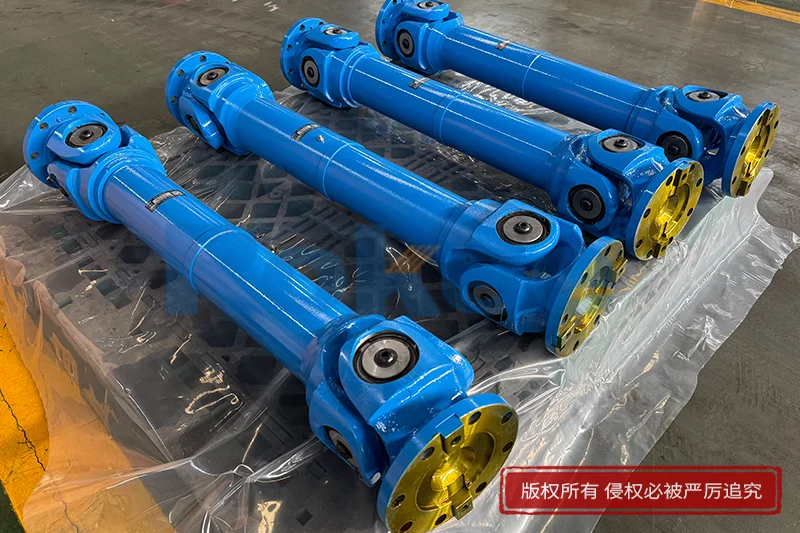
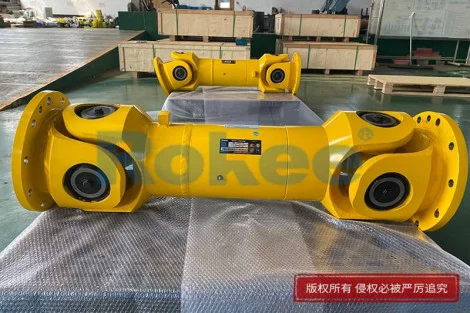
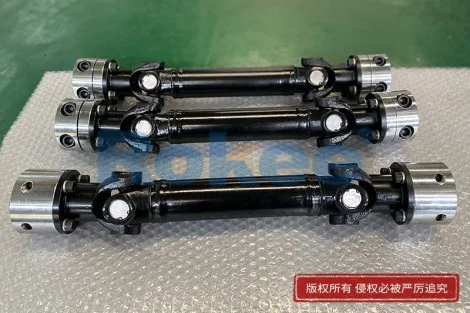
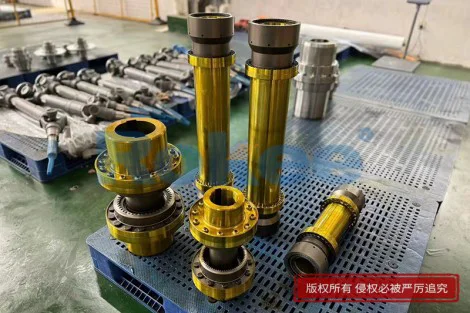
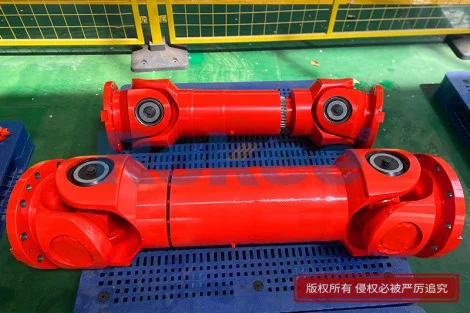
The universal driveshaft serves as a core power transmission component for PU sandwich panel production lines, undertaking the critical task of transferring rotational power between driving and driven equipment to ensure the synchronous operation of rolling, foaming, cutting, and shaping units in the production line. The stable operation of the entire PU sandwich panel production process is highly dependent on the standardized installation of the universal driveshaft, as improper installation will directly lead to abnormal vibration, uneven power transmission, accelerated component wear, and even intermittent shutdowns of the production line, seriously affecting the flatness, density uniformity, and overall quality of finished PU sandwich panels. Different from universal driveshafts used in general mechanical equipment, the driveshafts matched with PU sandwich panel lines need to adapt to continuous high-load operation, stable low-jitter transmission, and long-duration cyclic working conditions, which puts forward more stringent requirements for the whole installation process. Strict implementation of standardized installation precautions throughout the whole process can effectively extend the service life of the driveshaft, reduce mechanical failure rates, maintain consistent production stability, and guarantee the continuous and high-quality output of PU sandwich panel products.
Full and rigorous pre-installation preparation is the primary premise to avoid installation defects and hidden operational risks, and every detail of preparation work needs to be strictly implemented before any formal assembly operation. First of all, comprehensive appearance and structural inspection of the universal driveshaft and its matching accessories must be carried out. It is necessary to carefully check the shaft body, universal joint yoke, cross journal, needle bearing components, and flange connection parts to confirm that there are no visual defects such as surface cracks, local deformation, wear scratches, rust spots, or structural looseness. Minor surface damage that is ignored in the preparation stage will be gradually amplified under continuous high-load operation of the PU sandwich panel line, eventually causing bearing jamming, universal joint failure, or shaft body fracture. Meanwhile, it is essential to verify the structural matching degree of the driveshaft with the production line equipment, including the length specification, torque bearing capacity, and rotation adaptation range of the driveshaft, to ensure that it can fully meet the power transmission demands of the production line’s operating speed and load intensity, avoiding power mismatch caused by inappropriate model selection that affects production efficiency and equipment safety.
In addition to component inspection, thorough cleaning of all matching connection surfaces is indispensable before installation. Flange end faces, shaft body mating surfaces, bearing assembly positions, and bolt connection holes often retain residual antirust oil, dust, grease, and tiny metal impurities from production and storage links. These contaminants will seriously reduce the friction coefficient of the mating surfaces, resulting in insufficient positioning accuracy and poor torque transmission stability. Before assembly, all contact surfaces must be completely cleaned with professional cleaning tools to ensure a dry, smooth, and impurity-free state, which lays a reliable foundation for precise positioning and firm connection in subsequent installation. At the same time, all installation tools need to be inspected and sorted to ensure that the tools have stable precision and complete functions, avoiding installation errors caused by tool failure or inaccurate calibration. It is also necessary to confirm that the production line equipment is in a complete power-off and stop state, and the mechanical braking device is locked to prevent accidental startup of the equipment during installation, which may cause safety accidents or component collision damage.
Precise axis alignment and position calibration are the core links of driveshaft installation for PU sandwich panel lines, and the accuracy of alignment directly determines the operating stability and service life of the driveshaft. In the installation process, it is necessary to accurately measure the spatial position of the driving shaft and driven shaft of the production line equipment first, and strictly control the parallelism and coaxiality of the two shaft ends. The axis offset deviation between the driving and driven shafts should be kept within a tiny allowable range, and the angular deflection of the shaft body should not exceed the standard limit applicable to industrial continuous production equipment. Excessive axis offset and angular deviation will cause the driveshaft to bear additional bending stress and shear stress during operation, leading to severe vibration and noise in the production line, making the rolling and forming units of the PU panel line operate unevenly, and resulting in problems such as uneven panel thickness and foaming density deviation of finished products.
During the calibration process, the horizontal and vertical levels of the two shaft ends need to be adjusted repeatedly to ensure that the flange surfaces at both ends of the driveshaft are kept parallel and the stress distribution of the shaft body is uniform after installation. It is forbidden to force assembly by bending or twisting the driveshaft to compensate for equipment position deviation, as forced assembly will cause permanent structural stress inside the driveshaft components. This hidden stress will continuously act on the universal joint and shaft body during long-term cyclic operation, accelerating fatigue wear of bearings and cross journals, and greatly shortening the service cycle of the driveshaft. For driveshafts with length compensation functions, the telescopic length should be reasonably adjusted according to the actual installation spacing of the equipment to ensure that the shaft body maintains a moderate telescopic margin during operation, avoiding excessive tension or compression caused by thermal expansion and cold contraction of equipment components in high-temperature production environments, which affects transmission stability.
Standardized assembly and fastening operations are key to ensuring firm and reliable driveshaft installation, and all assembly steps must follow mechanical operation specifications without arbitrary adjustment or simplified processes. When installing the driveshaft body, the assembly marking arrows on the components must be strictly aligned and installed in the original matching state. It is forbidden to disassemble and interchange the two halves of the driveshaft spline structure at will, because random disassembly and assembly will destroy the dynamic balance precision of the driveshaft that is calibrated in the factory. The unbalanced structure will produce severe centrifugal force during high-speed rotation, causing continuous vibration of the production line equipment, affecting the precise operation of the PU sandwich panel forming process, and even leading to loose connection parts and component falling off in severe cases. In addition, the balance plates and limit parts on the driveshaft shall not be removed or adjusted at will, as these components are key structures to maintain the dynamic balance of the driveshaft.
In the bolt fastening link of flange connection, symmetrical cross fastening methods must be adopted to ensure uniform stress on the flange surface and consistent fastening tightness of all bolts. One-way sequential fastening is strictly prohibited, as this operation will lead to uneven gap of the flange joint surface, resulting in poor sealing and unbalanced stress concentration. In the long-term operation of the production line, unbalanced flange stress will cause local bolt fatigue loosening, leading to shaft body swing and unstable power transmission. During fastening, the tightening force should be controlled evenly within the standard range, avoiding excessive tightening force that causes thread deformation and flange surface extrusion damage, or insufficient tightening force that leads to loose connection and relative sliding of mating surfaces. After all bolts are fastened, a comprehensive inspection of all connection points should be carried out to confirm that there is no missing fastening or uneven tightness, ensuring that the flange connection forms an integral and stable force transmission structure.
Special environmental and operational adaptation precautions should be taken into full consideration during the installation of driveshafts for PU sandwich panel lines, due to the unique working environment of PU panel production. The production process of PU sandwich panels involves foaming reaction, which will produce tiny chemical dust and trace volatile substances, and the production workshop has certain temperature and humidity changes for a long time. Therefore, during installation, it is necessary to ensure that all sealed parts of the driveshaft are installed in place to prevent external dust and humid air from entering the interior of universal joints and bearing structures. Incomplete sealing installation will lead to internal component corrosion, lubricant deterioration and failure, increased component friction resistance, and abnormal wear, which will affect the continuous operation stability of the equipment. Meanwhile, the installation position of the driveshaft should avoid long-term direct contact with high-temperature equipment areas as far as possible, to prevent the high-temperature environment from accelerating the aging of internal lubricating grease and reducing the flexibility of universal joint movement.
It is strictly forbidden to carry out any arbitrary modification and structural cutting on the universal driveshaft during installation. Any structural change such as cutting the shaft body, changing the flange size, or modifying the universal joint structure will destroy the original mechanical performance balance and structural strength of the driveshaft, bringing potential safety hazards to high-load continuous operation. The operating parameters of the driveshaft, including rotating speed, deflection angle, and load-bearing limit, shall never be exceeded through forced installation and debugging. All installation operations must match the actual operating parameters of the PU sandwich panel production line to ensure that the driveshaft operates within a safe and reasonable working range.
Post-installation inspection, debugging and protective treatment are essential links to ensure the stable operation of the driveshaft and eliminate potential installation hazards. After the completion of formal assembly, a static comprehensive inspection must be carried out first to confirm that all connection parts are firm, the shaft body rotates flexibly without jamming and abnormal resistance, the universal joint moves freely within the allowable deflection range, and there is no structural interference with surrounding equipment components. It is necessary to manually rotate the driveshaft for multiple cycles to check for abnormal friction, blocking and unsmooth rotation, and adjust and correct abnormal problems in a timely manner. After the static inspection is qualified, low-speed no-load trial operation and gradual load debugging should be carried out. The trial operation process should be slow and stable, avoiding instantaneous high-speed startup and sudden load increase, to observe whether the driveshaft has abnormal vibration, noise and shaft body swing during operation.
During the debugging process, if abnormal vibration or offset swing is found, the equipment should be stopped immediately for re-calibration and adjustment, and formal production operation is prohibited with hidden installation problems. After the debugging is completed and the operation is stable, necessary protective treatment should be carried out on the installed driveshaft. The exposed threaded parts and uncoated metal surfaces can be properly treated with antirust protection to adapt to the long-term humid working environment of the production workshop. Meanwhile, it is necessary to confirm that the protective baffles and isolation devices around the driveshaft are installed in place to avoid foreign matter from entering the transmission operation area during production, preventing equipment failure and safety accidents caused by foreign matter jamming.
In addition to the above standardized installation operations, standardized operation awareness and detailed process control throughout the installation process also play an important role in improving installation quality. All installation work should be completed by professional personnel who are familiar with the structural characteristics of universal driveshafts and the operation logic of PU sandwich panel production lines, as professional operation can effectively avoid human error caused by unfamiliarity with equipment parameters and installation specifications. During the whole installation process, barbaric operations such as violent knocking, prying and forced extrusion are strictly prohibited, because violent impact will cause hidden cracks and structural deformation of precision components such as bearings and cross journals, which cannot be found in a short time but will cause sudden equipment failure in the subsequent production process.
Reasonable lubrication treatment should be completed synchronously during installation. Before the final assembly of bearing and universal joint components, qualified lubricating grease should be evenly filled according to the structural requirements to ensure that all friction moving parts form a stable lubricating film. Sufficient and standardized lubrication can effectively reduce friction and wear between components, reduce operating noise and vibration, and improve the power transmission efficiency of the driveshaft. It is necessary to avoid excessive or insufficient grease filling, excessive grease will cause rotational resistance increase and heat accumulation, while insufficient grease will lead to dry friction of components and accelerated wear, both of which will affect the service performance and service life of the driveshaft.
In the actual production and operation of PU sandwich panel lines, the installation quality of the universal driveshaft is closely related to product quality and production efficiency. Standardized installation can maintain the stable power output of each functional unit of the production line, ensure the synchronization of rolling speed, foaming feeding speed and cutting speed, and effectively avoid product quality problems such as inconsistent panel size, uneven foaming layer and surface warpage caused by unstable power transmission. At the same time, standardized installation can greatly reduce the frequency of equipment failure shutdowns, reduce the maintenance cost of mechanical components, and improve the continuous production capacity of the production line. Therefore, every installation link must be strictly controlled in accordance with technical specifications, and all potential installation risks must be eliminated from the source.
To sum up, the installation of universal driveshaft for PU sandwich panel line is a systematic and standardized technical work covering pre-installation preparation, precision calibration, standardized assembly, environmental adaptation, post-installation debugging and protective treatment. Every detail in the installation process affects the operating state and service life of the driveshaft, and further determines the stability of the entire production line and the quality of finished products. Only by strictly implementing all installation precautions, adhering to standardized and precise operation procedures, and doing a good job in full-process quality control, can we ensure that the universal driveshaft gives full play to efficient and stable power transmission performance, adapt to the long-term high-load continuous working conditions of PU sandwich panel production, provide reliable mechanical guarantee for stable production and high-quality product output, and create better operational benefits for production and processing work.