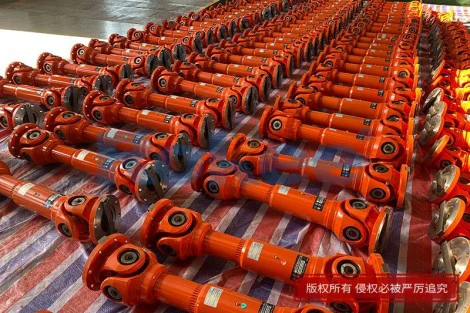
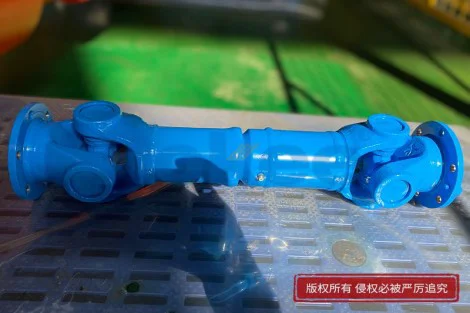
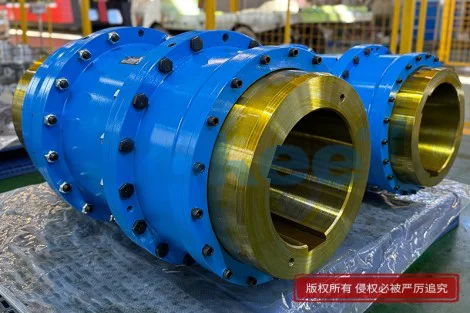
Durable Universal Shaft Suitable For Heavy-duty Continuous PU Sandwich Panel Production Line

In the demanding world of continuous polyurethane sandwich panel manufacturing, where production lines stretch over a hundred meters and run non-stop for shifts that can last weeks, every rotating component in the drive train carries an outsized burden. At the heart of this mechanical ecosystem sits the universal shaft, a deceptively simple-looking device that bridges the gap between the motorized reduction gearbox and the rotating rollers, conveyor drums, and lamination stations that move the steel coil skin through foaming, curing, and cutting zones. Unlike intermittent manufacturing processes where equipment can be stopped for routine inspection and correction, a continuous PU panel line demands that every power-transmitting component operate reliably around the clock under fluctuating loads, temperatures, and alignment conditions. The universal shaft chosen for such an environment must not only transmit torque efficiently but also tolerate the angular and parallel misalignments that inevitably develop as the line heats up, settles into its foundations, and experiences minor structural shifts. This article explores the engineering principles, material choices, lubrication strategies, and operational considerations that make a universal shaft truly durable in this punishing application, and why selecting the right one directly affects yield, panel quality, and overall line profitability.
The foundation of a durable universal shaft begins with the selection of materials for its core components—the yokes, the cross bearing assembly, the splined or telescopic section, and the flanges that connect it to driven and driving equipment. In heavy-duty PU panel lines, the driven rollers at the lamination and curing sections experience intermittent but substantial torque spikes when the foam core expands and creates back-pressure against the moving skins, or when panel thickness changes momentarily jam the nip. This means the yokes must be forged from high-strength alloy steel rather than cast, because forging aligns the grain flow and eliminates internal porosity that could propagate into fatigue cracks under cyclic loading. The cross trunnions, which are the actual pivoting points inside the bearing caps, undergo surface hardening through induction or carburizing processes to produce a wear-resistant outer layer that supports rolling contact, while retaining a tough, shock-absorbing core. The telescopic tube that allows axial length adjustment during thermal expansion and foundation settlement must be internally splined with precise tooth geometry, so that torque is distributed evenly across all spline teeth rather than concentrated on a few. Every material choice is calibrated to balance hardness against toughness—too brittle and the shaft fractures on a torque spike; too soft and it wears prematurely under the constant oscillation of angular misalignment.
Inside each universal joint knuckle, the bearing assembly represents the most critical wear interface, and here the design choices separate mediocre shafts from durable ones. Needle roller bearings are the standard choice because they pack a large number of rolling elements into a small radial space, which is essential when the joint must accommodate large angular offsets while still transmitting high torque. But in a PU panel line, the environment introduces additional challenges: the area around the lamination section can be warm, ambient dust from steel coil grinding and foam overspray accumulates on exposed surfaces, and water or release-agent mist may drift from adjacent cutting and cleaning stations. A durable universal shaft therefore uses multi-lip radial seals that retain lubricant and exclude contaminants, often combined with hardened wear sleeves on the trunnion journals so that the seal runs against a polished, replaceable surface rather than against the trunnion itself. The bearing cages are typically machined from bronze or high-performance engineering plastic rather than stamped sheet metal, because machined cages guide the needles more precisely and resist thermal softening. Properly designed, these bearing packs can maintain their preload and runout accuracy for extended periods, even when the joint oscillates through several degrees of angle every revolution—a motion that would quickly destroy a poorly sealed or under-loaded bearing.
Angular misalignment is not an aberration in a continuous PU sandwich panel line; it is a permanent operating condition. When the line is cold and first commissioned, the motor reducer and the drive roller might be perfectly aligned, but within hours the curing ovens raise the temperature of nearby steel structures, foundations shift slightly as thermal gradients propagate through the concrete, and the heavy steel coil loads cause small deflections in the support frames. A rigid shaft would transmit these misalignments directly into the bearing housings of the gearbox and roller, causing premature failure of those expensive components and introducing lateral forces that can warp the panel as it moves through the lamination. The universal shaft solves this by introducing two articulated joints—one at each end—which permit angular deviation in any plane while still transmitting rotational motion. The double-jointed design with an intermediate telescoping section also accommodates changes in center distance, which occur as the equipment breathes thermally. Durability in this context depends on choosing joints with sufficient angular capacity—typically allowing several degrees of deflection without binding—and ensuring that the operating angle stays within the range where bearing life is acceptable. Excessive angles create uneven needle loading and accelerate seal wear, so the engineering of the shaft must account not just for static alignment but for the dynamic, temperature-induced misalignment that develops during a long production run.
Torque transmission in a continuous PU panel line is rarely smooth. At startup, the drive must overcome the static inertia of dozens of loaded rollers and the friction of the panel skins against Teflon or felt belts. During normal running, the torque required varies as the foam reacts and expands, as the line speed changes when panel profiles switch, and as the cutting saw periodically engages and disengages from the moving panel. These fluctuating loads travel through the universal shaft and subject every connection point—bolt holes, splines, welds, and bearing races—to alternating stress. A durable universal shaft is engineered with a generous service factor that accounts for both the steady-state torque and the occasional shock loads, so that no component operates near its fatigue limit. The flange connections are typically fitted with fitted bolts or doweled interfaces rather than relying solely on friction from bolt torque, because friction connections can slip under repeated torque reversals and fretting corrosion can quickly destroy the mating surfaces. Splined telescoping sections are designed with a backlash specification that keeps lateral play minimal without binding when the tube expands thermally. Even the balance of the shaft is considered: at line speeds where the roller surface moves at tens of meters per minute, an unbalanced shaft introduces vibration that shakes the entire drive frame, accelerates bearing wear, and can even cause panel thickness variations that reject finished product.
Lubrication strategy is what transforms a well-mechanical universal shaft into a durable, long-lived one, and in a continuous PU panel line the lubrication system must be nearly maintenance-free because stopping the line to grease individual joints is economically prohibitive. The best designs use either lifetime-sealed bearing packs pre-filled with high-molybdenum grease at the factory, or a centralized automatic grease distribution system that routes lubricant through internal drillings in the yokes and cross trunnions to the needle races. The choice of grease itself is critical: it must withstand the elevated temperatures near the curing oven without bleeding oil or carbonizing, resist washout from water mist and foam-release agents, and provide extreme-pressure protection for the heavily loaded needle contact lines. Splined telescoping sections require their own lubrication, typically a high-viscosity tacky grease that adheres to the spline teeth and survives the sliding motion as the shaft extends and contracts with thermal movement. Over-lubrication can be as damaging as under-lubrication, because excess grease pressure can blow out seals; durable shafts therefore include pressure-relief features or precisely metered centralized lubrication that injects small quantities at controlled intervals rather than flooding the bearings. When the lubrication system is properly designed and maintained, the universal shaft can run for extended intervals between overhauls, matching the multi-week continuous operation cycles that modern PU panel lines demand.
Thermal effects in a PU sandwich panel production line are significant and must be engineered into the universal shaft from the start. The curing and foaming zones operate at elevated temperatures, and while the drive rollers themselves may be insulated, heat conducts along the steel roller shafts and into the universal shaft flanges. As the line warms up, the shaft's own steel components expand axially, and the distance between the gearbox output shaft centerline and the driven roller centerline changes. A rigidly fixed shaft would bind under this expansion, but a properly designed universal shaft with a sliding splined section absorbs this growth automatically. However, the sliding section itself becomes a wear point if the spline teeth are not protected—dust, oxide, and fine steel particles from the coil surfaces can migrate into the spline and act as an abrasive paste. Durable shafts address this with telescopic covers, rubber boots, or labyrinth seals that keep the splined region clean. Temperature also affects lubricant viscosity, so the grease selected must retain its film strength across the full operating temperature range. In extreme cases, where the shaft passes near high-temperature sections, heat-dissipating finning or heat-shield barriers may be integrated into the yoke design to prevent the grease from reaching its dropping point. Ignoring these thermal considerations leads to shafts that bind on cold startup, gall on the splines, or bake out their lubricant within weeks of continuous operation.
Safety and operational protection are often overlooked dimensions of universal shaft selection, but in a heavy production line they carry real consequences. A rotating shaft that spans between two pieces of moving equipment is a potential entanglement hazard, and production personnel working near the lamination stations or during panel-profile changes must be protected. Durable designs include bolted-on steel or composite safety guards that cover the entire rotating length of the shaft while leaving the flanges accessible for disconnection during maintenance. Beyond physical guarding, modern heavy-duty shafts incorporate torque-limiting features—such as friction disk clutches or shear pin protections—that disconnect drive torque before a catastrophic jam destroys the gearbox, the roller, or the shaft itself. If a panel skin tears and wraps around a roller, the resulting torque spike can reach several times normal operating load; a properly sized protection device sacrifices an inexpensive shear pin or slips a friction clutch rather than snapping an expensive forged yoke. Vibration monitoring pickups can also be integrated into the bearing caps, allowing predictive-maintenance systems to detect developing bearing wear before it causes a sudden failure. These safety and protection features do not directly transmit torque, but they dramatically reduce the risk of unplanned downtime, personnel injury, and collateral equipment damage—all of which matter enormously when a single hour of line stoppage can represent thousands of square meters of lost production.
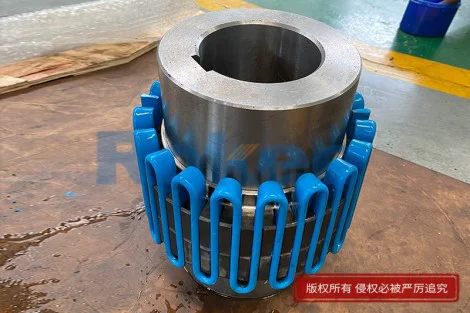
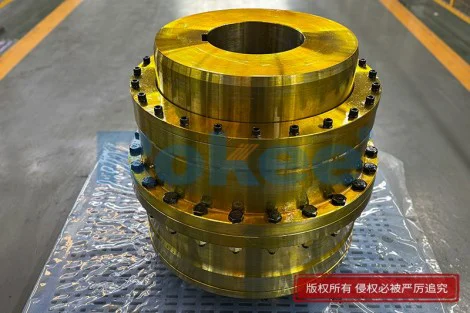
When comparing universal shafts to alternative power-transmission devices—such as gear couplings, elastomeric tire couplings, or belt-and-pulley arrangements—the reasons they dominate in heavy PU panel line drives become clear. Gear couplings can transmit very high torque but require precise alignment, offer limited angular compensation, and are sensitive to lubrication contamination; they also introduce no axial float, which makes them poorly suited to the thermal expansion conditions described earlier. Elastomeric couplings dampen vibration well but have lower torque capacity and wear out their rubber elements under constant angular oscillation in a hot environment. Belt drives are flexible but introduce lateral loads on the driven shafts and require frequent tension adjustment. The universal shaft, by contrast, combines high torque density, angular and axial compensation in a single assembly, robust mechanical construction, and a relatively modest number of wear components that can be serviced individually. Its modular design—where each bearing cap, cross, and splined section is replaceable—means that routine maintenance involves swapping worn components rather than replacing the entire shaft, which keeps lifecycle cost low. For a continuous production line where uptime is the primary economic metric, this combination of tolerance, repairability, and shock-load absorption is difficult to match with any other coupling technology.
In the end, the durable universal shaft suitable for a heavy-duty continuous PU sandwich panel production line is more than a simple mechanical part; it is an engineered system whose every feature—the forged yokes, the sealed needle bearings, the splined telescoping section, the guarded torque protection, and the high-temperature lubrication—is selected to survive the specific combination of loads, temperatures, misalignments, and contaminants that this application presents. Procurement decisions that focus only on catalog torque ratings and unit price often result in shafts that look identical but fail within months, bringing the entire line to a stop and eroding the apparent savings many times over. A properly specified universal shaft, installed with attention to angular alignment, supported by a disciplined lubrication and inspection program, and protected by appropriate guarding and overload devices, will run reliably for years of continuous operation, contributing invisibly to the consistent panel quality, high line speed, and predictable maintenance intervals that define a profitable PU sandwich panel plant. Its durability is not the product of a single heroic material or feature but of hundreds of small engineering decisions working together, and that holistic design philosophy is what separates a universal shaft built for occasional duty from one truly forged for the relentless demands of heavy-duty continuous panel production.