Metal Grid Coupling
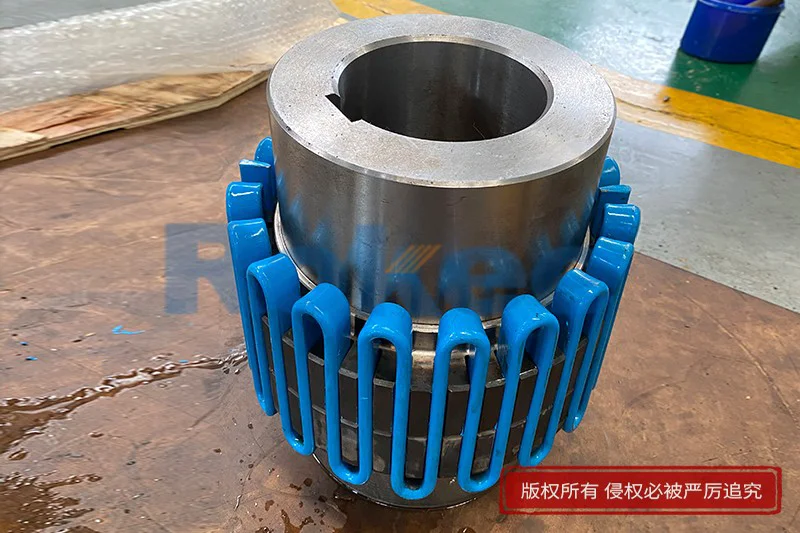
Metal grid coupling is a versatile and high-performance flexible transmission component widely adopted in modern mechanical drive systems, designed to connect driving and driven shafts while ensuring stable and efficient power transmission under complex operating conditions. Distinguished from rigid couplings and other flexible coupling types, it features a unique elastic metal grid structure that integrates torque transmission, vibration damping, shock absorption and misalignment compensation into one compact unit. The core structure consists of two symmetrical hub bodies with special tooth grooves and a high-strength alloy steel grid strip embedded in the grooves, forming a spring-like elastic transmission mechanism. This structural design enables the coupling to adapt to axial, angular and radial misalignments generated by equipment installation errors, mechanical wear and operational vibration. It effectively buffers instantaneous impact loads caused by frequent starting, sudden load changes and fluctuating operating conditions, reducing torsional vibration in the transmission system and lowering mechanical operation noise. With robust structural toughness, excellent fatigue resistance and adaptable working performance, metal grid couplings are suitable for high-torque, high-speed and heavy-duty industrial scenarios, serving as a key guarantee for the long-term stable operation of various mechanical transmission equipment.
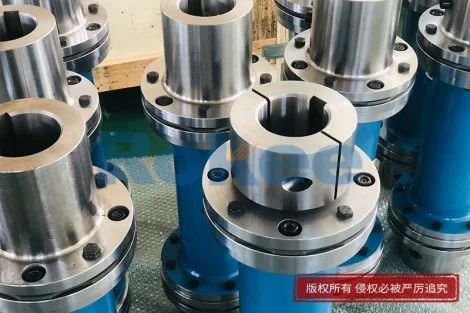
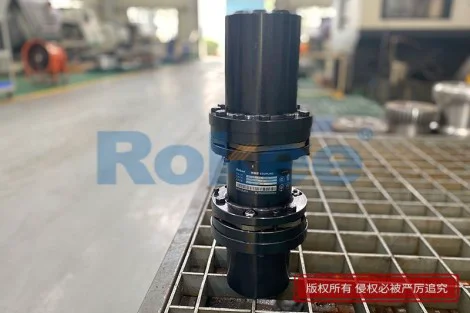
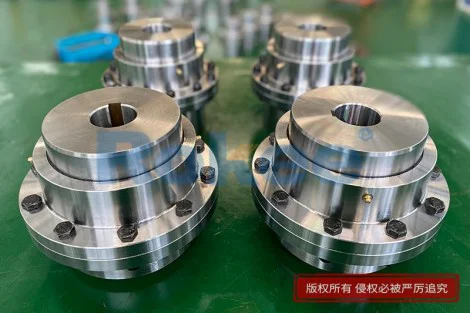
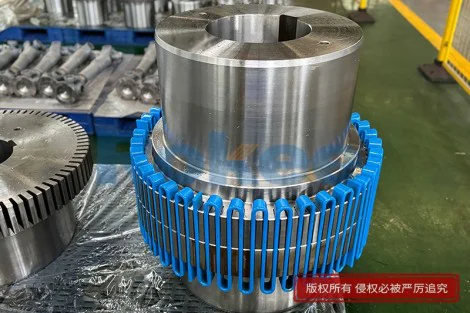
The structural composition of metal grid couplings is scientifically optimized and highly integrated, with every component designed to balance transmission efficiency, structural durability and operational flexibility. The primary components include two precision-machined metal hubs, a flexible metal grid strip, sealing accessories and lubrication auxiliary parts. The paired hubs are processed with arc-shaped tooth grooves with uniform spacing, and the special curved surface design allows the embedded grid strip to produce controllable elastic deformation during torque transmission, rather than rigid force bearing. The metal grid strip, manufactured from high-strength alloy steel through special heat treatment, presents a continuous serpentine structure, which is the core force-bearing and elastic buffer component of the entire coupling. Different from ordinary spring structures, the grid strip’s integral forming design ensures uniform force distribution during operation, avoiding local stress concentration and structural damage. Matching sealing parts are installed at the joints of the two hubs, which effectively isolate external dust, moisture and corrosive substances while locking internal lubricants to maintain long-term lubrication of the friction contact surface. The overall structure requires no complex assembly accessories, realizing a compact and lightweight layout that reduces the overall occupied space of the transmission system and facilitates integrated installation of mechanical equipment.
The working principle of metal grid couplings relies on the elastic deformation and force transmission characteristics of the metal grid strip, achieving flexible and stable power transmission between shafts. When the driving shaft starts to rotate and output torque, the hub tooth grooves drive the embedded metal grid strip to bear cyclic torsion force, and the elastic deformation of the grid strip transfers power evenly to the driven hub and the connected driven shaft. In the steady operation state with stable load, the grid strip maintains mild and uniform elastic deformation, ensuring synchronous and smooth rotation of the two shafts with minimal power loss. When the mechanical system encounters load fluctuations, instantaneous impact or shaft misalignment, the grid strip can produce adaptive elastic stretching and bending deformation in multiple directions. This deformation process effectively absorbs and disperses instantaneous impact energy and torsional vibration, preventing peak loads from directly acting on key mechanical components such as bearings, shafts and gears. With the increase of transmitted torque, the contact position between the grid strip and the hub tooth grooves changes dynamically, bringing the force-bearing points closer and improving the overall rigidity of the coupling. This variable stiffness characteristic enables the coupling to adapt to both low-load stable operation and high-load heavy-duty transmission, realizing flexible adjustment of transmission performance under different working conditions.
Metal grid couplings possess outstanding comprehensive performance advantages that make them superior to many traditional coupling products in industrial application scenarios. First of all, they have excellent vibration damping and shock absorption capabilities, which can effectively reduce torsional vibration and mechanical noise during equipment operation. The elastic grid structure can absorb most of the vibration energy generated by load changes and mechanical operation, creating a more stable operating environment for the entire transmission system and significantly reducing the vibration loss of mechanical components. Secondly, the coupling has strong misalignment compensation ability, which can adapt to slight axial displacement, angular deflection and radial deviation between shafts caused by installation errors, equipment aging and thermal expansion and contraction during operation. This avoids additional friction and stress wear caused by shaft misalignment, greatly extending the service life of matching equipment. In addition, the alloy steel grid strip has excellent fatigue resistance and mechanical toughness, enabling long-term stable operation under cyclic load and frequent start-stop working conditions without easy deformation or fracture. Compared with rigid couplings, it has stronger impact resistance, and compared with elastic couplings made of non-metallic materials, it features higher temperature resistance, corrosion resistance and structural stability, adapting to harsh industrial working environments.
The application scenarios of metal grid couplings cover numerous core industrial fields, thanks to their adaptable performance and reliable transmission capacity. In the field of industrial power transmission, they are widely used in various motor-driven mechanical equipment, including fans, pumps, compressors and conveyors, realizing stable power transmission for continuous operating equipment and reducing equipment failure rates caused by vibration and impact. In heavy machinery and mining industries, the couplings are applied to jaw crushers, ball mills and mining transmission equipment, effectively buffering strong instantaneous impact loads generated by material crushing and mechanical operation, protecting key transmission structures from damage. In municipal water treatment and environmental protection equipment, they adapt to the variable load operation state of water pumps and stirring equipment, ensuring stable operation of fluid transmission and processing systems. Moreover, metal grid couplings are also commonly used in metallurgical equipment, chemical machinery, building materials processing equipment and other heavy-duty industrial scenarios. Whether it is continuous stable operation under conventional working conditions or intermittent impact operation under harsh working conditions, the couplings can maintain efficient and reliable transmission performance, meeting the diverse operational requirements of different industrial equipment.
Installation and daily maintenance of metal grid couplings follow standardized and efficient operation norms, with low technical threshold and low later-stage use cost. During installation, the key is to ensure the coaxiality of the driving and driven shafts, controlling the misalignment within the allowable range of the product to avoid excessive deviation affecting transmission performance and service life. The two hubs need to be fixed on the shaft shoulders of the corresponding equipment respectively, with stable and firm positioning to prevent axial displacement during high-speed operation. After fixing the hubs, the metal grid strip is embedded in the aligned tooth grooves, and the sealing parts are installed to ensure tight sealing without gaps. In daily operation, regular maintenance mainly focuses on lubrication management, as good lubrication can reduce friction and wear between the grid strip and hub tooth grooves, avoiding dry friction damage and abnormal noise. It is necessary to regularly check the sealing state to prevent lubricant leakage and external impurities from entering the internal friction pair. Meanwhile, regular visual inspection of the grid strip is required to check for fatigue deformation, wear or cracks. The replaceable structural design of the grid strip allows independent replacement of worn parts without disassembling the overall coupling and readjusting shaft alignment, greatly simplifying maintenance procedures and reducing equipment downtime.
The service life and operational stability of metal grid couplings are closely related to working environment, load conditions and maintenance frequency, and scientific use can maximize their application value. Under stable load, clean environment and regular lubrication maintenance, the coupling can maintain long-term stable operation with low wear rate and excellent performance retention. In harsh working environments such as high dust, high humidity and variable temperature, the metal grid strip and sealing parts will face accelerated aging and wear, so it is necessary to appropriately increase the frequency of inspection and lubrication replacement. Frequent overloaded operation and long-term impact load operation will accelerate the fatigue loss of the grid strip, easily causing elastic attenuation and structural deformation, so it is essential to avoid long-term overload operation in actual use. The fail-safe structural design of the metal grid coupling ensures that even if the grid strip is partially worn or damaged, it can still maintain basic power transmission capacity for a short time, avoiding sudden equipment shutdown and providing buffer time for equipment maintenance and replacement. This reliable safety performance makes it more suitable for industrial production scenarios that require continuous and stable operation.
With the continuous upgrading of modern industrial mechanical equipment towards high speed, high precision and high load, the application value and development potential of metal grid couplings are constantly improving. Traditional transmission components are gradually unable to meet the comprehensive requirements of new industrial equipment for vibration reduction, misalignment compensation and long-term stability, while metal grid couplings perfectly adapt to the development trend of mechanical transmission technology by virtue of their integrated performance advantages. In the future, with the innovation of metal material processing technology and heat treatment technology, the mechanical strength, fatigue resistance and environmental adaptability of metal grid strips will be further optimized, enabling the couplings to adapt to more extreme working conditions such as higher speed, heavier load and stronger corrosion. At the same time, the structural design will be further optimized towards miniaturization, lightweight and easy maintenance, reducing installation space and maintenance costs while improving transmission efficiency. As an indispensable core component of mechanical transmission systems, metal grid couplings will continue to play a key role in promoting the stable and efficient operation of modern industrial mechanical equipment.