Troubleshooting Guide For Universal Joint Coupling Of PUR Sandwich Panel Making Machine
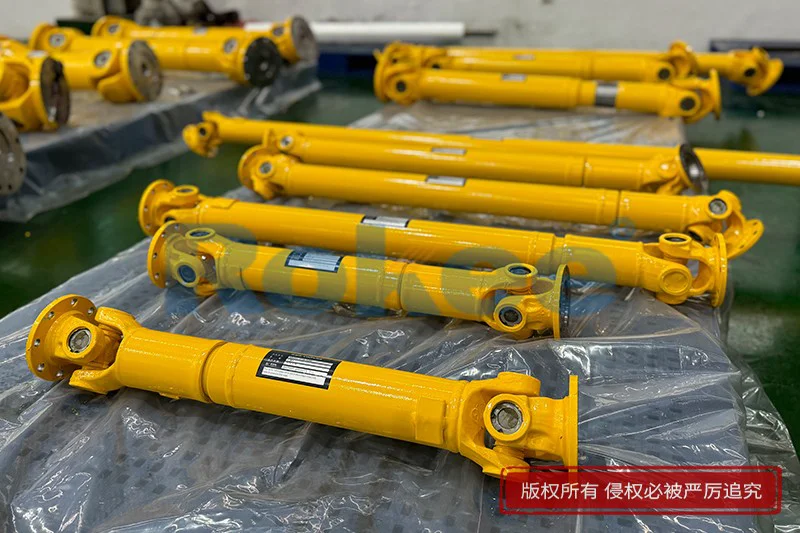
The universal joint coupling serves as an indispensable power transmission core component in the overall operation of the PUR sandwich panel making machine, undertaking the critical task of stably transmitting rotational torque and power between the driving motor, reduction gearbox and the forming and conveying system of the entire production line. In the continuous industrial production process of PUR sandwich panel fabrication, the equipment needs to maintain long-term uninterrupted operation with stable rotational speed and uniform load output to ensure the consistent density, uniform thickness and intact surface flatness of each finished PUR sandwich panel. The universal joint coupling can adapt to minor axial, radial and angular displacement deviations between connected shafts caused by equipment installation errors, long-term operational vibration and mechanical thermal expansion and contraction, effectively buffering transmission vibration and avoiding rigid impact damage to key transmission parts. However, affected by long-duration continuous operation, harsh on-site production environments, irregular daily operation habits and inadequate routine maintenance management, universal joint couplings are prone to various abnormal operating states and progressive failure problems during service. Once subtle faults occur and fail to be detected and handled in a timely manner, minor wear and abnormal vibration will gradually evolve into component jamming, transmission torque attenuation, shaft body deformation and even sudden structural fracture, which will directly lead to unstable operation of the entire PUR sandwich panel making machine, frequent production line shutdowns, unqualified product processing quality and increased subsequent mechanical maintenance and replacement costs. This troubleshooting guide focuses on the actual operating working conditions of universal joint couplings matched with PUR sandwich panel making machines, systematically sorts out all common abnormal symptoms, deep-rooted fault inducements, targeted step-by-step troubleshooting methods, standardized on-site repair and adjustment operations, and scientific daily maintenance and fault prevention strategies, helping equipment operators and maintenance personnel quickly locate hidden dangers, eliminate existing faults, restore the optimal operating state of universal joint couplings, and ensure the long-term stable, efficient and safe continuous operation of the entire sandwich panel production and processing equipment.
In the daily production and operation process of the PUR sandwich panel making machine, the universal joint coupling will show a variety of obvious early warning abnormal states before complete failure, and these subtle abnormal manifestations are the most intuitive basis for maintenance personnel to carry out preliminary fault judgment and rapid hidden danger investigation. The most common abnormal phenomenon is irregular periodic knocking and continuous squeaking friction noise during the operation of the production line. This kind of abnormal noise is not obvious in the low-speed debugging state of the equipment, but becomes extremely prominent when the equipment is running at the rated production speed and bearing the load of sandwich panel extrusion and conveying. When the equipment starts up, accelerates or switches the production load of different specifications of PUR sandwich panels, the knocking sound will intensify instantaneously, accompanied by obvious sound resonance inside the transmission box of the equipment. Most operators tend to ignore this early abnormal noise and continue to arrange production work as usual, mistakenly believing that minor noise will not affect the normal production and product quality, but in fact, this kind of abnormal sound is the typical early signal of excessive internal clearance of the universal joint coupling, wear of cross shaft bearings, dry friction of lubrication parts or slight loosening of connecting fixing parts. Another common abnormal symptom is abnormal vibration of the equipment frame and transmission shaft system that changes with the operating speed. This vibration state is completely different from the normal slight mechanical vibration generated during the operation of the equipment. The abnormal vibration caused by the failure of the universal joint coupling has obvious periodic regularity. The vibration amplitude increases synchronously with the increase of the operating speed of the equipment, and obvious shaking can be felt by touching the surface of the coupling and the adjacent transmission components by hand. In severe cases, the vibration will be transmitted to the entire feeding, foaming, forming and cutting stations of the PUR sandwich panel making machine, resulting in unstable feeding of raw materials, uneven mixing of PUR foaming materials, inconsistent bonding degree between the core material and the surface plate of the sandwich panel, and finally leading to a large number of unqualified defective products. In addition, some universal joint couplings will have obvious local heating phenomenon during continuous operation. The surface temperature of the coupling continues to rise after long-term operation, and even obvious scalding feeling appears after the equipment runs for a short time. This thermal abnormality is mainly caused by excessive internal friction resistance of the coupling, poor lubrication effect, excessive installation angle deviation or shaft body misalignment operation, and long-term high-temperature operation will accelerate the aging and wear of internal rubber buffer parts and metal friction components, greatly shortening the overall service life of the coupling.
After discovering the above abnormal operating symptoms of the universal joint coupling of the PUR sandwich panel making machine, maintenance personnel need to follow the principle of from simple to complex, from external observation to internal disassembly and inspection, and carry out standardized and orderly fault troubleshooting work step by step, avoiding blind disassembly and random replacement of parts to prevent unnecessary secondary damage to the transmission system and waste of maintenance resources. The first step of troubleshooting is to carry out static shutdown comprehensive inspection. Before all inspection operations, it is necessary to completely cut off the total power supply of the PUR sandwich panel making machine, confirm that all transmission shafts and moving parts are completely static and locked, and implement safety protection measures to avoid mechanical injury accidents during the inspection process. First, visually inspect the overall external state of the universal joint coupling, focusing on checking whether the outer protective shell of the coupling is deformed, cracked or loose, whether the connecting bolts and fastening nuts at both ends of the coupling are loose, missing or rusted and deformed, and whether there is grease leakage, dust accumulation and dirt adhesion on the surface of the coupling. A large amount of dust and dirt accumulated on the surface of the coupling will easily penetrate into the internal moving fit gap, causing accelerated abrasive wear of bearings and cross shafts, while grease leakage indicates that the internal sealing structure of the coupling has been damaged, resulting in the loss of lubricating grease and reduced lubrication protection effect. After completing the external visual inspection, manually rotate the driving and driven shafts connected by the universal joint coupling respectively to feel the rotational flexibility and internal clearance of the coupling. During the rotation process, if there is obvious jamming, stagnation feeling, uneven rotation resistance or obvious axial and radial looseness and shaking, it can be preliminarily judged that there are serious wear, clamping stagnation or excessive assembly clearance inside the coupling. On the basis of static inspection, the second step is to carry out low-speed no-load test operation inspection. After confirming that all fastening parts are intact and no potential safety hazards exist, restart the equipment and adjust the operating speed to the lowest no-load running state, carefully observe the rotation runout of the universal joint coupling, check whether the shaft body has obvious shaking and eccentric rotation, listen to the abnormal noise changes during low-speed operation, and record the vibration and temperature changes of the coupling in real time. Through the comparison of static inspection and low-speed no-load operation inspection, most external connection faults and simple internal wear hidden dangers can be quickly eliminated, and the fault investigation scope can be narrowed down to the internal core components of the coupling.
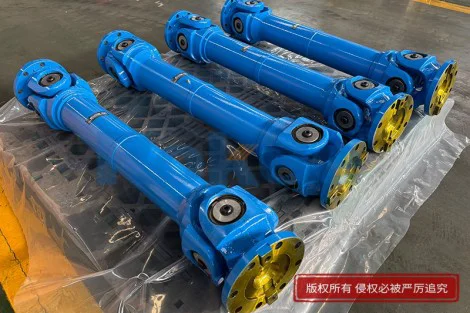
For the universal joint coupling faults that cannot be eliminated by external inspection and simple adjustment, it is necessary to further disassemble the coupling for internal component detailed inspection, accurately identify the specific damaged parts and fundamental fault causes, and formulate targeted repair and replacement schemes. The core internal components of the universal joint coupling matched with the PUR sandwich panel making machine mainly include cross shaft assembly, rolling bearings, sealing rings, spline auxiliary connection parts and buffer elastic components. After professional disassembly and decomposition, first check the wear degree of the cross shaft surface and the bearing mounting position. Long-term lack of lubrication, excessive load operation and mixed friction of dust and impurities will cause serious pitting, scratching and wear on the surface of the cross shaft, and in severe cases, the cross shaft will be deformed and bent, resulting in unbalanced rotation of the entire coupling. Then check the operating state of the internal rolling bearings. If the bearing rollers are worn, deformed, stuck or the bearing cage is damaged, the bearing will not roll flexibly during operation, resulting in increased friction resistance, abnormal noise and local heating of the coupling. The damage of the sealing ring is also one of the common core faults. The aging, deformation and cracking of the sealing ring will lead to the loss of internal lubricating grease and the invasion of external dust, moisture and sundries, forming a vicious cycle of wear and damage of internal components. In addition, the long-term high-load torque transmission of the spline auxiliary connection parts will cause tooth surface wear and increased meshing clearance, resulting in unstable power transmission and obvious impact vibration during equipment startup and load switching. After all internal damaged parts are inspected and confirmed, maintenance personnel need to carry out targeted repair and replacement operations in accordance with the actual damage degree. For parts with slight wear and no deformation, professional cleaning, grease replenishment and sealing restoration treatment can be carried out; for core components with serious wear, deformation and damage that cannot be repaired, new matching parts must be replaced in a timely manner, and it is strictly prohibited to continue to use inferior repaired parts or mismatched parts to avoid repeated faults after maintenance.
After the repair, part replacement and reassembly of the universal joint coupling are completed, standardized installation adjustment and commissioning calibration work must be carried out to ensure that the installation accuracy and operating parameters of the coupling meet the actual production operation requirements of the PUR sandwich panel making machine, otherwise the hidden danger of faults will remain and the service life of the coupling will be greatly reduced. The key focus of installation adjustment is to correct the coaxiality and installation angle of the driving shaft and driven shaft connected by the universal joint coupling. Excessive installation angle deviation and serious shaft body misalignment are important external causes of frequent failure of universal joint couplings. During the calibration process, professional measuring tools should be used to detect the radial runout and axial displacement of the two connected shafts, fine-tune the installation position and fixing height of the coupling, control the installation angle within the reasonable range required for mechanical transmission, and eliminate the eccentric rotation and additional friction caused by misalignment. After the position calibration is completed, all connecting bolts and fastening parts need to be tightened symmetrically and evenly in accordance with the standard fastening sequence to avoid uneven fastening force leading to local stress concentration and deformation of the coupling. Then carry out graded speed test operation and load commissioning. First, run the equipment at low speed with no load for a certain period of time to observe the rotation state, noise, vibration and temperature changes of the universal joint coupling, confirm that all abnormal phenomena disappear and the operation is stable, then gradually increase the operating speed and gradually add production load, simulate the actual production working condition of processing different specifications of PUR sandwich panels, and continuously monitor the operating state of the coupling during the commissioning process. If any slight abnormal situation is found during the commissioning process, stop the machine immediately for re-adjustment and troubleshooting, and put the equipment into formal production operation only after all operating indicators are stable and meet the production requirements.
In addition to timely troubleshooting and standardized repair and commissioning after faults occur, establishing a scientific daily maintenance management mechanism and implementing long-term fault prevention measures is the fundamental way to reduce the failure probability of universal joint couplings of PUR sandwich panel making machines and extend their overall service life. Daily maintenance work mainly includes regular visual inspection, periodic lubrication maintenance, fastening part inspection and cleaning and dedusting operations. Equipment operators need to conduct a brief inspection of the universal joint coupling before starting the machine every day to check for abnormal noise, vibration, grease leakage and loose fastening parts, and deal with minor hidden dangers in a timely manner to avoid small faults evolving into major failures. Regular lubrication maintenance is the core link of daily protection of universal joint couplings. According to the different operating intensity and environmental conditions of the production line, regular grease replenishment and old grease replacement should be carried out for the internal bearings and rotating friction parts of the coupling. The use of suitable lubricating grease can effectively reduce internal friction and wear, isolate external dust and moisture, and buffer transmission impact and vibration. It is necessary to regularly clean the dust, dirt and sundries accumulated on the surface of the coupling to prevent impurities from penetrating into the internal fit gap and causing abrasive wear. At the same time, the equipment operation load should be standardized in daily production to avoid long-term overload operation, frequent sudden startup and emergency shutdown operations, because excessive instantaneous torque and frequent load impact will cause fatigue damage to the internal structure of the universal joint coupling and accelerate the wear and aging of components. Regular professional maintenance and comprehensive disassembly and inspection should be arranged every certain production cycle to thoroughly check the wear state of internal core components, replace aging sealing parts and failed lubricating grease in advance, and carry out re-calibration and adjustment of installation accuracy, so as to eliminate potential hidden dangers in advance, ensure that the universal joint coupling always maintains a good operating state, and provide stable and reliable power transmission guarantee for the long-term high-efficiency production of PUR sandwich panels.