Precision Transmission Adaptation And Commissioning Of Cardan Shaft Coupling For Sandwich Panel Machinery
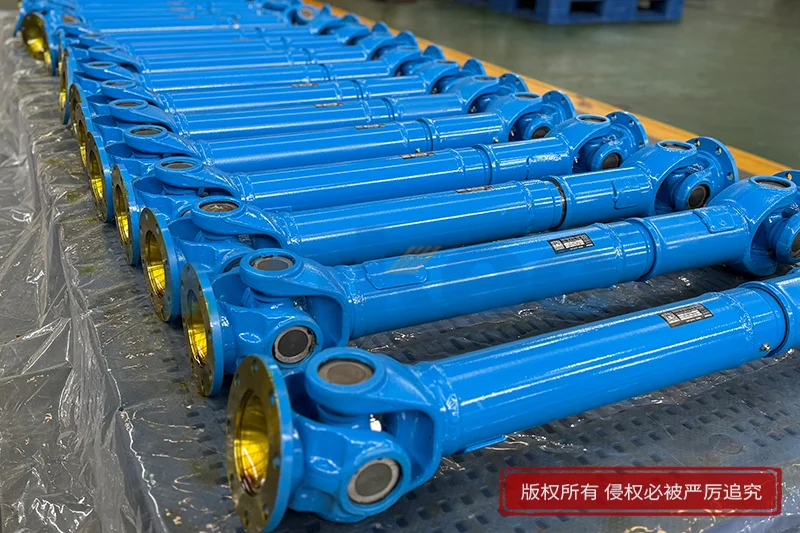
Sandwich panel machinery operates in continuous and high-load industrial production scenarios, where the stability and precision of power transmission directly determine the forming accuracy, production consistency and operational reliability of sandwich panels. As a core transmission component, the cardan shaft coupling undertakes the key task of transmitting torque and rotational power between the driving motor, reduction gearbox and the main operating mechanism of the sandwich panel production line. Different from general mechanical transmission equipment, sandwich panel production involves continuous feeding, rolling pressing, bonding shaping and fixed-length cutting processes, which put forward strict requirements on the displacement compensation capability, transmission uniformity and dynamic stability of the coupling. Precision adaptation and standardized commissioning of cardan shaft couplings are essential to eliminate transmission errors caused by shaft misalignment, mechanical vibration and operational deviation, and to ensure the long-term stable operation of the entire production line under high-speed and cyclic working conditions.
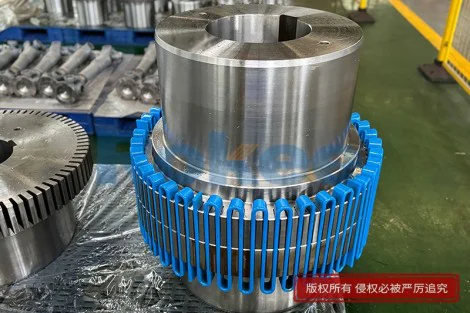
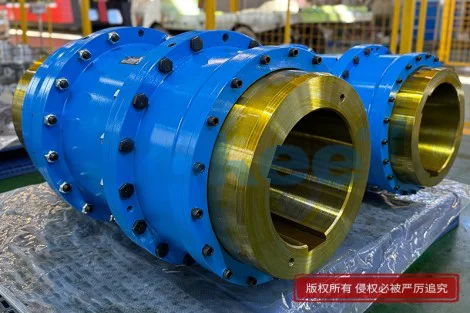
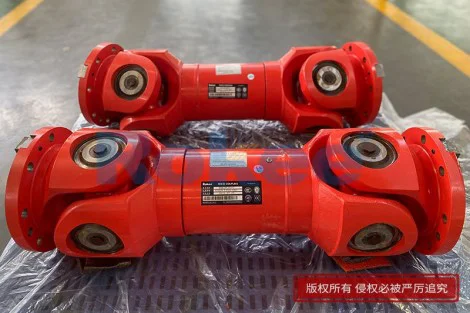
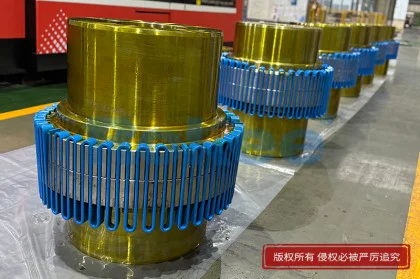
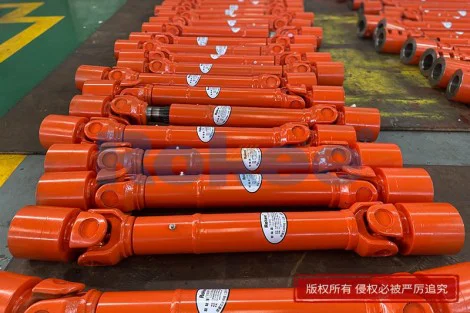
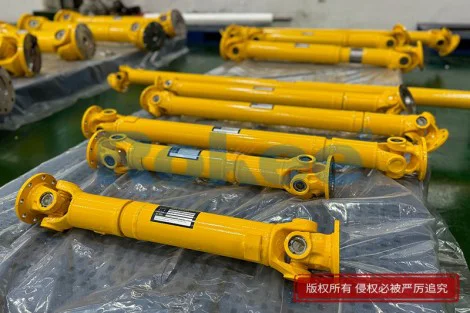
The structural characteristics and operational principles of cardan shaft couplings lay a solid foundation for precision transmission adaptation in sandwich panel machinery. Equipped with a universal hinge structure composed of cross shafts, bearing assemblies and hinged forks, this type of coupling can effectively compensate for multi-dimensional displacement deviations between driving and driven shafts, including axial stretching deviation, radial offset and angular deflection generated during equipment installation and long-term operation. In the continuous production process of sandwich panels, the mechanical frame will produce slight structural deformation due to long-term load bearing, and the thermal expansion and contraction of transmission shafts caused by continuous operation will also lead to subtle changes in shaft alignment. Rigid transmission components are prone to local stress concentration, transmission jitter and torque loss under such working conditions, while the flexible hinge structure of cardan shaft couplings can adapt to these dynamic deviations in real time, maintaining continuous and uniform torque output without interrupting the transmission state. This unique adaptive performance effectively avoids the problems of uneven panel thickness, offset forming and intermittent production pause caused by unstable power transmission in sandwich panel production.
Precision transmission adaptation is a systematic engineering process based on the structural parameters of sandwich panel machinery and actual production working conditions, which runs through the equipment installation, parameter matching and running-in adaptation stages. Before formal installation and commissioning, comprehensive pretreatment and parameter confirmation must be completed to eliminate basic interference factors affecting transmission precision. The contact surfaces of the coupling flange, shaft head and connecting fasteners need to be thoroughly cleaned to remove surface oil stains, rust layers, welding slag and mechanical debris, as any tiny impurity will cause uneven fitting of connecting surfaces, resulting in shaft runout and transmission error during high-speed operation. Meanwhile, it is necessary to check the structural integrity of the coupling components, confirm the flexibility of the universal hinge movement, the wear state of internal bearings and the tightness of assembly gaps, and replace deformed or fatigued components in time to ensure the basic mechanical performance of the coupling meets precision transmission standards.
In the parameter adaptation stage, the core is to match the coupling’s torque transmission range, allowable deflection angle and displacement compensation stroke with the operating parameters of the sandwich panel production line. Sandwich panel machinery usually operates under cyclic variable load conditions, with instantaneous torque fluctuation during feeding and pressing processes, so the coupling needs to retain a reasonable torque margin to avoid transmission failure caused by instantaneous overload. The angular deflection between the driving shaft and driven shaft should be strictly controlled within the optimal adaptive range. Excessive angular deviation will cause periodic torque fluctuation and mechanical vibration, while too small a deflection angle will limit the coupling’s displacement compensation ability and reduce its adaptive performance for equipment structural deformation and operational deviation. In actual adaptation operation, precise measurement of shaft coaxiality and angular deviation is carried out through precision measuring instruments, and the spatial position of the coupling is adjusted by fine-tuning the installation height and horizontal position of the transmission shaft group, so that the shaft misalignment error is controlled within the allowable precision range of continuous production. In addition, axial displacement adaptation should be fully considered according to the thermal deformation law of the transmission shaft during long-term operation, reserving a reasonable telescopic gap to eliminate transmission jitter caused by thermal expansion and cold contraction of components.
Standardized commissioning is the key link to realize the precision transmission performance of cardan shaft couplings and verify the adaptive matching effect with sandwich panel machinery. The commissioning process is divided into static debugging, no-load trial operation and load progressive debugging, with gradual parameter verification and performance optimization to ensure the stability and accuracy of the transmission system. Static debugging is carried out in the shutdown state of the equipment, focusing on checking the assembly symmetry of the coupling, the uniform fastening state of connecting bolts and the flexibility of universal hinge rotation. All connecting bolts need to be tightened in diagonal and symmetrical sequence to ensure uniform stress on the flange connection surface and avoid local stress difference causing shaft torsion deviation. After assembly, the coupling is manually rotated for multiple cycles to confirm that there is no jamming, abnormal friction and unsmooth rotation, and the hinge can flexibly adapt to tiny angle changes in all directions, ensuring the basic kinematic accuracy of the transmission structure.
No-load trial operation debugging aims to eliminate assembly errors and running-in residual stress, and verify the dynamic stability of the coupling under non-load operating conditions. The equipment is started at low speed first, and the operating state of the coupling is continuously observed, including rotational uniformity, vibration amplitude and abnormal noise. Low-speed no-load operation helps the internal bearing assembly and hinge structure complete preliminary running-in, eliminate tiny assembly gaps and improve the fitting accuracy of kinematic pairs. After stable low-speed operation, the rotational speed is gradually increased to the standard operating speed of the production line, and the dynamic runout error of the transmission shaft and the fluctuation range of rotational speed are monitored in real time. During no-load commissioning, it is necessary to focus on checking whether periodic vibration occurs during coupling rotation, which usually indicates unqualified shaft coaxiality or inconsistent assembly clearance, and secondary fine-tuning of shaft position and coupling assembly state is required until the transmission system operates smoothly without abnormal fluctuation.
Load progressive debugging is the most critical part of precision commissioning, which can truly verify the coupling’s adaptive transmission performance under actual production load. The debugging is carried out in a step-by-step load increasing mode, starting from light load operation with low material feeding quantity, gradually increasing the production load to the rated working load of the equipment, and continuously monitoring the torque transmission state, vibration characteristics and temperature change of the coupling during the process. In the light-load stage, the main debugging target is to confirm the stability of power transmission in the conventional production state, check whether the coupling can flexibly compensate for slight displacement deviation generated by equipment load operation, and ensure synchronous and consistent rotation of the driving and driven shafts. In the medium and heavy-load stage, attention is paid to observing the dynamic response of the coupling under variable load conditions, verifying whether the torque output is stable during the processes of panel feeding, pressing and shaping, and eliminating transmission lag and torque loss that affect panel processing accuracy.
During load commissioning, thermal state monitoring of the coupling must be emphasized. Long-term high-load transmission will generate friction heat inside the coupling, and excessive temperature rise will lead to bearing performance attenuation and structural thermal deformation, reducing transmission precision and service life. Real-time temperature detection of the coupling’s bearing position and hinge joint is required during operation, and abnormal temperature rise beyond the normal range indicates excessive internal friction or unsmooth movement, which needs to be optimized by adjusting assembly gaps and supplementing lubricating media. In addition, the operating vibration data of the transmission system is recorded and analyzed during load commissioning, and the vibration frequency and amplitude are matched with the equipment operating parameters to eliminate resonance problems caused by inconsistent coupling transmission frequency and equipment operating frequency, ensuring the dynamic stability of the entire transmission system.
In view of the common transmission precision problems in the operation of cardan shaft couplings for sandwich panel machinery, targeted adaptive optimization and fault correction measures need to be formulated in the commissioning process. Long-term continuous operation will lead to slight wear of internal bearings and hinge structures of the coupling, resulting in increased transmission gaps and reduced displacement compensation accuracy, which will further cause problems such as uneven panel processing thickness and unstable production dimensional accuracy. In the precision commissioning process, regular gap detection and wear calibration should be carried out, and worn kinematic pair components should be repaired or replaced in time to restore the original precision transmission performance of the coupling. For the transmission deviation caused by equipment frame aging and structural deformation, the adaptive angle and displacement compensation range of the coupling can be appropriately optimized through fine debugging, so that the coupling can adapt to the changed shaft position state and maintain stable power transmission.
Lubrication adaptation optimization is also an important part of precision transmission guarantee. The high-frequency cyclic movement of the universal hinge and bearing assembly of the coupling puts forward high requirements on lubrication conditions. Unsuitable lubrication media or insufficient lubrication will increase internal friction resistance, cause rotational jitter and affect transmission precision. In the commissioning process, it is necessary to select lubricating media suitable for high-load and continuous operating conditions, and formulate a standardized lubrication cycle to ensure that all kinematic pairs of the coupling are in a good lubrication state. Excessive lubricant filling should be avoided to prevent lubricant overflow from causing dust adhesion, which will form abrasive wear and damage the precision fitting surface of components.
After completing all commissioning and adaptive optimization work, a long-term running-in test and precision verification must be carried out to confirm that the coupling meets the precision transmission requirements of continuous sandwich panel production. The equipment is operated continuously for a long time under rated working conditions, and the transmission precision indexes including shaft runout error, torque transmission stability and rotational speed uniformity are regularly detected. At the same time, the processing quality of sandwich panels is tracked and detected, and the dimensional accuracy and surface flatness of finished panels are used as indirect verification indexes of coupling transmission performance to ensure that the optimized and debugged coupling can completely match the production process requirements of sandwich panel machinery.
In industrial practical application, the precision adaptation and commissioning of cardan shaft couplings are not one-time completion work, but need dynamic adjustment and regular maintenance with the aging of equipment and changes of production working conditions. With the extension of equipment operation time, the structural parameters of the transmission system will change slightly, and the wear degree of coupling components will gradually increase. Regular precision detection, parameter recalibration and adaptive optimization are required to continuously maintain the optimal transmission state of the coupling. Scientific and standardized adaptation and commissioning technology can not only effectively improve the transmission precision and operational stability of sandwich panel machinery, ensure the consistent processing quality of finished products, but also reduce mechanical vibration and impact wear, extend the service life of transmission components, reduce equipment failure rate and maintenance cost, and provide reliable technical support for efficient and high-quality continuous production of sandwich panels.