Cardan Shaft Coupling Adapts Multi Angle Power Transmission Of Sandwich Panel Machinery
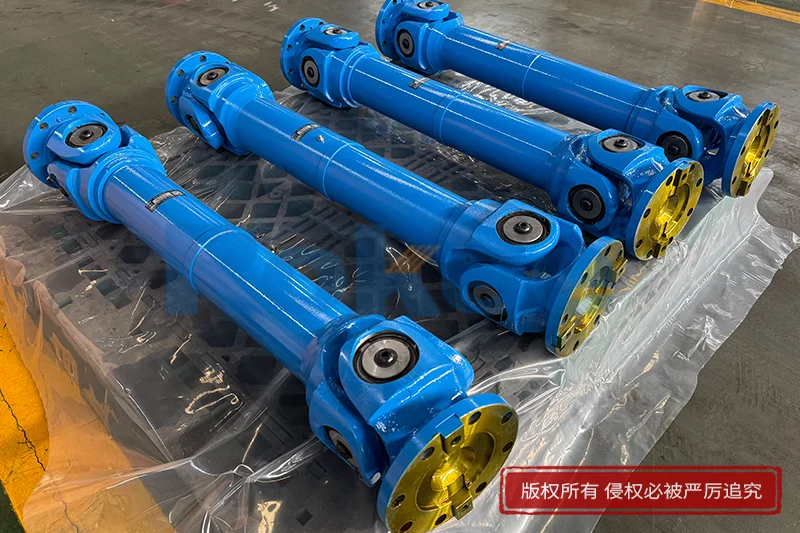
In the sophisticated manufacturing system of sandwich panel production, stable and flexible power transmission serves as the core foundation for continuous and efficient mechanical operation. Sandwich panel machinery consists of multiple interconnected functional units, including material unwinding, gluing, pressing, cutting, and conveying modules, each of which operates with different spatial layouts and motion trajectories. Traditional rigid transmission components often struggle to adapt to the complex spatial displacement and angular deviation generated during the operation of such multi-unit combined equipment, easily causing transmission jitter, power loss, and even mechanical wear and operational failure. As a highly adaptable universal transmission component, cardan shaft coupling effectively solves the multi-angle power transmission challenges faced by sandwich panel machinery through its unique articulated structural design, realizing stable torque and motion transmission under variable angular deflection conditions, and providing reliable mechanical support for the long-term stable operation of sandwich panel production lines.
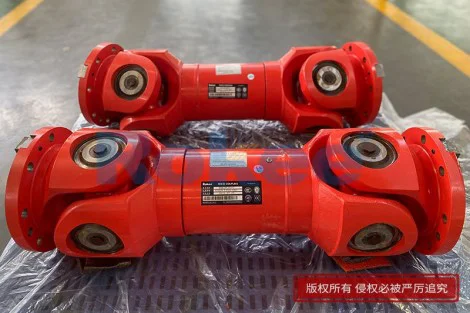
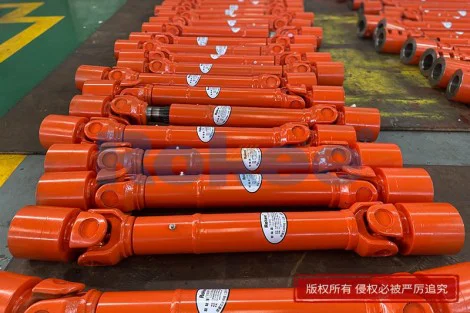
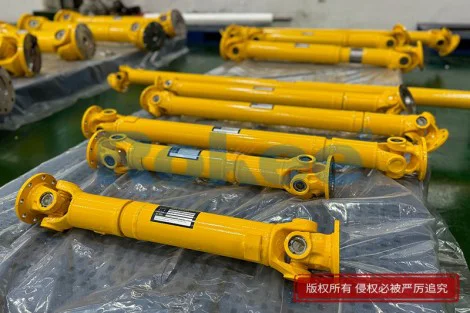
The superior multi-angle adaptation performance of cardan shaft coupling stems from its ingenious mechanical structure and spatial kinematics working principle. The core structure of the coupling is composed of a cross-shaped spider, double yoke frames, and precision rolling bearing components. The four cylindrical trunnions distributed on the perpendicular axes of the cross spider are perfectly matched with the bearings installed inside the yokes, forming a flexible hinged connection structure with multi-dimensional rotational freedom. Different from rigid couplings that only support coaxial linear transmission, this structural design allows the driving shaft and driven shaft to maintain continuous rotational motion and stable torque output even when there is a certain angular deviation, axial offset, or radial displacement. In actual operation, the cross spider can pivot synchronously along two perpendicular axes, enabling the coupling to adapt to angular deflection within a wide range, which fully meets the diverse power transmission angle requirements of different functional modules of sandwich panel machinery in limited installation spaces and dynamic operating states.
Sandwich panel production machinery has distinct operational characteristics that put forward high requirements for the flexibility and stability of transmission systems. The entire production process of sandwich panels involves the coordinated operation of multiple mechanical units arranged in a three-dimensional space. Due to the constraints of production line layout, equipment installation errors, thermal expansion and contraction during long-term operation, and micro-displacement caused by mechanical vibration, the transmission shafts between adjacent equipment modules cannot always maintain an absolute coaxial state. Local bending and angle offset of the transmission path often occur in the material feeding, composite pressing, and finished product conveying links. Rigid transmission structures will generate huge additional mechanical stress at the offset position, leading to increased friction between components, uneven torque transmission, and inconsistent operating speed of each equipment module, which will directly affect the flatness, bonding uniformity, and dimensional accuracy of the produced sandwich panels. In severe cases, it will cause frequent equipment shutdowns and increased component replacement frequency, restricting the continuous production capacity of the production line.
Cardan shaft coupling perfectly adapts to the complex operating conditions of sandwich panel machinery with its excellent deviation compensation capability and multi-angle transmission stability. The articulated flexible connection structure can automatically compensate for axial, radial, and angular deviations generated during equipment operation, eliminating the additional mechanical stress caused by shaft misalignment. When the production line is running, even if the transmission angle between the driving end and the driven end changes dynamically with the operation of the pressing cylinder, the swing of the conveying bracket, and the vibration of the cutting device, the cardan shaft coupling can still maintain uninterrupted power transmission. The built-in precision needle roller bearings greatly reduce the friction coefficient during the relative rotation of the hinge structure, ensuring smooth and low-noise operation while transmitting high torque. This enables each functional module of the sandwich panel production line to maintain synchronous and consistent operating speed, effectively avoiding product quality problems such as uneven gluing, inconsistent plate thickness, and edge warping caused by unstable power transmission.
In the multi-angle power transmission scenario of sandwich panel machinery, the structural matching advantage of double cardan joints further optimizes the transmission effect. A single cardan joint has the characteristic of periodic angular velocity fluctuation during operation under angular deflection conditions, which may cause slight speed jitter in high-precision production links. The double cardan shaft coupling structure effectively eliminates the velocity fluctuation defect through symmetric structural arrangement, realizing constant-speed and stable power transmission under any allowable angular deviation state. This optimized transmission performance is particularly critical for the core forming and pressing links of sandwich panels. In the continuous composite forming process of core materials and surface plates, stable and uniform power output ensures consistent pressing force and operating speed of the pressing roller set, making the composite bonding of sandwich panels more compact and uniform, and significantly improving the overall structural strength and surface flatness of finished products.
The operational adaptability of cardan shaft coupling is also fully reflected in the dynamic working environment of sandwich panel production lines. Sandwich panel machinery usually operates continuously for a long time, and the internal temperature of the equipment will change with the running time, resulting in tiny thermal deformation and spatial position offset of the frame and transmission shafts. In addition, the alternating load generated by high-frequency reciprocating operation of the pressing, cutting and conveying mechanisms will also cause real-time changes in the transmission angle of the power system. The flexible hinge structure of cardan shaft coupling has good tolerance to such dynamic deformation and angle changes, without rigid extrusion and structural fatigue damage. It can always maintain efficient power transmission efficiency in the long-cycle and high-load working state, effectively reducing the mechanical loss of the transmission system and extending the service life of the entire equipment transmission components.
Compared with other flexible transmission components applied in sandwich panel machinery, cardan shaft coupling shows more comprehensive performance advantages in multi-angle adaptation and high-torque transmission. Elastic sleeve couplings and diaphragm couplings have limited angular deviation tolerance and are mostly suitable for small-angle and low-load transmission scenarios, which are difficult to adapt to the large-angle dynamic offset requirements between cross-arranged equipment modules of sandwich panel production lines. Gear couplings have high transmission rigidity but poor flexibility, and they are prone to gear meshing wear and impact noise when facing variable-angle transmission. In contrast, cardan shaft coupling balances flexibility and structural rigidity perfectly. It not only supports large-angle multi-directional power transmission, but also bears high operating torque required for heavy-duty pressing and conveying of sandwich panel machinery, maintaining high transmission accuracy and stability under complex variable working conditions.
The application of cardan shaft coupling also brings significant economic and operational benefits to the daily operation and maintenance of sandwich panel production equipment. Its stable transmission performance effectively reduces the vibration and impact of the equipment during operation, lowers the wear rate of key transmission components, and reduces the frequency of daily maintenance and component replacement. The simple and compact structural design makes the coupling easy to install, debug and disassemble, which greatly improves the efficiency of equipment maintenance and line overhaul. For the multi-module integrated sandwich panel production line, the universal multi-angle transmission capability of the coupling also simplifies the overall mechanical layout design of the production line. Designers do not need to pursue absolute coaxial arrangement of transmission shafts, which optimizes the spatial utilization rate of the production workshop and improves the flexibility of production line transformation and function upgrading.
In the actual production process of different types of sandwich panels, cardan shaft coupling can adapt to differentiated power transmission angle requirements. For lightweight thermal insulation sandwich panel production lines with fast conveying speed and frequent start-stop operation, the coupling’s sensitive and flexible angle adjustment capability ensures rapid and synchronous power response of the conveying system, avoiding material accumulation and positioning deviation. For heavy-duty fireproof and structural sandwich panel production lines that require high-pressure composite pressing, the coupling’s high structural rigidity and stable torque transmission performance ensure that the pressing mechanism outputs uniform and lasting pressure, ensuring the firm composite bonding of thick plates and multi-layer materials. Whether it is horizontal linear transmission, vertical cross transmission, or arbitrary angle inclined transmission between equipment, the cardan shaft coupling can complete efficient power docking, fully meeting the diversified production process needs of sandwich panel machinery.
With the continuous upgrading of sandwich panel manufacturing technology towards high efficiency, precision and intelligence, the requirements for the stability, flexibility and accuracy of equipment power transmission systems are constantly improving. The multi-angle adaptive transmission performance of cardan shaft coupling makes it an indispensable core component of modern sandwich panel machinery. It solves the inherent transmission defects caused by complex spatial layout and dynamic operation of combined production equipment, realizes the organic coordination of multi-module mechanical motion, and provides a solid guarantee for improving product qualification rate, reducing production and maintenance costs, and enhancing the continuous production capacity of the production line. In the future, with the further optimization of mechanical structure and manufacturing precision, cardan shaft coupling will adapt to more complex and efficient sandwich panel production scenarios, and continue to play an important supporting role in the high-quality development of the sandwich panel manufacturing industry.