Snake Spring Coupling
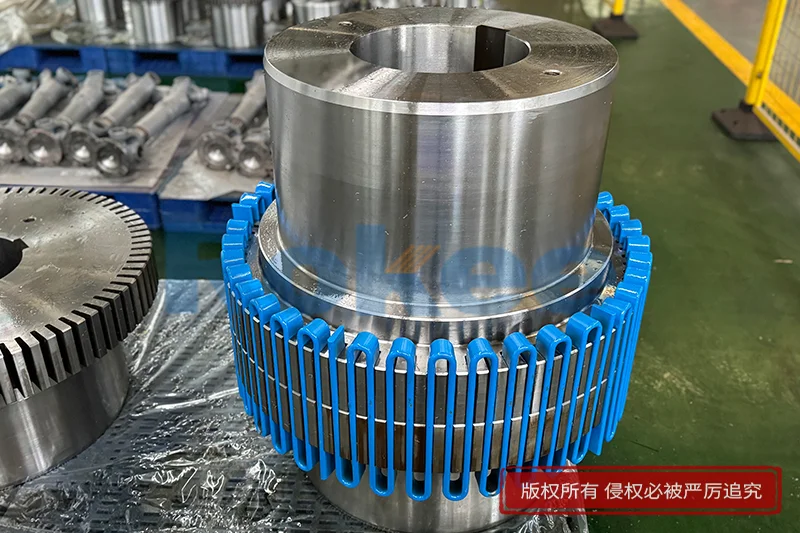
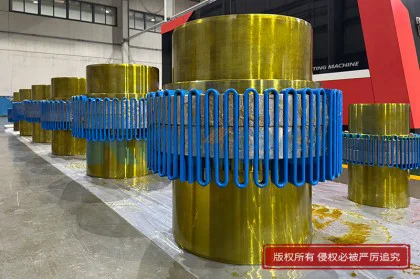
Snake spring coupling, also widely known as grid coupling, is a high-performance flexible mechanical coupling designed for torque transmission and shaft connection in various industrial mechanical systems. Distinguished from rigid couplings and ordinary elastic couplings, it adopts a unique wavy serpentine spring as the core force-transmitting component, which perfectly combines the structural stability of metal parts and the flexible buffering performance of elastic elements. This coupling mainly consists of two symmetric half couplings, a protective outer cover, sealing components and precision-made serpentine springs, forming a compact and durable integral structure. Its core functional advantages lie in its excellent vibration damping, impact buffering and misalignment compensation capabilities, which can effectively adapt to axial, radial and angular deviations between connected shafts during equipment operation. Widely applied in mechanical transmission scenarios with frequent start-stop, variable load and impact vibration, it can stabilize power transmission, reduce mechanical operation noise, relieve component wear, and greatly extend the overall service life of transmission equipment, making it a key basic component in modern industrial transmission systems.
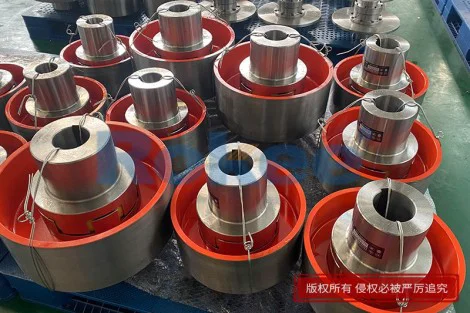
The overall structural composition of snake spring coupling is refined and reasonable, with each component undertaking independent and coordinated functional responsibilities to ensure stable and efficient operation. The two half couplings are the main bearing and connecting parts, usually forged from high-strength alloy steel or premium cast iron, with precisely machined tooth grooves on the circumferential surface. These evenly distributed tooth grooves are the embedded positions for serpentine springs, and their smooth and accurate processing ensures uniform stress contact between the spring and the coupling body. The serpentine spring, as the most critical functional component, is made of special fatigue-resistant spring steel through integral molding and precision bending, presenting a continuous wavy serpentine structure. Different from discrete spring structures, this integrated wave-shaped design enables continuous force transmission and uniform elastic deformation. The outer protective cover is a closed metal shell structure, which is divided into upper and lower halves for easy assembly and disassembly. It not only prevents the serpentine spring from deviating or flying out under high-speed centrifugal force, but also forms a closed inner cavity to store lubricating grease. Matching sealing parts are installed at the joints of the shell and the shaft body, which effectively isolate external dust, moisture and impurities, while preventing internal lubricant leakage, maintaining long-term internal lubrication conditions for the coupling.
The working principle of snake spring coupling is based on the elastic deformation of metal serpentine springs and meshing force transmission, realizing flexible and stable power transmission between driving and driven shafts. During equipment operation, the driving half coupling rotates synchronously with the power input shaft, and the tooth grooves on its surface apply continuous pushing force to the embedded serpentine spring. Under the action of rotational torque, the wavy serpentine spring produces controllable micro elastic deformation. This elastic deformation does not cause structural damage, but effectively buffers the instantaneous impact force generated by equipment start-up, sudden load change and emergency stop. The spring then transmits the rotational force to the tooth grooves of the driven half coupling, driving the driven shaft to rotate synchronously and complete torque and power transmission. When there is installation deviation or operational displacement between the two shafts, the flexible bending and stretching performance of the serpentine spring can automatically compensate for axial displacement, radial offset and angular deflection. In the whole transmission process, the spring always maintains uniform stress distribution, avoiding local overload and stress concentration. This flexible force transmission mode eliminates the rigid collision between mechanical parts, reduces transmission vibration and noise, and ensures the continuity and stability of power output under variable load conditions.
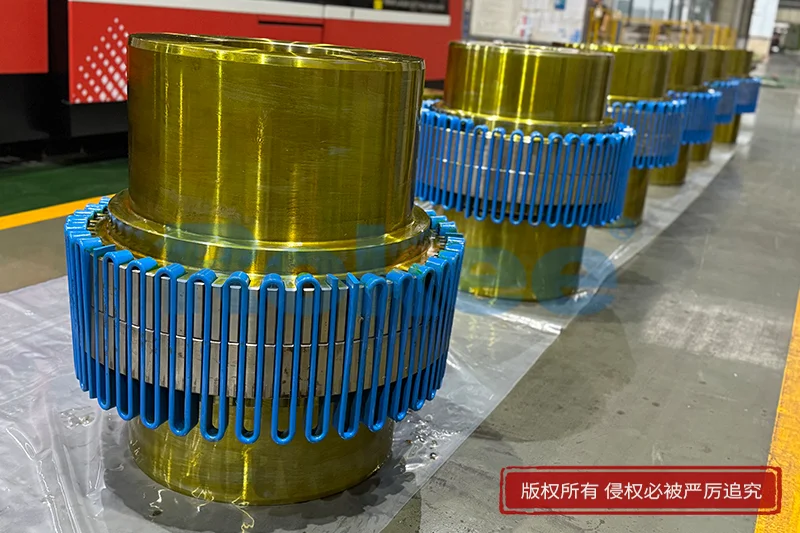
Snake spring coupling possesses outstanding vibration damping and impact resistance, which are core advantages that distinguish it from other types of mechanical couplings. In industrial production, most transmission equipment will produce instantaneous impact load during frequent start and stop, speed regulation and load switching, and long-term rigid impact will easily cause fatigue wear of transmission parts, loose connection and even structural damage. The unique wave-shaped elastic structure of the serpentine spring can store and release mechanical energy in real time during operation. When impact load occurs, the spring deforms elastically to absorb most of the impact energy; when the load is stable, it recovers its original state to ensure continuous power transmission. This energy absorption and buffering mechanism can effectively weaken high-frequency vibration generated by mechanical operation, reduce the vibration amplitude of the transmission system, and avoid vibration resonance between equipment components. Compared with rubber and other non-metallic elastic couplings, metal serpentine springs have stronger fatigue resistance and structural stability, and will not age, deform or fail due to long-term vibration and impact. It can maintain stable vibration damping performance in long-cycle and high-intensity industrial operation, effectively protect motors, reducers, bearings and other key equipment, and reduce the failure rate of the entire transmission system.
The misalignment compensation performance of snake spring coupling is one of its important practical values in industrial installation and operation. In the actual assembly process of mechanical equipment, it is difficult to achieve absolute coaxiality between the driving shaft and the driven shaft due to installation errors, equipment manufacturing tolerances and foundation fixation deviations. In addition, long-term operation, equipment vibration and ambient temperature changes will also cause slight displacement and deflection of the shaft body. ordinary rigid couplings cannot adapt to these deviations, which will lead to additional stress on the shaft body, accelerated wear of bearings and seals, and even shaft deformation and equipment failure. The serpentine spring of snake spring coupling has multi-directional flexible deformation capability, which can efficiently compensate for three common shaft misalignment states. It can adapt to small axial telescopic displacement caused by thermal expansion and cold contraction of the shaft, offset radial parallel deviation generated by installation errors, and balance angular deflection formed by asymmetric stress of the equipment. This excellent compensation performance reduces the installation precision requirements of equipment, simplifies the assembly process, and eliminates additional mechanical stress caused by shaft misalignment, ensuring the safe and stable operation of the transmission system for a long time.
Material selection and manufacturing craftsmanship determine the durability and operational stability of snake spring coupling. The core serpentine spring adopts high-grade alloy spring steel with strict component proportioning, which undergoes multiple heat treatment processes such as quenching and tempering to improve material hardness, toughness and fatigue resistance. This special treatment enables the spring to maintain stable elastic performance after millions of times of deformation and recovery, without permanent deformation or elastic attenuation. The half coupling body is made of high-strength cast iron or alloy steel with good rigidity and wear resistance. After precision casting and finishing, the tooth groove surface has high smoothness and dimensional accuracy, ensuring uniform contact and stable stress with the spring. The outer shell is made of thickened metal materials with strong compression resistance and impact resistance, which can resist external mechanical collision and environmental erosion. All sealing accessories are made of high-temperature resistant and wear-resistant rubber materials, which can adapt to different operating temperature environments and maintain long-term sealing performance. The overall manufacturing process adopts integrated molding and precision assembly technology, with tight matching between components, no loose gap, and stable overall structural performance, laying a solid foundation for long-term low-failure operation of the coupling.
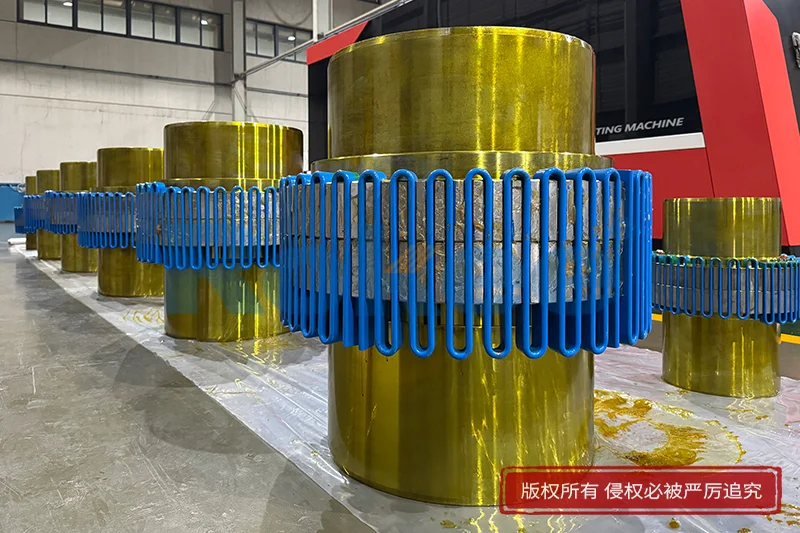
Snake spring coupling has excellent load adaptability and torque transmission performance, suitable for diverse industrial load conditions. Its unique multi-point meshing force transmission structure enables the serpentine spring to bear load evenly, avoiding local stress concentration, so it can stably transmit large torque under low-speed and high-load working conditions. At the same time, the flexible elastic structure can adapt to variable load and intermittent load operation, and will not produce rigid jamming or power fluctuation when the load suddenly increases or decreases. In high-speed operation scenarios, the balanced structural design of the coupling can effectively reduce centrifugal force and rotational vibration, maintain the stability of high-speed power transmission, and avoid abnormal noise and component wear caused by unbalanced rotation. Different from elastic couplings with limited load capacity, metal snake spring coupling has strong bearing capacity and structural rigidity, which can cope with heavy-duty operation of mechanical equipment. Whether it is continuous stable load operation or frequent impact load operation, it can maintain efficient and accurate torque transmission, ensure the power output accuracy of mechanical equipment, and improve the overall operating efficiency of industrial production lines.
The installation and maintenance advantages of snake spring coupling make it highly adaptable to industrial on-site use. The overall structure of the coupling is modular and split, with a simple assembly form. The upper and lower split outer cover design enables workers to complete assembly and disassembly operations without moving the connected equipment and adjusting the shaft position, which greatly simplifies the installation process and shortens the construction cycle. The internal structural layout is intuitive, and the replacement of core wearing parts such as serpentine springs can be completed quickly, without professional and complex operation steps. In terms of daily maintenance, the closed shell structure can keep the internal lubrication environment stable for a long time, and the lubricating grease filled in advance can maintain the lubrication effect of the spring and tooth groove meshing parts for a long period, reducing the frequency of daily refueling and maintenance. The metal components have strong wear resistance and corrosion resistance, with low failure rate in daily operation. Compared with other couplings that require frequent debugging and part replacement, it significantly reduces daily maintenance workload and later use cost, and improves the operational continuity of industrial equipment.
Snake spring coupling shows strong environmental adaptability and can operate stably in complex industrial working conditions. It has good temperature resistance, and the special spring steel and sealing materials will not have elastic failure, aging or deformation in conventional low and high temperature environments, maintaining stable transmission performance. The closed protective structure can effectively resist the erosion of dust, iron filings, moisture and other impurities in harsh working environments such as factories, mines and processing workshops, avoiding component abrasion and internal structure blockage caused by impurity accumulation. The metal overall structure has strong compression resistance and impact resistance, and can cope with external slight mechanical collision and vibration interference on the production site, without structural deformation and performance attenuation. In humid and dusty industrial scenarios where ordinary couplings are prone to rust, aging and failure, snake spring coupling can maintain long-term stable operation. Its excellent environmental adaptability avoids frequent equipment failures caused by harsh working conditions, reduces production interruption risks, and provides reliable guarantee for continuous operation of industrial mechanical equipment.
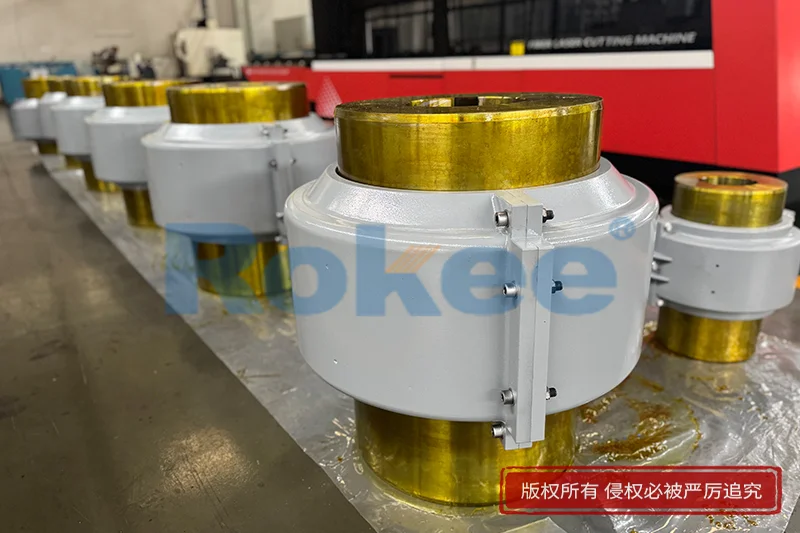
In practical industrial applications, snake spring coupling covers a wide range of mechanical transmission scenarios, with strong universal applicability. It is widely used in general mechanical equipment such as conveyors, mixers, crushers and fans, effectively buffering the vibration and impact generated by the operation of these equipment, stabilizing power transmission and improving equipment operation stability. In power transmission equipment such as reducers and motors, it serves as a key connecting component to compensate for shaft installation deviation, reduce the operating load of bearings and motors, and extend the service life of power components. It also performs excellently in industrial equipment with frequent start-stop and variable load operation, such as automated production lines and processing machinery, adapting to frequent load changes and instantaneous impact, ensuring the continuity and accuracy of mechanical movement. In heavy-duty industrial scenarios such as mining machinery and metallurgical equipment, its high torque transmission capacity and impact resistance can meet the requirements of heavy-load operation. With its comprehensive performance advantages, it has become a preferred connecting component in most industrial mechanical transmission systems.
Compared with other common types of flexible couplings, snake spring coupling has comprehensive performance advantages in structural stability, service life and operational reliability. Rubber elastic couplings rely on non-metallic materials for buffering, which are easy to age, deform and fail after long-term use, with poor high temperature resistance and fatigue resistance, and need frequent replacement. Gear couplings have high transmission accuracy but poor vibration damping and impact resistance, and are prone to gear wear and tooth surface damage under impact load, with high maintenance requirements. Diaphragm couplings have good high-speed performance but limited misalignment compensation capacity and poor adaptability to heavy impact loads. In contrast, snake spring coupling combines the advantages of metal structural rigidity and elastic buffering performance, with both high torque transmission capacity and excellent vibration damping and misalignment compensation effects. It has longer service life, lower failure rate and wider working condition adaptability. Although its structural volume is slightly larger than some miniature couplings, its comprehensive practical value in industrial heavy-load and long-term operation scenarios is far higher than other types of couplings.
With the continuous upgrading of modern industrial manufacturing technology, the application value and development potential of snake spring coupling are constantly highlighted. Modern industrial production is developing towards high efficiency, high stability and low failure rate, which puts forward higher requirements for the comprehensive performance of mechanical transmission components. As a mature and high-performance flexible coupling, snake spring coupling can well meet the development needs of modern industry by virtue of its stable transmission performance, excellent vibration damping and impact resistance, and low maintenance cost. With the continuous optimization of material technology and processing technology, the structural precision, fatigue resistance and environmental adaptability of snake spring coupling are further improved, enabling it to adapt to more sophisticated and harsh industrial working conditions. In the future, with the continuous expansion of industrial automation and intelligent production scenarios, snake spring coupling will be more widely used in various mechanical transmission fields, and continue to play an important role in improving the stability, efficiency and service life of industrial mechanical equipment.