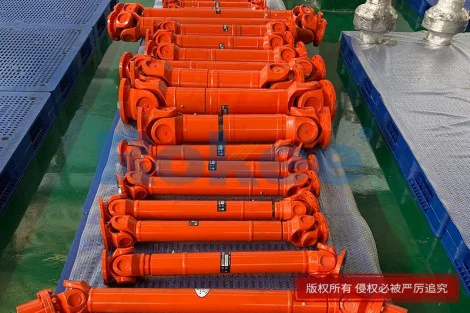
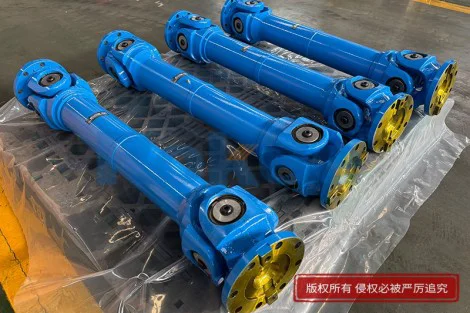
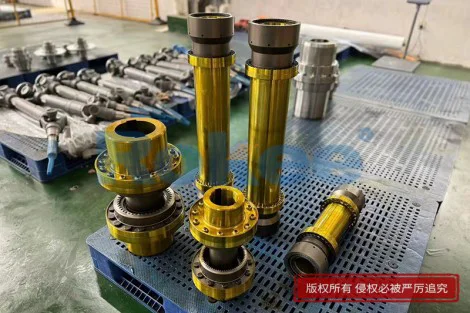
Cardan Driveshaft Ensures Stable Power Transmission For Sandwich Panel Production Machine
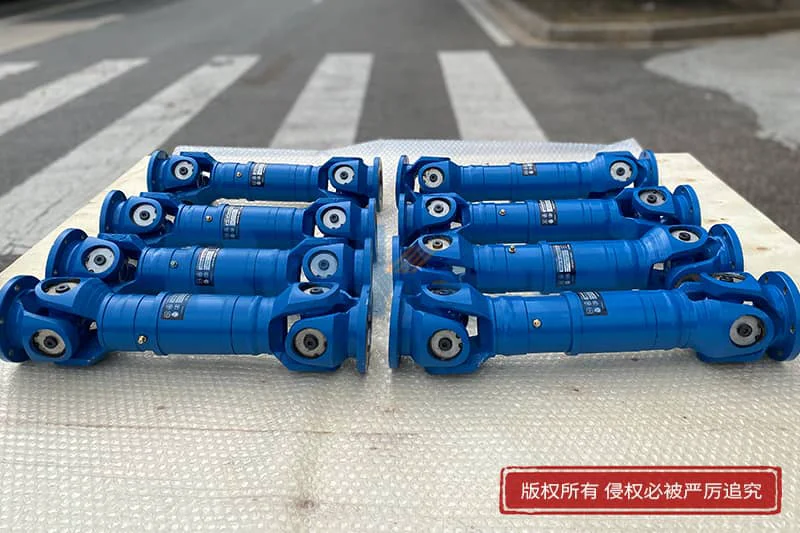
Sandwich panel production stands as a core pillar in the modern construction and industrial insulation manufacturing sector, delivering composite building materials that integrate structural strength, thermal insulation, sound absorption, and fire resistance for factory buildings, cold storage facilities, modular construction projects, and special industrial enclosure structures. The entire production process of sandwich panels involves a continuous and coordinated assembly of multiple mechanical processes, including raw material unwinding, surface plate leveling, core material filling and bonding, high-pressure composite pressing, continuous rolling forming, fixed-length cutting, and finished product conveying. Every link in this streamlined production chain relies on precise and uninterrupted mechanical power output, where the stability of power transmission directly determines the forming quality of sandwich panels, the consistency of product specifications, the continuous operation efficiency of the entire production line, and the long-term service life of key processing equipment. In such a complex and interconnected industrial production system, subtle fluctuations or intermittent interruptions in power transmission will trigger a series of production anomalies, ranging from uneven bonding between the metal surface layer and the internal core material of sandwich panels and inconsistent plate thickness deviation, to serious equipment jitter, production line shutdown, and increased mechanical component wear, bringing unnecessary operational disturbances and production efficiency losses to industrial manufacturing plants. As a key mechanical transmission component specially designed to adapt to complex operating conditions and variable shaft alignment states, the cardan driveshaft has become an indispensable core configuration for modern sandwich panel production machines, effectively solving various power transmission pain points in the continuous production process, maintaining stable and consistent torque and rotational motion output under dynamic operating environments, and laying a solid mechanical foundation for high-quality, high-efficiency, and long-cycle stable operation of sandwich panel production lines.
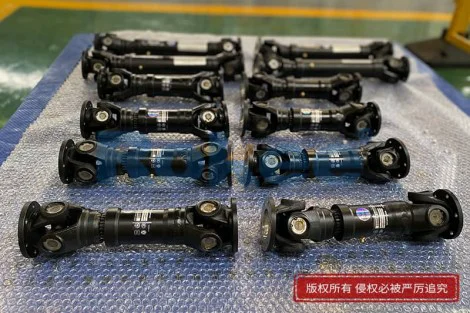
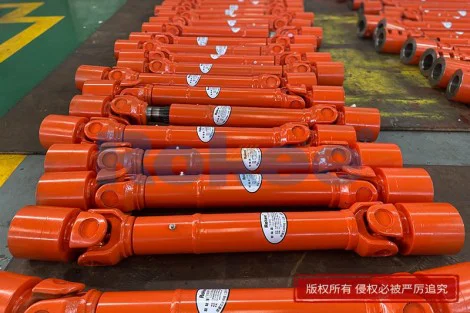
The fundamental working characteristics and structural design advantages of the cardan driveshaft determine its irreplaceable core role in the power transmission system of sandwich panel production equipment. Composed of precision-processed universal joints at both ends and a durable intermediate shaft body, the cardan driveshaft relies on the special geometric mechanical structure of cross shaft assemblies inside the universal joints to realize efficient torque and rotational motion transmission between driving shafts and driven shafts that cannot maintain absolute coaxial alignment. Unlike rigid transmission shafts that require extremely high installation alignment accuracy and can only adapt to a single linear transmission state, the cardan driveshaft has excellent angular deviation compensation capability, able to cope with continuous small changes in the relative position and angle between power input ends and load working ends during the long-term operation of sandwich panel production machines. In the actual production and operation process of sandwich panel production lines, perfect coaxial alignment between all power transmission shafts is almost impossible to achieve and maintain for a long time. On the one hand, the long-term continuous operation of the equipment will generate continuous mechanical vibration, and the cyclic load impact brought by raw material feeding, composite pressing and rolling forming processes will cause slight displacement and angle deviation of the installation position of transmission components. On the other hand, the mechanical components of the production line will produce thermal expansion and contraction changes under the influence of long-term operating temperature and ambient temperature fluctuations, further changing the relative spatial position between driving and driven shafts. In addition, the regular mechanical fatigue and slight structural deformation of the equipment frame after long-term operation will also lead to gradual misalignment of the transmission shaft system. Under these comprehensive complex conditions, rigid transmission components are prone to transmission jitter, torque loss, local stress concentration, and accelerated component wear, while the cardan driveshaft can flexibly adapt to three-dimensional misalignment changes in the working process through the flexible rotation and deflection coordination of internal universal joints, always maintaining the continuity and stability of power transmission without causing additional mechanical pressure or transmission resistance to the connected power equipment and processing execution components.
The production process of sandwich panels has extremely strict requirements for the continuity and uniformity of power transmission, and any unstable fluctuation in torque output will be directly reflected in the final product quality, making the stable transmission performance of cardan driveshafts particularly critical in actual production. The core production link of sandwich panels lies in the continuous composite bonding and rolling forming of metal surface plates and internal insulation core materials. This process requires the pressing roller set and forming roller set of the production machine to maintain constant rotational speed and uniform pressure output at all times. Only in this way can the core material and surface plates be closely bonded without gaps, and the thickness and flatness of each batch of sandwich panels can be kept consistent to meet the unified application standards of construction and industrial engineering. If the power transmission of the roller set is unstable and the rotational speed fluctuates intermittently, it will lead to uneven pressing force on different parts of the sandwich panel, resulting in local debonding, warping and deformation of the plate, and even obvious thickness difference between the two ends of the same plate, making the product fail to meet the basic use requirements and become defective waste. At the same time, the fixed-length cutting and finished product conveying links after forming also require synchronous and stable power drive. Unstable power transmission will cause asynchronous coordination between the cutting mechanism and the conveying mechanism, resulting in inaccurate cutting size and irregular cutting edges of sandwich panels, increasing subsequent processing procedures and material waste. The cardan driveshaft effectively avoids all these production quality risks by maintaining stable torque transmission and consistent rotational speed output. Its internal precision bearing and cross shaft assembly are engineered to reduce mechanical friction and transmission resistance to the greatest extent, ensuring that the power generated by the driving motor can be efficiently and completely transmitted to each working execution component of the production machine without obvious power loss or transmission delay. Even under long-term high-load continuous operation, the cardan driveshaft will not produce periodic jitter or rotational speed fluctuation, ensuring that every production link of sandwich panels is carried out in a stable and orderly mechanical operating state.
In addition to ensuring product processing quality, the stable power transmission provided by cardan driveshafts also greatly optimizes the overall operational stability and service life of sandwich panel production machine, reducing equipment failure rates and daily maintenance costs for manufacturing enterprises. Industrial production equipment for sandwich panels usually needs to operate continuously for long hours to meet large-scale market demand, and the power transmission system is the most vulnerable core part to wear and failure in the entire equipment structure. Traditional rigid transmission structures, when facing dynamic misalignment and load impact, will generate huge alternating stress inside the components, leading to rapid wear of connecting parts, frequent loosening of fixed parts, and even fatigue fracture of transmission shafts in severe cases. Each equipment failure of this kind will force the entire production line to shut down for maintenance, not only delaying production progress and reducing output efficiency, but also increasing the cost of replacement parts and manual maintenance labor. The structural design of the cardan driveshaft has excellent shock absorption and buffer performance while realizing flexible transmission. It can absorb the instantaneous impact load generated during the start-stop switching of the production machine, the sudden change of material feeding load and the fluctuation of operating speed, avoid the direct impact of vibration and impact force on the motor, reducer, pressing roller and other core equipment components, and effectively protect the key mechanical parts of the production line from damage caused by abnormal transmission stress. At the same time, the cardan driveshaft has strong adaptability to different operating load conditions, can maintain stable transmission performance under both low-speed high-torque and high-speed stable operating states, and will not produce abnormal wear and failure due to load changes in the production process of different specifications and types of sandwich panels. This reliable protection effect greatly extends the service cycle of the entire power transmission system and main production equipment, reduces the frequency of unexpected shutdown maintenance, enables the sandwich panel production line to maintain a high-efficiency continuous production state for a long time, and creates more stable production benefits for manufacturing enterprises.
The installation and layout flexibility of cardan driveshafts also brings great convenience to the structural design, equipment transformation and production line layout optimization of sandwich panel production machines, further supporting the stable operation and flexible adjustment of production work. In the design and manufacturing process of sandwich panel production lines, due to the integration of multiple processing links and the arrangement of various auxiliary equipment such as raw material unwinding racks, heating and bonding devices, and finished product conveying platforms, the spatial layout of the production line is compact and complex, and the installation position of power drive components and working execution components often cannot be arranged on the same straight line, with inevitable spatial angle deviation and distance difference. Rigid transmission shafts cannot adapt to this complex spatial layout requirement, and require complicated auxiliary correction and fixing structures during installation, which not only increases the difficulty of equipment manufacturing and installation, but also cannot eliminate the hidden troubles of transmission instability caused by inherent alignment deviation. The cardan driveshaft completely breaks through the layout limitation of linear transmission, relying on the angular deflection compensation function of universal joints to realize stable power transmission between shafts with different spatial angles and positions, greatly reducing the installation precision requirements of the transmission system, simplifying the equipment installation and debugging process, and shortening the equipment commissioning cycle. For old sandwich panel production lines that need to be upgraded and renovated to adjust production processes and expand production capacity, the cardan driveshaft can also adapt to the modified equipment layout and new transmission distance without large-scale transformation of the original equipment frame and transmission base, realizing rapid equipment upgrading and production capacity adjustment. This high layout flexibility not only reduces the transformation cost and construction cycle of production equipment, but also ensures that the power transmission system can still maintain excellent stability and reliability after equipment adjustment and upgrading, and will not affect the production quality and operational efficiency of sandwich panels due to equipment transformation.
In the long-term daily operation and maintenance management of sandwich panel production machines, the excellent structural durability and convenient maintenance characteristics of cardan driveshafts also provide strong support for the sustainable and stable operation of production lines. The main body of the cardan driveshaft is made of high-strength and wear-resistant metal materials through precision forging and machining processes, with good mechanical strength, fatigue resistance and wear resistance, able to cope with long-term continuous industrial operation and harsh production environment conditions including dust, slight humidity and temperature changes in the production workshop. The internal structural design is simple and compact, with few vulnerable parts, and the daily maintenance work only includes regular lubrication of universal joint bearing parts and regular inspection of connection fastening state, without complex professional maintenance procedures and high maintenance technical requirements. Compared with other complex transmission devices that require frequent precision debugging and parts replacement, the cardan driveshaft has lower daily maintenance difficulty and maintenance cost, and can maintain long-term stable working state with only conventional daily management. Even after long-term operation and normal wear of internal components, the replacement and maintenance of local parts can be completed quickly, with short maintenance downtime and little impact on the overall production schedule. This reliable durability and simple maintenance mode enable sandwich panel production enterprises to focus more on production scheduling and product quality control, without spending a lot of manpower, material and financial resources on the maintenance and repair of power transmission equipment, ensuring that the production line always maintains a stable and efficient operating state.
With the continuous upgrading of the construction industry's requirements for the performance and quality of sandwich panel products, and the continuous development of sandwich panel production machinery towards large-scale, continuous, automated and high-precision production, the importance of stable power transmission in the production process has become more prominent, and the application value and core role of cardan driveshafts in production equipment have been further highlighted. Modern sandwich panel production lines pursue higher production speed, more precise product size control and more stable continuous production capacity, which put forward higher standards for the stability, efficiency and reliability of the power transmission system. Any subtle transmission instability that could be ignored in traditional low-efficiency production modes will become an important factor restricting product quality improvement and production efficiency upgrading in modern high-precision and high-efficiency production scenarios. The cardan driveshaft, with its mature and reliable transmission principle, excellent angular deviation compensation performance, stable torque transmission capacity and strong environmental adaptability, can fully meet the high-standard power transmission needs of modern sandwich panel production machines, effectively guaranteeing the stable operation of all production links from raw material processing to finished product output. It not only solves various power transmission pain points existing in the operation of traditional production equipment, but also provides solid mechanical support for the high-quality development of the sandwich panel manufacturing industry, helping manufacturing enterprises realize stable production, quality improvement and efficiency enhancement, and lay a solid foundation for the sustainable and healthy development of the entire industrial chain.