High-precision Cardan Driveshaft Empowers Sandwich Panel Machines To Improve Quality And Efficiency

In the realm of modern industrial manufacturing, the pursuit of higher quality and efficiency has become a core driving force for the development of various processing equipment. Sandwich panel machines, as key equipment for producing composite panels widely used in construction, transportation, and other fields, are constantly evolving to meet the increasingly stringent market demands for product precision, stability, and production capacity. Among the numerous components that constitute a sandwich panel machine, the high-precision cardan driveshaft stands out as an indispensable core transmission part. Its unique structural design, excellent transmission performance, and high reliability not only solve the key pain points of traditional transmission systems but also inject strong momentum into the upgrading and transformation of sandwich panel machines, effectively empowering them to achieve significant improvements in both product quality and production efficiency.
To understand the critical role of high-precision cardan driveshafts in sandwich panel machines, it is first necessary to clarify the basic characteristics of sandwich panel production and the core requirements for the transmission system. Sandwich panels are composite materials composed of two outer panels and a middle core material, which have the advantages of light weight, high strength, thermal insulation, sound insulation, and fire resistance, making them widely used in the construction of walls, roofs, and cold storage facilities. The production process of sandwich panels is a continuous and automated process that involves multiple links, including uncoiling of outer metal coils, surface pretreatment, roll forming, core material foaming or bonding, composite lamination, fixed-length cutting, and stacking packaging. Each link requires precise coordination and stable power transmission to ensure the consistency and quality of the final product. The transmission system of a sandwich panel machine is responsible for transmitting power from the motor to various executing components, such as uncoiling rollers, forming rollers, conveyor belts, and cutting devices. It is required to maintain stable torque and speed transmission even under complex working conditions, compensate for the angular deviation between different components, and adapt to the dynamic changes in the production process.
Traditional transmission components used in sandwich panel machines, such as ordinary shafts and rigid couplings, often have limitations in practical applications. Due to the structural layout of the sandwich panel machine, the installation positions of various subsystems (such as the uncoiling system and the forming system) are often not on the same axis, resulting in angular misalignment between the driving shaft and the driven shaft. Ordinary rigid transmission components cannot effectively compensate for this misalignment, which will lead to unstable power transmission, increased vibration during equipment operation, and even wear and tear of components, affecting the normal operation of the machine. In addition, the production process of sandwich panels requires continuous and stable power output. Any slight fluctuation in torque or speed will affect the forming accuracy of the outer panels, the uniformity of the core material foaming, and the bonding firmness between the outer panels and the core material, thereby reducing the quality of the sandwich panels. For example, in the roll forming link, if the transmission speed is unstable, the metal coil will be unevenly stressed during the forming process, resulting in deformation of the outer panel, uneven thickness, or irregular edges, which will affect the subsequent composite effect and the overall appearance of the product. In the foaming and composite link, unstable power transmission will lead to uneven mixing of the core material, inconsistent foaming density, and insufficient bonding between the core material and the outer panels, reducing the structural strength and thermal insulation performance of the sandwich panels. At the same time, traditional transmission components have poor durability and require frequent maintenance and replacement, which increases the production cost and reduces the production efficiency.
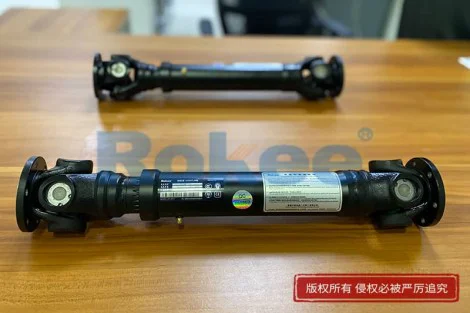
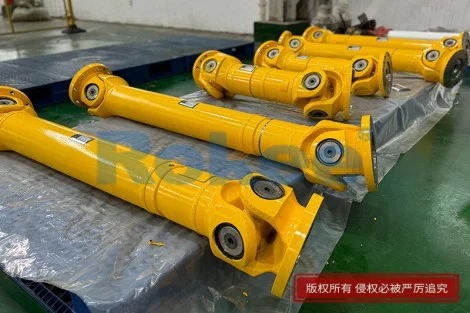
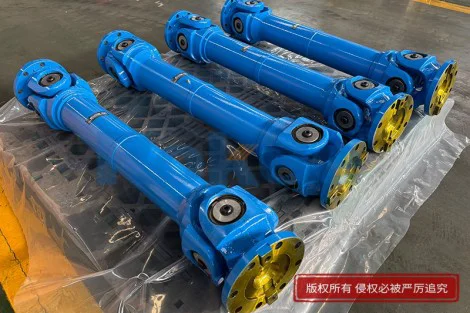
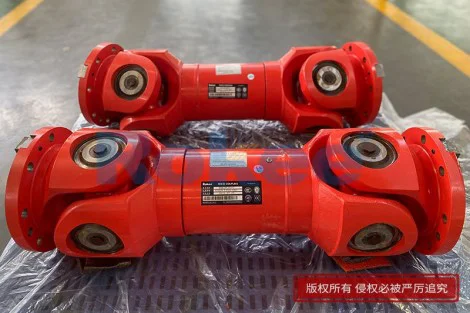
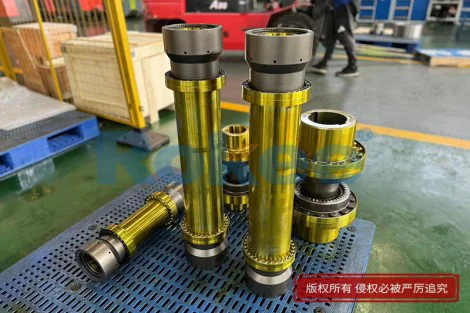
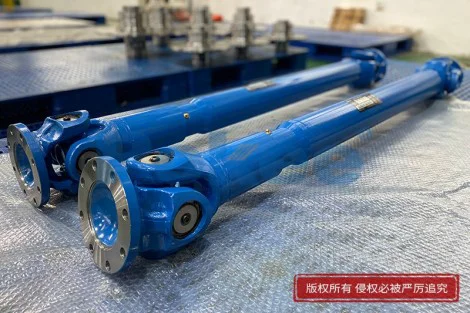
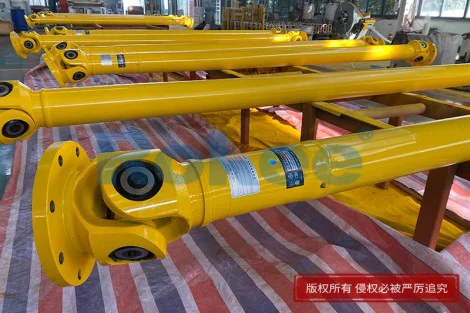
The emergence of high-precision cardan driveshafts has effectively solved the above problems, bringing a qualitative leap to the transmission system of sandwich panel machines. A high-precision cardan driveshaft, also known as a universal joint driveshaft, is a mechanical component designed to connect two rigid shafts with inclined axes and transmit rotational force. Its core structure includes universal joints at both ends, a splined section for length compensation, and a balanced shaft body. The universal joint, composed of cross shafts, bearings, and forks, allows the driveshaft to transmit torque and rotational motion at changing angles, realizing flexible power transmission between components with angular misalignment. The splined section can compensate for the axial displacement caused by thermal expansion or vibration during equipment operation, ensuring the stability of the transmission system. The high-precision processing technology and advanced material selection make the cardan driveshaft have excellent mechanical properties, which can withstand high torque and continuous loads, and maintain stable performance under long-term operation.
The high precision of the cardan driveshaft is mainly reflected in its processing accuracy and transmission accuracy. In the manufacturing process, advanced processing technologies such as high-precision CNC machining, isothermal forging, and induction heat treatment are adopted to ensure the dimensional accuracy and shape tolerance of each component. For example, the cross shaft and universal joint fork are processed by precision forging and grinding, which ensures the smoothness of the contact surface and the accuracy of the assembly gap, reducing the friction and wear during operation. The shaft body is made of high-grade heat-treated alloy steel, which has high strength, toughness, and wear resistance, and can withstand the impact of high torque and dynamic loads without deformation or fracture. In addition, the high-precision cardan driveshaft undergoes strict dynamic balancing testing during the production process to eliminate the centrifugal force generated during high-speed rotation, reduce vibration and noise, and ensure stable operation of the equipment. Compared with traditional transmission components, the transmission accuracy of high-precision cardan driveshafts can be improved by more than 30%, which can effectively ensure the stability of torque and speed transmission, and lay a solid foundation for improving the quality of sandwich panels.
In the actual application of sandwich panel machines, high-precision cardan driveshafts play a key role in multiple links, comprehensively optimizing the production process and improving product quality. In the uncoiling link, the uncoiling system needs to stably release the metal coil with a certain tension to ensure that the coil is not loose or deformed during the uncoiling process. The high-precision cardan driveshaft transmits power from the motor to the uncoiling roller, and its excellent torque transmission performance ensures that the uncoiling speed is stable and consistent, avoiding the phenomenon of uneven tension caused by speed fluctuations. At the same time, the cardan driveshaft can compensate for the angular misalignment between the motor and the uncoiling roller, ensuring that the uncoiling roller rotates smoothly, reducing the wear of the metal coil surface, and improving the flatness of the uncoiled metal sheet. This is particularly important for the subsequent roll forming link, as the flatness of the metal sheet directly affects the forming accuracy of the outer panel.
In the roll forming link, which is one of the core links of sandwich panel production, the high-precision cardan driveshaft shows unique advantages. The roll forming system is composed of multiple sets of precision rollers, which gradually shape the flat metal sheet into the desired profile through multi-pass progressive rolling. The power transmission of each roller needs to be synchronized and stable to ensure that the metal sheet is evenly stressed during the forming process, avoiding deformation, wrinkles, or edge warping. The high-precision cardan driveshaft connects the motor to each forming roller, realizing synchronous transmission of power. Its high transmission accuracy ensures that the rotational speed of each roller is consistent, and the torque is evenly distributed, so that the metal sheet is smoothly formed under uniform pressure. In addition, due to the flexible transmission characteristics of the cardan driveshaft, it can adapt to the slight position changes of the rollers caused by thermal expansion during long-term operation, ensuring the stability of the forming process. Compared with traditional transmission systems, the application of high-precision cardan driveshafts can reduce the forming error of the outer panel by more than 25%, significantly improving the dimensional accuracy and appearance quality of the outer panel.
The foaming and composite link is another key link affecting the quality of sandwich panels, and the high-precision cardan driveshaft also plays an important role here. In the production of polyurethane sandwich panels, the foaming system needs to mix the two-component raw materials evenly and inject them into the gap between the two outer panels, and then cure them to form the core material. The power transmission of the foaming machine, mixing head, and composite conveyor belt requires high stability and accuracy. The high-precision cardan driveshaft transmits power to the mixing head, ensuring that the mixing speed is stable and the mixing ratio is accurate, which is conducive to the uniform foaming of the core material and the improvement of foaming density. In the composite conveyor link, the cardan driveshaft drives the conveyor belt to run stably, ensuring that the outer panels and core material move at a constant speed during the composite process, so that the adhesive can fully cure and the bonding between the outer panels and core material is firm. For sandwich panels with inorganic core materials such as rock wool and glass wool, the high-precision cardan driveshaft ensures the stable operation of the automatic feeding system and precise gluing device, making the core material evenly distributed and the gluing amount accurate, avoiding the phenomenon of uneven core material distribution and insufficient bonding.
In the fixed-length cutting link, the high-precision cardan driveshaft also plays a key role in ensuring cutting accuracy. The fixed-length cutting system of sandwich panel machines usually adopts a flying saw cutting method, which requires the cutting device to move synchronously with the sandwich panel and complete the cutting action in a short time. The power transmission of the flying saw is realized by the cardan driveshaft, which ensures that the cutting speed is consistent with the running speed of the sandwich panel, avoiding cutting deviation caused by speed asynchrony. The high transmission accuracy of the cardan driveshaft ensures that the cutting position is accurate, the cutting surface is flat, and the dimensional error of the finished sandwich panel is controlled within a small range. This not only improves the quality of the finished product but also reduces the waste caused by cutting errors, saving production costs.
In addition to improving product quality, high-precision cardan driveshafts also significantly enhance the production efficiency of sandwich panel machines. On the one hand, the high reliability and durability of the cardan driveshaft reduce the frequency of equipment failure and maintenance. Traditional transmission components are prone to wear, deformation, and fracture under long-term high-load operation, requiring frequent maintenance and replacement, which not only increases maintenance costs but also affects production progress. The high-precision cardan driveshaft is made of high-quality materials and processed by advanced technologies, which has excellent wear resistance and fatigue resistance, and can operate stably for a long time without frequent maintenance. According to actual application data, the application of high-precision cardan driveshafts can reduce the maintenance frequency of sandwich panel machines by more than 40%, and extend the service life of the transmission system by 2-3 times, effectively reducing production downtime and improving production continuity.
On the other hand, the high transmission efficiency of the cardan driveshaft helps to improve the overall production speed of the sandwich panel machine. The high-precision cardan driveshaft has small friction resistance during operation, and the torque loss is small, which can effectively convert the power of the motor into the driving force of each executing component, improving the power utilization rate. At the same time, the flexible transmission characteristics of the cardan driveshaft allow the sandwich panel machine to adjust the production speed according to actual needs without affecting the stability of the transmission system. For example, in the production of sandwich panels of different specifications, the cardan driveshaft can adapt to the adjustment of the speed and torque of each subsystem, ensuring that the equipment can maintain stable operation at different production speeds. This flexibility not only improves production efficiency but also enhances the adaptability of the equipment to different production needs. In practical applications, the application of high-precision cardan driveshafts can increase the production speed of sandwich panel machines by 15%-25%, and the daily output can be increased by more than 300 square meters, bringing significant economic benefits to enterprises.
The advantages of high-precision cardan driveshafts in sandwich panel machines are also reflected in their strong adaptability to complex working environments. Sandwich panel production workshops often have harsh working conditions, such as high temperature, high humidity, and large dust, which put forward high requirements for the performance of transmission components. The high-precision cardan driveshaft is equipped with advanced sealing systems and lubricating mechanisms, which can effectively prevent dust, moisture, and other impurities from entering the internal components, avoiding corrosion and wear of the components. The lubricating mechanism ensures that the moving parts of the cardan driveshaft are fully lubricated during operation, reducing friction and extending the service life of the components. In addition, the cardan driveshaft can adapt to the angular misalignment and axial displacement caused by equipment vibration and thermal expansion, ensuring stable power transmission even under harsh working conditions. This strong environmental adaptability makes the sandwich panel machine equipped with high-precision cardan driveshafts can operate stably in various complex workshops, further ensuring the continuity and stability of production.
It is worth noting that the application of high-precision cardan driveshafts in sandwich panel machines is not only a simple replacement of traditional transmission components but also a comprehensive optimization of the entire transmission system. In the design and transformation of sandwich panel machines, the selection and installation of high-precision cardan driveshafts need to be combined with the overall structure of the equipment and the production process requirements to ensure that the cardan driveshaft can fully play its role. For example, according to the torque and speed requirements of different links of the sandwich panel machine, the appropriate specification and model of the cardan driveshaft should be selected to ensure that the transmission performance matches the equipment requirements. In the installation process, the alignment accuracy of the cardan driveshaft should be strictly controlled to reduce the additional load caused by improper installation, ensuring the stable operation of the transmission system. In addition, regular inspection and maintenance of the cardan driveshaft are also necessary, such as checking the lubrication status, sealing performance, and component wear, to timely find and solve potential problems, ensuring the long-term stable operation of the cardan driveshaft.
With the continuous development of the sandwich panel industry, the market demand for sandwich panel quality and production efficiency is constantly improving, which puts forward higher requirements for the performance of sandwich panel machines. As a core transmission component, high-precision cardan driveshafts will play an increasingly important role in the upgrading and transformation of sandwich panel machines. In the future, with the continuous advancement of precision machining technology and material science, the performance of high-precision cardan driveshafts will be further improved. For example, the application of new materials such as carbon fiber composites will further reduce the weight of the cardan driveshaft while improving its strength and durability; the integration of intelligent monitoring technology will enable real-time monitoring of the operation status of the cardan driveshaft, realizing predictive maintenance and further reducing equipment failure rates. These technological advancements will further empower sandwich panel machines, helping enterprises improve production efficiency, reduce costs, and enhance market competitiveness.
In conclusion, high-precision cardan driveshafts, with their unique structural design, high transmission accuracy, and excellent reliability, have become an indispensable core component of modern sandwich panel machines. They effectively solve the problems of unstable power transmission, low precision, and high maintenance frequency of traditional transmission systems, and play a key role in optimizing the uncoiling, roll forming, foaming composite, and fixed-length cutting links of sandwich panel production. By improving the dimensional accuracy, appearance quality, and structural performance of sandwich panels, and enhancing the production efficiency and stability of the equipment, high-precision cardan driveshafts bring substantial economic and social benefits to the sandwich panel production industry. In the context of the continuous development of industrial automation and intelligent manufacturing, the application of high-precision cardan driveshafts will become more widespread, and they will continue to empower the upgrading and development of the sandwich panel industry, promoting the high-quality development of the entire composite material manufacturing industry.