Drum Gear Coupling Empowers Rockwool Sandwich Panel Production Line To Improve Operation Efficiency
In the modern construction material industry, rockwool sandwich panels have become an indispensable choice for various construction projects due to their excellent thermal insulation, fire resistance, sound absorption, and structural stability. These panels, composed of two outer metal sheets and a central rockwool core, are widely used in industrial workshops, commercial complexes, public facilities, and residential buildings, meeting the growing demand for energy-efficient and safe building materials. The production of high-performance rockwool sandwich panels relies heavily on advanced and stable production lines, where every component plays a crucial role in determining production efficiency, product quality, and operational stability. Among these components, the drum gear coupling, as a key transmission element, has gradually become the core support for optimizing the operation of rockwool sandwich panel production lines, effectively solving the pain points of low efficiency, high failure rate, and poor stability in traditional transmission systems, and thus empowering the production line to achieve higher efficiency and more reliable operation.
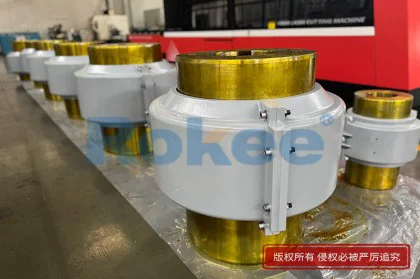
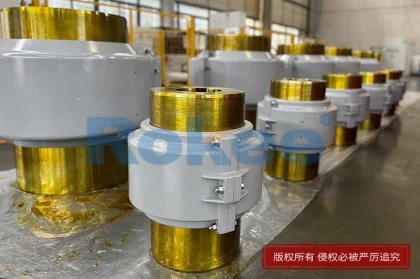
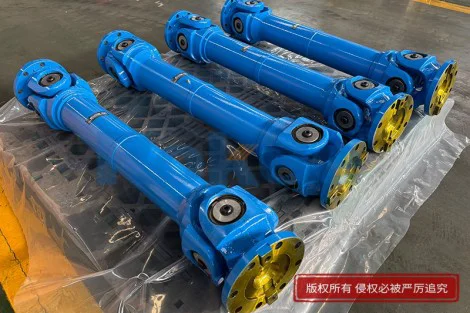
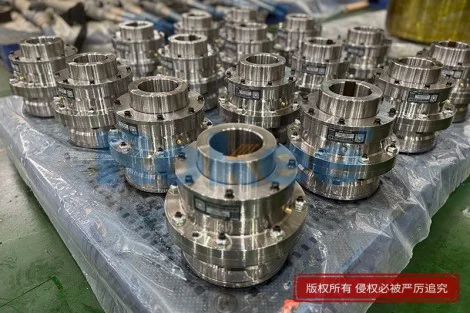
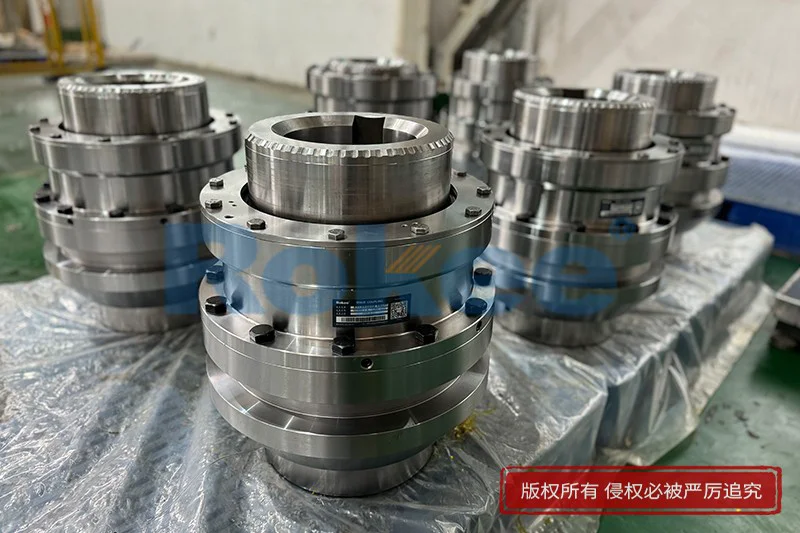
To understand how drum gear couplings empower rockwool sandwich panel production lines, it is first necessary to clarify the structural characteristics and working principles of drum gear couplings, as well as the complex operational demands of rockwool sandwich panel production lines. A drum gear coupling is a high-performance rigid-flexible coupling device, which belongs to an advanced form of gear coupling. It is mainly composed of an inner gear ring with the same number of teeth and a flange half-coupling with external teeth, and its most prominent feature is the arc-shaped spherical design of the tooth top and tooth surface of the external gear sleeve. This unique design is the key to its excellent performance, allowing it to compensate for radial, axial, and angular deviations between the two shafts connected, which is difficult to achieve with traditional straight-tooth couplings. Unlike ordinary straight-tooth couplings where both internal and external teeth are straight, leading to concentrated contact at the tooth edges when there is shaft misalignment, the drum-shaped tooth profile of the drum gear coupling ensures that the contact point between the internal and external teeth can smoothly shift, avoiding dangerous edge contact, reducing stress concentration, and thus improving the load-bearing capacity and service life of the coupling.
The rockwool sandwich panel production line is a complex integrated system that integrates multiple functional units, including raw material preparation, surface layer forming, core layer processing, composite bonding, curing, cutting, and finished product inspection. Each unit is closely linked, and the coordination and precision of the equipment directly affect the final product quality and production efficiency. The production process involves multiple high-load and continuous operation links: for example, in the raw material preparation stage, the unwinding system needs to stably unfold metal coils; in the core layer processing stage, the rockwool raw material needs to be melted, fiberized, and formed through high-temperature treatment, which requires the transmission system to provide stable power; in the composite bonding and pressing stage, the equipment needs to apply uniform pressure to bond the metal surface layers and rockwool core tightly, which puts high requirements on the stability and accuracy of the transmission system. In these links, the transmission system is responsible for transmitting power from the motor to various functional equipment, and any instability or failure in the transmission process will lead to interruptions in the production line, reduced production efficiency, and even defects in the final products. Traditional transmission components often have shortcomings such as limited deviation compensation capacity, low load-bearing capacity, high noise, and frequent maintenance, which are difficult to adapt to the long-term, high-load, and high-precision operation requirements of rockwool sandwich panel production lines.
The application of drum gear couplings in rockwool sandwich panel production line effectively addresses the limitations of traditional transmission components, bringing comprehensive improvements to the operation efficiency and stability of the production line. One of the most significant advantages is their excellent deviation compensation capacity. In the long-term operation of the production line, due to factors such as mechanical wear, thermal deformation of equipment, uneven installation, and foundation settlement, it is inevitable that there will be radial, axial, and angular deviations between the shafts of various equipment. For example, the unwinding system of the metal surface layer may have slight axial deviation due to long-term use, and the rockwool forming equipment may have angular deviation due to thermal expansion. If these deviations are not effectively compensated, they will cause additional load on the transmission system, leading to increased wear of components, increased noise, and even equipment failure. The drum gear coupling, with its unique drum-shaped tooth design, can effectively compensate for these deviations—its angular compensation capacity can reach 1.5° to 3°, and the radial compensation amount can be up to 6mm, which is far superior to traditional straight-tooth couplings. This compensation capacity ensures that the transmission system can operate stably even when there are slight deviations between the shafts, reducing the wear of bearings and other components, and avoiding production interruptions caused by transmission failures.
Another key advantage of drum gear couplings is their high load-bearing capacity and transmission efficiency, which are crucial for improving the production efficiency of rockwool sandwich panel production lines. The production process of rockwool sandwich panels involves multiple high-load links, such as the pressing of composite panels and the transmission of heavy-duty raw materials, which require the transmission system to transmit large torque stably. Compared with traditional straight-tooth couplings, under the same external dimensions, the load-bearing capacity of drum gear couplings is 15% to 20% higher on average. This is due to the optimized load distribution of the drum-shaped teeth, which avoids stress concentration and allows the coupling to transmit greater torque. At the same time, the drum gear coupling has high transmission efficiency, which can reach up to 99.7%. This means that the power loss in the transmission process is minimized, more energy is converted into effective power for production, and the energy consumption of the production line is reduced while improving production efficiency. For example, in the composite pressing link, the drum gear coupling can stably transmit the torque required by the pressing equipment, ensuring that the pressure applied to the rockwool sandwich panel is uniform and stable, not only improving the bonding quality of the panel but also reducing the energy loss caused by power waste, thus increasing the output of the production line per unit time.
The smooth operation and low noise performance of drum gear couplings also play an important role in optimizing the working environment of the production line and reducing maintenance costs. In the traditional production line, the meshing impact of straight-tooth couplings is large, resulting in high noise during operation, which not only affects the working environment of employees but also indicates severe wear of components, requiring frequent maintenance and replacement. The drum gear coupling, with its optimized tooth profile design, makes the relative sliding between the internal and external teeth smoother, reducing vibration and noise, and the operating noise can be controlled below 75dB, creating a quieter and more comfortable working environment. At the same time, the smooth operation reduces the wear of the coupling itself and the connected equipment components, extending the service life of the equipment and reducing the frequency of maintenance and replacement. For rockwool sandwich panel production lines that require 24-hour continuous operation, reducing maintenance frequency means reducing production interruptions, ensuring the continuity of production, and further improving overall operation efficiency. In addition, the drum gear coupling has a simple structure and is easy to maintain; regular cleaning, lubrication, and inspection can ensure its long-term stable operation. Proper lubrication, such as the use of thin oil lubrication, can reduce wear to about 10% of grease lubrication, while also taking away the heat generated by meshing to prevent material performance degradation, further extending the service life of the coupling.
In the specific application links of the rockwool sandwich panel production line, drum gear couplings play a key role in various functional units, forming a comprehensive empowerment for the entire production line. In the unwinding system of the metal surface layer, the drum gear coupling connects the motor and the unwinding roller, ensuring that the unwinding speed is stable and consistent. The deviation compensation capacity of the coupling can effectively adapt to the slight deviation caused by the unevenness of the metal coil, avoiding the phenomenon of uneven unwinding, which may lead to wrinkles or misalignment of the metal surface layer, thus ensuring the flatness of the surface layer and laying a good foundation for the subsequent composite bonding link. In the rockwool core processing system, the drum gear coupling is used to connect the motor and the fiberization equipment, transmitting stable power to the high-speed spinning spinneret. The high load-bearing capacity and transmission efficiency of the coupling ensure that the spinneret can maintain a stable rotation speed, which is crucial for the formation of uniform rockwool fibers. Uneven fiber distribution is a common problem in rockwool production, which is often caused by inconsistent spinner speed; the stable transmission of the drum gear coupling can effectively avoid this problem, ensuring that the rockwool core has uniform density and excellent thermal insulation performance.
In the composite bonding and pressing link, the drum gear coupling plays a more critical role. The composite bonding of rockwool sandwich panels requires the pressing equipment to apply uniform and stable pressure to the metal surface layers and rockwool core, ensuring that the three layers are closely bonded without gaps. The drum gear coupling connects the motor and the pressing roller, transmitting large torque stably and ensuring that the pressure applied by the pressing roller is uniform and consistent. The deviation compensation capacity of the coupling can adapt to the slight deviation of the pressing roller caused by long-term use, avoiding uneven pressure on the panel, which may lead to poor bonding, uneven thickness, or even delamination of the panel. This not only improves the quality of the finished rockwool sandwich panel but also reduces the waste of raw materials caused by product defects, further improving the economic benefits of the production line. In the curing and cutting links, the drum gear coupling ensures the stable operation of the curing equipment and cutting machine, ensuring that the curing temperature and time are accurately controlled, and the cutting size is precise. This avoids the problems of unqualified curing or inaccurate cutting, reducing the rate of defective products and improving the efficiency of the production line.
The application of drum gear couplings also helps the rockwool sandwich panel production line achieve energy conservation and environmental protection, which is in line with the development trend of modern industrial production. As mentioned earlier, the drum gear coupling has high transmission efficiency, which can minimize power loss, reduce the energy consumption of the production line, and thus reduce energy costs and carbon emissions. At the same time, the long service life and low maintenance frequency of the coupling reduce the waste of spare parts and maintenance materials, reducing the environmental impact caused by the disposal of waste components. In addition, the low noise operation of the coupling reduces noise pollution, improving the environmental performance of the production line, which is conducive to the sustainable development of enterprises.
In practical application, the performance of drum gear couplings in rockwool sandwich panel production lines has been fully verified. Many production lines that have adopted drum gear couplings have achieved significant improvements in operation efficiency and product quality. For example, some production lines that originally had frequent transmission failures and low output have significantly reduced the failure rate after replacing with drum gear couplings, and the production efficiency has increased by 15% to 20%. The qualified rate of products has also been improved, and the maintenance cost has been reduced by 30% or more. This fully shows that drum gear couplings can effectively empower rockwool sandwich panel production lines, helping enterprises reduce costs, improve efficiency, and enhance market competitiveness.
With the continuous development of the construction material industry, the demand for rockwool sandwich panels is constantly increasing, and the requirements for the production line are also getting higher and higher. The drum gear coupling, as a high-performance transmission component, will play a more important role in the future. With the advancement of industrial technology, drum gear couplings are also constantly evolving towards intelligence, lightweight, and environmental protection. For example, intelligent drum gear couplings integrated with sensors can real-time monitor torque, temperature, and vibration, realizing predictive maintenance, which can further reduce the failure rate of the production line and improve the stability of operation. Lightweight design using new materials can reduce the weight of the coupling while ensuring load-bearing capacity, reducing energy consumption and improving the overall efficiency of the transmission system. These technological upgrades will further enhance the empowerment effect of drum gear couplings on rockwool sandwich panel production lines, promoting the high-quality development of the rockwool sandwich panel industry.
In conclusion, the drum gear coupling, with its unique structural design and excellent performance, has become an indispensable key component in rockwool sandwich panel production lines. Its excellent deviation compensation capacity, high load-bearing capacity, high transmission efficiency, smooth operation, and low noise performance effectively solve the pain points of traditional transmission systems, improving the operation efficiency, product quality, and stability of the production line, while reducing maintenance costs and energy consumption. In the context of the continuous development of the construction material industry, the application of drum gear couplings will become more widespread, and they will continue to empower rockwool sandwich panel production lines to achieve more efficient, reliable, and sustainable operation, making greater contributions to the development of the construction material industry.