Universal Coupling Ensures Precise Transmission Of PUR Sandwich Panel Production Line
The continuous and stable operation of modern lightweight building material production lines hinges fundamentally on the reliability and accuracy of mechanical transmission systems, among which the PUR sandwich panel production line stands out for its high requirements for synchronous operation, dimensional consistency, and continuous forming stability in every processing link. PUR sandwich panels, as high-efficiency thermal insulation and structural integration building materials, are widely applied in industrial factory buildings, cold storage facilities, logistics warehouses, and prefabricated construction projects, and their overall performance and finished product quality are directly determined by the precision coordination of each functional unit in the production process from raw material feeding, continuous foaming, composite pressing, surface laminating to fixed-length cutting and finished product conveying. In the entire mechanical operation system of the production line, various driving and driven shafts responsible for power output, roller rotation, material traction, and equipment linkage need to maintain highly consistent rotational speed and torque transmission status at all times. Even tiny deviations in angular synchronization, shaft position offset, or operational vibration during transmission will be amplified in the continuous high-speed production process, leading to uneven foaming density of PUR core materials, inconsistent bonding strength between surface plates and core layers, irregular panel thickness specifications, and even continuous deviation of cutting dimensions, resulting in a large number of defective products and affecting the overall production efficiency and product yield of the entire line. As a core flexible transmission component specially designed to adapt to complex shaft connection conditions and achieve stable torque transfer under misalignment states, the universal coupling plays an irreplaceable core role in eliminating transmission errors, compensating for mechanical position deviations, stabilizing synchronous rotation, and maintaining long-term consistent power output in the PUR sandwich panel production line, becoming a key guarantee for the precise and efficient operation of the entire production and processing system.
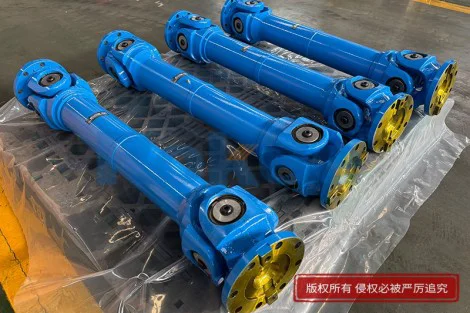
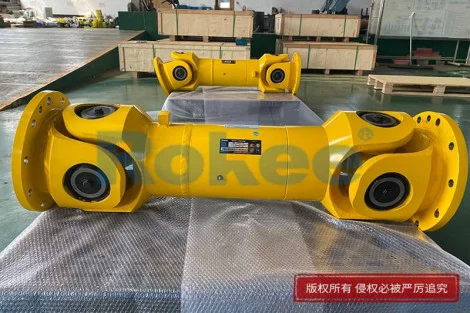
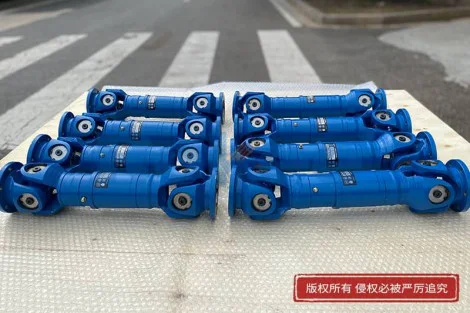
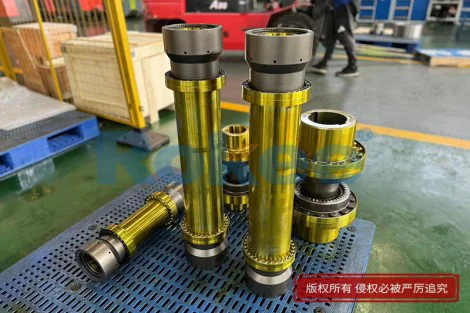
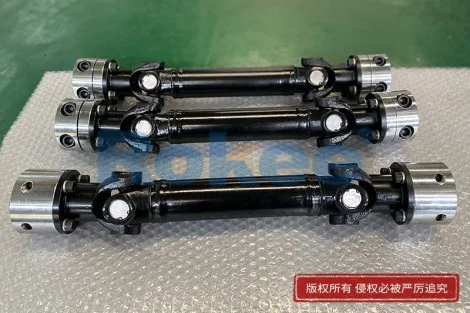
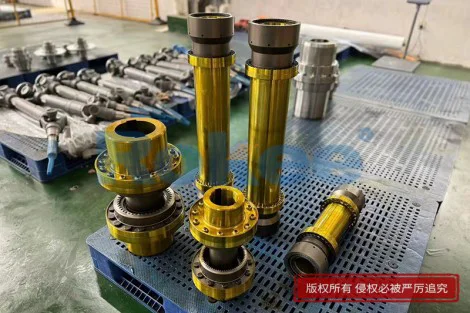
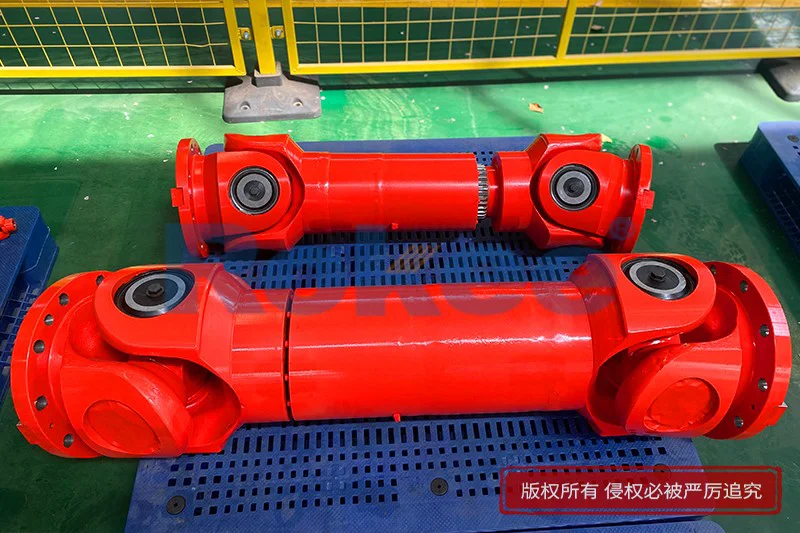
The basic working principle and structural characteristics of universal couplings lay a solid mechanical foundation for their excellent precise transmission performance in complex industrial production environments. Composed of two fork-shaped joint components and a central cross shaft structure equipped with precision bearings at each end, the universal coupling relies on a spatial linkage mechanical mechanism to realize the flexible connection and power transmission between driving shafts and driven shafts that cannot maintain absolute coaxial alignment. In actual industrial operation scenarios, it is almost impossible for the driving and driven shafts of various mechanical equipment in the PUR sandwich panel production line to achieve complete ideal coaxial installation. On the one hand, inevitable installation deviations will occur during the equipment assembly and debugging process of the production line, resulting in slight angular inclination and parallel offset between connected shafts; on the other hand, long-term continuous operation of the production line will generate mechanical vibration, thermal expansion and contraction of metal components caused by equipment operating temperature changes, and minor structural deformation of the frame under long-term load bearing, all of which will further change the relative position and angle between the driving and driven shafts during operation. The unique structural design of the universal coupling perfectly adapts to this actual operating state. The cross shaft can perform multi-directional spatial swinging movement inside the fork-shaped joints, and the precision bearings at the ends of the cross shaft ensure flexible rotation without friction resistance during movement. This structural design enables the coupling to effectively compensate for angular misalignment, parallel displacement, and axial position deviation between the two connected shafts while stably transmitting rotational torque and rotational motion, avoiding the transmission jitter, torque loss, and rotational speed fluctuation that are easily caused by rigid connection methods when shaft positions change. Different from single rigid transmission parts that are only suitable for ideal coaxial conditions, the universal coupling can always maintain continuous and stable power transmission under various non-ideal installation and operation states, ensuring that the rotational motion output by the driving equipment can be accurately and synchronously transmitted to each driven mechanical component without delay or deviation, which is the primary prerequisite for maintaining the overall transmission precision of the PUR sandwich panel production line.
The precise transmission performance of universal couplings is closely integrated with the core processing technological requirements of each key station in the PUR sandwich panel production line, directly determining the forming quality and dimensional accuracy of finished sandwich panels. The production process of PUR sandwich panels is a continuous integrated processing process with strict synchronous coordination requirements for each link. The initial raw material feeding stage needs to realize the uniform and synchronous conveying of upper and lower metal surface plates and quantitative conveying of PUR foaming raw materials. The traction rollers responsible for surface plate conveying and the metering equipment responsible for raw material proportional conveying must maintain strict synchronous rotational speed. Once transmission deviation occurs, it will lead to asynchronous feeding speed of upper and lower plates or unstable proportional supply of foaming materials, resulting in uneven thickness of the sandwich panel core layer and inconsistent composite bonding gap. In the subsequent continuous foaming and composite pressing stage, the pressing rollers and forming rollers of the production line need to maintain constant rotational speed and stable pressing pressure coordination. The slight rotational speed difference between the driving rollers will cause relative sliding between the surface plate and the pressing rollers, resulting in surface scratches on the finished panel and inconsistent overall flatness. In the final fixed-length cutting and finished product output stage, the cutting equipment and conveying mechanism must achieve precise position synchronization. Only when the conveying speed and cutting action are completely coordinated can the sandwich panel be cut according to the set fixed length specifications to ensure the uniformity of finished product dimensions. In all these key production links, universal couplings are installed at the shaft connection positions of all driving and driven transmission parts. Through efficient compensation of shaft position deviations and stable maintenance of synchronous rotation, the couplings eliminate abnormal vibration and rotational speed fluctuation in the transmission process. Even in the long-term uninterrupted continuous production state, each transmission shaft can maintain consistent operating frequency and torque output, ensuring that each production process is carried out in accordance with preset technological parameters. There will be no cumulative transmission errors due to long-term operation, nor will there be sudden changes in operating status due to equipment thermal deformation or mechanical vibration, thus ensuring that every piece of PUR sandwich panel produced has consistent thickness, uniform core density, firm composite bonding, and accurate dimensional specifications.
Compared with other traditional transmission connection components, the unique advantages of universal couplings in anti-interference transmission and long-term stable operation make them more suitable for the high-intensity and high-precision production environment of PUR sandwich panel production lines. Many simple rigid connection parts and ordinary fixed connecting shafts often face obvious limitations in actual industrial application. Rigid connections cannot compensate for any shaft misalignment and position deviation. Once installation errors or operational structural deformation occur, the transmission process will generate huge additional mechanical stress, which not only causes severe wear of shaft parts and shortens the service life of equipment accessories, but also leads to obvious rotational speed jitter and torque attenuation in transmission, seriously affecting transmission accuracy. Some ordinary flexible connecting parts have simple structural designs and weak bearing capacity, which can only adapt to low-load and low-speed transmission scenarios, and are prone to elastic deformation and fatigue damage under the long-term high-load operation conditions of sandwich panel production lines, resulting in reduced transmission synchronization and gradual loss of precision. In contrast, universal couplings adopt an integrated reinforced structural design, with strong overall bearing capacity and good mechanical impact resistance. They can withstand the long-term continuous torque output required by the high-speed operation of the production line without structural deformation or functional failure. At the same time, the flexible adaptive connection mode of the universal coupling does not produce additional mechanical stress during the transmission compensation process. All position adjustments and angle adaptations are completed through the flexible swinging of the cross shaft and the flexible rotation of bearings, which will not cause additional load on the driving and driven shafts, nor will it affect the stability of torque and rotational speed transmission. This enables the transmission system of the PUR sandwich panel production line to maintain a stable working state under complex working conditions such as high-load continuous operation, temperature changes, and mechanical vibration. The transmission precision will not decline with the extension of production time, and the failure rate of transmission parts is effectively reduced, avoiding frequent equipment shutdown maintenance caused by transmission component problems, ensuring the continuity and efficiency of production work.
The reasonable configuration and stable operation of universal couplings also play a vital role in reducing equipment maintenance costs and extending the overall service life of the PUR sandwich panel production line, while ensuring precise transmission. In mechanical transmission systems, transmission component failure and shaft part wear are the main causes of equipment downtime and maintenance investment. Poor transmission accuracy and unstable operation will not only affect product quality, but also cause abnormal friction and impact between transmission shafts, accelerating the wear of bearings, shafts, rollers and other core equipment parts, leading to frequent replacement of accessories and increased production and maintenance costs. The excellent compensation performance and stable transmission performance of universal couplings effectively avoid abnormal impact and friction in the transmission process. By maintaining the synchronous and stable operation of each transmission shaft, the mechanical vibration and eccentric wear of equipment parts are reduced to the greatest extent. The standardized structural design of universal couplings also makes daily maintenance and upkeep more convenient. The internal structural parts are not easy to accumulate dust and sundries, and the wear degree of key components is low during long-term operation, without the need for frequent debugging and replacement. For the PUR sandwich panel production line that pursues long-term continuous industrial production, this not only ensures the long-term stability of production precision and product quality, but also reduces the frequency of equipment failure shutdown and daily maintenance workload, saves a lot of time and cost spent on equipment maintenance and accessory replacement, and improves the overall economic operation benefit of the production line. While realizing precise transmission and stable production, the universal coupling also optimizes the overall operating cost of the production line, becoming an important mechanical component that balances production quality, production efficiency and operating cost.
With the continuous upgrading of the building material industry and the increasing market demand for high-performance PUR sandwich panels, the production requirements of sandwich panel production lines for transmission precision, operating stability and continuous production capacity are constantly improving. Higher product quality standards and more stringent dimensional tolerance requirements put forward higher demands on the synchronization accuracy and long-term stable transmission capacity of the mechanical transmission system of the production line. In this development trend, the application value of universal couplings in PUR sandwich panel production lines will become more prominent. As a mature and reliable flexible transmission component, universal couplings can always adapt to the upgrading and adjustment of production line equipment and the optimization of production processes. Whether it is conventional standard sandwich panel production or customized special specification panel processing, universal couplings can provide stable and accurate transmission guarantee for each production link. In the future, with the continuous progress of mechanical processing technology and material optimization, the structural performance and transmission accuracy of universal couplings will be further improved, which can better meet the high-standard production needs of modern PUR sandwich panel production lines. It will continue to play a core role in stabilizing transmission order, ensuring production precision, maintaining equipment stability and reducing operating costs, and become an indispensable and important basic guarantee for the high-quality and efficient production of PUR sandwich panels in the building material manufacturing industry.