Precise Transmission Scheme Of Steel Laminae Coupling For PU Insulation Board Production Line
In the field of modern industrial production, the continuous and high-precision operation of production lines is the core guarantee for improving product quality and production efficiency. PU insulation boards, as a kind of high-performance thermal insulation material, are widely used in construction, cold storage, food processing and other fields due to their excellent thermal insulation, air tightness and mechanical properties. The production process of PU insulation boards involves multiple links such as uncoiling of surface materials, precise mixing of foaming raw materials, continuous lamination, pressing curing and fixed-length cutting. Each link has strict requirements on the stability and accuracy of power transmission. Any deviation in the transmission process may lead to problems such as uneven thickness of the board, poor bonding between the surface layer and the core layer, and inaccurate cutting size, which will directly affect the product qualification rate and increase production costs. As a key component in the power transmission system of the production line, the coupling undertakes the task of connecting the motor, reducer and various working components, and its performance directly determines the stability and precision of the entire production line. Among various types of couplings, the steel laminae coupling has gradually become the preferred choice for the precise transmission system of PU insulation board production lines due to its unique structural advantages such as high transmission accuracy, strong compensation capacity, maintenance-free performance and good environmental adaptability. This paper focuses on the precise transmission scheme of steel laminae coupling in PU insulation board production lines, elaborates on the structural characteristics of steel laminae coupling, analyzes the key requirements of the production line for transmission systems, and puts forward a targeted precise transmission design scheme, so as to provide technical support for the stable and efficient operation of PU insulation board production lines.
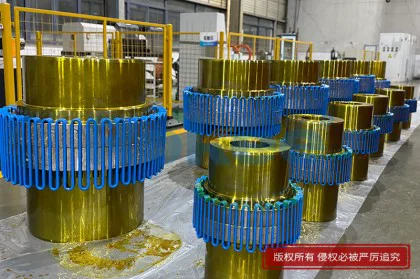
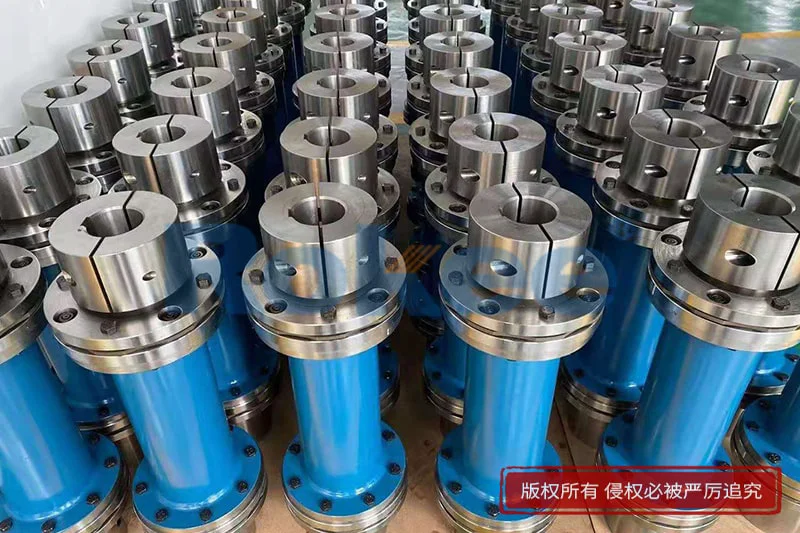
The steel laminae coupling is a kind of metal elastic flexible coupling, which realizes torque transmission and compensates for shaft deviation through the elastic deformation of the metal diaphragm group. Its core structure is composed of a diaphragm group stacked by multiple layers of stainless steel thin plates, and the two halves of the coupling are connected by bolts in a staggered manner, forming a rigid connection in the torque transmission direction and a flexible compensation capacity in the direction of shaft deviation. Unlike traditional couplings that rely on lubrication to reduce wear, the steel laminae coupling adopts a lubrication-free design, which avoids the problem of lubricating oil leakage polluting the production environment and the product, and is particularly suitable for the clean production requirements of PU insulation board production lines. The stainless steel thin plates used in the diaphragm group are usually made of high-strength spring steel, which is processed by precision stamping and heat treatment processes to ensure excellent elastic deformation capacity and fatigue resistance. The number of layers and thickness of the diaphragm group can be adjusted according to the actual torque and deviation compensation requirements, so as to achieve the optimal balance between transmission rigidity and flexibility. In addition, the steel laminae coupling has the characteristics of compact structure, small moment of inertia and high transmission efficiency, which can effectively reduce the energy loss in the transmission process and improve the response speed of the production line. According to the structural form, the steel laminae coupling can be divided into single diaphragm type and double diaphragm type. The single diaphragm type has a simple structure and high torsional stiffness, which is suitable for the transmission scenario with small shaft deviation; the double diaphragm type can compensate for multi-directional shaft deviation by coordinating the deformation of two groups of diaphragm groups, and its angular displacement compensation capacity is significantly higher than that of the single diaphragm type, which is more suitable for the long wheelbase and large deviation transmission scenarios in PU insulation board production lines, such as the connection between the reducer and the lamination roller, and the connection between the motor and the metering pump.
To design a precise transmission scheme of steel laminae coupling suitable for PU insulation board production line, it is first necessary to clarify the key requirements of the production line for the transmission system. The PU insulation board production line is a continuous automatic production equipment, which integrates multiple processes such as uncoiling, mixing, foaming, lamination, curing and cutting. Each process has different requirements for transmission precision, torque and speed, which puts forward comprehensive requirements for the coupling. Firstly, in terms of transmission precision, the production line has extremely strict requirements on the synchronization of each working component. For example, in the lamination process, the speed of the upper and lower lamination rollers must be strictly consistent to ensure that the surface material is evenly attached to the foaming core layer, and the thickness of the board is uniform. The steel laminae coupling must have no rotational clearance, so as to realize the precise transmission of speed and torque, and avoid the speed fluctuation caused by the clearance, which affects the product quality. Secondly, in terms of deviation compensation capacity, due to the long length of the PU insulation board production line, the installation and operation process will inevitably lead to axial, radial and angular deviations between the motor, reducer and working components. If the coupling cannot effectively compensate for these deviations, it will cause additional stress on the shaft and bearing, accelerate the wear of components, and even lead to equipment failure. Therefore, the steel laminae coupling must have good multi-directional deviation compensation capacity to adapt to the installation and operation errors of the production line. Thirdly, in terms of environmental adaptability, the PU insulation board production line usually works in a complex environment. The mixing and foaming links may produce corrosive gas and dust, and the curing link needs to work at a certain high temperature. The coupling must have good corrosion resistance, high temperature resistance and dust resistance to ensure stable operation in harsh environments. Finally, in terms of reliability and maintenance, the PU insulation board production line usually operates continuously for a long time, and the shutdown of the equipment due to the failure of the coupling will cause huge economic losses. Therefore, the coupling must have high reliability, long service life and maintenance-free performance, so as to reduce the downtime and maintenance cost of the production line.
Based on the above requirements, the precise transmission scheme of steel laminae coupling for PU insulation board production lines is designed from the aspects of coupling type selection, structural parameter design, installation and debugging, and daily maintenance. In terms of type selection, according to the different working conditions of each link of the production line, different types of steel laminae couplings are selected. For the transmission links with small shaft deviation and high torsional stiffness requirements, such as the connection between the motor and the metering pump, the single diaphragm type steel laminae coupling is selected. Its simple structure and high transmission precision can ensure the accurate metering of foaming raw materials, avoid the uneven foaming of the core layer caused by the fluctuation of the metering pump speed. For the transmission links with large shaft deviation and long wheelbase, such as the connection between the reducer and the lamination roller, the connection between the curing tunnel transmission roller and the drive motor, the double diaphragm type steel laminae coupling is selected. Its strong multi-directional deviation compensation capacity can effectively absorb the axial, radial and angular deviations between the shafts, reduce the stress on the bearing and shaft, and ensure the stable operation of the lamination and curing processes. In addition, for the transmission links with heavy load and high power, such as the main drive system of the production line, the step-type steel laminae coupling can be selected. Its enhanced torsional stiffness can adapt to the high-power torque transmission requirements, and ensure the stable operation of the entire production line under heavy load conditions.
In the aspect of structural parameter design, the key parameters of the steel laminae coupling, such as torque capacity, diaphragm thickness, number of diaphragm layers, bolt specification and installation clearance, are designed according to the actual working conditions of the PU insulation board production line. The torque capacity of the coupling is the core parameter to ensure the normal transmission of power. It is necessary to calculate the maximum torque required by each transmission link according to the power of the motor, the speed ratio of the reducer and the load of the working components, and select the steel laminae coupling with sufficient torque capacity. The torque capacity of the coupling should be 1.2-1.5 times the maximum working torque to ensure that the coupling can work stably under overload conditions. The thickness and number of layers of the diaphragm group directly affect the elastic deformation capacity and torsional stiffness of the coupling. For the transmission links with large deviation compensation requirements, the diaphragm group with thinner thickness and more layers can be selected to improve the flexibility of the coupling; for the transmission links with high torsional stiffness requirements, the diaphragm group with thicker thickness and fewer layers can be selected to ensure the transmission precision. The bolt specification and pre-tightening force are important factors to ensure the connection reliability of the coupling. The bolts should be made of high-strength alloy steel to avoid bolt fracture caused by torque transmission. The pre-tightening force of the bolts should be strictly controlled during installation, and the bolts should be tightened diagonally in three times to the rated torque to ensure uniform force on the diaphragm group and avoid stress concentration. In addition, the installation clearance between the flange and the diaphragm group should be controlled within 0.20-0.30 mm to avoid axial overload of the diaphragm, which affects the service life of the coupling.
The installation and debugging of the steel laminae coupling is an important link to ensure the precise transmission effect. Before installation, it is necessary to clean the shaft end of the motor, reducer and working components to remove oil stains, rust and dust, so as to ensure the tight fit between the coupling and the shaft. At the same time, the shaft end should be coated with an appropriate amount of lubricant to reduce the friction during installation and avoid damage to the shaft and coupling. During installation, the coaxiality of the motor shaft, reducer shaft and working component shaft should be strictly adjusted. The radial runout and end face runout of the coupling should be controlled within the allowable range. If the coaxiality deviation is too large, it will increase the additional stress on the diaphragm group, accelerate the fatigue damage of the diaphragm, and affect the transmission precision. After the installation of the coupling, a no-load test run should be carried out first. The operation status of the coupling, such as noise, vibration and temperature rise, should be checked during the test run. If abnormal phenomena are found, the cause should be found and adjusted in time. After the no-load test run is qualified, a load test run should be carried out. The transmission precision, torque transmission capacity and deviation compensation capacity of the coupling should be tested under the actual working load of the production line. The test data should be recorded and compared with the design requirements. If the test results do not meet the requirements, the structural parameters of the coupling should be adjusted or the installation position should be corrected until the transmission effect meets the production requirements.
Daily maintenance and fault handling of the steel laminae coupling are important guarantees for the long-term stable operation of the PU insulation board production line. Since the steel laminae coupling adopts a maintenance-free design, it does not need regular lubrication and wear part replacement, but regular inspection is still necessary. It is necessary to regularly check the pre-tightening force of the coupling bolts. If the bolts are loose, they should be tightened in time to avoid the relative movement between the coupling and the shaft, which affects the transmission precision. At the same time, the surface of the diaphragm group should be checked for cracks, deformation and other damage. If the diaphragm is damaged, it should be replaced in time to avoid the failure of the coupling. In addition, the operation status of the coupling should be monitored during the operation of the production line. If abnormal noise, excessive vibration or obvious temperature rise occurs, the production line should be shut down immediately for inspection. The common faults of the steel laminae coupling include abnormal noise, diaphragm fracture and bolt loosening. The main cause of abnormal noise is loose bolts or excessive axial displacement. At this time, the bolts should be tightened and the axial displacement should be adjusted to within 1/3 of the allowable value. The main cause of diaphragm fracture is long-term overload or accumulated fatigue caused by excessive angular deviation. At this time, the damaged diaphragm should be replaced, and the installation coaxiality of the coupling should be rechecked and adjusted to avoid the recurrence of the fault. The bolt loosening is mainly caused by the vibration during the operation of the equipment. It is necessary to regularly check and tighten the bolts, and apply molybdenum disulfide lubricant between the bolt and the diaphragm group to reduce the friction and prevent the bolts from loosening.
The application effect of the precise transmission scheme of the steel laminae coupling in the PU insulation board production line is verified through practical application. After adopting the steel laminae coupling precise transmission scheme, the transmission precision of the production line is significantly improved. The speed fluctuation of each working component is controlled within ±0.5%, which ensures the uniform thickness of the PU insulation board, the tight bonding between the surface layer and the core layer, and the accurate cutting size. The product qualification rate is increased from 92% to 98%, which greatly reduces the production cost caused by unqualified products. At the same time, the steel laminae coupling has good deviation compensation capacity, which effectively reduces the wear of the shaft and bearing, extends the service life of the equipment, and reduces the downtime of the production line. The maintenance-free design of the coupling also reduces the maintenance cost and labor intensity of the equipment, and improves the production efficiency of the production line. In addition, the steel laminae coupling has good corrosion resistance and high temperature resistance, which can adapt to the complex working environment of the PU insulation board production line, and ensure the stable operation of the transmission system under various harsh conditions. Compared with the traditional coupling, the steel laminae coupling has obvious advantages in transmission precision, reliability and environmental adaptability, which provides a strong guarantee for the high-quality and efficient production of PU insulation boards.
In conclusion, the steel laminae coupling, with its unique structural advantages and excellent performance, is very suitable for the precise transmission requirements of the PU insulation board production line. The precise transmission scheme designed according to the actual working conditions of the production line, including type selection, structural parameter design, installation and debugging, and daily maintenance, can effectively improve the transmission precision and stability of the production line, reduce the equipment failure rate and production cost, and improve the product quality and production efficiency. With the continuous development of PU insulation board production technology, the requirements for the precision and reliability of the transmission system will be higher and higher. The steel laminae coupling, as a key component of the precise transmission system, will play a more important role in the future. In the follow-up research, we can further optimize the structural design of the steel laminae coupling, improve its deviation compensation capacity and torque transmission capacity, and develop more customized products to adapt to the different working conditions of the PU insulation board production line. At the same time, we can also combine advanced monitoring technology to realize real-time monitoring of the operation status of the coupling, predict potential faults in advance, and ensure the long-term stable and efficient operation of the PU insulation board production line.