Flexible Coupling Empowers Efficient Operation Of PU Sandwich Panel Line

In the modern manufacturing industry, the PU sandwich panel line has become an indispensable core equipment in the fields of construction, logistics, and industrial enclosure due to its high efficiency, automation, and versatility. These production lines integrate multiple complex processes, from the uncoiling of facing materials and roll forming to PU foaming, lamination, curing, and precision cutting, each link requiring precise coordination and stable power transmission to ensure the consistency of product quality and the continuity of the production process. Among the numerous components that constitute the PU sandwich panel line, the flexible coupling, though often overlooked, plays a pivotal role as a core transmission part. Its unique structural design and excellent performance not only solve the key pain points of power transmission in the production line but also effectively optimize the operation efficiency, reduce equipment wear, and lay a solid foundation for the stable and efficient operation of the entire production system. Unlike rigid couplings that require strict alignment and lack flexibility, flexible couplings achieve flexible power transmission through built-in elastic elements, integrating torque transmission, misalignment compensation, shock absorption, and overload protection. This multi-functional characteristic makes them perfectly adapt to the complex working conditions of PU sandwich panel lines, becoming an invisible driving force behind the efficient operation of the production lines.
To fully understand the empowering role of flexible couplings in PU sandwich panel lines, it is first necessary to clarify the working characteristics of the production lines and the core challenges faced by their transmission systems. A modern PU sandwich panel line is a continuous and automated integrated system that combines mechanical, electrical, hydraulic, and chemical reaction technologies, involving the coordinated operation of multiple subsystems such as the uncoiling system, roll forming system, foaming system, double-belt lamination system, cutting system, and conveying system. Each subsystem is driven by an independent power source, and the power needs to be accurately and stably transmitted to various executive components to ensure that the entire production line operates in a synchronized manner. In the actual operation process, the transmission system of the PU sandwich panel line often faces multiple challenges. Firstly, due to the limitations of the production process and the overall structure of the equipment, the installation and layout of each subsystem are often not on the same axis, resulting in angular, radial, or axial misalignment between the driving shaft and the driven shaft. If such misalignment cannot be effectively compensated, it will lead to increased vibration of the shaft system, accelerated wear of bearings, and even equipment failure. Secondly, during long-term continuous operation, the equipment will generate vibration and thermal expansion due to factors such as motor operation, load changes, and environmental temperature fluctuations, which will cause changes in the relative position of the shafts, requiring the transmission components to have a certain adaptive capacity. Thirdly, the production process of PU sandwich panels has strict requirements on the stability and uniformity of power transmission. Especially in the foaming and lamination links, even slight fluctuations in transmission speed or torque will affect the density of the PU foam core and the bonding effect between the core and the facing materials, thereby reducing product quality and increasing the rate of waste products. Fourthly, the production line needs to adapt to the production of PU sandwich panels of different specifications, which involves adjusting the speed and torque of each subsystem, requiring the transmission components to have good flexibility and adaptability to meet the changing production needs.
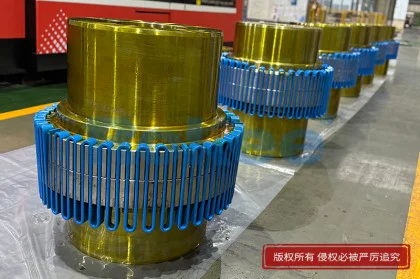
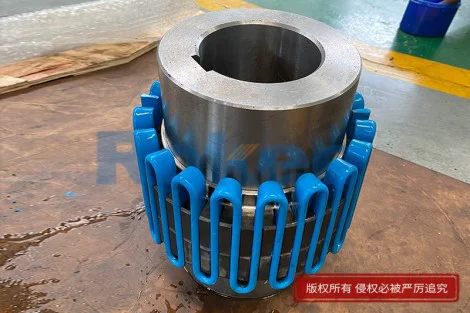
The flexible coupling effectively addresses these challenges through its unique structural advantages and multi-functional characteristics, providing reliable support for the efficient operation of the PU sandwich panel line. As an integrally formed metal elastic body, the flexible coupling is usually cut from metal round bars, with common materials including aluminum alloy, stainless steel, and engineering plastics, which are not only lightweight and corrosion-resistant but also can accurately transmit torque and adapt to various misalignment conditions. The built-in elastic compound of pre-pressed rubber in the flexible coupling not only provides additional strength to extend its service life but also plays a key role in shock absorption and noise reduction, making the power transmission process smoother and quieter, thus protecting the power source and the connected equipment. The parallel or spiral groove system adopted by the flexible coupling enables it to flexibly adapt to various types of shaft misalignment, effectively absorbing the stress caused by misalignment and reducing the requirements for installation accuracy, which is particularly important for the PU sandwich panel line with complex subsystem layout.
Torque transmission is the basic function of the flexible coupling and the core value of its participation in the transmission system of the PU sandwich panel line. In the production line, the torque output by power equipment such as motors needs to be transmitted to various working machines through connectors, and the flexible coupling achieves stable transmission of rotational power from the driving shaft to the driven shaft through the close connection between the elastic element and the shafts at both ends, ensuring that each subsystem obtains continuous and stable power support. Unlike rigid couplings that produce forced rigid constraints during torque transmission, the flexible coupling has both rigidity and flexibility in the torque transmission process. It can not only meet the conventional power transmission needs of ordinary mechanical equipment but also adapt to the precise transmission requirements of high-precision components such as the cutting system and the foaming metering system in the PU sandwich panel line, avoiding problems such as power interruption or excessive loss during the transmission process. In the foaming link, the stable torque transmission of the flexible coupling ensures that the metering pump can deliver the PU raw material at a uniform speed and proportion to the mixing head, ensuring the uniformity of the foam mixture and further guaranteeing the density and quality of the foam core. In the roll forming link, the stable power transmission ensures that the forming rollers operate at a constant speed, avoiding the deformation of the facing materials caused by speed fluctuations, thus ensuring the flatness and dimensional accuracy of the panel surface.
Compensating for shaft misalignment is another important function of the flexible coupling, which is also a key reason why it can be widely applied in PU sandwich panel lines. In the installation process of the production line, due to factors such as installation accuracy, foundation settlement, and equipment operation deformation, it is inevitable that there will be coaxiality deviation between the driving shaft and the driven shaft, accompanied by radial offset, angular tilt, and axial movement. If these deviations cannot be effectively compensated, it will lead to increased vibration of the shaft system, accelerated wear of bearings and seals, and even damage to core components such as motors and reducers, resulting in unplanned shutdowns of the production line. The elastic element of the flexible coupling can absorb the stress caused by these deviations through its own deformation, effectively offsetting the impact of radial offset, angular tilt, and axial movement, reducing the additional loss during equipment operation, and extending the service life of the shaft system, bearings, and other components. For example, in the connection between the motor and the conveyor belt of the PU sandwich panel line, the flexible coupling can effectively compensate for the axial movement caused by the thermal expansion of the conveyor belt during operation, ensuring the stable operation of the conveyor system and avoiding the deviation or jamming of the conveyor belt. In the connection between the reducer and the cutting machine, it can compensate for the angular misalignment caused by installation errors, ensuring that the cutting knife operates stably and improving the cutting accuracy of the panel.
The shock absorption and vibration damping performance of the flexible coupling further enhances the operational stability of the PU sandwich panel line and reduces equipment maintenance costs. During the operation of the production line, the start-up of the motor, the sudden change of load, and the braking of the equipment will all generate impact loads, and the operation of the equipment itself will also generate vibration. These impacts and vibrations, if directly transmitted to the shaft system and the working machine, will damage precision components, affect the stability of equipment operation, and even cause safety hazards. The elastic element of the flexible coupling can absorb impact energy, alleviate the impact of impact loads on the shaft system and equipment, and at the same time weaken the transmission of vibration, reduce the noise of equipment operation, and create a more stable operating environment. In the PU foaming link, the vibration generated by the operation of the mixing head and the metering pump can be effectively absorbed by the flexible coupling, avoiding the impact of vibration on the mixing uniformity of the raw materials and the bonding effect of the foam core. In the cutting link, the shock absorption performance of the flexible coupling can reduce the vibration of the cutting knife, avoid the occurrence of burrs or uneven cutting surfaces on the panel, and improve the product qualification rate. In addition, when the equipment is overloaded, some elastic elements of the flexible coupling will undergo plastic deformation or fracture, playing a role of overload protection, preventing the shaft system and core equipment from being damaged due to excessive torque, and reducing the number of equipment failures and unplanned shutdowns.
The flexible coupling also has the advantages of strong adaptability and convenient maintenance, which further promotes the efficient operation of the PU sandwich panel line. PU sandwich panel lines are often used in different working environments, including high temperature, humidity, and oil pollution. High-quality flexible couplings can adapt to these complex environments by selecting oil-resistant, corrosion-resistant, and high-temperature resistant elastic materials and main materials, maintaining stable transmission performance without frequent maintenance. Compared with other transmission components, the flexible coupling has a simple structure, convenient installation, and does not require complex calibration procedures. During daily maintenance, only regular inspection of the wear of the elastic element is required, and timely replacement is sufficient, which can effectively reduce the maintenance workload and maintenance costs of the production line. In addition, the flexible coupling has good flexibility and adaptability, which can adapt to the speed and torque adjustment of each subsystem when the production line produces panels of different specifications, without the need for major modifications to the transmission system, improving the flexibility and responsiveness of the production line. For example, when the production line needs to switch from producing thick panels to thin panels, the speed of the roll forming system and the cutting system needs to be adjusted accordingly. The flexible coupling can smoothly adapt to the changes in speed and torque, ensuring the stable operation of the production line during the switching process, and reducing the time loss caused by equipment adjustment.
In practical application, the performance of the flexible coupling directly affects the operation efficiency and product quality of the PU sandwich panel line. A well-selected and properly installed flexible coupling can significantly reduce the failure rate of the production line, improve the continuity of production, and reduce the waste of raw materials. On the contrary, if the flexible coupling is not selected properly or installed incorrectly, it will not only fail to play its due role but also may cause damage to other equipment, affecting the normal operation of the entire production line. Therefore, when selecting a flexible coupling for the PU sandwich panel line, it is necessary to comprehensively consider the working conditions of the production line, including the transmission torque, rotating speed, shaft misalignment, and environmental factors, and select the appropriate type and specification of the flexible coupling. At the same time, attention should be paid to the installation accuracy of the flexible coupling to ensure that the alignment deviation between the driving shaft and the driven shaft is within the allowable range of the coupling, so as to give full play to the performance of the flexible coupling.
With the continuous development of industrial automation, the PU sandwich panel line is moving towards higher efficiency, higher precision, and more intelligence, which puts forward higher requirements for the performance of the transmission system. As a key component of the transmission system, the flexible coupling is also constantly optimizing its performance and structure. The development of new materials and manufacturing processes has made the flexible coupling have higher torque transmission capacity, better misalignment compensation performance, and longer service life. For example, the application of high-strength engineering plastics and composite materials has further reduced the weight of the flexible coupling while improving its corrosion resistance and wear resistance; the optimization of the structural design has made the flexible coupling have better shock absorption and vibration damping performance, adapting to the high-speed operation needs of the production line. In the intelligent PU sandwich panel line, the flexible coupling can also cooperate with the monitoring system to realize real-time monitoring of its operation status, timely find potential faults, and provide a basis for predictive maintenance, further improving the reliability and efficiency of the production line.
In conclusion, the flexible coupling, as a key transmission component in the PU sandwich panel line, plays an irreplaceable role in empowering the efficient operation of the production line. Through its functions of stable torque transmission, effective misalignment compensation, reliable shock absorption and vibration damping, and convenient maintenance, it solves the key pain points of the transmission system in the production line, reduces equipment wear and failure rate, improves production efficiency and product quality, and reduces production costs. In the context of the continuous development of the PU sandwich panel industry, the flexible coupling will continue to optimize its performance and expand its application scope, providing more powerful support for the efficient, stable, and intelligent operation of the PU sandwich panel line. It is not only a simple connection component but also an important guarantee for the sustainable development of the PU sandwich panel manufacturing industry, contributing to the improvement of the overall level of the manufacturing industry.