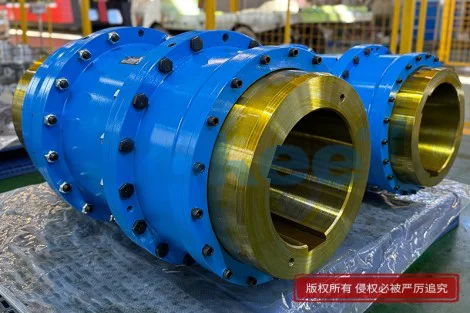
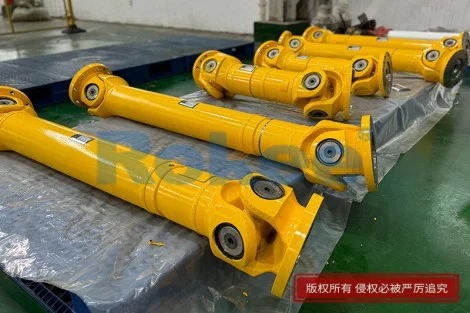
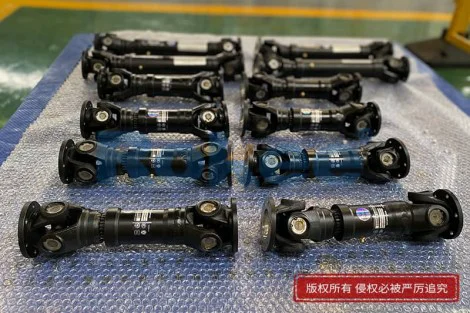
Custom Cardan Coupling Adapts To The Personalized Needs Of Continuous PU Sandwich Panel Production Line
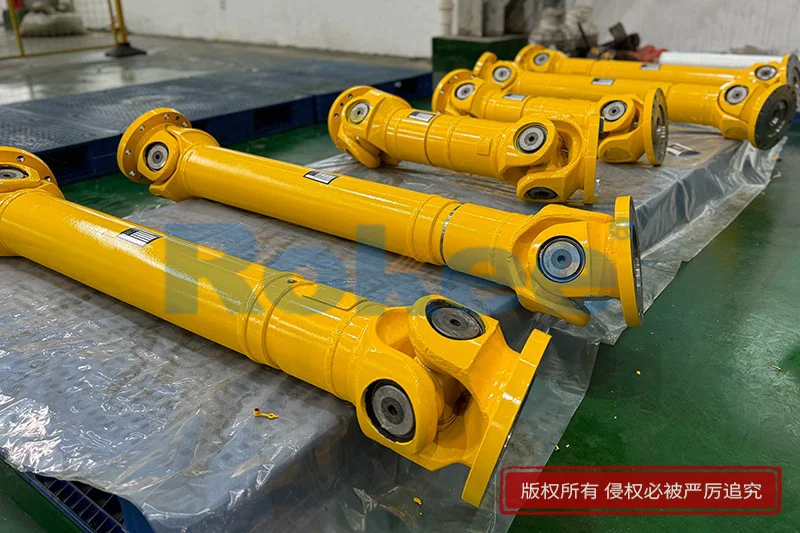
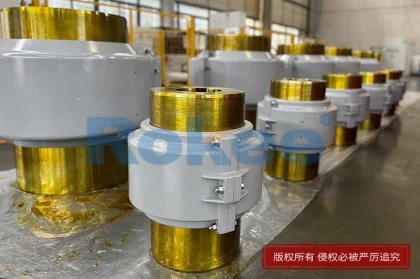
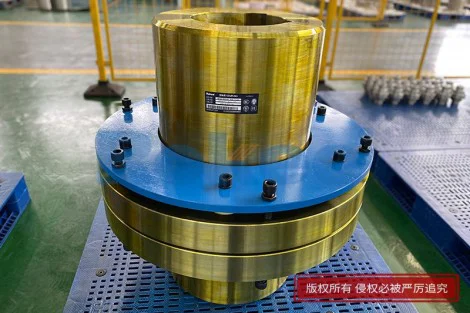
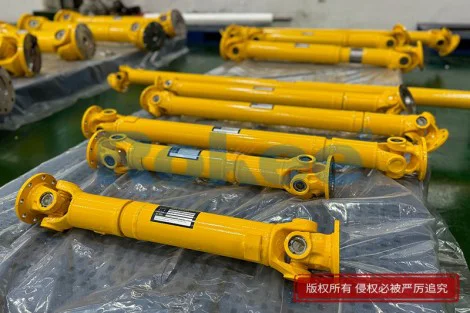
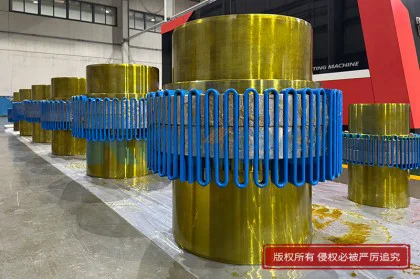
Continuous PU sandwich panel production line operate as highly integrated systems where every mechanical component must work in near-perfect synchronization to deliver panels with uniform density, consistent skin adhesion, and precise dimensional tolerances. Among the many transmission elements that keep these lines running, the cardan coupling—also known as a universal joint coupling—occupies a surprisingly critical position. It bridges the drive motors, gearboxes, and roller shafts that transport metal coils through decoiling, leveling, roll forming, foaming, curing, and cutting stations. Because these stations are rarely aligned on a single perfect axis due to foundation settlement, thermal expansion, removable access covers, and modular layout changes, a rigid shaft would quickly bind, wear, or fracture under the resulting angular and parallel misalignment. The custom cardan coupling absorbs these offsets while transmitting torque smoothly, and when it is engineered to the specific geometry and duty cycle of a given PU panel line rather than selected from a generic catalog, the entire production system becomes far more responsive to the personalized requirements that define modern panel manufacturing.
PU sandwich panel lines differ substantially from one customer to the next. One producer may specialize in thin architectural wall panels with tight surface finishes, another may run thick refrigerated-camper panels at slower line speeds, a third may alternate between galvanized steel, aluminum, and stainless steel skins on the same shift. These product mixes impose different torque profiles, temperature profiles, and alignment demands on the drive train. A standard off-the-shelf cardan coupling chosen by bore size alone cannot address all of these variables simultaneously. A custom-designed coupling, by contrast, can specify the cross-bearing diameter, the needle-roller arrangement, the yoke material and heat treatment, the overall length range, the angular capacity per joint, and the spline or flange interface to match the actual loads at each station. This customization is what allows the coupling to adapt to personalized needs rather than forcing the production line to compromise around a coupling that was never intended for that duty.
The role of the cardan coupling begins as soon as the top and bottom metal skins enter the roll-forming sections. These sections consist of numerous powered rollers that progressively bend the flat coil into the desired corrugated or ribbed profile. Each roller is driven through its own gearbox, and the alignment between gearbox output shaft and roller input shaft is rarely collinear because the roll-forming cassette must be withdrawn for die changes, and the roller height is adjusted to accommodate different panel thicknesses. A cardan coupling with generous angular capability—often in the range of several degrees per joint—allows these positional variations to be accommodated without the operator shimming or re-aligning the entire cassette every time a die set is swapped. Custom sizing of the splined telescoping section also permits axial length changes as the cassette moves in and out, eliminating the need to dismantle and reassemble drive shafts during routine format changes.
Moving downstream, the panel passes through the double-belt laminator where the polyurethane is poured, expands, and cures under controlled heat and pressure. The double belt itself is driven by large-diameter drums, and the drive connection between the main gearbox and the drum shaft must transmit very high torque at relatively low rotational speed. At this station, torsional shock from the sudden onset of foaming pressure, as well as minor thermal growth of the drum shaft, places unusual demands on the coupling. A custom cardan coupling can be specified with oversized cross bearings, high-strength alloy yokes, and enhanced lubrication reservoirs to handle both the peak torque during foam injection and the sustained heat of the curing zone. The custom design can also incorporate balance weights and backlash-minimizing bearing preload so that the laminator belt tracks without the subtle speed fluctuations that would otherwise create visible density variations or surface waviness in the finished panel.
Personalized panel lines often include specialized stations that generic couplings were never expected to serve. A line that produces acoustic panels with perforated bottom skins may add a perforation press driven intermittently, requiring a coupling that must start and stop rapidly while absorbing the reverse torques characteristic of crank-driven presses. A line that produces clean-room panels may integrate an edge-sealing or edge-crimping station that operates at an angle to the main line direction. A line that produces fire-rated panels may include an intermediate mineral-wool insertion stage whose conveyor drive is mounted on a movable carriage. In each case, the custom cardan coupling can be configured with the appropriate angular deflection, length compensation, and torque rating to bridge the non-standard drive geometry without introducing a costly redesign of the surrounding structure. This flexibility is precisely what allows equipment builders and panel producers to tailor the line to their product roadmap rather than being constrained by the limits of stock transmission components.
The choice of materials and surface treatments in a custom cardan coupling also reflects the specific environmental conditions of a PU panel line. The foaming zone releases isocyanate and polyol vapors, and the downstream cutting and stacking zones generate fine metal dust and occasional overspray. These contaminants accelerate wear on exposed bearing surfaces if the coupling is not properly sealed. A custom coupling can specify reinforced lip seals, grease channels that purge contaminants during lubrication intervals, and corrosion-resistant coatings on yokes and shafts to extend service life in this chemically and mechanically aggressive environment. In lines that operate in cold-climate regions where the curing oven exhaust may condense on the drive train, or in coastal plants where salt-laden air drifts through open coil storage areas, these material selections become not optional but essential for predictable uptime. Because each plant's ambient conditions differ, a coupling tailored to that site's exposure profile will outlast a generic equivalent by a wide margin.
Lubrication and maintenance access is another dimension of personalization that generic couplings rarely address well. On a busy PU panel line, maintenance windows are narrow and scheduled weeks in advance, so any coupling that requires partial disassembly to grease will inevitably be neglected until a failure occurs. A custom cardan coupling can be fitted with extended grease lines routed to accessible service points, automatic lubrication distributors shared with adjacent gearboxes, and sight glasses or grease-collection cups that make lubrication status immediately visible to line operators. The custom design can also specify bearing geometry that allows relubrication without stopping the line at critical stations, reducing the risk of unplanned downtime. These seemingly minor details are what transform a transmission component from a source of nuisance failures into a transparent part of the production system—exactly what personalized turnkey panel lines require when the operator's core competence is panel fabrication, not mechanical maintenance.
Alignment and installation tolerance is perhaps the most underappreciated benefit of a custom cardan coupling. Field erection of a multi-decade-meter-long production line rarely achieves the theoretical precision assumed by catalog coupling selection. Foundation slabs settle over the first year of operation, steel support frames deflect under load, and replacement gearboxes or motors are often installed with slightly different shaft heights than the originals. A coupling designed with a deliberately generous angular and parallel misalignment envelope—rather than one sized to the absolute minimum torque required—can absorb these real-world deviations for years without requiring re-shimming. The custom engineering process involves measuring the as-built drive geometry during installation and then specifying the coupling length, joint angle, and intermediate support bearing positions to suit those measured values. The result is a drive train that tolerates the imperfections of real factory construction, rather than one that demands the factory conform to idealized drawings.
Energy efficiency and product quality are also indirectly affected by the quality of the cardan coupling. A worn, backlash-prone universal joint introduces minute speed fluctuations into the roller and drum drives. In the roll-forming section, these fluctuations translate into subtle longitudinal marks on the panel skin. In the laminator, they create uneven belt tension that shows up as density stripes across the panel width. In the cutting section, a variable drive speed causes the flying saw to produce slight length deviations. A precision custom coupling, with controlled needle-bearing clearance, balanced rotating mass, and torsional rigidity matched to the driven load, eliminates these fluctuations at their source. Because the coupling is sized and engineered to the specific inertia and speed of each station rather than to a nominal power rating, it operates closer to its design sweet spot, where vibration, heat generation, and parasitic friction are minimized. The energy savings over years of continuous operation are modest per coupling but accumulate across dozens of drive points, and the improvement in first-pass panel quality is often immediately visible to customers inspecting the finished product.
Ultimately, the value of a custom cardan coupling on a continuous PU sandwich panel production line is that it treats the drive train as an integrated part of the customer's product strategy rather than as a collection of interchangeable parts. When a panel producer invests in a line that can switch between wall panels, roof panels, cold-storage panels, and clean-room panels, that investment demands transmission components that can switch with it. The custom coupling accommodates different torque demands, different drive geometries, different ambient conditions, and different maintenance philosophies, all while remaining largely invisible to the operator. It is precisely this invisibility—this ability to quietly absorb misalignment, transmit torque smoothly, and survive the long hours of nearly continuous operation—that makes the personalized cardan coupling an unsung enabler of modern PU sandwich panel manufacturing. As product lines continue to diversify, shorten changeover times, and demand tighter quality, the role of custom-engineered transmission elements will only grow, and the cardan coupling will remain one of the most versatile and cost-effective tools available for keeping these complex lines running at their best.