Integration Of Cardan Shaft Coupling And Continuous PU Sandwich Panel Production Line For More Efficient Production
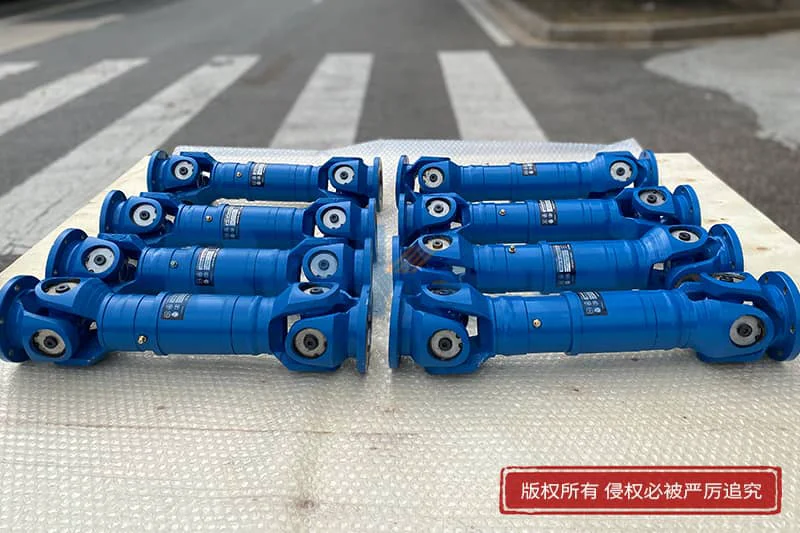
In the modern manufacturing landscape, the continuous PU sandwich panel production line stands as one of the most intricate and mechanically demanding systems in the building envelope industry. These lines are engineered to lay down, foam, laminate, and cut insulated panels at speeds that often surpass one linear meter per second, combining metal decoilers, chemical mixing heads, double-band conveyors, curing ovens, and cross-cutting saws into a single synchronized flow. The economic viability of such a line depends entirely on how smoothly energy is transferred from the electric motors and gearboxes through to the driven rollers, chains, and conveyor belts that carry the facing sheets and the foaming core. When that transfer is poorly designed, the entire output suffers: panels can delaminate, edge joints can become uneven, line speed must be held back, and unplanned stoppages erode the margins that the investment was meant to generate. It is precisely at this junction—between the drive unit and the working machinery—that the choice of coupling becomes decisive, and it is here that the cardan shaft coupling earns its place as a critical component rather than an afterthought.
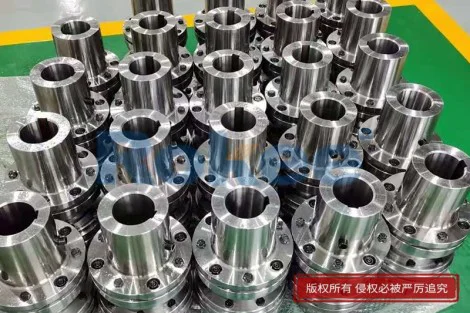
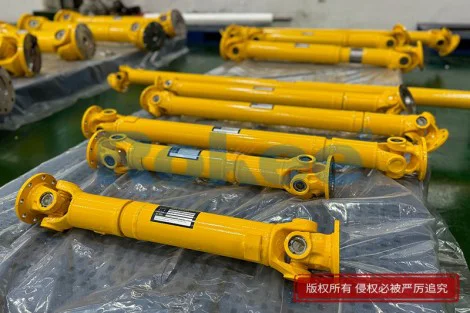
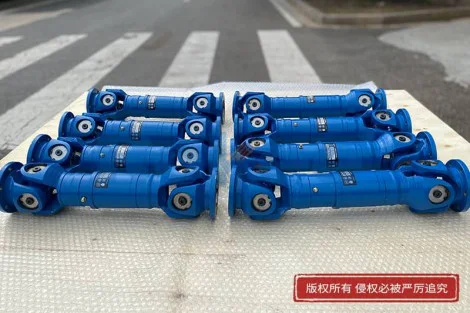
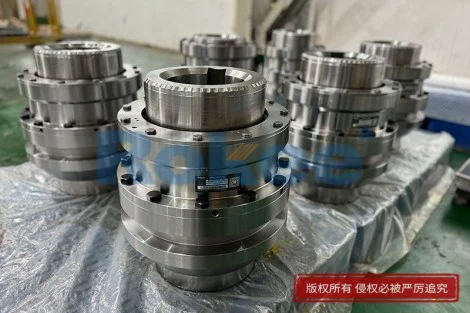
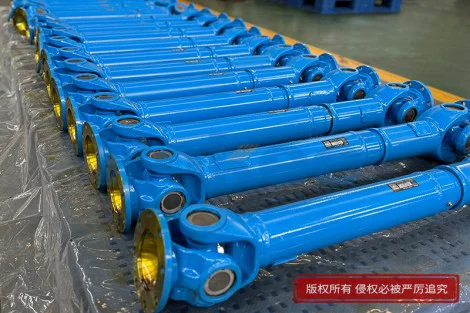
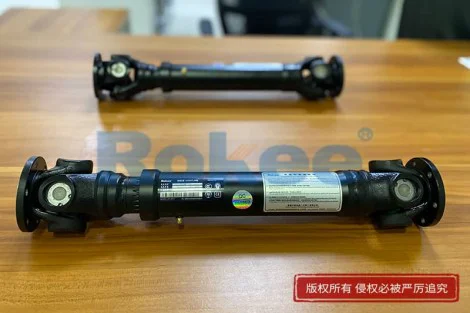
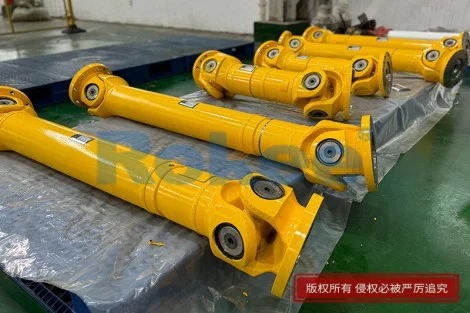
A cardan shaft coupling, also commonly referred to as a universal joint drive shaft, is a mechanical assembly designed to transmit rotational power between two shafts whose axes are not collinear. Unlike rigid couplings that require perfect alignment, or elastomeric jaw couplings that struggle with angular offsets, a cardan shaft uses one or more universal joints connected by a telescopic intermediate tube, allowing it to accommodate substantial angular, radial, and axial misalignment while still delivering torque efficiently. In the context of a continuous PU sandwich panel line, this geometry is invaluable because the driven components—decoiler mandrels, conveyor drive rollers, roller hearth sections, and cut-off saw carriages—are rarely mounted on the same rigid bed as their motors and gearboxes. Structural deflection, foundation settling, thermal growth, and intentional sliding movements all conspire to move the driven shaft relative to the driver, and the cardan shaft absorbs these movements without forcing the bearings, gears, or seals to fight against them.
The traditional approach to connecting drives on sandwich panel lines has often relied on belt drives, chains, or simpler rigid couplings. Belt drives are efficient at moderate speeds but suffer from slip, tension loss, and the need for frequent adjustment; chains stretch and wear; rigid couplings transmit misalignment as destructive side loads into the bearing housings. On a continuous PU line, where precision of facing sheet tension directly controls panel flatness and foam density distribution, any loss in drive integrity quickly manifests as visible product defects. A panel that leaves the press with a wavy skin, inconsistent core thickness, or delaminated edges may be traceable all the way back to a coupling that was transmitting vibration or imposing a binding load on a roller that should have rotated freely. Integrating properly specified cardan shaft couplings into the drive train removes this failure mode by design, keeping torque transmission clean and predictable across the entire operating envelope of the line.
One of the most compelling reasons to integrate cardan shaft couplings into a continuous PU sandwich panel line lies in their ability to handle the high, fluctuating torques characteristic of the process. When the mixing head injects reactive polyurethane between two facing sheets, the material begins to expand and cure almost immediately, and the double-band conveyor must pull the composite through the forming section with consistent tension. During start-up, when the line is cold and the facing sheets are still being threaded, the drive rollers experience peak torque that can be several times the running torque. A cardan shaft with properly dimensioned joints and needle bearings is engineered to transmit these peak torques with a safety margin, while the universal joint geometry allows the rollers to maintain contact with the band even as the line expands thermally. This robustness means the line can be ramped up to full production speed more confidently, with less concern that a drive component will fail under transient load conditions.
Beyond raw torque capacity, the cardan shaft coupling contributes to production efficiency through its dynamic behavior. Universal joints, when used singly, are known to introduce speed variation during each revolution, but when arranged as paired joints in a Cardan shaft assembly—with the yokes correctly phased—this variation is canceled out, and the driven shaft rotates at a nearly constant angular velocity. This is critically important on a PU panel line because conveyor speed directly determines panel length accuracy at the cut-off saw and the dwell time in the curing section. Any speed ripple at the drive roller translates directly into uneven panel lengths or variations in foam density along the panel. By using paired-joint cardan shafts that maintain constant velocity, the line can hold tighter speed tolerances without requiring complex electronic compensation, reducing scrap and rework while improving the dimensional consistency of every panel produced.
Vibration and noise are often treated as cosmetic concerns in factory environments, but on a continuous PU sandwich panel line they are diagnostic indicators of mechanical health, and left unchecked they accelerate wear. Misaligned drives, worn bearings, and belt slap all introduce vibrations that propagate through the steel structure of the line, ultimately reaching the delicate foaming and lamination zones. The cardan shaft coupling, particularly when fitted with needle bearings and properly lubricated, runs smoothly and imposes less reaction load on the connected shafts than rigid alternatives. The reduction in side loads on the roller bearings means longer bearing life, less frequent lubrication, and fewer unexpected failures. In an industry where a single unscheduled stop can mean scrapping meters of partially cured panel and wasting expensive chemical formulations, the indirect savings from reduced vibration and smoother running are substantial, often justifying the investment in higher-quality drive components early in the line’s design.
Maintenance and uptime are two sides of the same coin, and the integration of cardan shaft couplings has a pronounced effect on both. These shafts are designed to be greasable, with easily accessible grease nipples at each universal joint, and their wear components—needle bearings, bearing cages, and seals—are standardized and replaceable without removing the entire drive. On a continuous PU line, where scheduled maintenance windows are narrow and any extension of downtime risks missing production commitments, the ability to quickly inspect, re-grease, or swap a cardan shaft is a significant operational advantage. Technicians can perform routine checks while the line is running, listen for unusual joint noise, and schedule replacements during planned shifts, rather than reacting to catastrophic failures. This predictive and preventable maintenance pattern transforms the drive train from a source of constant anxiety into a reliable, manageable subsystem.
Thermal expansion is a subtle but pervasive issue on any line that includes a curing oven. The double-band conveyor and the supporting rollers heat up significantly during operation, growing in length and shifting relative to the gearboxes which remain cooler. A rigid connection would bind as the structure heated up, while a belt drive might slacken or jump. The cardan shaft’s telescopic intermediate tube is specifically designed to accommodate axial displacement, sliding smoothly as the distance between the driver and driven shaft changes with temperature. This capability means the line can be brought up to operating temperature and held there for long production runs without periodic re-adjustment of drive components. The PU reaction itself is highly temperature-sensitive, and a stable thermal profile in the curing section is essential for achieving consistent core properties. By allowing the mechanical structure to expand freely without imposing loads on the drive, the cardan shaft contributes directly to process stability.
The practical benefits of this integration become clear when one considers the overall economics of a continuous PU sandwich panel line. A line that runs at a steady speed, producing consistent panels with minimal scrap, and that requires only planned maintenance, generates far more value than a nominally cheaper line that stops frequently, produces defects, and demands constant attention. The cardan shaft coupling is not a glamorous component, and it rarely appears in marketing materials, but its role in keeping the line running is foundational. Engineers who have operated these lines will often point to the drive train as the single most important determinant of whether a production line is a profit center or a headache. By specifying cardan shaft couplings early in the design phase, and by integrating them with appropriate bearing supports, guard shielding, and lubrication systems, manufacturers can build a line that ages gracefully over decades of operation.
Looking forward, as PU sandwich panel lines continue to push toward higher speeds, wider panel formats, and tighter quality demands, the role of precision drive components like cardan shaft couplings will only grow. Trends toward digital monitoring, condition-based maintenance, and energy efficiency mean that every mechanical connection will need to be documented, tracked, and optimized. The cardan shaft, with its well-understood mechanics and adaptable geometry, fits naturally into this future: it can be instrumented for vibration or temperature monitoring, sized for higher torque densities through modern metallurgy, and integrated into drive trains that balance mechanical simplicity with electronic precision. The integration of cardan shaft coupling technology with continuous PU sandwich panel production lines is ultimately a story of how attention to the most fundamental mechanical details—how torque is transmitted, how misalignment is absorbed, and how wear is managed—compounds into meaningful production efficiency. It is a reminder that in manufacturing, the most efficient lines are not always the ones with the newest sensors or the fastest software, but the ones whose mechanical heart beats steadily, reliably, and without drama, shift after shift, year after year.