Continuous PU Sandwich Panel Manufacturing Line And Universal Shaft Combination Reduces Manual Operation Costs
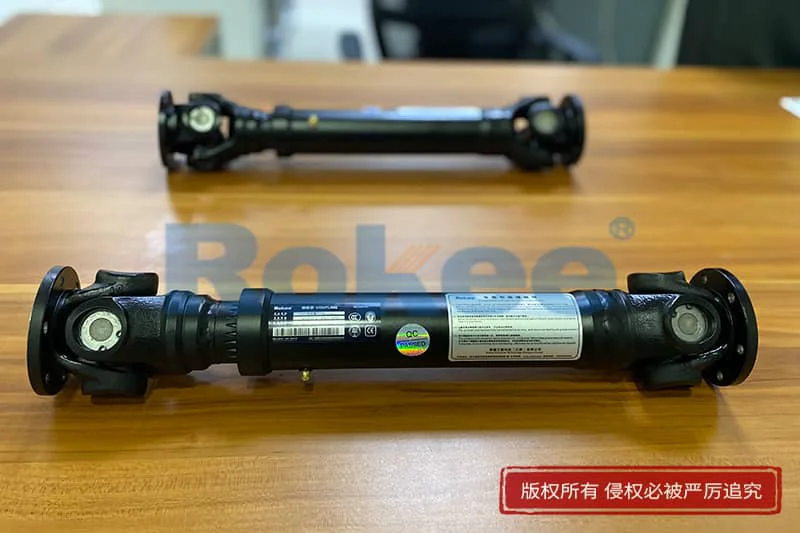
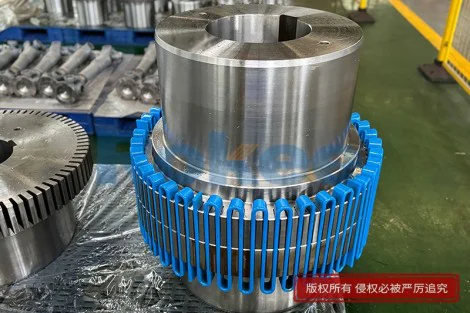
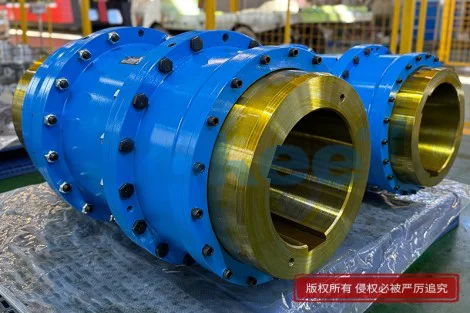
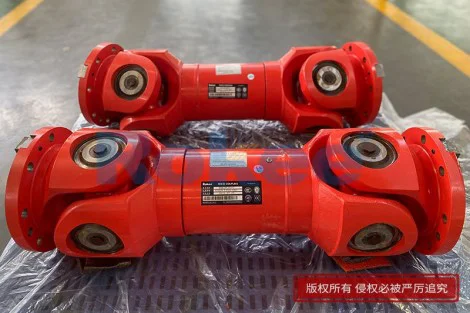
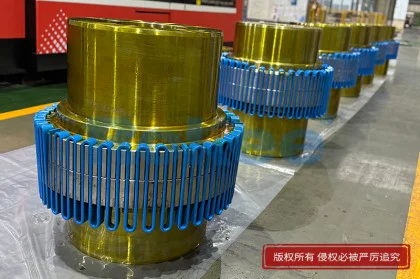
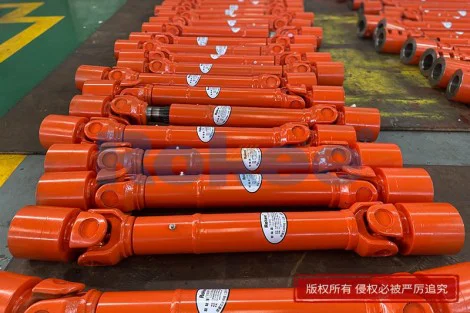
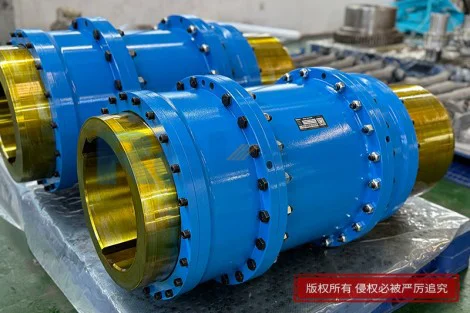
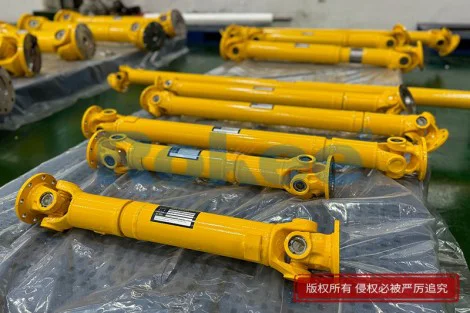
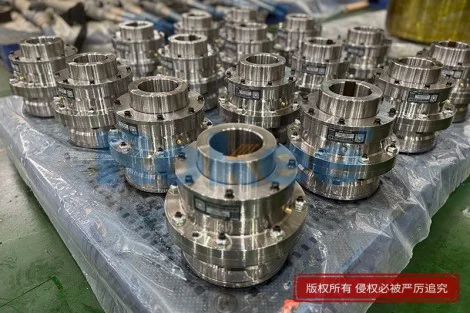
The continuous PU sandwich panel manufacturing line represents one of the most sophisticated integrated production systems in the modern building envelope industry. At its core, this production architecture orchestrates the synchronized movement of two facing sheets—typically pre-painted steel, aluminum, or sometimes foil—through a precisely controlled tunnel where polyurethane chemical components are mixed, injected, and foamed between the substrates. Unlike batch or discontinuous processes that rely on human operators to load, position, and demold individual panels, the continuous line transforms raw coil stock into finished, cut-to-length panels at speeds reaching several meters per minute. This transformation depends on dozens of mechanical, chemical, and control subsystems working in concert, and among the most critical yet often underappreciated elements are the drive transmission components that link motor output to the moving parts of the line. Universal shaft combinations, also known as cardan shaft assemblies, play an indispensable role in this orchestration by transmitting torque across offset and angular misalignments between gearboxes, rollers, and drive stations. Their reliable operation directly determines whether the line runs continuously or suffers frequent stoppages that force workers to intervene manually, and it is precisely this reduction in manual intervention that delivers measurable labor savings over the lifecycle of the equipment.
Understanding how a universal shaft combination reduces manual operation costs requires first examining the nature of continuous sandwich panel production. The line begins at uncoiling stations where two large coils of facing material are mounted on hydraulic mandrels, each weighing several tons. As the line pulls material forward, the facing passes through cleaning stations, pre-heating sections, and sometimes profiling units that emboss or stiffen the skin. The chemical mixing head then deposits a pressurized blend of polyol and isocyanate onto the lower facing, which enters a long, heated twin-belt conveyor. Inside this tunnel, the mixture expands, rises, and cures into a rigid foam core that bonds chemically to both facings. The exiting sandwich slab then travels through a cutoff saw that slices it into predetermined lengths, after which panels are stacked, strapped, and prepared for shipment. At every station along this path, rotating shafts drive rollers, belts, chains, or drums. When two rotating components are not perfectly aligned—due to thermal expansion, foundation settling, assembly tolerances, or deliberate design offset—rigid shafts cannot accommodate the discrepancy, causing rapid wear, vibration, and eventual seizure. Universal shafts solve this problem by incorporating universal joints at each end, allowing angular deflection and parallel offset while maintaining smooth torque transmission.
The economic case for investing in high-quality universal shaft combinations becomes clear when one considers the cost of manual intervention on a continuous line. Every stoppage requires line operators to respond: they must identify the fault, access the affected station, execute the corrective action, reset the machine, and then wait for the process to stabilize before resuming full-speed production. A single stoppage might consume ten to thirty minutes of operator time, and during that interval the line produces nothing while its fixed labor force remains on the clock. Multiply this across dozens of stoppages per month, across multiple shifts, and the cumulative labor cost of unplanned downtime becomes substantial. Universal shaft assemblies are designed to minimize exactly this category of downtime. When properly specified with appropriate joint angles, torque ratings, and lubrication systems, they operate for tens of thousands of hours without attention. Their ability to tolerate misalignment means that even after years of foundation shift or seasonal temperature variation, the drive train does not develop the binding forces that would otherwise seize a roller or shear a coupling. Operators spend their time on value-added tasks such as quality inspection, coil changes, and panel stacking rather than troubleshooting mechanical failures.
One of the primary areas where universal shafts reduce manual labor is in the twin-belt conveyor section, which forms the heart of the continuous line. This section consists of two endless steel belts running over large drums at entry and exit, with the foaming sandwich material traveling between them. The drums must rotate at precisely matched speeds to avoid stretching, wrinkling, or shearing the facing sheets. Drive motors and gearboxes for these drums are typically mounted on a foundation below or beside the conveyor, and the geometric distance between the gearbox output shaft and the drum input shaft rarely permits a direct, coaxial connection. Universal shaft combinations bridge this gap efficiently, accommodating both the vertical offset and any angular misalignment that arises during installation. Because the drums are large and heavy, any failure of a drive connection—such as a broken coupling or seized universal joint—requires a team of technicians to disassemble guards, align replacement parts, and re-secure fasteners. This kind of repair can consume half a shift or more. By contrast, a well-maintained universal shaft rarely demands attention beyond scheduled relubrication, and even that task is often performed automatically through centralized lubrication lines.
Beyond the main conveyor drums, universal shafts are extensively used in the cutoff saw station, the stacking system, and the uncoiler mandrels. The cutoff saw must traverse the moving slab synchronously while a rotating blade cuts through the steel-faced foam. The saw's feed mechanism and blade drive each rely on robust torque transmission that can accommodate the saw's linear travel. Universal shafts with telescopic spline sections are ideal here because they permit the driven component to move axially while continuing to transmit rotation. Without such flexible transmission, the saw drive would require complex cable dressings, flexible hoses, or separate motor placements that introduce additional points of failure. Similarly, uncoiler mandrels rotate to pay off coil stock as the line pulls, and the braking or tension-control motor connects to the mandrel through a shaft that must absorb the coil's shrinking diameter as material is consumed. In each of these stations, the universal shaft replaces what would otherwise be a manual alignment and adjustment burden. Operators no longer need to constantly monitor coupling temperature, listen for unusual noises, or perform realignment after every coil change, because the shaft itself tolerates the variations inherent to the process.
The combination of multiple universal shafts into an integrated drive system further amplifies labor savings. A typical continuous line might employ twenty or more universal shaft assemblies distributed across uncoiling, profiling, pre-heating, mixing head traverse, belt drive, saw, outfeed conveyor, and stacker. When these shafts are selected as a matched combination—with consistent lubrication intervals, compatible joint designs, and accessible greasing points—the maintenance workload drops dramatically. Instead of maintaining a heterogeneous collection of couplings, chains, and belt drives each requiring its own inspection routine, the maintenance team can standardize on a single shaft architecture. Greasing protocols become uniform, spare parts inventory simplifies to a handful of universal joint sizes, and technicians develop muscle memory for inspecting and replacing these components. This standardization reduces both the frequency of unplanned interventions and the time required for each planned maintenance activity. Over a year, the accumulated savings in maintenance labor, troubleshooting time, and avoided downtime can offset the premium paid for high-quality shaft combinations many times over.
Quality consistency on a continuous line is another indirect but significant source of labor savings linked to universal shaft performance. When drive transmission is smooth and uniform, the facing sheets travel through the foaming tunnel at constant speed, the foam rises evenly, and panel thickness remains within tight tolerances. Conversely, if a universal joint begins to wear, it may introduce slight speed fluctuations or vibration that manifest as uneven foam density, surface waviness, or bond defects. Defective panels must then be sorted out, repaired, or scrapped, and each of these quality actions requires manual labor. Inspection staff must examine every panel, flag defects, and route rejects appropriately. By ensuring that torque delivery remains smooth from the first coil to the last panel of a shift, universal shafts help eliminate the downstream manual rework that quality defects generate. The cost saved is not merely the time of inspectors and rework operators, but also the avoidance of customer complaints, returns, and the management overhead associated with quality incidents.
Energy efficiency, while not a direct labor cost, indirectly supports reduced manual operation by stabilizing line throughput. Universal shafts that are properly aligned and lubricated transmit torque with high mechanical efficiency, minimizing parasitic losses that would otherwise heat up the drive train and waste electricity. Worn or misaligned shafts introduce binding, vibration, and heat, forcing motors to draw more current to maintain line speed. Over time, this inefficiency contributes to motor overheating, premature bearing failure, and the very stoppages that require manual intervention. A well-designed universal shaft combination maintains its efficiency throughout its service life because the needle bearings inside each universal joint are sealed, greased, and dimensionally stable. The result is a drive system that runs cool, quietly, and predictably, reducing the frequency with which operators must respond to thermal alarms, overcurrent trips, or abnormal noise complaints. Line stability directly translates into fewer hands-on interventions and a more consistent production rhythm that operators can rely on.
Training and workforce planning also benefit from a standardized universal shaft drive architecture. On a line where every rotating connection uses the same universal shaft design, new operators and maintenance technicians require less training time. They learn one set of inspection criteria, one greasing procedure, and one replacement workflow rather than a multitude of coupling types. This reduces the dependence on a small number of experienced specialists and makes the workforce more flexible. When operators can confidently monitor shaft condition through simple indicators—grease color, joint temperature, visible play—they can perform first-line diagnosis without waiting for a specialized technician. Problems can be addressed during scheduled breaks or planned maintenance windows rather than escalating into urgent, after-hours callouts. The cumulative effect is a production environment where manual labor is concentrated on the tasks that genuinely require human judgment—quality decisions, material handling, and process optimization—rather than on firefighting mechanical issues.
In summary, the continuous PU sandwich panel line depends on a network of drive connections that must transmit torque reliably across offsets, angles, and dynamic movement. Universal shaft combinations are the connective tissue of this network, bridging gearboxes to drums, motors to saws, and drive stations to uncoilers with a tolerance for misalignment that rigid couplings cannot match. Their contribution to reducing manual operation costs operates through several simultaneous channels: they eliminate the stoppages that otherwise demand emergency operator response, they standardize maintenance procedures across the entire line, they preserve the process stability that prevents quality defects and downstream rework, and they lower the skill barriers for frontline personnel. When a line is specified with a coordinated set of universal shafts rather than an ad-hoc collection of drive components, the labor savings compound—fewer interruptions, shorter repair times, less inspection overhead, and more predictable output. The result is a manufacturing system where human workers are freed from constant mechanical troubleshooting and can focus on adding value at the points where it matters most, making the investment in universal shaft combinations not merely a mechanical detail but a fundamental lever for operational cost reduction on the continuous sandwich panel production floor.