Serpentine Spring Shaft Coupling
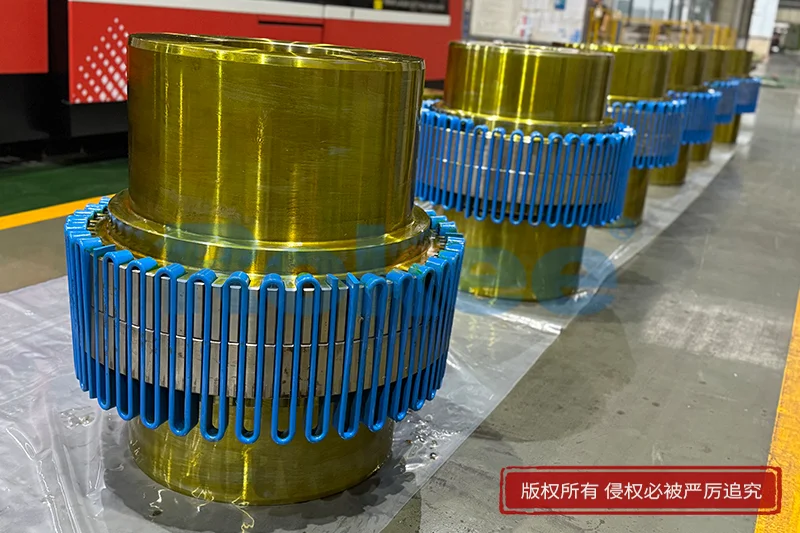
Serpentine spring shaft coupling is a high-performance metal flexible transmission component widely adopted in modern mechanical transmission systems, designed to connect driving and driven shafts while delivering stable torque transmission and comprehensive mechanical protection. Distinguished from traditional rigid and elastomeric couplings, it features a unique serpentine-shaped metal spring core component embedded in the tooth grooves of two symmetrical coupling hubs, integrating high torque bearing capacity and excellent flexible compensation performance. This coupling effectively addresses common mechanical operation problems including shaft misalignment, instantaneous impact loads, and continuous vibration interference. It balances rigid torque transmission efficiency and flexible buffering performance, making it adaptable to complex and variable working conditions. With compact structural layout, reliable operation stability and long service life, it has become a core connecting part for heavy-duty, high-frequency and continuous-running mechanical equipment in various industrial fields, providing stable and safe guarantee for the normal operation of transmission systems.
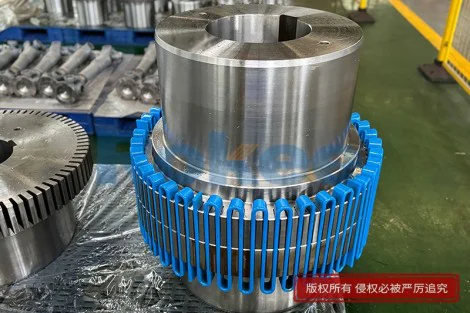
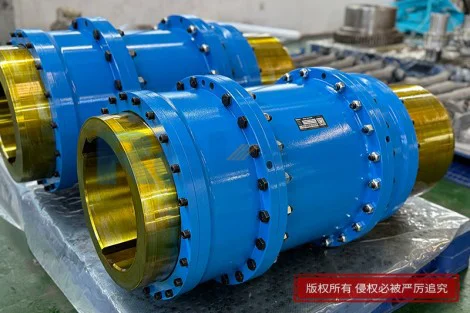
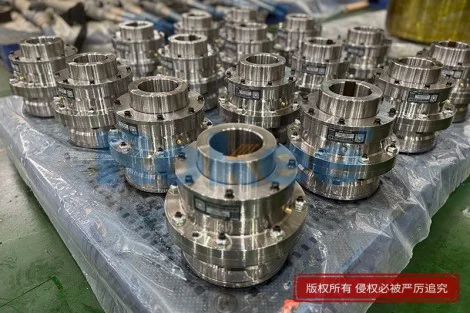
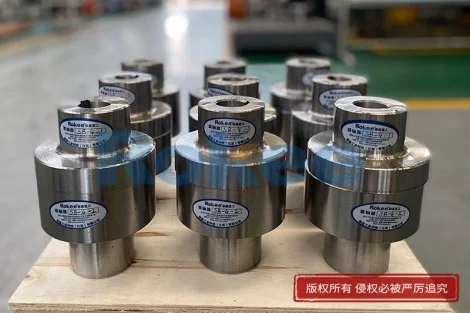
The overall structural composition of serpentine spring shaft coupling is concise and scientific, with few matching parts, which lays a solid foundation for its stable operation and convenient maintenance. The core components mainly include two symmetrical coupling hubs, a integral serpentine spring strip, sealed protective covers and auxiliary sealing parts. The two hubs are made of high-strength alloy steel or precision cast iron, with uniformly processed trapezoidal tooth grooves on the circumferential surface. The specially designed tooth groove structure can perfectly fit the curved surface of the serpentine spring strip, realizing tight and stable engagement. The serpentine spring strip, forged from high-grade tempered spring steel, presents a continuous wave-shaped bending structure, which is the key functional component for torque transmission and flexible buffering. The outer sealed cover completely wraps the spring and tooth groove assembly, which not only fixes the overall structure to avoid component displacement during high-speed operation, but also isolates external dust, debris and humid air. Auxiliary sealing parts further enhance the internal sealing performance, retain internal lubricating grease, and prevent lubricant loss and component corrosion. The compact overall structure reduces the overall volume and weight of the coupling compared with traditional transmission parts, achieving lightweight installation while ensuring structural strength.
The working principle of serpentine spring shaft coupling relies on the elastic deformation and synchronous force transmission of metal serpentine springs, realizing efficient and stable power connection between mechanical shafts. During equipment operation, the driving shaft drives the active coupling hub to rotate synchronously, and the tooth grooves on the hub continuously apply uniform thrust to the embedded serpentine spring strip. Driven by the thrust, the serpentine spring transmits torque to the driven hub through elastic stress conduction, thereby driving the driven shaft to operate synchronously and completing the basic power transmission process. When the transmission system encounters operational deviations such as axial displacement, radial deflection and angular misalignment between the two shafts, the wave-shaped structure of the serpentine spring will produce controllable micro elastic deformation. This deformation can effectively compensate for various installation and operation deviations, avoiding rigid friction and stress concentration between shafts. In the face of instantaneous impact loads and sudden torque fluctuations, the spring can absorb and buffer impact energy through reversible elastic compression and rebound, prevent sudden torque changes from directly acting on the equipment body, and eliminate torsional resonance phenomenon in the transmission process to ensure continuous and stable power output.
Serpentine spring shaft coupling possesses outstanding comprehensive performance advantages that make it superior to many traditional coupling products in industrial application scenarios. First of all, it achieves the perfect balance of high torque transmission and high flexibility. Different from elastomeric couplings that are prone to aging and low torque resistance, its metal spring core maintains stable torque bearing capacity for a long time, and can still transmit power efficiently while realizing multi-directional displacement compensation. Secondly, it has excellent vibration damping and impact resistance. The point contact fit between the serpentine spring and the tooth groove makes the stress distribution more uniform, which can effectively attenuate mechanical vibration generated during equipment operation, reduce vibration and noise of the whole machine, and greatly lower the fatigue loss of mechanical parts caused by long-term vibration. In addition, the metal spring element has excellent fatigue resistance and structural stability, and will not produce deformation failure or performance attenuation under long-term high-frequency operation and repeated impact. Its unique structural design also avoids the loosening and failure problems of traditional coupling bolt connection, effectively improving the overall operation reliability of the transmission system and reducing the probability of mechanical failure shutdown.
The installation and daily maintenance of serpentine spring shaft coupling have obvious convenience and economy, which is one of the important reasons for its wide popularization in industrial production. Thanks to the simple overall structure and few matching parts, the assembly and disassembly process of the coupling is more efficient than that of complex transmission components. The trapezoidal tooth groove and serpentine spring fit structure has strong inclusiveness, allowing workers to complete positioning and installation quickly without high-precision auxiliary calibration in the installation process, which effectively shortens the equipment assembly cycle. In terms of daily maintenance, the sealed protective cover can effectively protect the internal spring and tooth groove structure from external pollution, reducing the cleaning frequency of internal components. The internal lubricating grease can be stored stably for a long time, avoiding frequent refueling maintenance. When the equipment runs for a long time, the wearing parts are mainly the serpentine spring strip, and the replacement operation is simple and fast with low replacement cost. Compared with integrated couplings that need overall replacement after failure, its split structure design greatly reduces the later operation and maintenance cost of mechanical equipment, and improves the operational efficiency of the production system.
Serpentine spring shaft coupling is highly adaptable to diverse and harsh working conditions, showing stable and reliable working performance in complex industrial environments. It can maintain normal and efficient operation in high-speed rotating working states, and the flexible buffering structure can offset the centrifugal force deviation and micro-displacement generated during high-speed operation, avoiding transmission jitter and power loss. In heavy-load working scenarios with long-term continuous operation, the high-strength metal spring structure can bear stable large torque load, without plastic deformation or performance decline, adapting to the long-cycle working mode of industrial production equipment. Meanwhile, it has good environmental adaptability, capable of resisting dry and dusty working environments, and the sealed structure can prevent particulate impurities from entering the friction gap to cause component wear. It can also adapt to conventional temperature fluctuation environments, maintaining stable elastic performance and structural tightness without being affected by minor temperature changes. Whether in continuous production assembly lines, heavy mechanical transmission equipment or intermittent impact operation scenarios, it can give full play to its flexible transmission and protection advantages to ensure the stable operation of mechanical systems.
With the continuous upgrading of modern industrial mechanical equipment towards high efficiency, high stability and long life, the application scope of serpentine spring shaft coupling is constantly expanding, and its market application value is increasingly prominent. It is widely used in various mechanical transmission scenarios that require stable torque transmission and vibration reduction protection, including industrial conveyor equipment, mechanical processing equipment, power transmission equipment and general industrial machinery. In the transmission system of large and medium-sized mechanical equipment, it can effectively connect power components and execution components, reduce equipment operation failure rate, and extend the overall service life of mechanical equipment. In automated production equipment, its precise displacement compensation and stable power transmission performance ensure the operating accuracy of automated machinery, avoiding production errors caused by transmission deviation. With the development of industrial intelligence and high-precision manufacturing, the performance advantages of serpentine spring shaft coupling in low loss, high stability and long service life will further meet the higher technical requirements of modern mechanical transmission systems, and it will become an indispensable basic transmission component in more industrial fields.
The technical characteristics and structural advantages of serpentine spring shaft coupling determine its unique development potential in the field of mechanical transmission, and it has gradually become an optimized alternative to traditional coupling products. Different from the single performance of rigid couplings and the short service life of non-metallic flexible couplings, it integrates the advantages of rigid transmission stability and flexible buffering protection, solving many pain points in traditional mechanical transmission. Its modular structural design is convenient for subsequent technical optimization and performance upgrading, and can be adapted to more personalized mechanical equipment transformation and upgrading needs. In the future, with the continuous progress of material technology and mechanical processing technology, the comprehensive performance of serpentine spring shaft coupling will be further improved, including higher fatigue resistance, stronger displacement compensation ability and more stable high-load operation performance. It will continue to promote the optimization and upgrading of modern mechanical transmission systems, provide more reliable basic component support for the efficient and stable operation of industrial machinery, and occupy a more important position in the field of industrial transmission equipment.