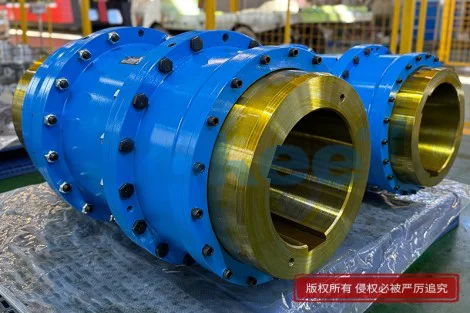
Flexible Serpentine Spring Coupling
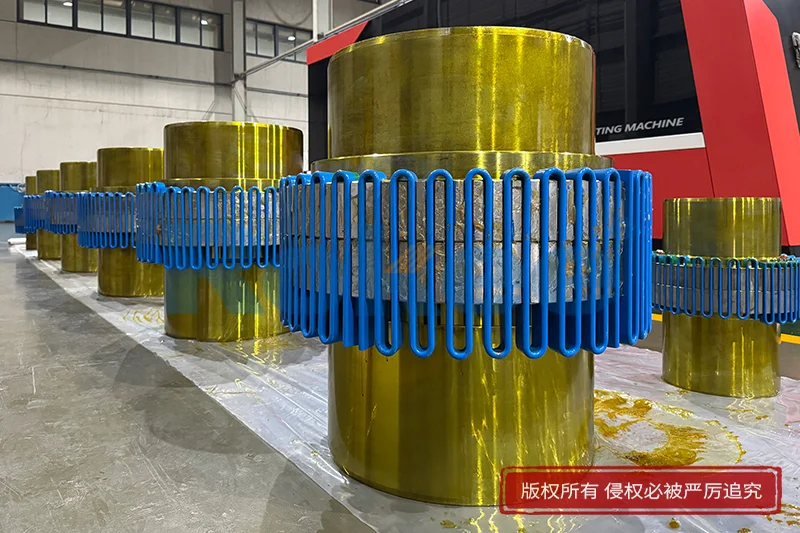
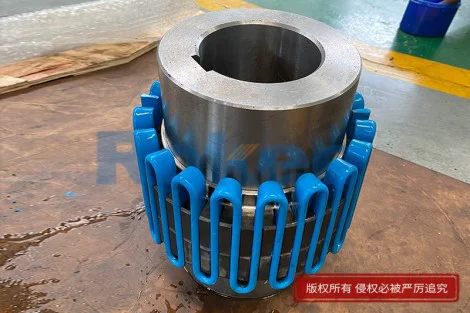
Flexible serpentine spring coupling is a high-performance metallic flexible transmission component widely adopted in modern mechanical power transmission systems, serving as a critical connecting unit between driving and driven shafts. Distinct from conventional rigid couplings and ordinary elastic couplings, this device relies on a uniquely shaped serpentine spring element to complete torque transmission, integrating outstanding flexibility, vibration damping and impact resistance in one compact structure. Its core design features a wave-form spring strip embedded in the tooth grooves of two symmetric hub bodies, which enables elastic deformation during operation to buffer mechanical vibration and compensate for multi-dimensional shaft misalignment. Capable of adapting to axial, radial and angular deviations in shaft assembly, it effectively resolves the operational instability caused by installation errors and mechanical wear. With fewer structural components, stable transmission performance and excellent fatigue resistance, it suits diverse medium and heavy-duty mechanical scenarios, delivering reliable power transmission while extending the overall service life of mechanical equipment and reducing daily operational failure risks.
The structural composition of flexible serpentine spring coupling is concise and scientific, with every component designed to optimize transmission efficiency and operational stability. The core functional part is the integral serpentine spring strip forged from high-strength spring steel, which features a continuous wave-like bending structure and trapezoidal cross-section. This special structural design allows the spring strip to fit tightly with the trapezoidal tooth grooves of the two matching hubs, forming a stable flexible connection structure. The two hubs are symmetrically arranged on both sides of the spring strip, crafted from high-rigidity metal materials to ensure sufficient structural strength during high-load operation. Unlike complex flexible couplings equipped with multiple auxiliary accessories, this coupling adopts a modular integrated structure with no redundant moving parts. The tight point contact fit between the arc surface of the spring strip and the hub tooth surface not only improves the uniformity of torque transmission but also provides sufficient elastic deformation space. The overall compact layout reduces the overall volume and weight of the coupling, making it adaptable to mechanical equipment with limited installation space while maintaining stable structural integrity under long-term continuous operation.
The working principle of flexible serpentine spring coupling is based on the elastic deformation and uniform load-bearing characteristics of metal spring elements, realizing efficient and stable power transmission. During equipment operation, the torque generated by the driving shaft is first transmitted to the active hub, which then acts on the embedded serpentine spring strip through the tooth groove contact surface. Under the action of rotational torque, the wave-shaped spring strip produces controllable elastic deformation, and the contact points between the spring strip and the hub teeth change dynamically with the load magnitude. This variable stiffness transmission mode enables the coupling to automatically adjust the stress distribution according to different operating loads, avoiding local stress concentration caused by sudden load changes. The elastic deformation of the serpentine spring can effectively absorb the instantaneous impact force generated during equipment start-up, shutdown and load fluctuation, converting mechanical impact energy into elastic potential energy and releasing it slowly. Meanwhile, the flexible connection formed by the spring strip can automatically compensate for minor axial stretching, radial offset and angular deflection between the two shafts, ensuring continuous and smooth torque transmission even when the shaft system has slight assembly errors or operational displacement.
Flexible serpentine spring coupling boasts remarkable vibration damping and noise reduction performance, making it superior to many traditional transmission couplings in dynamic operation environments. Mechanical vibration and operational noise are common problems in power transmission systems, which are easily triggered by load fluctuations, shaft misalignment and mechanical friction, and long-term vibration will accelerate component wear and reduce equipment operation accuracy. The unique wave-shaped spring structure of this coupling has excellent elastic buffering capacity, which can effectively weaken and absorb high-frequency vibration generated during equipment operation. When the mechanical system produces vibration, the serpentine spring undergoes micro elastic deformation to consume vibration energy, block the transmission of vibration between the driving and driven shafts, and avoid vibration resonance of the whole equipment. In terms of noise control, the tight and flexible fit between the spring strip and the hub tooth surface reduces rigid friction and collision between metal components, lowering mechanical operation noise significantly. This excellent dynamic performance enables the coupling to maintain stable operation in high-speed and variable-load working conditions, greatly improving the operational comfort and stability of mechanical systems.
Adaptability to misalignment is one of the most prominent advantages of flexible serpentine spring coupling, solving many practical problems in mechanical installation and operation. In actual mechanical assembly, it is difficult to achieve absolute coaxiality between the driving shaft and the driven shaft, and minor axial, radial and angular misalignments are inevitable due to installation errors, equipment aging and base deformation. Rigid couplings cannot tolerate any shaft misalignment, which will cause severe component wear, increased transmission resistance and even equipment failure. Ordinary elastic couplings have limited misalignment compensation capacity and are only suitable for low-load and low-precision scenarios. In contrast, the serpentine spring coupling utilizes the multi-directional elastic deformation capability of the wave-shaped spring strip to achieve efficient compensation for three-dimensional shaft misalignment. It can adapt to axial displacement caused by thermal expansion and contraction of components, radial offset caused by assembly deviation, and angular deflection caused by equipment operation vibration, ensuring that the power transmission system always maintains a stable working state without additional mechanical loss.
Durability and operational stability endow flexible serpentine spring coupling with long-term reliable service performance in complex working environments. The core serpentine spring strip is made of high-quality alloy spring steel with precise heat treatment technology, which gives the material excellent fatigue resistance, wear resistance and structural toughness. Under long-term cyclic load and frequent impact conditions, the spring strip is not prone to plastic deformation, fatigue fracture or wear failure, maintaining stable elastic performance and transmission capacity for a long time. The hub components adopt high-rigidity metal processing technology, with uniform internal structure and strong compression resistance and torsion resistance, which can withstand long-term high-load operation without structural deformation. In addition, the overall structure of the coupling has good environmental adaptability, capable of stable operation in conventional temperature environments and dusty working conditions. Its unique variable stiffness transmission characteristic enables it to cope with frequent load changes, effectively avoiding transmission failure caused by sudden load increase or decrease. Compared with ordinary couplings, it has a longer service life and lower operational failure rate, greatly reducing the downtime loss of mechanical equipment.
The installation and maintenance advantages of flexible serpentine spring coupling make it highly cost-effective in long-term mechanical operation. Benefiting from its simple modular structure, the coupling has extremely convenient assembly and disassembly processes without the need for complex professional tools and tedious operating procedures. The trapezoidal tooth groove design is convenient for the rapid embedding and positioning of the serpentine spring strip, enabling operators to complete installation and debugging efficiently. During daily equipment maintenance, the independent structural design of the spring strip and hubs allows targeted replacement of worn or aging components without disassembling the entire transmission system, greatly simplifying maintenance work and shortening maintenance time. The few structural components also reduce the probability of mechanical failure caused by accessory aging and damage. In actual operation, the coupling does not require frequent lubrication and fine debugging, with low daily maintenance costs and simple management. This convenient installation and maintenance feature not only improves the overall operating efficiency of mechanical equipment but also effectively saves human and material resources invested in equipment operation and maintenance.
Flexible serpentine spring coupling has extremely wide application prospects in industrial mechanical transmission systems due to its comprehensive superior performance. It is widely applied in various medium and heavy-duty mechanical equipment that requires stable power transmission and vibration buffering, including general industrial transmission equipment, mechanical conveying systems, processing machinery and power equipment. In high-speed operation scenarios, its excellent vibration damping and noise reduction performance can ensure the high-precision and stable operation of equipment; in variable-load and impact-load working environments, its strong impact resistance and flexible adjustment capacity can protect key mechanical components from damage. Its good misalignment adaptability and environmental tolerance also make it suitable for complex working conditions with harsh on-site environments and difficult installation precision control. With the continuous upgrading of modern industrial mechanical equipment towards high efficiency, high stability and long service life, the flexible serpentine spring coupling, as a high-performance flexible transmission component, will be further popularized and applied, becoming an indispensable key part of modern mechanical power transmission systems.