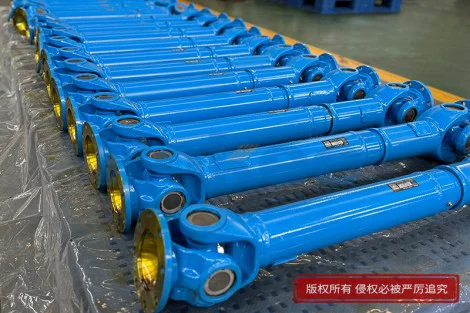
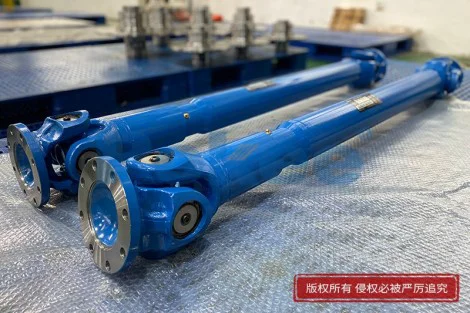
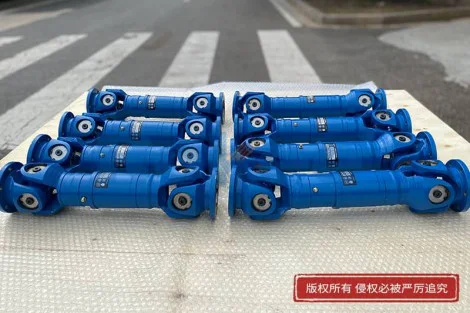
Curved Tooth Coupling Is Compatible With PUR Sandwich Panel Production Line

The stable and continuous operation of modern PUR sandwich panel production lines relies heavily on the coordinated operation of various mechanical transmission components, among which shaft coupling units serve as core connecting parts for power transmission between driving and driven equipment. As a high-performance flexible transmission component, curved tooth coupling has gradually become an ideal matching part for PUR sandwich panel production equipment by virtue of its unique structural design, excellent torque transmission capacity and superior misalignment compensation performance. It effectively solves various transmission stability problems easily encountered in the continuous production process of sandwich panels, and provides reliable mechanical support for the high-efficiency and low-failure operation of the entire production line. PUR sandwich panel production is a continuous and intensive manufacturing process that integrates material feeding, foaming, pressing, cutting and conveying. The whole production line operates in a long-term continuous working state, and the transmission system needs to maintain stable power output under complex working conditions such as variable load, frequent start-stop and slight shaft displacement. Traditional rigid transmission parts often suffer from excessive vibration, uneven force transmission and easy wear under such working conditions, which will not only affect the processing precision of PUR sandwich panels, but also increase the failure rate of production equipment and reduce the overall production efficiency. In contrast, the structural characteristics and working mechanism of curved tooth coupling are highly adapted to the operational logic and working environment of PUR sandwich panel production line, making it a key component to optimize the transmission performance of panel production equipment.
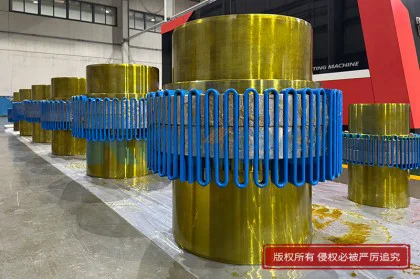
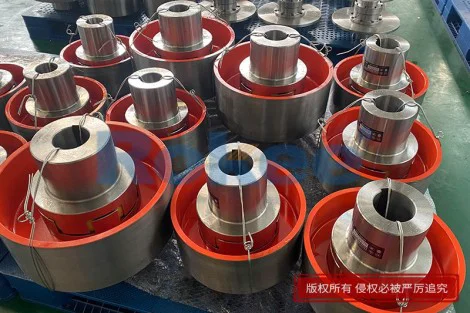
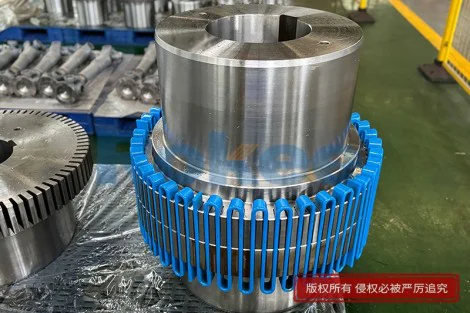
The core working principle of curved tooth coupling lies in the surface meshing transmission formed by the perfect fit between the curved tooth hubs on the driving and driven shafts and the inner teeth of the outer sleeve. Different from the linear contact mode of traditional straight tooth couplings, the curved tooth profile design realizes continuous and uniform surface contact during the torque transmission process. This structural advantage enables the coupling to bear larger torque load while avoiding local stress concentration and edge wear caused by point or line contact. In the actual operation of PUR sandwich panel production lines, the pressing and forming section is the core load-bearing link of the entire production line. The pressing equipment needs to maintain stable pressure output to ensure the uniform foaming and compact bonding of PUR materials, and the transmission system will bear continuous and stable mechanical load for a long time. The large contact area of curved tooth coupling ensures efficient and lossless torque transmission, avoids power attenuation in the transmission process, and enables the pressing equipment to maintain consistent operating speed and pressure, which is crucial to ensure the uniform thickness and stable structural performance of finished PUR sandwich panels. At the same time, the overall structure of curved tooth coupling adopts integrated forging and heat treatment process, which optimizes the hardness and toughness of the component material, enabling it to adapt to long-term continuous operation without frequent fatigue failure, and matching the long-cycle uninterrupted production mode of sandwich panel production lines.
In the daily operation of PUR sandwich panel production lines, mechanical misalignment of transmission shafts is an inevitable problem caused by equipment installation errors, long-term operation vibration and thermal expansion and contraction of mechanical parts. Slight axial, radial and angular displacements between driving and driven shafts will cause additional vibration and impact load on the transmission system, which will lead to abnormal noise, accelerated part wear and even equipment jamming in serious cases. The unique curved tooth structure of curved tooth coupling has excellent multi-directional misalignment compensation capability, which can automatically adapt to the slight displacement of the shaft body during equipment operation without generating additional bending stress and friction resistance. When the production line is running at high speed, the flexible compensation performance of the coupling can effectively buffer the vibration and impact generated by equipment operation, stabilize the operating state of the entire transmission system, and avoid the fluctuation of equipment operating parameters caused by shaft misalignment. For PUR sandwich panel production, stable equipment operation directly determines the flatness and bonding quality of panel surfaces. Vibration and jitter of transmission equipment will lead to uneven material feeding and inconsistent pressing force, resulting in defective products such as unsmooth panel surfaces and insufficient core material bonding strength. The misalignment compensation and vibration damping advantages of curved tooth coupling fundamentally optimize the operating stability of the production line, reduce the fluctuation of processing parameters, and effectively improve the yield and processing quality of PUR sandwich panels.
The operational load characteristics of each section of the PUR sandwich panel production line are different, and the transmission system needs to cope with frequent load changes in the production process. The feeding and conveying section needs to adapt to intermittent material supply and low-load stable operation, while the pressing, cutting and finishing sections need to bear high-load continuous operation and instantaneous impact load during equipment start-stop. The curved tooth coupling has excellent variable load adaptability, and its curved tooth meshing structure can evenly disperse instantaneous impact force and alternating load, avoiding tooth surface abrasion and transmission failure caused by sudden load changes. In the frequent start-stop process of the production line, the coupling can realize smooth power connection and disconnection, reduce the mechanical impact on the motor, reducer and other core equipment, and effectively extend the service life of the entire transmission system. In addition, the compact structural design of curved tooth coupling enables it to adapt to the compact equipment layout of modern PUR sandwich panel production lines. The internal nested structure of tooth hubs and sleeves saves installation space, meets the space layout requirements of integrated and automated production lines, and will not interfere with the operation of other auxiliary equipment such as material conveying rollers and cooling devices on the production line.
Long-term operational stability and low maintenance cost are important indicators for industrial production equipment selection, and curved tooth coupling shows significant practical application advantages in the long-term operation of PUR sandwich panel production lines. The curved tooth surface processing technology eliminates the edge pressure phenomenon existing in straight tooth transmission, so the tooth surface wear is extremely slight during long-term operation, and the transmission accuracy can be maintained for a long time without frequent adjustment and replacement. For continuous industrial production lines represented by PUR sandwich panel production, frequent equipment shutdown maintenance will seriously affect production progress and reduce production efficiency. The high wear resistance and long service life of curved tooth coupling greatly reduce the frequency of equipment failure and maintenance downtime, ensure the continuous and efficient operation of the production line, and create stable production benefits for manufacturing enterprises. At the same time, the structural design of the coupling is simple and reasonable, with fewer vulnerable parts, and the daily maintenance work only needs regular lubrication inspection, which reduces the daily operation and maintenance difficulty and labor cost of the production line.
The automated production mode of modern PUR sandwich panel production lines puts forward higher requirements for the synchronization accuracy of transmission systems. The processes of material feeding, foaming, pressing, curing and cutting need precise speed synchronization and action coordination, and any transmission delay and speed fluctuation will lead to the dislocation of each production link and affect the overall production quality. The curved tooth coupling realizes almost zero-slip torque transmission through precise tooth surface meshing, ensuring strict synchronization of the driving end and driven end speed. This high-precision transmission performance ensures that all links of the sandwich panel production line operate in a coordinated manner, the foaming time of PUR materials is accurately controlled, the pressing speed and pressure are kept stable, and the cutting size of finished panels is accurate and unified. In the high-speed automated production scenario, this stable synchronization transmission capability can effectively improve the production speed of the production line while ensuring product consistency, and realize the dual improvement of production efficiency and product quality.
In terms of environmental adaptability, the production workshop of PUR sandwich panels has certain characteristics of temperature change and dust accumulation. The foaming and curing links of PUR materials will generate certain heat, resulting in slight temperature changes of production equipment, and the cutting and finishing processes will produce fine dust particles. The curved tooth coupling is made of high-strength alloy materials with good temperature resistance and environmental adaptability. After special heat treatment, the material has stable mechanical properties in a certain temperature variation range, and will not produce deformation and performance attenuation due to equipment heating. At the same time, the closed meshing structure can effectively prevent external dust and debris from entering the tooth meshing area, avoid abrasive wear of tooth surface caused by particle deposition, and maintain long-term stable transmission performance in the industrial production environment of sandwich panels. This excellent environmental adaptability makes the coupling always maintain efficient and stable working state in complex production environments, and avoids equipment failure caused by environmental factors.
In summary, the curved tooth coupling achieves a high degree of functional matching with the PUR sandwich panel production line in terms of power transmission efficiency, misalignment compensation capability, variable load adaptability, operational stability and environmental adaptability. Its unique curved tooth meshing structure makes up for many performance defects of traditional transmission components, solves the common stability problems in the operation of sandwich panel production lines, and provides strong technical support for the high-precision, high-efficiency and low-failure production of PUR sandwich panels. With the continuous upgrading of automated sandwich panel production equipment, the matching performance advantages of curved tooth coupling in industrial transmission systems will be further highlighted. It has become an indispensable core transmission component in modern PUR sandwich panel production lines, helping manufacturing enterprises optimize production processes, improve product quality, reduce operational costs, and realize sustainable and efficient industrial production operations.