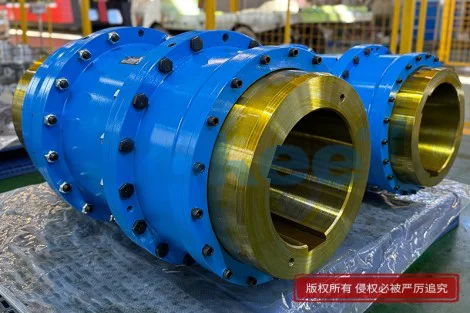
Universal Coupling Empowers Efficient Transmission Of PUR Board Production Line
In the modern manufacturing industry, the pursuit of efficiency, stability, and quality has become the core driving force for the development of various production lines. Among them, the PUR board production line, which is widely used in construction, refrigeration, and other fields due to its excellent thermal insulation, waterproof, and environmental protection performance, relies heavily on a stable and efficient power transmission system to ensure continuous and high-quality production. As a key mechanical component in the power transmission system, the universal coupling plays an irreplaceable role in connecting different mechanisms, compensating for shaft misalignment, and transmitting torque stably, thereby empowering the efficient operation of the entire PUR board production line.
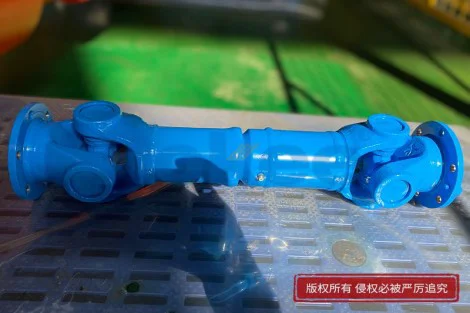
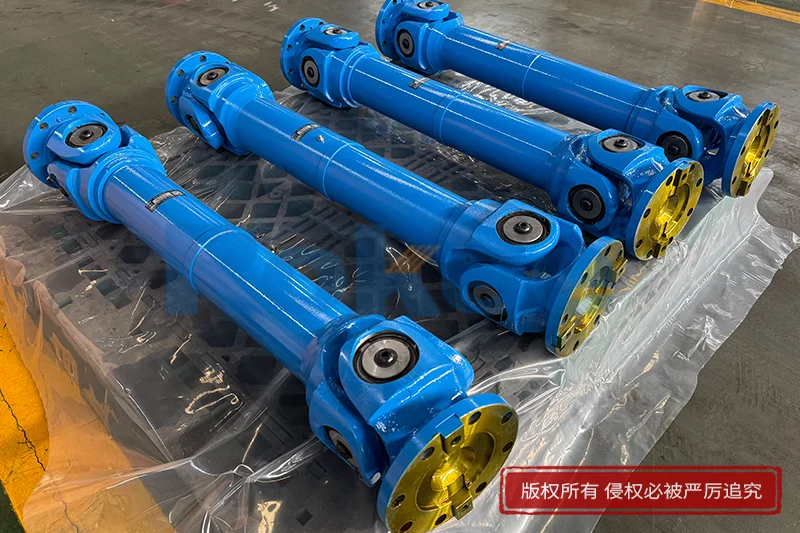
To understand the role of universal couplings in PUR board production lines, it is first necessary to clarify the basic working principle and structural characteristics of universal couplings. A universal coupling, also known as a universal joint or U-joint, is a mechanical component specifically designed to connect two shafts (active shaft and passive shaft) in different mechanisms, enabling them to rotate together and transmit torque and motion effectively. Unlike ordinary rigid couplings that require perfect alignment of the two connected shafts, the most prominent feature of universal couplings is their ability to achieve reliable power transmission even when the two shafts are not on the same axis and there is an angle between the axes, with strong angular compensation capability. According to common engineering practices, the allowable angle between the two axes for most universal couplings ranges from 5° to 45°, which allows them to adapt to various complex installation environments and working conditions in industrial production, especially in scenarios where shaft alignment is difficult to achieve due to equipment layout or structural limitations.
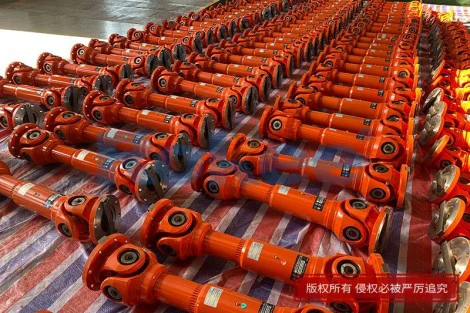
The basic working principle of universal couplings is based on the theory of spatial linkage mechanisms. Taking the most commonly used cross-axis universal coupling as an example, it consists of a cross axis, bearings, fork head components, and other key parts. The cross axis acts as the core intermediate component, connecting the fork heads of the active shaft and the passive shaft. When the active shaft rotates, it drives the fork head connected to it, which in turn drives the cross axis to perform swinging motion. The cross axis then transmits this swinging motion to the fork head of the passive shaft, converting it into rotational motion of the passive shaft, thereby realizing the transmission of torque. It is worth noting that a single universal coupling may experience speed fluctuations during transmission, leading to periodic changes in the speed of the passive shaft, which may affect the stability of precision transmission. To solve this problem, in practical applications of PUR board production lines, a double-joint universal coupling is usually adopted. By reasonably arranging the spatial geometric relationship between the two universal couplings, the synchronization of the active and passive shafts is ensured, and the impact of speed fluctuations is eliminated, ensuring stable and uniform power transmission.
In terms of material selection, universal couplings for PUR board production lines are usually made of high-quality alloy steels such as 45 steel, 45 forged steel, and 40 chromium. These materials have high strength, wear resistance, and fatigue resistance after appropriate heat treatment, which can withstand the long-term continuous operation and torque impact in the PUR board production process. For some heavy-duty transmission links in the production line, universal couplings may also use alloy cast steel or forged steel parts to meet the demand for high-torque transmission. With the continuous advancement of materials science, new materials such as high-strength stainless steel and special alloys have also been gradually applied in some special working conditions, such as high-temperature or corrosive environments, further expanding the application scope of universal couplings and improving their service life and reliability.
Before delving into the specific application of universal couplings in PUR board production lines, it is necessary to have a clear understanding of the structure and working process of the PUR board production line. The PUR board, also known as polyurethane sandwich board, is a composite board composed of a surface layer (usually color steel plate, aluminum alloy plate, etc.) and a core layer (polyurethane foam). Its production process is a continuous and automated process, which mainly includes raw material pretreatment, surface layer forming, core layer foaming, compound pressing, cutting, curing, stacking, and other key links. Each link is closely connected, and the power required for the operation of each equipment is transmitted through the transmission system. The stability and efficiency of the transmission system directly affect the production efficiency, product quality, and operational cost of the entire production line. In this continuous production process, the transmission system needs to connect multiple pieces of equipment with different installation positions and working speeds, such as uncoilers, roll forming machines, foaming machines, double-belt pressing machines, cutting machines, and stacking machines. Due to the differences in equipment layout and structural design, the shafts of these devices often have angular misalignment, parallel offset, or axial displacement, which puts forward high requirements for the flexibility and adaptability of the coupling.
The uncoiling link is the starting point of the PUR board production line, which is responsible for uncoiling the coiled surface layer material (such as color steel plate) and conveying it to the next process stably. The uncoiler is usually driven by a motor and a reducer, and the power is transmitted to the uncoiling shaft through a universal coupling. In the actual installation process, due to the limitations of the production line layout, the output shaft of the reducer and the uncoiling shaft often cannot be perfectly aligned, and there is a certain angular misalignment. If a rigid coupling is used, it will not only affect the transmission efficiency but also cause excessive wear of the shaft and bearing due to the stress generated by misalignment, leading to equipment failure and production interruption. The universal coupling can effectively solve this problem. Its excellent angular compensation capability allows it to transmit torque stably between the misaligned reducer output shaft and the uncoiling shaft, ensuring that the uncoiler operates at a uniform speed. At the same time, the universal coupling also has a certain buffering and vibration reduction effect, which can absorb the vibration generated during the operation of the motor and reducer, avoiding the impact of vibration on the uncoiling process, ensuring that the surface layer material is uncoiled smoothly without wrinkles or deviations, laying a good foundation for the subsequent forming process.
After the uncoiling process, the surface layer material enters the roll forming link, where it is formed into the required shape (such as corrugated or flat plate) through the roll forming machine. The roll forming machine is composed of multiple sets of forming rolls, each of which needs to be driven by a power system to rotate at a specific speed. The power transmission between the motor, reducer, and forming rolls also relies on universal couplings. The forming rolls of the roll forming machine are usually arranged in a staggered manner according to the forming process, which leads to the existence of angular misalignment between the shafts of different forming rolls and the output shaft of the reducer. The universal coupling can adapt to this complex installation environment, transmit torque accurately to each forming roll, ensure that all forming rolls rotate synchronously and at a stable speed, and avoid problems such as uneven forming, edge warping, or material damage caused by inconsistent speed of the forming rolls. In addition, during the forming process, the surface layer material will generate a certain resistance to the forming rolls, which will cause fluctuations in the load on the transmission system. The universal coupling has strong load-bearing capacity and impact resistance, which can withstand the sudden load changes caused by the forming resistance, ensuring the stable operation of the roll forming machine and improving the forming quality of the surface layer material.
The core layer foaming link is the key link affecting the performance of the PUR board, which requires the foaming machine to inject the mixed polyurethane foaming material into the gap between the two surface layers evenly and continuously, and then form a uniform and dense foam core layer through chemical reaction and curing. The foaming machine is usually composed of a mixing system, a feeding system, and an injection system, and the power transmission of each system is inseparable from the universal coupling. The mixing system of the foaming machine needs to mix the polyurethane raw materials evenly at a high speed, which requires the motor to transmit a large torque to the mixing shaft. The universal coupling used here has high torque transmission capacity, which can ensure that the mixing shaft rotates stably at a high speed, making the raw materials fully mixed and improving the foaming quality. The feeding system is responsible for conveying the raw materials to the mixing system continuously and stably. The power transmission between the feeding motor and the feeding screw also uses a universal coupling, which can compensate for the misalignment between the motor shaft and the feeding screw shaft, ensuring that the feeding speed is uniform and stable, avoiding the problem of uneven foaming caused by insufficient or excessive feeding. The injection system needs to inject the mixed foaming material into the surface layer gap at a constant pressure and speed. The universal coupling ensures the stable transmission of power between the injection motor and the injection pump, making the injection pressure and speed stable, ensuring that the foam core layer is evenly distributed, and avoiding defects such as bubbles, voids, or uneven thickness in the core layer.
After the foaming link, the composite board composed of the surface layer and the core layer enters the double-belt pressing link, where it is pressed by the double-belt pressing machine to ensure that the surface layer and the core layer are closely bonded, and the thickness of the board is uniform. The double-belt pressing machine is composed of upper and lower pressure belts, which are driven by a motor and a reducer to run synchronously. The power transmission between the reducer and the pressure belt roller uses a universal coupling. Due to the large size of the double-belt pressing machine, the installation positions of the reducer and the pressure belt roller are often not on the same axis, and there is a certain parallel offset and angular misalignment. The universal coupling can effectively compensate for these displacements, ensuring that the upper and lower pressure belts run synchronously at a stable speed, and the pressing force is uniform. This not only ensures the bonding quality between the surface layer and the core layer but also avoids the problem of uneven board thickness or surface unevenness caused by the asynchronous operation of the pressure belts. In addition, the universal coupling can absorb the vibration generated during the operation of the double-belt pressing machine, reducing the noise of the equipment and extending the service life of the pressure belts and other components.
The cutting link is the last key link in the PUR board production line, which is responsible for cutting the continuous composite board into finished products of specified length according to the customer's requirements. The cutting machine usually adopts a flying cutting mode, which requires the cutting blade to move synchronously with the composite board while completing the cutting action, ensuring that the cutting surface is flat and free of burrs. The power transmission of the cutting machine's driving system and cutting blade is also realized through a universal coupling. The universal coupling can ensure the accurate transmission of power between the motor, reducer, and cutting blade, making the cutting blade rotate at a stable speed and move synchronously with the composite board. At the same time, due to the frequent start-stop and load changes of the cutting machine during the cutting process, the universal coupling has good impact resistance and fatigue resistance, which can withstand the impact generated during the start-stop process, avoid the damage of the transmission components, and ensure the continuity and stability of the cutting process. In addition, the universal coupling's compact design makes it suitable for the limited installation space of the cutting machine, reducing the occupied space of the transmission system and facilitating the overall layout of the production line.
In addition to the above key links, universal couplings also play an important role in the auxiliary links of the PUR board production line, such as the stacking system and the conveying system. The stacking system is responsible for stacking the cut finished PUR boards neatly, which requires the stacking machine to move stably and accurately. The power transmission between the motor and the stacking mechanism uses a universal coupling, which can compensate for the misalignment between the shafts, ensure the stable movement of the stacking machine, and avoid the damage of the finished boards caused by unstable movement. The conveying system is responsible for conveying the semi-finished and finished products between different processes. The power transmission of the conveyor belt roller also relies on universal couplings, which can ensure the synchronous operation of each conveyor belt, avoid the accumulation or deviation of materials during the conveying process, and improve the overall efficiency of the production line.
The application of universal couplings in the PUR board production line not only solves the practical problems of shaft misalignment and unstable transmission in the transmission system but also brings a series of significant advantages to the production line, further empowering the efficient operation of the production line. First of all, it improves the transmission efficiency of the production line. The universal coupling has high transmission efficiency, usually above 95% when properly installed and maintained, which can reduce the energy loss in the power transmission process, make full use of the motor's power, and improve the overall production efficiency of the production line. Compared with traditional rigid couplings, universal couplings can avoid the energy loss caused by shaft misalignment, reduce the load of the motor and reducer, and extend the service life of these key equipment.
Secondly, it enhances the stability and reliability of the production line. The PUR board production line is a continuous production system, and any equipment failure or transmission interruption will lead to production stagnation, resulting in economic losses. The universal coupling has strong durability and reliability, with advanced bearing systems and high-quality materials, which can withstand long-term continuous operation and load impact. Its buffering and vibration reduction effect can absorb the vibration generated during the operation of the equipment, reduce the wear of the transmission components and other equipment parts, and reduce the frequency of equipment failure. At the same time, the universal coupling's ability to compensate for shaft misalignment can avoid the stress concentration caused by misalignment, protect the shafts, bearings, and other components from damage, ensuring the continuous and stable operation of the entire production line.
Thirdly, it improves the product quality of PUR boards. The stable and uniform power transmission provided by universal couplings ensures that each link of the production line operates stably. For example, in the roll forming link, the synchronous rotation of the forming rolls ensures the accurate shape of the surface layer; in the foaming link, the stable operation of the foaming machine ensures the uniform distribution of the core layer; in the pressing link, the synchronous operation of the pressure belts ensures the uniform thickness and tight bonding of the composite board; in the cutting link, the stable operation of the cutting machine ensures the flatness of the cutting surface. All these factors together improve the overall quality of the PUR board, reduce the number of defective products, and enhance the market competitiveness of the products.
Fourthly, it reduces the maintenance cost and labor intensity of the production line. Universal couplings have a simple structure, easy installation and maintenance, and most modern universal couplings adopt sealed bearings and long-lasting lubricants, realizing maintenance-free operation or minimal maintenance. Compared with other types of couplings that require frequent maintenance and replacement, universal couplings can reduce the maintenance frequency and maintenance cost of the transmission system. At the same time, the stable operation of the transmission system reduces the frequency of equipment failure, reduces the labor intensity of maintenance personnel, and improves the operational efficiency of the production line.
With the continuous development of the PUR board industry, the production line is moving towards higher automation, higher speed, and higher precision, which puts forward higher requirements for the performance of the transmission system and the universal coupling. In response to these requirements, the design and manufacturing technology of universal couplings are also constantly innovating. For example, the application of advanced materials such as composite materials and high-performance plastics has further improved the wear resistance, corrosion resistance, and lightweight performance of universal couplings; the optimization of the lubrication system, such as the adoption of self-lubricating bearings, has reduced the maintenance requirements and extended the service life of the couplings; the improvement of the structural design has enhanced the torque transmission capacity and angular compensation range of the universal couplings, making them more suitable for the high-speed and heavy-duty operation requirements of the PUR board production line.
In practical applications, the selection and installation of universal couplings in the PUR board production line also need to pay attention to some key points to ensure their optimal performance. First of all, the type and specification of the universal coupling should be selected according to the specific working conditions of each link, such as the transmission torque, speed, angular misalignment, and installation space. For example, in the heavy-duty transmission links such as the foaming machine and double-belt pressing machine, universal couplings with high torque capacity should be selected; in the links with large angular misalignment, double-joint universal couplings should be selected to ensure stable transmission. Secondly, the installation of the universal coupling should be carried out in strict accordance with the installation requirements, ensuring that the alignment error is within the allowable range, and the connection is firm to avoid the occurrence of loosening during operation. In addition, regular inspection and maintenance should be carried out on the universal coupling, such as checking the wear of the bearings and cross axis, adding lubricants in time, and replacing damaged components, to ensure that the universal coupling is in good operating condition.
In conclusion, the universal coupling, as a key component in the power transmission system of the PUR board production line, plays a crucial role in optimizing the transmission efficiency, enhancing the stability and reliability of the production line, improving product quality, and reducing maintenance costs. Its unique structural design and excellent performance enable it to adapt to the complex working conditions of the PUR board production line, solve the practical problems of shaft misalignment and unstable transmission, and provide a strong guarantee for the continuous and efficient operation of the production line. With the continuous innovation of universal coupling technology and the continuous upgrading of the PUR board production line, the application of universal couplings will be more extensive and in-depth, further empowering the high-quality development of the PUR board manufacturing industry. In the future, with the continuous advancement of materials science, mechanical design, and automation technology, the performance of universal couplings will be further improved, and they will play a more important role in promoting the efficiency and quality of the PUR board production line, bringing more economic and social benefits to the industry.