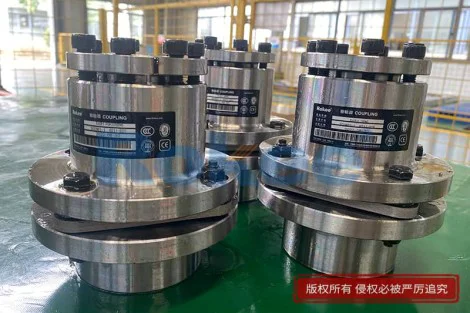
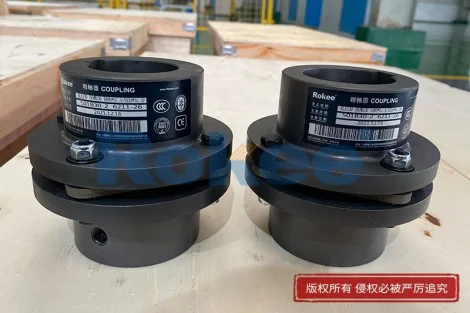
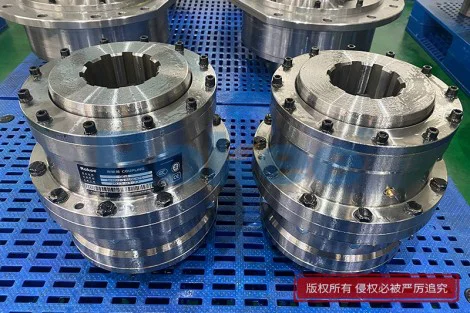
Universal Joint Coupling Extends Service Life Of PUR Sandwich Panel Making Line
The continuous and stable operation of industrial production lines is the core foundation for maintaining consistent manufacturing efficiency and reducing long-term operational losses, especially for continuous forming processing equipment that runs for long hours and bears heavy cyclic loads, where every key transmission component directly determines the overall operational stability and service cycle of the entire production system. The PUR sandwich panel making line belongs to a typical continuous composite forming production equipment, which integrates raw material feeding, continuous foaming, high-pressure composite bonding, constant-temperature curing, fixed-size cutting and finished product conveying into one complete automated production process. Each production link is closely connected and mutually driven by mechanical transmission systems, and any slight failure or unstable operation of the transmission structure will cause chain reactions in the subsequent production processes, resulting in unplanned equipment shutdowns, unstable product forming quality, increased mechanical wear of core equipment components, and shortened overall service life of the entire production line. In the long-term actual production operation of PUR sandwich panel making lines, shaft misalignment, cyclic vibration, uneven torque transmission and structural stress concentration have always been the key mechanical problems that plague the stable operation of transmission parts, and these hidden mechanical risks will gradually erode the performance of conventional transmission connecting parts, accelerate the aging and damage of bearings, transmission shafts, gears and other matching components, and finally lead to frequent equipment maintenance, increased replacement frequency of vulnerable parts and rising comprehensive operational costs. The application of universal joint couplings in the power transmission links of PUR sandwich panel making lines fundamentally solves the various mechanical defects caused by rigid transmission connection modes, effectively adapts to the complex and variable operating conditions of the production line, relieves structural stress impact on key mechanical parts, reduces abnormal wear and fatigue damage of equipment components, and thus comprehensively extends the overall service life of the entire PUR sandwich panel making line while maintaining long-term efficient and stable production operation.
To understand the important role of universal joint couplings in extending the service life of PUR sandwich panel making lines, it is first necessary to clarify the special operating characteristics and transmission stress characteristics of PUR sandwich panel production equipment in daily industrial production. Different from intermittent processing machinery, the PUR sandwich panel making line needs to maintain uninterrupted continuous operation for a long time according to production scheduling requirements, and the entire production process requires precise coordination of multiple sets of transmission shafts, drive motors, reduction gearboxes and roller conveying structures to ensure the synchronous operation of raw material unwinding, polyurethane material uniform foaming, upper and lower panel composite pressing and finished product conveying and forming. In the actual installation and long-term operation process of the production line, it is impossible to achieve absolute perfect coaxial alignment between all connected transmission shafts due to objective factors such as on-site installation foundation deviation, equipment frame welding deformation, long-term operational thermal expansion and cold contraction of metal structures, and slight mechanical displacement caused by cyclic vibration. Conventional rigid coupling structures cannot adapt to any angular deviation, radial offset and axial displacement between transmission shafts, and all misalignment stresses generated during equipment operation will be directly superimposed on the surface of transmission shafts, bearings and gearbox internal parts in the form of concentrated load. Under the action of long-term cyclic rotation and repeated stress impact, these concentrated loads will gradually cause micro deformation of transmission shaft structures, abnormal friction and heating of bearing matching surfaces, accelerated tooth surface wear of gear sets, and even local fatigue cracking of key mechanical components. For the PUR sandwich panel making line, once the transmission system has such abnormal wear and structural damage, it is not only necessary to stop production for long-term maintenance and part replacement, affecting production progress and output stability, but also easy to cause jitter and speed fluctuation in the production transmission process, resulting in uneven foaming density of PUR sandwich core materials, inconsistent composite bonding strength between panels and core materials, and dimensional deviation of finished plate cutting, bringing additional quality adjustment costs and product scrap losses to production enterprises.
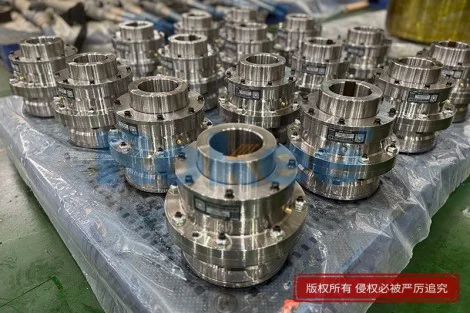
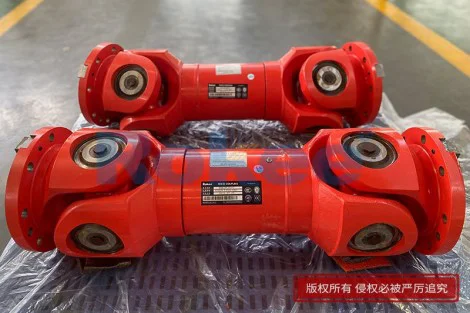
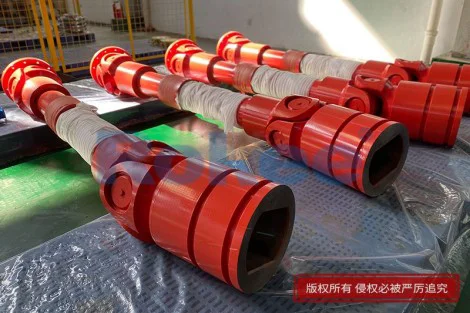
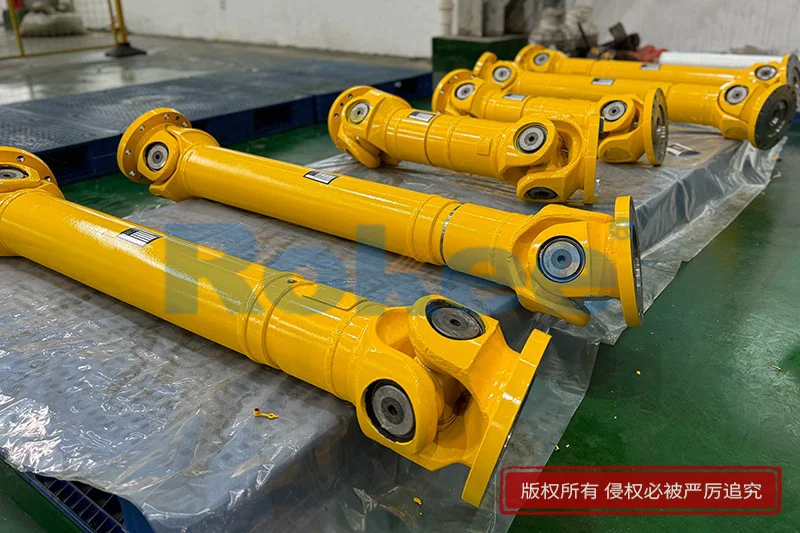
The universal joint coupling, also known as cross shaft universal coupling, is a professional power transmission component designed for non-coaxial shaft connection and variable-angle power transmission, with a simple and reliable mechanical structure composed of two fork-shaped yokes and an intermediate cross-shaped spider connected with precision bearing assemblies. The core mechanical working principle of this coupling is to rely on the pivoting rotation of the cross spider between the two yokes to realize flexible transmission of rotational torque and motion, which can effectively compensate for angular misalignment, radial parallel offset and axial displacement between the driving shaft and the driven shaft within a reasonable rotation angle range. Unlike rigid couplings that pursue absolute fixed connection and zero displacement, universal joint couplings actively introduce controllable structural flexibility into the power transmission system, balancing the structural rigidity required for high-torque transmission and the flexible compensation performance needed for adapting to equipment operation deviation. In the actual operation of the PUR sandwich panel making line, this unique structural performance enables the universal joint coupling to buffer and decompose the unbalanced stress and vibration impact generated by shaft misalignment in real time during the torque transmission process, avoiding the long-term concentration of mechanical stress on a single transmission part. Every cyclic rotation of the production line transmission system will produce slight position deviation and vibration displacement, and the universal joint coupling can automatically adjust the connection angle and transmission fit state according to the real-time operating state of the equipment, ensuring that the torque and rotational speed transmitted between each transmission shaft remain stable and uniform at all times, eliminating the periodic speed fluctuation and transmission jitter caused by misalignment, and making the overall operation of the production line transmission system more stable and smooth.
The long-term service life extension effect of PUR sandwich panel making lines brought by universal joint couplings is mainly reflected in reducing abnormal wear of core mechanical components and reducing the frequency of equipment fatigue damage and maintenance replacement. In the traditional transmission connection mode using rigid couplings, the slight misalignment between shafts will cause eccentric rotation during the operation of the transmission system, resulting in continuous eccentric friction between bearings and shafts, and periodic impact load on gear meshing parts. This kind of invisible abnormal wear will not cause obvious equipment failure in a short period of time, but will continue to consume the structural performance and service life of key components. After several months or years of continuous operation, the accumulated wear will lead to increased transmission clearance, aggravated equipment vibration, increased operating noise, and eventually sudden failure of bearings, gears or transmission shafts, requiring overall disassembly and maintenance of the production line. After adopting universal joint couplings, all the eccentric stress and impact load caused by shaft misalignment are effectively absorbed and released by the flexible articulated structure of the coupling itself, and the bearings, transmission shafts and gearboxes in the production line transmission system only bear uniform and stable transmission torque during operation, without additional eccentric load and periodic impact. This working state greatly reduces the friction loss and fatigue wear of core components, slows down the aging speed of metal materials and the wear degree of matching surfaces, enables each mechanical part of the production line to operate within the optimal load design range for a long time, and effectively delays the aging and failure cycle of key equipment components.
In the foaming and composite pressing section, which is the core processing link of the PUR sandwich panel making line, the operating load of the transmission system is more complex and harsh, and the application advantage of universal joint couplings is more prominent. In this production section, the equipment needs to maintain constant-speed and high-pressure composite pressing operation, the transmission roller group bears continuous and stable pressure load, and the transmission shaft needs to maintain synchronous and consistent rotational speed to ensure the uniform composite bonding effect of PUR foam materials and metal or non-metal panels. Once the transmission system has unstable torque transmission or rotational speed jitter, it will directly lead to uneven material feeding speed, inconsistent foaming reaction time, and uneven pressing force of the upper and lower roller groups, resulting in unqualified internal structure and unstable quality of the produced PUR sandwich panels. At the same time, the long-term high-pressure pressing operation will cause slight structural deformation of the equipment frame and thermal deformation of the transmission shaft due to continuous mechanical pressure and operating temperature rise, further increasing the shaft misalignment of the transmission connection part. The universal joint coupling can well adapt to the dynamic misalignment change under such working conditions, automatically adjust the transmission angle in real time according to the deformation and displacement of the equipment during operation, ensure the synchronization and stability of the transmission shaft operation under dynamic working conditions, avoid production quality problems caused by transmission fluctuation, and also avoid additional mechanical damage to the transmission system caused by forced operation under misalignment state. The stable transmission state maintained by the coupling not only ensures the stable production quality of PUR sandwich panels, but also avoids mechanical damage to the core pressing and foaming equipment caused by long-term forced operation, effectively extending the stable service life of the core processing section of the production line.
Another key factor that universal joint couplings rely on to extend the service life of PUR sandwich panel making line is reducing unplanned equipment downtime and frequent disassembly and assembly loss. For industrial production lines, each equipment shutdown and maintenance is not only accompanied by production output loss, but also brings additional disassembly and assembly wear and installation accuracy loss. Every time the production line is shut down for maintenance and parts replacement, the transmission system needs to be disassembled and reassembled, and repeated disassembly and assembly will easily cause wear of the connection thread and positioning surface of the transmission parts, resulting in reduced installation accuracy after reassembly, forming a vicious cycle of more wear, more maintenance and shorter service life. Due to the good adaptive compensation performance of universal joint couplings, the failure rate of the transmission system of the PUR sandwich panel making line is greatly reduced, the service cycle of bearings, gears, transmission shafts and other key vulnerable parts is significantly prolonged, and the number of regular maintenance and emergency maintenance of the equipment is reduced accordingly. The production line can maintain long-term continuous stable operation without frequent shutdown for maintenance and parts replacement, which not only improves the overall production efficiency and continuous production capacity, but also avoids the installation accuracy deviation and structural wear caused by frequent disassembly and assembly of equipment. The reduction of maintenance times and disassembly and assembly loss further protects the original mechanical structure and installation accuracy of the production line, making the overall service life of the PUR sandwich panel making line effectively extended on the premise of maintaining long-term high-efficiency operation.
In addition to the core mechanical compensation and wear reduction advantages, the structural durability and convenient maintenance characteristics of universal joint couplings themselves also provide a reliable guarantee for the long-term stable operation of PUR sandwich panel making lines. The main body of universal joint couplings is made of high-strength alloy materials through forging and precision heat treatment process, with high structural strength, good wear resistance and strong fatigue resistance, which can adapt to long-term high-torque cyclic operation in harsh industrial production environments without easy structural deformation or damage. The internal bearing and cross spider components are designed with a standardized assembly structure, with simple overall structure and convenient daily inspection and maintenance work. In the daily operation and management of the PUR sandwich panel making line, the maintenance work of the universal joint coupling only needs regular lubrication inspection and simple wear check, without complex maintenance procedures and high maintenance costs. Compared with other complex transmission connecting components, universal joint couplings have lower later maintenance difficulty and longer self-service life, and will not become a new vulnerable point in the production line transmission system. While protecting the core equipment of the production line and extending its service life, the coupling itself can maintain long-term stable performance, avoiding the problem that the service life of the whole production line is affected by the frequent failure of the connecting parts themselves.
In the actual long-term operation comparison of multiple PUR sandwich panel making lines, the production lines equipped with universal joint couplings in the key transmission links show obvious advantages in equipment operation stability, component wear degree and overall service life compared with the production lines using traditional rigid connection methods. The production lines using rigid couplings often need to replace bearings and transmission shafts every few months, and need to shut down for overall maintenance every year, with obvious equipment vibration and increasing operating noise, and the overall equipment aging speed is fast. In contrast, the production lines equipped with universal joint couplings have significantly reduced component replacement frequency, stable equipment operation noise and vibration state for a long time, no obvious aging and failure of core transmission components for many consecutive years, stable and consistent product production quality, and the overall effective service life of the production line is extended by a large margin. This practical operation comparison fully proves that the reasonable application of universal joint couplings is not only a simple optimization of the transmission connection structure of the PUR sandwich panel making line, but also an important measure to reduce comprehensive operational costs, improve production stability and extend the overall service life of the equipment.
In conclusion, the PUR sandwich panel making line, as a continuous automated production equipment with complex transmission links and harsh operating conditions, its long-term stable operation and service life are closely related to the operating state of the transmission system. The universal joint coupling, with its unique flexible connection and misalignment compensation performance, effectively solves a series of mechanical problems such as shaft misalignment, cyclic vibration, stress concentration and uneven torque transmission existing in the operation of the production line transmission system, reduces abnormal wear and fatigue damage of core mechanical components, reduces unplanned shutdown maintenance and frequent disassembly and assembly loss, maintains long-term stable and efficient operation of the production line, and fundamentally extends the overall service life of the PUR sandwich panel making line. In the modern industrial production pursuit of high efficiency, low consumption and long-life equipment operation, the rational application of universal joint couplings in PUR sandwich panel making lines and other similar continuous forming production equipment has important practical significance for optimizing equipment operation status, reducing operational maintenance costs and realizing long-term stable production benefits.