Cardan Shaft Coupling Improves Transmission Efficiency Of PUR Sandwich Panel Machine
In the modern manufacturing industry, the production of PUR sandwich panels has become an indispensable part of the construction and insulation fields, thanks to their excellent thermal insulation, sound insulation, and structural performance. PUR, or polyurethane, is a high-performance polymer material that offers superior adhesion, mechanical strength, and water resistance compared to traditional insulation materials, making it an ideal core material for sandwich panels. The PUR sandwich panel machine is a complex and integrated production system that combines multiple processes, including uncoiling, roll forming, foaming, lamination, and cutting, requiring precise coordination between various subsystems to ensure stable and efficient production. Among all the components that make up this production system, the transmission system plays a decisive role in determining the overall efficiency, stability, and product quality. Any inefficiency or instability in power transmission can lead to production delays, increased energy consumption, and even defects in the final products. In recent years, the application of cardan shaft couplings has emerged as a key solution to optimize the transmission efficiency of PUR sandwich panel machines, addressing the inherent challenges of traditional transmission components and bringing significant improvements to the production process.
To understand how cardan shaft couplings enhance the transmission efficiency of PUR sandwich panel machines, it is first necessary to clarify the working characteristics of these machines and the core challenges faced by their transmission systems. A modern PUR sandwich panel machine is a continuous and automated production system that integrates mechanical, electrical, hydraulic, and chemical reaction technologies. It relies on the coordinated operation of multiple subsystems, such as the uncoiling system for face materials, the roll forming system for shaping the face sheets, the foaming system for preparing the PUR core, the double-belt lamination system for bonding the core and face materials, the cutting system for trimming finished panels, and the conveying system for moving materials through each process. Each subsystem is driven by an independent power source, and the power must be transmitted to the executing components accurately and stably to ensure that the entire production line operates in a synchronized manner. This synchronization is particularly critical in the foaming and lamination processes, where even slight fluctuations in transmission speed or torque can affect the density of the PUR foam core, the bonding strength between the core and the face materials, and ultimately the quality of the sandwich panels.
The transmission system of a PUR sandwich panel machine faces several key challenges that traditional coupling components struggle to address effectively. First, due to the limitations of the production process and the overall structural design of the equipment, the installation and layout of each subsystem are often not on the same axis, resulting in angular deviations between the driving shaft and the driven shaft. This misalignment can cause significant energy loss and wear in rigid couplings, which require precise coaxial alignment to function properly. Second, during long-term continuous operation, the machine generates vibration and thermal expansion, leading to changes in the relative position of the shafts. Traditional couplings lack the flexibility to compensate for these displacements, resulting in increased friction, noise, and even component failure over time. Third, the production of PUR sandwich panels requires stable and uniform power transmission. Fluctuations in torque or speed can disrupt the foaming reaction, leading to uneven foam density, poor adhesion, and other product defects. Fourth, the machine needs to adapt to different specifications of sandwich panels, which involves adjusting the speed and torque of each subsystem. Traditional couplings have limited flexibility, making it difficult to accommodate these adjustments efficiently.
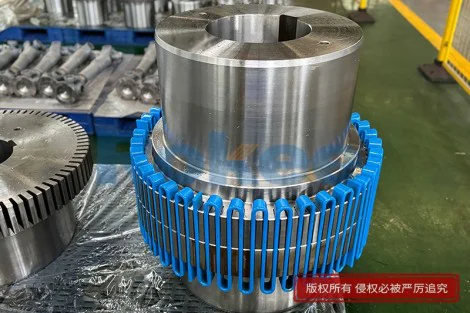
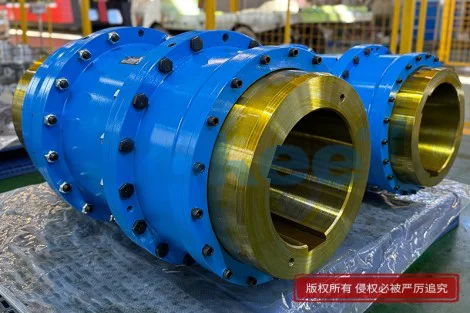
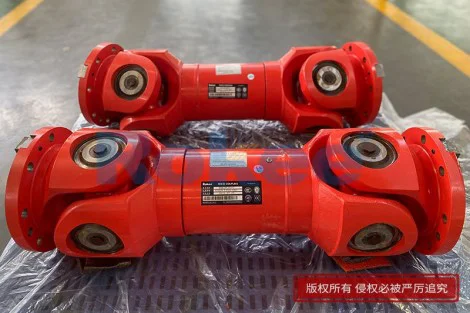
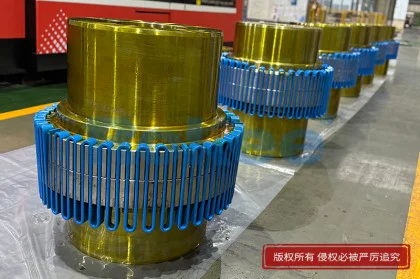
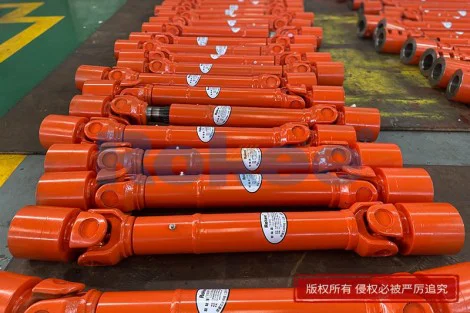
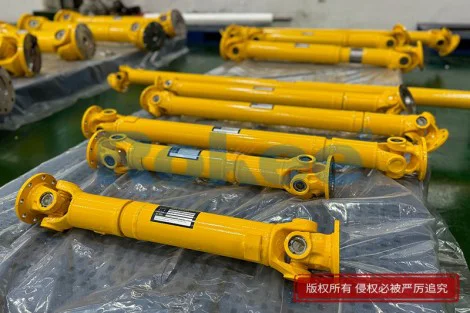
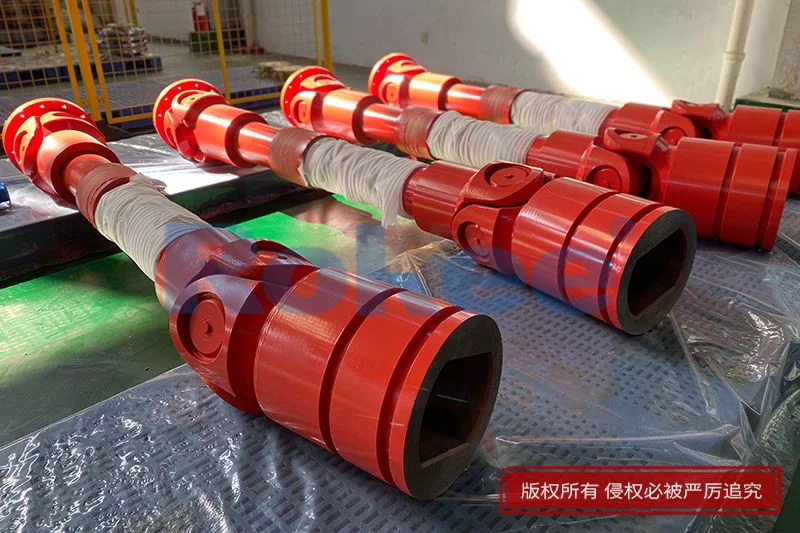
The cardan shaft coupling, also known as the universal joint coupling, addresses these challenges through its unique structural design and excellent transmission performance, thereby significantly improving the transmission efficiency of PUR sandwich panel machines. A typical cardan shaft coupling consists of two fork-shaped joints, a cross shaft, and needle roller bearings or plain bearings that ensure smooth rotation. This simple yet robust structure allows the coupling to connect two shafts that are not perfectly aligned, transmitting torque and rotational motion reliably even when there are angular, radial, or axial deviations between the shafts. Unlike rigid couplings that demand precise coaxial alignment, the cardan shaft coupling offers a high degree of flexibility, making it ideal for the complex operating conditions of PUR sandwich panel machines.
One of the key advantages of cardan shaft couplings is their ability to compensate for angular misalignment between shafts, which is a common issue in PUR sandwich panel machine. Due to the layout of the machine’s subsystems, the driving and driven shafts often intersect at an angle, and traditional couplings cannot handle this misalignment without sacrificing efficiency or causing wear. The cardan shaft coupling, however, can accommodate angular deviations of up to 25 degrees, depending on the design, allowing for smooth power transmission even when the shafts are not collinear. This angular compensation capability eliminates the need for precise alignment during installation, reducing setup time and ensuring that the machine can operate efficiently even with minor installation errors. Moreover, this flexibility helps to absorb vibrations generated during operation, reducing the impact of vibration on the transmission system and other machine components. Vibration is a major cause of energy loss in mechanical systems, as it converts useful mechanical energy into heat and noise. By absorbing these vibrations, cardan shaft couplings minimize energy waste and extend the service life of the machine’s components, further contributing to improved overall efficiency.
Another critical feature of cardan shaft couplings that enhances transmission efficiency is their high load-bearing capacity and low transmission loss. PUR sandwich panel machines require the transmission of significant torque to drive the various subsystems, especially the roll forming and lamination systems, which need to apply considerable pressure to shape and bond the materials. Cardan shaft couplings are typically made of high-strength alloy steel or heat-treated steel, which gives them excellent mechanical strength and wear resistance. Compared to other types of couplings with the same rotation diameter, cardan shaft couplings can transmit greater torque without deformation or failure. Additionally, the design of the cross shaft and bearings minimizes friction between moving parts, reducing energy loss due to friction. The transmission efficiency of a high-quality cardan shaft coupling can reach 98% to 99.8%, meaning that almost all of the power generated by the motor is transmitted to the executing components, rather than being wasted as heat or noise. This high transmission efficiency directly translates to lower energy consumption for the machine, reducing operational costs and improving sustainability.
The smooth and stable transmission provided by cardan shaft couplings also plays a crucial role in improving the efficiency of PUR sandwich panel machines. In the foaming process, the PUR raw materials are mixed and distributed onto the face sheets, and the speed and stability of the conveyor system directly affect the uniformity of the foam layer. Any fluctuations in transmission speed can cause uneven foam distribution, leading to defects such as inconsistent thickness or density. Cardan shaft couplings ensure that the power is transmitted evenly and stably, maintaining a constant speed throughout the production process. This stability is particularly important in the lamination process, where the face sheets and foam core are pressed together under high pressure. A stable transmission system ensures that the pressure is applied uniformly, resulting in strong adhesion between the layers and high-quality finished panels. By reducing product defects, cardan shaft couplings minimize the need for rework and waste, further improving production efficiency.
Flexibility and adaptability are additional benefits of cardan shaft couplings that contribute to the efficiency of PUR sandwich panel machines. Modern manufacturing requires equipment that can adapt to diverse product specifications, and PUR sandwich panel machines are no exception. They need to produce panels of different thicknesses, widths, and configurations, which involves adjusting the speed and torque of the various subsystems. Cardan shaft couplings have excellent flexibility, allowing for easy adjustment of the transmission parameters to accommodate different production requirements. Unlike rigid couplings, which are fixed in their transmission ratio, cardan shaft couplings can adapt to changes in speed and torque without compromising performance. This adaptability reduces the time required to switch between different product specifications, increasing the machine’s productivity and versatility. Additionally, cardan shaft couplings are easy to install and maintain, reducing downtime for maintenance and repairs. Their compact and rational structure makes them suitable for installation in confined spaces, which is often the case in PUR sandwich panel machines where space is limited.
To fully understand the impact of cardan shaft couplings on the transmission efficiency of PUR sandwich panel machines, it is helpful to consider the practical application scenarios. In a typical PUR sandwich panel production line, the uncoiling system feeds the face materials into the roll forming system, which shapes the sheets into the desired profile. The foaming system then distributes the PUR mixture onto the shaped face sheets, which are then fed into the lamination system where they are pressed together with the other face sheet. The finished panels are then cut to the required length by the cutting system. Each of these subsystems is connected by a transmission system, and the use of cardan shaft couplings ensures that power is transmitted efficiently between them. For example, the roll forming system requires a constant torque to shape the face sheets, and the cardan shaft coupling ensures that the torque is transmitted evenly, preventing the sheets from being deformed or damaged. The lamination system requires precise control of speed and pressure, and the stable transmission provided by the cardan shaft coupling ensures that the pressure is applied uniformly, resulting in strong adhesion between the layers.
In addition to improving transmission efficiency, cardan shaft couplings also contribute to the overall reliability and longevity of PUR sandwich panel machines. The ability to compensate for misalignment and absorb vibrations reduces the wear and tear on other components, such as motors, bearings, and gears. This reduces the frequency of maintenance and repairs, minimizing downtime and increasing the machine’s operational availability. The high load-bearing capacity and wear resistance of cardan shaft couplings also extend their service life, reducing the need for frequent replacement and lowering operational costs. Over time, the use of cardan shaft couplings can lead to significant cost savings for manufacturers, as they reduce energy consumption, minimize waste, and extend the life of the machine.
It is important to note that the performance of cardan shaft couplings in PUR sandwich panel machines depends on proper selection and installation. Manufacturers should choose cardan shaft couplings that are suitable for the specific torque, speed, and angular deviation requirements of their machines. The coupling should be made of high-quality materials to ensure durability and performance, and it should be installed correctly to maximize its efficiency. Proper lubrication is also essential to minimize friction and wear, ensuring smooth operation and extending the service life of the coupling. Regular maintenance, such as checking for wear, lubricating the bearings, and inspecting the cross shaft, can further enhance the performance and longevity of the cardan shaft coupling.
As the demand for PUR sandwich panels continues to grow, manufacturers are increasingly seeking ways to improve the efficiency and reliability of their production equipment. The cardan shaft coupling has emerged as a key component in this effort, offering a range of benefits that address the unique challenges of PUR sandwich panel production. Its ability to compensate for misalignment, transmit power efficiently, provide stable operation, and adapt to changing production requirements makes it an indispensable part of modern PUR sandwich panel machines. By reducing energy consumption, minimizing product defects, and extending the life of the machine, cardan shaft couplings help manufacturers improve their productivity, reduce costs, and stay competitive in the market.
In conclusion, the cardan shaft coupling plays a vital role in improving the transmission efficiency of PUR sandwich panel machines. Its unique structural design and excellent performance address the core challenges faced by the transmission systems of these machines, including misalignment, vibration, and the need for stable and flexible power transmission. By providing angular compensation, high load-bearing capacity, low transmission loss, and smooth operation, cardan shaft couplings enhance the overall efficiency of the production process, reduce energy consumption, and improve product quality. As manufacturing technology continues to advance, the use of cardan shaft couplings is likely to become even more widespread, helping to drive innovation and efficiency in the PUR sandwich panel industry. Manufacturers who invest in high-quality cardan shaft couplings and ensure their proper installation and maintenance will be better positioned to meet the growing demand for high-quality PUR sandwich panels and achieve long-term success in the market.