Efficient Transmission Of PUR Panel Production Line Relies On Universal Coupling
The production of PUR panels is a complex and continuous process that integrates multiple mechanical, electrical, and chemical technologies, requiring precise coordination between various subsystems to ensure stable and efficient operation. From the uncoiling of facing materials and roll forming to the preheating, PUR foaming, lamination, curing, and final cutting, every link depends on reliable power transmission to maintain consistent product quality and production efficiency. Among the numerous components that constitute the transmission system of the PUR panel production line, the universal coupling stands out as an indispensable core part, whose unique structural design and excellent transmission performance directly determine the overall operational level of the production line. Without the stable support of universal couplings, the transmission system would face frequent failures, leading to reduced production efficiency, increased product defects, and even prolonged shutdowns, which would bring significant losses to the production process. Therefore, understanding the role of universal couplings in the efficient transmission of PUR panel production lines, mastering their structural characteristics and application principles, is of great practical significance for optimizing production processes, improving production efficiency, and reducing operational costs.
To fully grasp the importance of universal couplings in PUR panel production lines, it is first necessary to clarify the working characteristics of the production line and the core challenges faced by its transmission system. A modern PUR panel production line is a highly automated continuous production system that integrates multiple technologies such as mechanics, electronics, hydraulics, and chemical reactions. It consists of several key subsystems, including the uncoiling system, roll forming system, preheating system, foaming system, double-belt lamination system, curing system, cutting system, and conveying system. Each subsystem is driven by an independent power source, and the power needs to be accurately and stably transmitted to various executive components to ensure that the entire production line operates in a synchronized and coordinated manner. The transmission system of the PUR panel production line faces unique challenges due to the particularity of the production process. Firstly, due to the limitations of the production process and the overall structure of the equipment, the installation positions of each subsystem are often not on the same axis, resulting in angular deviations, parallel offsets, or axial displacements between the driving shaft and the driven shaft. This misalignment is inevitable and requires the transmission component to have a certain compensation capacity to ensure stable power transmission. Secondly, during long-term continuous operation, the equipment will generate vibration and thermal expansion, which will further change the relative position of the shafts, putting higher requirements on the flexibility and adaptability of the transmission component. Thirdly, the production process of PUR panels has strict requirements on the stability and uniformity of power transmission. Especially in the foaming and lamination links, even slight fluctuations in transmission speed or torque will affect the density of the PUR foam core and the bonding effect between the core and the facing materials, thereby reducing product quality and increasing the rate of defective products. Fourthly, the production line needs to adapt to the production of PUR panels of different specifications and thicknesses, which involves adjusting the speed and torque of each subsystem. This requires the transmission component to have good flexibility and adjustability to quickly respond to production changes.
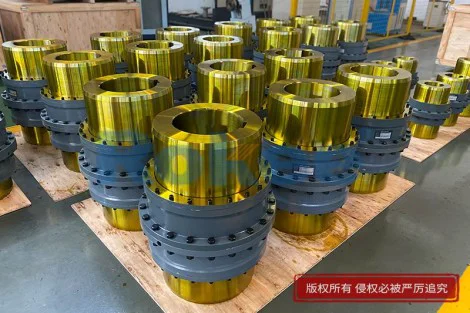
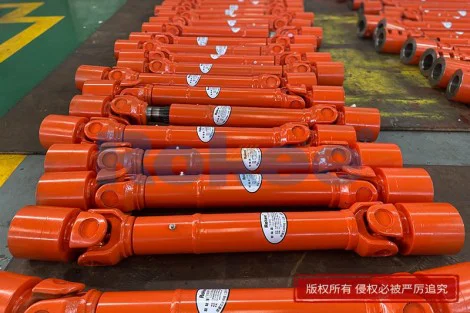
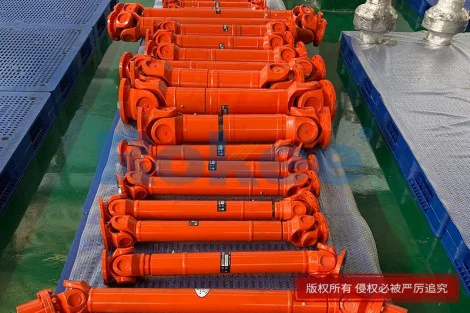
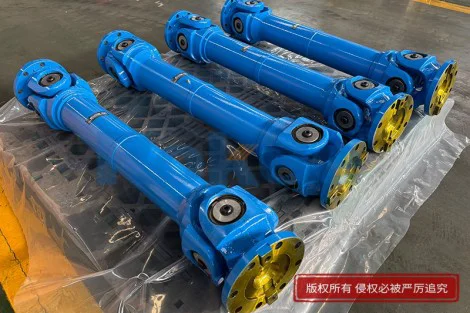
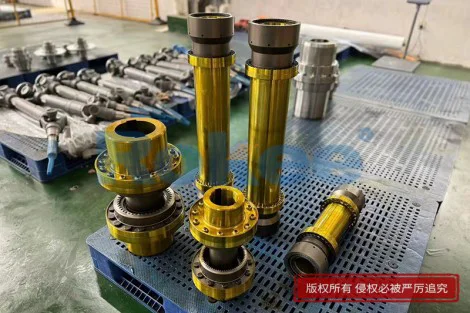
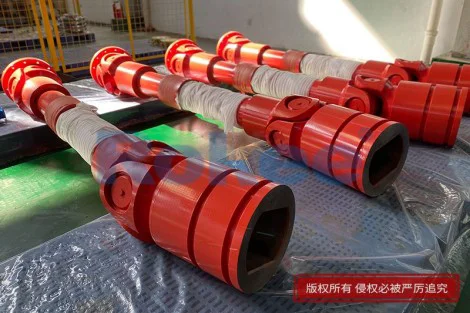
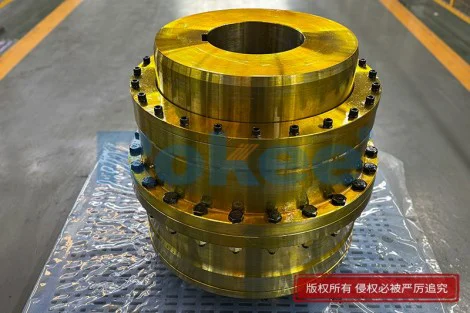
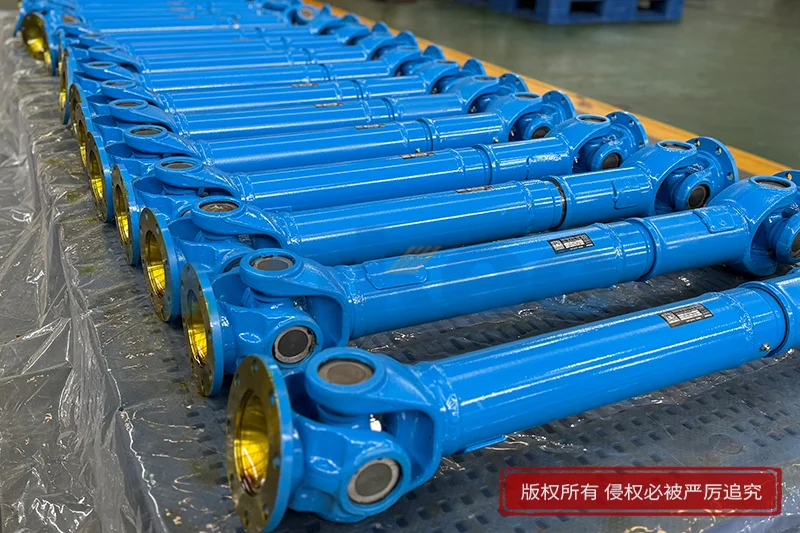
The universal coupling, also known as the universal joint coupling, can perfectly solve the above challenges with its unique structural advantages and excellent transmission performance, becoming the core component of the transmission system of the PUR panel production line. The basic structure of the universal coupling is composed of a cross joint, yoke assemblies, bearings, and fasteners. The cross joint is the core part of the coupling, with four bearing points that allow rotational movement in multiple planes, enabling the coupling to accommodate angular misalignment between the input and output shafts while maintaining the integrity of power transmission. The yoke assemblies are the main connection points between the universal coupling and the connected shafts, responsible for transferring rotational forces. They are usually made of high-strength steel alloys to withstand significant torsional stresses and maintain precise alignment with the respective shaft systems. The bearings installed at the connection between the cross joint and the yoke ensure smooth rotation and reduce friction during operation, extending the service life of the coupling. The overall structure of the universal coupling is compact, occupies a small space, and does not require complex installation and debugging procedures, which can be easily adapted to the limited installation space of the PUR panel production line.
The key advantage of the universal coupling in the transmission system of the PUR panel production line lies in its excellent misalignment compensation capacity. In the actual operation of the production line, due to the layout of the equipment and the influence of thermal expansion and vibration, the shafts of each subsystem often have a certain degree of angular misalignment, parallel offset, or axial displacement. The universal coupling can flexibly adapt to these displacements through its cross joint structure, ensuring that the power is stably transmitted from the driving shaft to the driven shaft without being affected by misalignment. Compared with other types of couplings, the universal coupling has a wider range of misalignment compensation, which can effectively reduce the installation accuracy requirements of the equipment, reduce the difficulty of installation and debugging, and save installation time and costs. For example, in the connection between the roll forming system and the conveying system of the PUR panel production line, due to the structural limitation, the two shafts cannot be perfectly aligned, and the universal coupling can easily solve this problem, ensuring the synchronized operation of the two systems and avoiding the phenomenon of material jamming or uneven forming caused by asynchronous operation.
Another important advantage of the universal coupling is its stable torque transmission performance, which is crucial for the production of PUR panels. The production process of PUR panels requires that each subsystem maintains a stable speed and torque, especially in the foaming link. The foaming of PUR raw materials requires a stable mixing speed and uniform material feeding, which depends on the stable transmission of the foaming machine's power. The universal coupling has a direct force transmission path and low transmission loss, which can stably transmit torque of different magnitudes, ensuring that the speed and torque of each subsystem remain stable during operation. Even under the condition of fluctuating loads, the universal coupling can still maintain stable transmission performance, avoiding the phenomenon of slipping or idling, thus ensuring the stability of the production process and the consistency of product quality. In addition, the universal coupling has high rotational accuracy, low vibration, and low noise during operation, which can reduce the impact of equipment vibration on the production line, protect other components of the equipment, and extend the overall service life of the production line.
The durability and adaptability of the universal coupling also make it suitable for the harsh operating environment of the PUR panel production line. The production process of PUR panels involves high-temperature preheating and curing links, and the equipment is often in a working environment with high temperature, dust, and slight corrosion. The universal coupling is usually made of high-strength steel alloys, which have undergone forging, heat treatment, precision cutting, and other multiple processes, greatly improving its hardness, wear resistance, and corrosion resistance. The bearings and other components of the coupling are also treated with special anti-corrosion and high-temperature resistance, ensuring that they can stably operate in harsh environments without frequent failure. At the same time, the universal coupling has a simple structure and few wearing parts, which is convenient for maintenance and replacement. Only regular lubrication and inspection are needed to ensure its long-term stable operation, reducing the maintenance cost and downtime of the production line.
In the actual application of the PUR panel production line, the selection and installation of universal couplings also need to be carried out according to the specific working conditions to give full play to their performance advantages. When selecting a universal coupling, it is necessary to comprehensively consider the torque, speed, misalignment range, and working environment of the transmission system, and select the appropriate type and specification of the coupling. For example, in the heavy-load transmission links such as the main drive system of the production line, a universal coupling with strong load-bearing capacity should be selected; in the high-speed transmission links such as the cutting system, a universal coupling with high rotational accuracy and stable transmission should be selected. In the installation process, it is necessary to ensure the correct installation of the coupling, adjust the alignment of the shafts as much as possible, and avoid excessive misalignment exceeding the compensation range of the coupling, which will lead to increased wear and reduced service life. At the same time, attention should be paid to the tightness of the fasteners to prevent loosening during operation, which will affect the transmission effect.
Regular maintenance and maintenance of universal couplings are important guarantees for the efficient operation of the PUR panel production line. During the long-term operation of the production line, the universal coupling will inevitably have wear and tear, such as wear of bearings, loosening of fasteners, and oil leakage. Therefore, it is necessary to establish a regular maintenance system, regularly inspect the operation status of the coupling, and timely find and solve potential problems. The specific maintenance work includes: regularly lubricating the bearings and cross joints of the coupling, selecting appropriate lubricating grease according to the working environment, and ensuring that the lubrication is sufficient to reduce friction and wear; regularly checking the tightness of the fasteners, and retightening them in time if there is loosening; regularly inspecting the wear of the coupling components, and replacing the worn parts in time if there are scratches, indentations, or cracks to avoid further damage to the coupling; regularly cleaning the coupling to remove dust and debris on the surface, ensuring that the coupling operates in a clean environment. Through regular maintenance and maintenance, the service life of the universal coupling can be effectively extended, the failure rate of the transmission system can be reduced, and the continuous and stable operation of the PUR panel production line can be ensured.
With the continuous development of the PUR panel industry, the requirements for production efficiency and product quality are getting higher and higher, which puts forward higher requirements for the transmission system of the production line. As the core component of the transmission system, the universal coupling is also constantly developing and upgrading. In recent years, with the progress of machining technology and material science, the structural design of universal couplings has become more reasonable, the performance has become more excellent, and the application range has become wider. For example, the emergence of double universal couplings has solved the problem of uneven speed transmission of single universal couplings, making the transmission more stable and suitable for high-precision transmission scenarios; the application of new materials has further improved the wear resistance, corrosion resistance, and high-temperature resistance of universal couplings, making them more suitable for the harsh working environment of PUR panel production lines. At the same time, with the popularization of intelligent production, the combination of universal couplings and intelligent monitoring systems has become a new development trend. Through the installation of sensors on the coupling, the operation status of the coupling can be monitored in real time, such as temperature, vibration, and torque, and potential failures can be predicted in advance, providing a strong guarantee for the intelligent operation and maintenance of the production line.
In conclusion, the efficient transmission of the PUR panel production line is inseparable from the support of universal couplings. The universal coupling, with its unique structural design, excellent misalignment compensation capacity, stable torque transmission performance, and strong durability, solves the key challenges faced by the transmission system of the PUR panel production line, ensures the synchronized and stable operation of each subsystem, improves production efficiency, reduces product defects, and reduces operational costs. In the actual production process, selecting the appropriate universal coupling, correctly installing and maintaining it, can give full play to its performance advantages, promote the healthy and stable development of the PUR panel production industry. With the continuous progress of technology, the universal coupling will be further optimized and upgraded, and will play a more important role in the efficient transmission of the PUR panel production line, contributing more to the development of the industry.