Diaphragm Coupling Ensures Continuous And Stable Operation Of Insulated Panel Production Line
In the modern industrial production system, the insulated panel production line plays an irreplaceable role in the construction, refrigeration, and industrial fields, relying on its efficient production capacity to provide high-performance insulated materials for various industries. The stable operation of the entire production line directly determines the quality of insulated panels, production efficiency, and economic benefits of enterprises. Among the numerous components that make up the production line, the diaphragm coupling, as a key transmission part, undertakes the important task of connecting power equipment and working machinery, transmitting torque stably, and compensating for shaft deviations. Its performance and reliability directly affect whether the insulated panel production line can operate continuously and stably, and it has become an indispensable core component in the production process.
Insulated panels are widely used in building exterior walls, roofs, cold storage, mobile houses, and other fields due to their excellent thermal insulation, sound absorption, fire resistance, and waterproof properties. The production of insulated panels is a complex systematic project that involves multiple processes such as raw material handling, mixing and foaming, lamination and molding, cutting, and packaging. Each process is closely connected, and the normal operation of each link depends on the stable transmission of power. From the raw material conveying system to the mixing and foaming module, from the lamination and molding equipment to the final cutting and stacking system, all need reliable power transmission to ensure the coordination and synchronization of each process. Once the power transmission is interrupted or unstable, it will cause the entire production line to shut down, resulting in product defects, reduced production efficiency, and increased production costs. Therefore, choosing a suitable transmission component is crucial to ensuring the continuous and stable operation of the insulated panel production line.
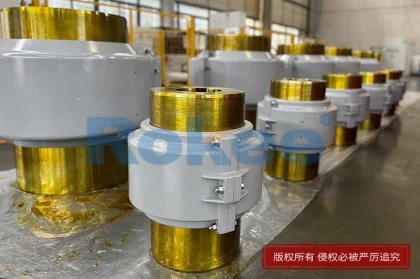
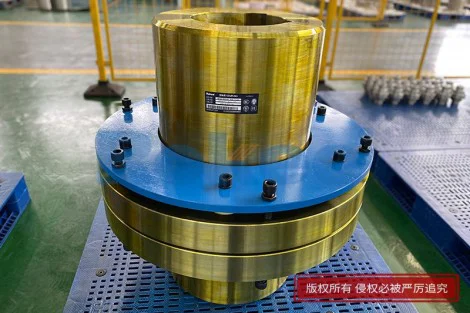
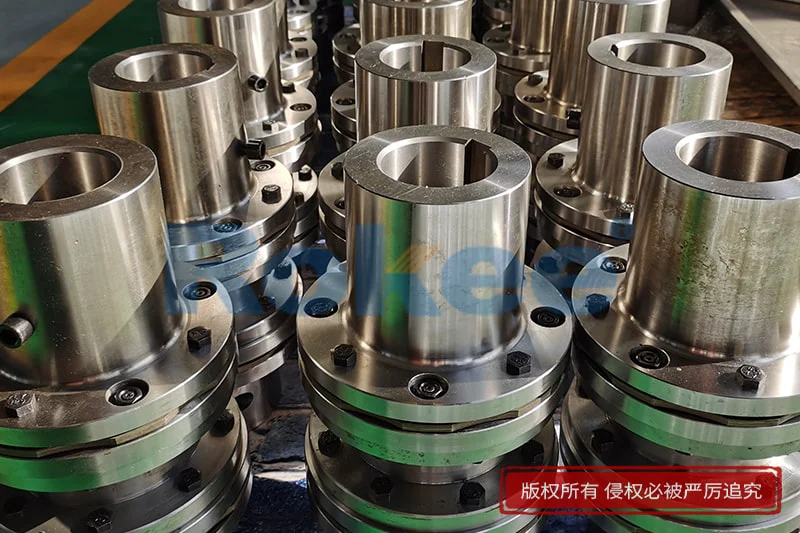
The diaphragm coupling, as a high-performance metal elastic flexible coupling, has gradually replaced traditional couplings in the insulated panel production line due to its unique structural advantages and excellent performance. Unlike traditional rigid couplings that have no compensation capacity, the diaphragm coupling uses a diaphragm group composed of multiple layers of stainless steel thin plates as the core elastic element, which can achieve flexible transmission while transmitting torque. The basic structure of the diaphragm coupling includes a metal diaphragm group, connecting components, and shaft sleeves or hubs. The metal diaphragm group is usually formed by stacking multiple layers of stainless steel thin plates, which have good elasticity and fatigue resistance. The connecting components include staggered bolt assemblies, flanges, and buffer sleeves. The bolts pass through the diaphragm holes and flange holes, and are tightened with nuts after matching with buffer sleeves and elastic washers to ensure a firm connection. The shaft sleeve or hub is used to connect the transmission shaft and the diaphragm group, and is designed with different connection methods such as keyways, clamping mechanisms, or cone sleeves to adapt to various shaft end forms.
The working principle of the diaphragm coupling is based on the elastic deformation characteristics of the metal diaphragm. When the driving shaft rotates, the torque is transmitted to the diaphragm through the bolt group, and the diaphragm undergoes elastic deformation under the action of torque, thereby transmitting the torque to the driven shaft. This flexible transmission method not only ensures the efficient transmission of torque but also can effectively compensate for the relative displacement between the two shafts, including axial, radial, and angular deviations. In the insulated panel production line, due to factors such as manufacturing errors of equipment components, installation deviations, thermal expansion and contraction during operation, and bearing deformation, it is inevitable that there will be relative displacement between the shafts of power equipment and working machinery. If such displacement cannot be effectively compensated, it will cause additional stress on the transmission system, leading to increased wear of components, increased vibration and noise, and even damage to equipment in severe cases. The diaphragm coupling can effectively solve this problem through the elastic deformation of the diaphragm, reduce the impact of shaft deviation on the transmission system, and ensure the stable operation of the production line.
The high-precision transmission performance of the diaphragm coupling provides an important guarantee for the quality of insulated panels. The production of insulated panels has strict requirements on the precision of each process. For example, in the mixing and foaming process, the mixing speed and uniformity of raw materials directly affect the foaming effect and thermal insulation performance of the panel core; in the lamination and molding process, the speed synchronization of the upper and lower conveyor belts determines the flatness and thickness uniformity of the insulated panels. The diaphragm coupling has a transmission efficiency of up to 99.86%, with no rotational clearance, which can accurately transmit speed and torque, ensuring that each equipment in the production line operates at the set speed and torque, and maintaining the coordination and synchronization of the entire production process. Compared with traditional gear couplings, which have problems such as rotational clearance and easy wear, the diaphragm coupling can avoid the impact of transmission errors on product quality, making the thickness, flatness, and thermal insulation performance of the produced insulated panels more stable and consistent.
The maintenance-free design of the diaphragm coupling greatly reduces the downtime of the insulated panel production line and improves production efficiency. In the traditional insulated panel production line, the used couplings often require regular lubrication and maintenance. For example, gear couplings need to be filled with lubricating oil regularly to reduce wear between gears. However, frequent lubrication not only increases the labor intensity of maintenance personnel but also may cause oil leakage, which pollutes the production environment and raw materials, affecting the quality of insulated panels. The diaphragm coupling adopts a full-metal structure, which does not require lubrication and sealing during operation. It avoids the trouble of regular lubrication and the risk of oil pollution, and only needs simple regular inspection to ensure its normal operation. This maintenance-free design reduces the maintenance cost of the production line, shortens the maintenance time, and ensures that the production line can operate continuously for a long time, effectively improving production efficiency and reducing economic losses caused by downtime.
The excellent environmental adaptability of the diaphragm coupling enables it to work stably in the complex working environment of the insulated panel production line. The insulated panel production line often involves the use of various raw materials, including polymers, inorganic fibers, foaming agents, catalysts, etc. Some raw materials may have certain corrosiveness, and the production process may generate a certain amount of dust and temperature changes. The diaphragm coupling is usually made of stainless steel, which has good corrosion resistance, acid and alkali resistance, and can work stably in corrosive environments. At the same time, it has a wide temperature resistance range, which can adapt to the temperature changes during the production process (from -80 ℃ to +300 ℃), and will not be affected by temperature changes to reduce its performance. In addition, the compact structure of the diaphragm coupling makes it small in size and light in weight, which can save installation space, especially suitable for the limited installation space of some key equipment in the insulated panel production line. Its good sealing performance can prevent dust and impurities from entering the interior of the coupling, avoiding wear of components and ensuring the long-term stable operation of the coupling.
The vibration and noise reduction performance of the diaphragm coupling plays an important role in improving the operating environment of the production line and extending the service life of equipment. The insulated panel production line involves multiple high-power equipment, such as motors, pumps, and compressors. During operation, these equipment will generate a certain amount of vibration and noise, which not only affects the working environment of workers but also may cause resonance between equipment, leading to increased wear of components and reduced service life of equipment. The elastic properties of the diaphragm in the diaphragm coupling can effectively absorb vibration and impact, reduce the transmission of vibration between equipment, and reduce the noise generated during the operation of the production line to below 65dB(A). This not only improves the working environment of workers but also reduces the additional stress on the production line equipment, extends the service life of the equipment, and reduces the frequency of equipment replacement and maintenance, further reducing production costs.
The safety and reliability of the diaphragm coupling provide a strong guarantee for the safe operation of the insulated panel production line. In industrial production, safety is the top priority. The diaphragm coupling has good overload protection performance. When the torque exceeds the design value, the diaphragm will undergo significant elastic deformation, which can play a certain role in overload protection, avoiding damage to the power equipment and working machinery due to excessive torque. Even if the diaphragm is damaged accidentally, the coupling can usually maintain short-term transmission, avoiding sudden shutdown of the production line, which provides valuable time for maintenance personnel to handle faults and reduces the losses caused by sudden shutdown. In addition, after precision dynamic balancing treatment, the diaphragm coupling has good balance performance, and the maximum speed can reach 6000 r/min, which can adapt to the high-speed operation of the production line equipment and avoid vibration and noise caused by unbalanced rotation.
In the actual application process of the insulated panel production line, the correct installation and regular inspection of the diaphragm coupling are crucial to ensuring its performance and service life. When installing the diaphragm coupling, it is necessary to first clean the end faces of the two shafts to ensure that there is no dirt or debris, and check the matching of the keyways on the end faces. Then, the coupling is installed according to the installation requirements, and the bolts are tightened in stages with a torque wrench (first 50% of the rated torque, then 100% of the rated torque) to ensure that the flange clearance is between 0.2-0.3 mm. At the same time, it is necessary to adjust the shaft center deviation within the allowable range. When multiple deviations coexist, the compensation amount should be controlled at 50% of the allowable value. It is recommended to set the shaft center deviation within 1/3 of the allowable value to prolong the service life of the coupling. After installation, the coupling should be run normally for one shift, and all bolts should be checked. If any looseness is found, it should be tightened in time, and this operation should be repeated for several shifts to ensure that the bolts do not loosen.
Regular inspection is an important part of ensuring the stable operation of the diaphragm coupling. During the operation of the production line, maintenance personnel should regularly check the diaphragm coupling for abnormal phenomena, such as whether the diaphragm has fatigue cracks, plastic deformation, or corrosion, whether the connecting bolts are loose or damaged, and whether there is abnormal vibration or noise during operation. It is recommended to stop the machine every 5000 hours to inspect the diaphragm for fatigue cracks. For the diaphragm coupling used in corrosive environments, it is necessary to regularly clean the surface of the coupling to remove accumulated dust and corrosive substances, and apply molybdenum disulfide coating or anti-friction coating on the surface of the diaphragm to prevent fretting wear during high-speed operation, which may lead to micro-cracks and damage to the diaphragm bolt holes. If any abnormal phenomenon is found, it should be stopped in time for inspection and maintenance to avoid further expansion of the fault and affect the operation of the production line.
The application of diaphragm coupling in the insulated panel production line has brought significant economic and social benefits to enterprises. By ensuring the continuous and stable operation of the production line, the diaphragm coupling reduces the downtime and maintenance costs of the production line, improves production efficiency and product quality, and enhances the market competitiveness of enterprises. At the same time, the maintenance-free design of the diaphragm coupling reduces the labor intensity of maintenance personnel, improves the working environment, and conforms to the development concept of green and efficient production. In the context of the increasing demand for insulated panels in the market and the continuous improvement of production automation, the role of diaphragm coupling in the insulated panel production line will become more and more important. With the continuous progress of technology, the performance of diaphragm coupling will be further optimized, and its application scope will be more extensive, providing a more reliable guarantee for the development of the insulated panel industry.
In conclusion, the diaphragm coupling, as a key transmission component of the insulated panel production line, relies on its unique structural advantages and excellent performance, such as high-precision transmission, maintenance-free design, good environmental adaptability, vibration and noise reduction, and safety and reliability, to effectively ensure the continuous and stable operation of the production line. It not only solves the problems of shaft deviation, vibration, and noise in the power transmission process but also improves production efficiency, reduces production costs, and ensures product quality. For enterprises engaged in the production of insulated panels, choosing a suitable diaphragm coupling and doing a good job in its installation, inspection, and maintenance is an important measure to improve production efficiency and economic benefits. With the continuous development of the insulated panel industry, the diaphragm coupling will play a more important role in the future, contributing to the sustainable development of the industry.