Maintenance Cost Control Of Universal Driveshaft For PU Sandwich Panel Line
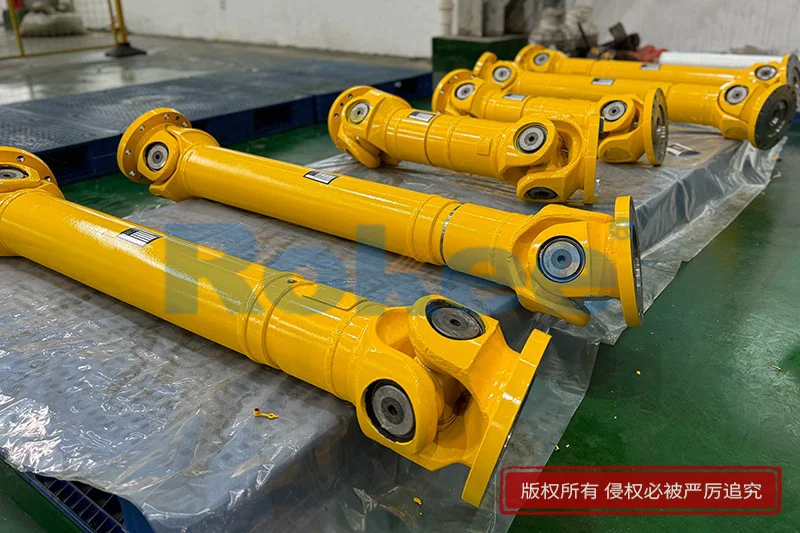
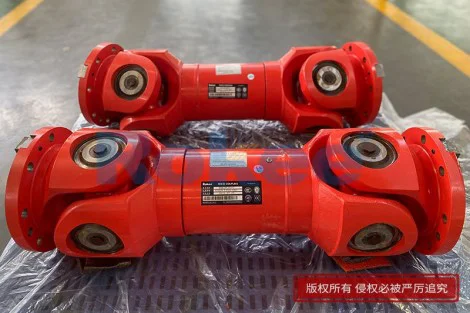
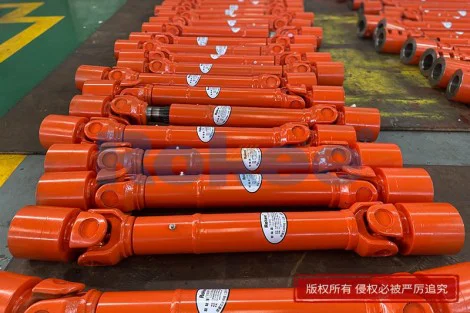
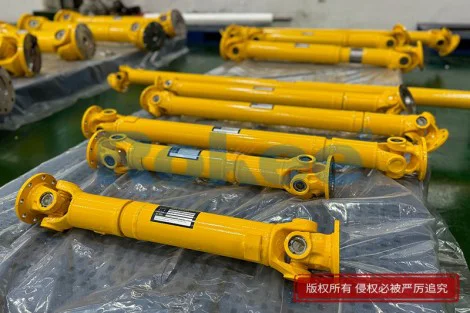
In the continuous and high-intensity operation of PU sandwich panel production lines, the universal driveshaft serves as a core transmission component that connects various driving and driven mechanical units, undertaking the task of torque transmission and rotational power distribution throughout the production process. The stable operation of this component directly determines the continuity of panel forming, foaming, and cutting procedures, while its maintenance status profoundly affects the overall operational cost and economic benefit of the entire production system. Unlike general mechanical transmission parts, the universal driveshaft of PU sandwich panel line operates in a long-term alternating load environment, accompanied by persistent dust accumulation, slight temperature fluctuation caused by PU foaming reaction, and frequent start-stop impacts in batch production. These special working conditions accelerate component wear, fatigue aging and functional degradation, leading to frequent maintenance, premature part replacement and unplanned production downtime if lacking scientific and standardized management, which will form invisible and repeated cost consumption in daily production. Therefore, systematic and refined maintenance cost control for universal driveshafts has become a key link in reducing the comprehensive operating cost of PU sandwich panel production lines and improving equipment operation efficiency.
Most production enterprises currently adopt passive maintenance modes for universal driveshafts, relying on post-fault repair and regular blind part replacement rather than condition-based proactive maintenance, which is the primary cause of excessive maintenance cost input. In actual production scenarios, many equipment management personnel only carry out emergency maintenance when the driveshaft generates abnormal vibration, harsh operating noise, torque transmission lag or obvious operational failure. This passive maintenance method often leads to secondary damage of matching components. For instance, minor wear of cross trunnions and needle bearings, if not detected and processed in a timely manner, will gradually expand into structural clearance increase, shaft body eccentricity and transmission unbalance. The continuous operation of damaged components will further cause abrasion of shaft yokes, deformation of connecting structures and even damage to adjacent transmission equipment, transforming simple and low-cost routine maintenance into complex and high-cost overall repair and component replacement. Meanwhile, sudden driveshaft failures will force the production line to suspend operation, disrupting the continuous production rhythm of PU sandwich panels. The production stagnation period not only loses effective output benefits but also generates additional invisible costs such as idle labor, delayed order delivery and increased production scheduling pressure, which far exceeds the direct maintenance cost of the component itself.
Irregular and non-standard daily maintenance operations are another important factor leading to increased maintenance costs of universal driveshafts. Lubrication is the most basic and critical daily maintenance item for universal driveshafts, yet irregular lubrication operations widely exist in actual production. Some production teams fail to formulate fixed lubrication cycles based on equipment operating intensity and working environment, resulting in either excessive lubrication or insufficient lubrication. Insufficient grease filling will cause direct friction between internal moving parts, accelerating wear and shortening component service life, while excessive lubrication will lead to grease overflow, adhesion of workshop dust and debris, formation of abrasive dirt layers on the shaft surface and internal gaps, and further aggravation of mechanical wear. In addition, unreasonable selection of lubricants also brings hidden troubles for cost control. Using lubricants that do not match the operating temperature, load intensity and rotating speed of the driveshaft will cause poor lubrication effect, rapid grease deterioration and failure to form effective protective oil films, resulting in frequent lubrication replacement and accelerated component aging. Moreover, many maintenance personnel lack standardized operation awareness during daily inspection and maintenance, ignoring fine inspection of key structures such as sealing parts, connecting gaps and shaft body straightness. Long-term neglect of slight seal aging and micro-leakage problems will lead to intrusion of dust, moisture and chemical impurities generated by PU foaming into the internal transmission structure, causing corrosion, rust and bearing jamming, which greatly increases the difficulty and cost of later maintenance.
Unreasonable component replacement strategies and lack of professional fault judgment ability also lead to unnecessary waste of maintenance costs. In the maintenance process of universal driveshafts, there is a common phenomenon of over-maintenance and blind replacement. Some enterprises replace the entire driveshaft assembly when local parts such as individual universal joints, bearings and sealing rings are slightly worn, out of worry about subsequent equipment failure and lack of accurate fault diagnosis capability. This one-size-fits-all replacement mode greatly improves the unit maintenance cost, as most of the structural parts of the driveshaft are still in normal service state and can maintain stable operation after local part repair and replacement. On the contrary, some teams adopt excessive economical maintenance, adhering to delayed replacement for aging and severely worn components, and only carry out simple debugging and repair to maintain temporary operation. This behavior will lead to repeated faults of the driveshaft in a short cycle, requiring frequent shutdown maintenance and repeated labor and material input. The cumulative maintenance cost is far higher than the reasonable replacement cost of aging components. In addition, incorrect disassembly and assembly operations during maintenance will cause artificial damage to the driveshaft structure, such as asymmetric assembly of universal joints, excessive fastening of connecting bolts and deviation of shaft body installation angle, which will lead to increased operational vibration, unbalanced torque transmission and accelerated fatigue damage of components, forming a vicious cycle of frequent maintenance and rising costs.
To achieve effective maintenance cost control of universal driveshafts for PU sandwich panel lines, enterprises must first establish a complete proactive maintenance system to replace the traditional passive fault maintenance mode. The core of proactive maintenance lies in regular condition inspection and real-time operation monitoring, so as to discover potential faults in the early stage of component wear and carry out low-cost preventive treatment. Enterprises can formulate targeted inspection cycles and inspection standards according to the continuous operation characteristics of PU sandwich panel production lines. Weekly routine visual inspection and operational state detection should be implemented, focusing on checking whether the driveshaft has surface abrasion, seal damage, grease leakage and structural deformation, and observing whether there is abnormal vibration and noise during equipment operation under load. Regular professional detection should be carried out every certain operating hours, including detection of axial and radial clearance of bearings, straightness of shaft body, matching precision of universal joint structures and transmission stability under different operating speeds. Through hierarchical and regular inspection, early minor faults can be eliminated in the bud, avoiding the expansion of fault damage and the generation of high-cost emergency maintenance. At the same time, operation monitoring records should be established for each driveshaft to track its operating state, maintenance records and component aging rules, so as to formulate scientific maintenance and replacement plans, realize precise maintenance and avoid blind maintenance investment.
Standardizing daily lubrication and maintenance operations is the key to reducing the natural wear rate of universal driveshafts and cutting long-term maintenance costs. Enterprises need to formulate unified lubrication management standards based on the actual working conditions of PU sandwich panel production lines. For the driveshafts operating in high-frequency continuous production, dust-prone and slight temperature fluctuation environments, a fixed lubrication cycle should be formulated, and the lubrication cycle should be dynamically adjusted according to the actual operating load. High-quality lubricants matching the equipment operating conditions should be selected to ensure good high-temperature stability, dust resistance and wear resistance, which can effectively form protective oil films on the surface of moving parts, reduce friction loss and prevent impurity erosion. In the lubrication operation, standardized filling processes must be followed to avoid insufficient or excessive grease filling, and the overflowing grease and accumulated dust on the shaft surface should be cleaned in a timely manner to keep the external structure of the driveshaft clean and tidy. In addition, regular cleaning and maintenance of the driveshaft and its matching structures should be increased to remove residual dust, debris and trace chemical attachments generated in the production process, prevent long-term adhesion from causing structural corrosion and transmission unbalance, and maintain the optimal operating state of the driveshaft for a long time, thereby extending the service cycle of components and reducing the frequency of part replacement.
Optimizing component replacement strategies and improving fault diagnosis and maintenance professionalism can effectively avoid unnecessary maintenance cost waste. Enterprises need to train professional equipment maintenance personnel to master the structural characteristics, failure modes and aging rules of universal driveshafts, so as to realize accurate fault judgment and differentiated maintenance treatment. For local minor faults such as single bearing wear, slight seal damage and individual universal joint clearance increase, targeted local part replacement and repair should be adopted instead of overall assembly replacement, so as to maximize the utilization rate of intact components and reduce material maintenance costs. For components that have reached the aging service cycle, have structural fatigue deformation or have multiple faulty parts, overall standardized replacement should be carried out in a timely manner to avoid repeated faults caused by delayed replacement and reduce the invisible cost of downtime loss. At the same time, standardized disassembly and assembly operation specifications should be formulated to standardize the installation angle, bolt fastening force and structural matching precision of the driveshaft, avoid artificial structural damage caused by irregular operation, ensure the stability of post-maintenance equipment operation, and reduce the failure recurrence rate. Regular professional skill training and operation assessment should be carried out for maintenance personnel to continuously improve their maintenance precision and standardized operation awareness, laying a human resource foundation for long-term cost control.
In addition to daily maintenance optimization, long-term equipment operation management optimization can further reduce the comprehensive maintenance cost of universal driveshafts. In actual production operation, unreasonable equipment operation modes are also important inducements for accelerated driveshaft wear. Frequent overload operation, rapid start-stop and long-term high-speed no-load operation will increase the alternating load and impact force of the driveshaft, accelerating component fatigue aging. Therefore, enterprises need to standardize the equipment operation process, require operators to start and stop equipment smoothly, avoid long-term overload operation and frequent frequent start-stop operations, and maintain stable operating load and speed of the driveshaft, so as to reduce mechanical impact and friction loss. Meanwhile, the overall operating environment of the production line should be optimized, regular dust removal and environmental cleaning should be done in the production workshop, and effective isolation and protection measures should be taken for the driveshaft installation position to reduce the erosion of dust, moisture and chemical substances, improve the operating environment of the driveshaft, and slow down the aging and wear speed of components.
The maintenance cost control of universal driveshafts for PU sandwich panel lines is a systematic long-term management work, which covers daily inspection, standardized maintenance, precise fault treatment, standardized operation and long-term equipment management. The core of cost control is not to blindly reduce maintenance investment, but to eliminate invalid and wasteful cost input through scientific management and standardized operation, realize precise investment of maintenance resources, and reduce the comprehensive cost caused by equipment faults, component aging and downtime loss. For PU sandwich panel production enterprises, effective driveshaft maintenance cost control can not only reduce daily equipment maintenance and replacement costs, but also ensure the continuous and stable operation of the production line, improve production continuity and product qualification rate, and create greater long-term economic benefits for enterprises. In the future production and equipment management process, enterprises need to continuously optimize the maintenance management system according to the actual production conditions and equipment operation rules, summarize maintenance experience, improve the refined management level of transmission components, and realize the dual goals of stable equipment operation and controllable comprehensive production cost.