Toothed Coupling Optimizes Transmission Of PU Sandwich Panel Line To Improve Quality And Efficiency
In the modern construction and industrial fields, PU sandwich panels have become an indispensable material due to their excellent thermal insulation, light weight, high structural strength, and good fire resistance. These panels, composed of two outer facing materials and a rigid PU foam core, are widely used in external walls, roofs, cold storage facilities, prefabricated buildings, and other scenarios, driving the continuous upgrading of their production technology. The PU sandwich panel production line is a complex integrated system that involves multiple consecutive processes, including uncoiling of facing materials, roll forming, preheating, PU foaming, lamination, curing, and cutting. Each link requires precise and stable power transmission to ensure the consistency of product quality and the efficiency of the entire production process. Among the numerous components that constitute the transmission system of the production line, the toothed coupling stands out as a key core component, whose unique structural design and excellent transmission performance effectively solve the pain points of traditional transmission components, optimize the overall operation of the production line, and ultimately achieve the dual improvement of product quality and production efficiency.
To understand the role of toothed couplings in optimizing the transmission of PU sandwich panel production lines, it is first necessary to clarify the working characteristics of the production line and the core challenges faced by its transmission system. A modern PU sandwich panel production line is a high-speed, continuous, and automated production system that integrates mechanical, electrical, hydraulic, and chemical reaction technologies. It requires the coordinated operation of multiple subsystems, such as the uncoiling system, roll forming system, foaming system, double-belt lamination system, cutting system, and conveying system. Each subsystem is driven by an independent power source, and the power needs to be accurately and stably transmitted to various executive components to ensure that the entire production line operates in a synchronized manner. The transmission system of the production line is faced with several key challenges: first, due to the limitations of the production process and the overall structure of the equipment, the installation and layout of each subsystem are often not on the same axis, resulting in angular, radial, or axial deviations between the driving shaft and the driven shaft; second, during long-term continuous operation, the equipment will generate vibration and thermal expansion, leading to changes in the relative position of the shafts, which requires the transmission component to have a certain displacement compensation capacity; third, the production process of PU sandwich panels has strict requirements on the stability of transmission speed and torque. Even slight fluctuations may lead to uneven thickness of the panel, uneven foaming of the core material, or poor bonding between the facing and the core, affecting product quality; fourth, the production line often operates under heavy load conditions, which puts high requirements on the load-bearing capacity and service life of the transmission components.
Traditional transmission components used in PU sandwich panel production lines, such as rigid couplings and elastic couplings, have obvious limitations in addressing the above challenges. Rigid couplings have high torsional stiffness but cannot compensate for any shaft misalignment, which easily leads to increased vibration, accelerated wear of bearings and other components, and even damage to the transmission system in severe cases. Elastic couplings have a certain compensation capacity but poor load-bearing performance, and their transmission efficiency and stability will decrease significantly under long-term heavy load operation, which is difficult to meet the high-speed and high-stability transmission requirements of modern PU sandwich panel production lines. In contrast, the toothed coupling, as a movable rigid coupling, has the comprehensive advantages of high torsional stiffness, strong load-bearing capacity, good displacement compensation, and high transmission efficiency, making it an ideal choice for optimizing the transmission system of PU sandwich panel production lines.
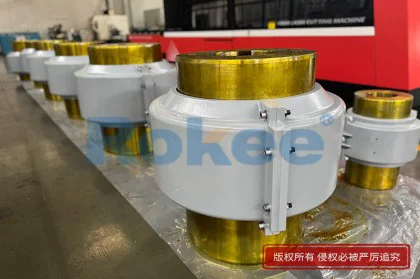
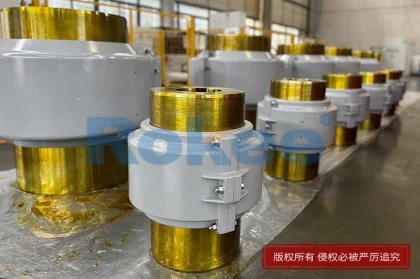
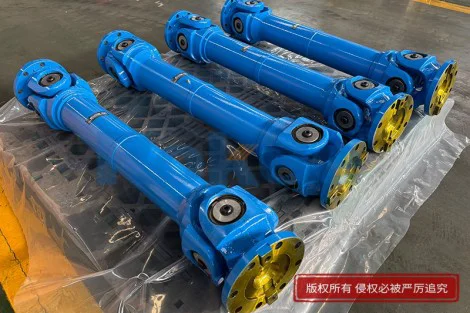
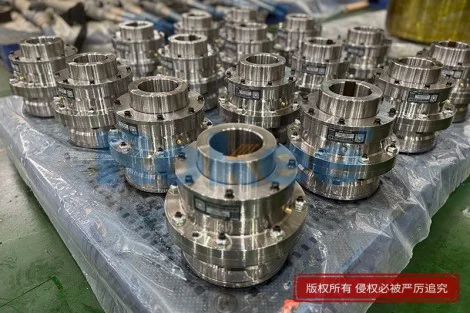
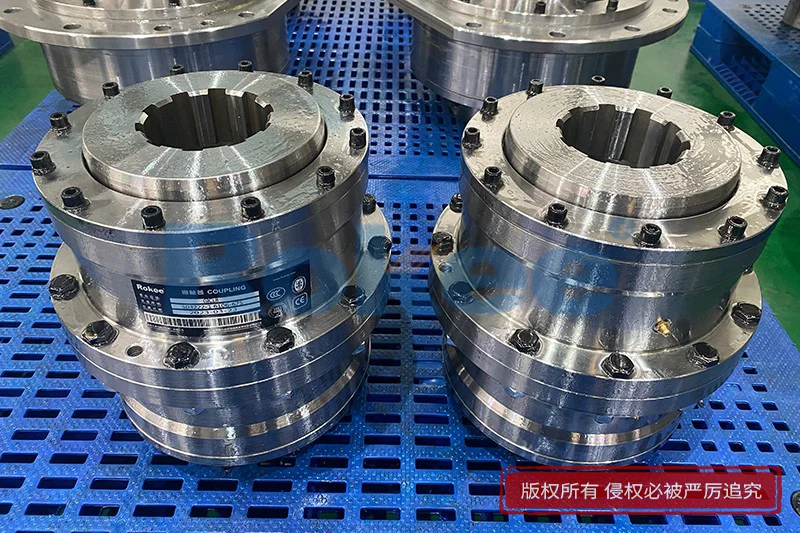
The core structure of a toothed coupling consists of internal gear rings with the same number of teeth and flange half couplings with external teeth. According to the different shapes of the external teeth, they are mainly divided into two types: straight teeth and drum teeth. Among them, drum-shaped gear couplings have become the mainstream choice in PU sandwich panel production lines due to their more excellent performance. The drum-shaped gear coupling processes the outer teeth into a spherical surface, with the center of the spherical surface located on the gear axis, and has a larger tooth flank clearance than the straight gear coupling. This unique structural design brings significant performance advantages to the toothed coupling, enabling it to better adapt to the complex working environment of PU sandwich panel production lines.
The working principle of the toothed coupling is based on the meshing of internal and external teeth to transmit torque and rotational motion between the two halves of the coupling. When the driving shaft rotates, the torque is transmitted to the external gear sleeve through the key connection, and then the external teeth of the sleeve mesh with the internal teeth of the inner gear ring, thereby driving the driven shaft connected to the inner gear ring to rotate, realizing efficient power transmission. When there is relative displacement between the two axes, the tooth surfaces of the internal and external teeth will periodically slide axially relative to each other. This working characteristic enables the toothed coupling to compensate for a certain degree of axial, radial, and angular displacement while transmitting power, effectively solving the problem of shaft misalignment caused by installation errors, equipment vibration, and thermal expansion in the production line.
In the PU sandwich panel production line, the optimization effect of the toothed coupling on the transmission system is reflected in multiple aspects, first of which is the improvement of transmission stability and accuracy. The meshing of internal and external teeth of the toothed coupling has high precision, and the transmission backlash is small, which can effectively reduce the speed fluctuation and torque shock during the power transmission process. In the roll forming process of the production line, stable power transmission ensures that the facing material is uniformly formed, avoiding problems such as uneven thickness and edge warping of the panel caused by unstable transmission. In the PU foaming link, the stable rotation speed of the mixing shaft and the conveying system ensures that the foaming agent is fully mixed, the foaming speed is uniform, and the density of the foam core is consistent, which fundamentally improves the thermal insulation performance and structural strength of the PU sandwich panel. In the cutting link, the accurate transmission of the toothed coupling ensures that the cutting device operates at a constant speed, avoiding the problems of uneven cutting surface and inaccurate size caused by speed fluctuations, ensuring that the size of each PU sandwich panel meets the design requirements, and reducing the waste of materials.
Secondly, the toothed coupling has a strong load-bearing capacity, which can adapt to the heavy load working environment of the PU sandwich panel production line. The load-bearing capacity of the drum-shaped toothed coupling is 15-30% higher than that of the straight-tooth type, and the allowable angular displacement can reach 1°30′, which is 50% higher than that of the straight-tooth type. This enables the toothed coupling to stably transmit large torque under long-term continuous operation, ensuring that each subsystem of the production line can work normally under heavy load conditions. For example, in the double-belt lamination process, the lamination belt needs to apply a certain pressure to the panel to ensure the tight bonding between the facing and the foam core. The toothed coupling can stably transmit the power required for the operation of the lamination belt, avoiding the problem of insufficient pressure or uneven pressure caused by insufficient load-bearing capacity of the transmission component, which ensures the bonding quality of the panel and prevents the occurrence of delamination between the facing and the core.
In addition, the toothed coupling has good wear resistance and long service life, which can effectively reduce the maintenance frequency and cost of the production line, and further improve production efficiency. The internal and external teeth of the toothed coupling are usually made of high-strength alloy steel, which is processed by carburizing, quenching, and other heat treatment processes, making the tooth surface have high hardness and wear resistance. At the same time, the reasonable tooth profile design and good lubrication conditions further reduce the wear of the tooth surface. Lubrication and sealing are key conditions for the normal operation of toothed couplings. Due to the relative sliding between the tooth surfaces, wear and power loss are inevitable, so the toothed coupling must operate under good lubrication and sealing conditions. Modern high-performance toothed couplings often use forced thin oil lubrication systems or segmented grease lubrication structures to reduce tooth wear and extend service life. Compared with traditional transmission components, the toothed coupling has a longer service life, which can reduce the number of shutdowns for maintenance and replacement, ensure the continuous operation of the production line, and improve the overall production efficiency. In practical applications, after adopting the toothed coupling, the maintenance cycle of the transmission system of the PU sandwich panel production line can be extended by 30% to 50%, and the maintenance cost can be reduced by 20% to 40%, which brings significant economic benefits to the enterprise.
The optimization effect of the toothed coupling on the transmission system of the PU sandwich panel production line is also reflected in the reduction of equipment vibration and noise, which creates a better working environment and further ensures product quality. The drum-shaped tooth profile of the toothed coupling improves the contact condition of the internal and external teeth, eliminates the edge compression phenomenon existing in the straight-tooth coupling, reduces the contact stress, and thus reduces the vibration and noise generated during the meshing process. In the PU sandwich panel production line, excessive vibration will not only affect the stability of the equipment but also cause the foaming core to be uneven and the facing material to be deformed, affecting product quality. The use of toothed couplings can effectively reduce the vibration amplitude of the transmission system, ensure the stable operation of each component of the production line, and thus improve the consistency of product quality. At the same time, the reduction of noise also improves the working environment of the operators, reduces the impact of noise on the physical and mental health of the operators, and improves work efficiency.
To give full play to the role of the toothed coupling in optimizing the transmission of the PU sandwich panel production line, reasonable selection, correct installation, and scientific maintenance are essential. In the selection process, it is necessary to comprehensively consider the working parameters of the production line, such as transmission power, rotational speed, torque, and the amount of shaft misalignment, and select the appropriate type and specification of the toothed coupling. For example, in the high-speed transmission link of the production line, a high-precision drum-shaped toothed coupling should be selected to ensure transmission accuracy; in the heavy-load transmission link, a toothed coupling with a larger load-bearing capacity should be selected to ensure stable operation. In the installation process, it is necessary to strictly control the coaxiality and parallelism deviation of the two ends of the shaft. Exceeding the allowable range will lead to additional torque, accelerate gear wear and bearing damage. At the same time, attention should be paid to the installation direction of the coupling to ensure that the internal and external teeth are fully meshed and avoid tooth collision. In the maintenance process, it is necessary to regularly check the lubrication state, tooth surface wear, axial clearance, and fastening of the toothed coupling. The lubricant should be regularly added and replaced to ensure that the tooth surface forms an effective oil film, reducing wear and power loss. Generally, the lubricating oil should be fully replaced every 3000 hours of operation or at most one year. When disassembling the coupling, special tools should be used, and knocking is not allowed to avoid bending the shaft or damaging the sealing surface. When reassembling, the gear ring can be heated to about 200℃ and then installed on the shaft to ensure the tight fit between the gear ring and the shaft.
In practical application cases, many PU sandwich panel production enterprises have achieved significant results after adopting toothed couplings to optimize the transmission system. A production enterprise specializing in the production of PU sandwich panels once faced problems such as unstable transmission of the production line, frequent equipment failures, uneven product thickness, and high maintenance costs. After replacing the traditional elastic coupling with a drum-shaped toothed coupling, the transmission stability of the production line was significantly improved, the speed fluctuation was reduced by more than 70%, and the product qualification rate was increased from 88% to 98%. At the same time, the maintenance frequency of the equipment was reduced, the continuous operation time of the production line was extended, and the production efficiency was increased by 25%. In addition, the energy consumption of the transmission system was also reduced by about 10% due to the high transmission efficiency of the toothed coupling, which further reduced the production cost of the enterprise. This case fully shows that the toothed coupling can effectively optimize the transmission of the PU sandwich panel line, realize the dual improvement of product quality and production efficiency, and bring significant economic benefits to the enterprise.
With the continuous development of the PU sandwich panel industry, the requirements for production efficiency and product quality are getting higher and higher, which puts forward more stringent requirements for the transmission system of the production line. As a key transmission component with excellent performance, the toothed coupling will play a more important role in the optimization and upgrading of the PU sandwich panel production line. In the future, with the continuous progress of material technology and processing technology, the performance of the toothed coupling will be further improved. For example, the use of new high-strength and wear-resistant materials can further extend the service life of the coupling; the optimization of the tooth profile design can further improve the transmission accuracy and displacement compensation capacity; the integration of intelligent monitoring technology can realize real-time monitoring of the operating state of the coupling, timely find potential faults, and reduce maintenance costs. These improvements will further promote the optimization of the transmission system of the PU sandwich panel production line, help enterprises improve their core competitiveness, and promote the healthy and sustainable development of the PU sandwich panel industry.
In conclusion, the toothed coupling, with its unique structural design and excellent performance characteristics such as high transmission accuracy, strong load-bearing capacity, good displacement compensation, and long service life, effectively solves the problems of unstable transmission, poor load-bearing capacity, frequent maintenance, and low efficiency of the traditional transmission system in the PU sandwich panel production line. By optimizing the power transmission process of the production line, the toothed coupling not only ensures the consistency and stability of product quality, reduces material waste and product unqualified rate but also improves production efficiency, reduces maintenance costs and energy consumption, bringing significant economic and social benefits to enterprises. In the context of the continuous upgrading of the PU sandwich panel industry, the application of toothed couplings will become more and more extensive, and it will become an important guarantee for the high-quality development of the PU sandwich panel production industry.