Sandwich Panel Production Line And Curved Tooth Coupling Synergistic Efficiency And More Peace Of Mind
In the modern industrial landscape, the pursuit of efficiency, stability, and reliability has become the core driving force for the development of manufacturing equipment. Sandwich panels, as a key material widely used in construction, refrigeration, transportation, and other fields, are favored for their excellent thermal insulation, soundproofing, lightweight, and high-strength properties. The production of high-quality sandwich panels relies heavily on the stable and efficient operation of sandwich panel production lines, while the curved tooth coupling, as a critical component in the transmission system of such production lines, plays an indispensable role in ensuring the smooth operation of the entire line. The synergistic effect between the sandwich panel production line and the curved tooth coupling not only significantly improves production efficiency but also enhances the stability and service life of the equipment, bringing more peace of mind to enterprise operation and management.
Sandwich panel production lines are highly automated integrated systems that integrate multiple processes such as raw material feeding, gluing, lamination, foaming, forming, and cutting. The entire production process requires precise coordination between various components, and the transmission system, as the "heart" of the production line, is responsible for transmitting power from the motor to each functional unit, ensuring that each process operates in a synchronized and orderly manner. From the unwinding of surface materials to the precise mixing of core materials, from the lamination of panels to the automatic cutting of finished products, every link requires stable power transmission to avoid production interruptions or product quality defects caused by power loss or transmission instability. In this complex transmission system, the curved tooth coupling stands out due to its unique structural advantages and excellent performance, becoming the preferred component for connecting motors, reducers, rollers, and other key equipment in sandwich panel production lines.
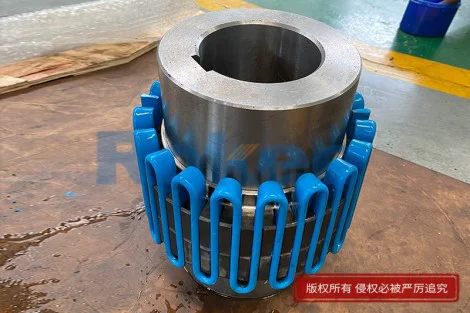
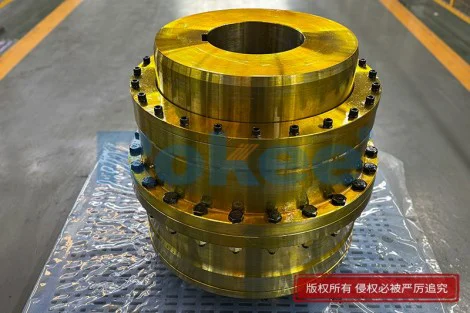
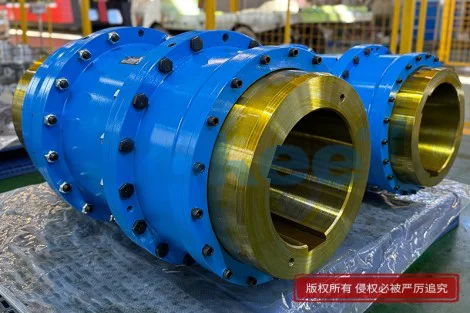
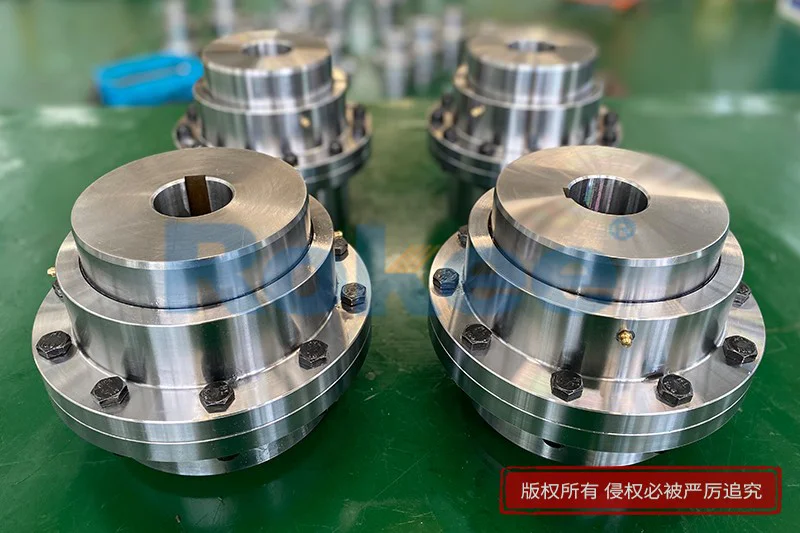
Curved tooth couplings, as a type of rigid-flexible coupling, are designed with arc-shaped teeth on the gear surface, which is fundamentally different from traditional straight-tooth couplings. This curved tooth design not only improves the contact condition between the internal and external teeth but also effectively avoids edge pressure and stress concentration at the tooth ends when angular or radial displacements occur, thereby reducing wear and noise during operation. The structural characteristics of curved tooth couplings enable them to compensate for axial, radial, and angular deviations between shafts, which is particularly important in sandwich panel production lines. Due to the long length of the production line and the large number of connected equipment, it is difficult to achieve absolute alignment between the shafts of each component during installation and operation; even slight deviations may lead to uneven power transmission, increased equipment wear, and even production failures. The curved tooth coupling can effectively absorb these deviations through its flexible meshing characteristics, ensuring that the power is transmitted stably and evenly, thus protecting the motors, reducers, and other key equipment from damage caused by misalignment.
The synergistic efficiency between the sandwich panel production line and the curved tooth coupling is reflected in every link of the production process, starting from the preparation of raw materials and extending to the output of finished products. In the raw material feeding stage, the sandwich panel production line needs to transport surface materials (such as color steel plates, aluminum plates) and core materials (such as EPS, PU, rock wool) to the designated positions through conveyor belts and feeding rollers. The power transmission of these conveyor systems and rollers relies on curved tooth couplings. Due to the large volume and weight of raw materials, the transmission system needs to bear large torque and impact loads during operation. The curved tooth coupling has a strong load-bearing capacity—under the same outer diameter of the inner tooth sleeve and the maximum outer diameter of the coupling, its load-bearing capacity is 15% to 20% higher than that of straight-tooth couplings. This excellent load-bearing performance ensures that the feeding system can operate stably even under heavy loads, avoiding material jams or feeding unevenness caused by insufficient transmission capacity, thereby laying a solid foundation for the smooth progress of subsequent processes.
In the gluing and lamination process, the sandwich panel production line requires precise control of the gluing amount and uniform lamination of the surface and core materials. The rollers responsible for pressing and conveying the materials need to maintain a stable speed and pressure, which places high requirements on the stability of the transmission system. The curved tooth coupling has a high transmission efficiency, reaching up to 99.7%, which means that almost all the power output by the motor can be transmitted to the rollers, reducing energy loss caused by transmission inefficiency. At the same time, the stable transmission performance of the curved tooth coupling ensures that the rollers rotate at a constant speed, avoiding speed fluctuations that may lead to uneven gluing, insufficient bonding, or uneven thickness of the panels. In addition, the curved tooth coupling can effectively absorb the impact generated during the lamination process, reducing the vibration of the equipment, which not only protects the precision components of the gluing and lamination system but also improves the bonding quality of the sandwich panels, ensuring that the panels have consistent structural strength and performance.
The foaming and forming stage is the core link of sandwich panel production, requiring precise control of temperature, pressure, and time. The foaming system and forming rollers of the production line need to operate in a highly synchronized manner to ensure that the foam core is evenly distributed between the two surface materials and fully cured. The curved tooth coupling plays a key role in ensuring the synchronization of these systems. Due to its ability to compensate for shaft deviations and transmit power stably, it ensures that the foaming machine, forming rollers, and other equipment operate in a coordinated manner, avoiding production defects such as uneven foam density, bubble formation, or panel deformation caused by asynchrony. For example, in the production of PU sandwich panels, the high-pressure foaming machine needs to inject the foaming material into the gap between the surface materials at a precise speed, and the forming rollers need to apply a uniform pressure to the panels during the foaming process. The stable power transmission of the curved tooth coupling ensures that the speed of the foaming machine and the pressure of the forming rollers are kept within the optimal range, thus improving the quality and qualification rate of the finished panels.
In the cutting stage, the automatic tracking cross-cut saw of the sandwich panel production line needs to cut the continuous sandwich panels into specified lengths according to production requirements. The cutting process requires high precision and stability, and any speed fluctuation or vibration may lead to uneven cutting surfaces, inaccurate lengths, or even damage to the panels. The curved tooth coupling, by virtue of its excellent vibration damping performance, can effectively reduce the vibration generated by the motor and the cutting machine during operation, ensuring that the cutting saw operates stably. At the same time, the precise power transmission of the curved tooth coupling enables the cutting saw to adjust the cutting speed in real time according to the production line speed, achieving precise matching between the cutting length and the production rhythm, thus improving the cutting efficiency and quality.
Beyond improving production efficiency and product quality, the synergistic effect between the sandwich panel production line and the curved tooth coupling also brings significant advantages in equipment maintenance and service life, further enhancing the peace of mind of enterprise operation. Curved tooth couplings have a long service life due to their reasonable structural design and excellent wear resistance. When properly maintained, their average service life can reach more than 8,000 hours, which is much longer than that of traditional couplings. This reduces the frequency of coupling replacement, thereby reducing the downtime of the production line and the maintenance cost of the enterprise. In addition, the curved tooth coupling is easy to install and disassemble—the flared design of the outer tooth sleeve makes the meshing and disassembly of the inner and outer teeth very convenient, which simplifies the maintenance process and shortens the maintenance time. For sandwich panel production lines that require continuous operation, this advantage is particularly important, as it can minimize the impact of maintenance on production progress.
The maintenance of curved tooth couplings is relatively simple, mainly focusing on lubrication and cleaning. Proper lubrication can reduce the friction between the tooth surfaces, slow down wear, and extend the service life of the coupling. For example, all-steel curved tooth couplings with grease lubrication and O-ring seals can achieve almost wear-free operation, and the permanent grease lubrication ensures a good friction ratio of the spline. The O-ring seals also prevent lubricant leakage and the entry of dust and impurities, further protecting the internal structure of the coupling. Regular cleaning of the coupling surface and the surrounding area can prevent the accumulation of dust, oil sludge, and other pollutants, which may affect the transmission performance and service life of the coupling. By establishing a regular maintenance system for curved tooth couplings, enterprises can effectively prevent potential failures, ensure the long-term stable operation of the transmission system, and thus avoid production losses caused by sudden equipment failures.
The synergistic efficiency between the sandwich panel production line and the curved tooth coupling also embodies the concept of energy conservation and environmental protection, which is in line with the development trend of modern industrial production. The high transmission efficiency of the curved tooth coupling reduces energy loss during power transmission, enabling the production line to consume less energy while maintaining the same production capacity. This not only reduces the energy cost of the enterprise but also reduces carbon emissions, contributing to the realization of green production. In addition, the long service life of the curved tooth coupling reduces the generation of waste parts, which is conducive to environmental protection. The stable operation of the production line also reduces the generation of defective products, avoiding the waste of raw materials and energy, further improving the economic and environmental benefits of the enterprise.
In practical applications, the synergistic effect between the sandwich panel production line and the curved tooth coupling has been fully verified in various industrial scenarios. For example, in large-scale construction material factories, the application of curved tooth couplings in sandwich panel production lines has significantly improved production efficiency—compared with the use of traditional couplings, the production capacity of the production line has increased by 10% to 15%, and the qualification rate of finished products has increased by more than 5%. At the same time, the failure rate of the transmission system has been reduced by 30% to 40%, greatly reducing the maintenance cost and downtime of the enterprise. In the field of refrigeration and cold storage, where the requirements for the quality of sandwich panels are higher, the stable transmission performance of the curved tooth coupling ensures that the panels have uniform thickness and excellent thermal insulation performance, meeting the strict requirements of the refrigeration industry. In the transportation field, the lightweight and high-strength sandwich panels produced by the synergistic operation of the production line and the coupling have been widely used in the manufacturing of automobile carriages and shipping containers, improving the load-bearing capacity and energy-saving effect of transportation equipment.
The synergistic efficiency between the sandwich panel production line and the curved tooth coupling is not a simple superposition of functions, but a mutual promotion and complementation of performance. The high automation and high-precision requirements of the sandwich panel production line put forward higher requirements for the transmission system, which promotes the continuous optimization and improvement of the curved tooth coupling technology. On the other hand, the excellent performance of the curved tooth coupling provides a reliable guarantee for the stable operation of the sandwich panel production line, enabling the production line to give full play to its efficiency and quality advantages. This positive interaction forms a virtuous cycle, promoting the continuous development of both the sandwich panel production technology and the curved tooth coupling technology.
With the continuous development of industrial technology, the requirements for the efficiency, stability, and intelligence of sandwich panel production lines are constantly improving, which also puts forward new requirements for the performance of curved tooth couplings. In the future, with the application of digital twin technology, intelligent monitoring technology, and other advanced technologies in industrial production, the synergistic effect between the sandwich panel production line and the curved tooth coupling will be further enhanced. For example, through digital twin technology, the operation status of the production line and the coupling can be simulated and monitored in real time, predicting potential failures and optimizing the operation parameters, thus further improving production efficiency and reducing maintenance costs. The integration of intelligent monitoring technology can realize real-time monitoring of the temperature, vibration, and other parameters of the curved tooth coupling, timely find abnormal conditions, and take corresponding measures to avoid failure expansion, ensuring the long-term stable operation of the production line.
In conclusion, the sandwich panel production line and the curved tooth coupling, as two key components in modern industrial production, have a close synergistic relationship. The curved tooth coupling, with its unique structural advantages and excellent performance, provides a reliable power transmission guarantee for the sandwich panel production line, ensuring the smooth operation of each production link, improving production efficiency and product quality, and reducing equipment failure rate and maintenance cost. The synergistic efficiency between the two not only brings significant economic benefits to enterprises but also enhances the stability and reliability of production, bringing more peace of mind to enterprise operation and management. In the context of the continuous development of industrialization, the exploration and promotion of this synergistic relationship will play an important role in promoting the upgrading and development of the sandwich panel manufacturing industry, and contribute to the realization of more efficient, stable, and green industrial production.