Analysis On Adaptability Of Diaphragm Coupling And Continuous Phenolic Insulation Board Production Line
In the field of building insulation materials production, continuous phenolic insulation board production lines have become the core equipment for large-scale, high-efficiency and high-quality product manufacturing, relying on their continuous operation capacity and stable production performance. As a key transmission component in the production line, the coupling undertakes the important task of transmitting power between the motor and various functional equipment, and its adaptability directly affects the overall operation efficiency, product quality and service life of the production line. Among various types of couplings, diaphragm couplings have gradually become the preferred choice for continuous phenolic insulation board production lines due to their unique structural advantages and excellent performance characteristics.
To understand the adaptability between diaphragm couplings and continuous phenolic insulation board production line, it is first necessary to clarify the core working characteristics of the continuous phenolic insulation board production line and the structural and performance advantages of diaphragm couplings. Continuous phenolic insulation board production is a complex continuous process involving multiple links such as raw material mixing, foaming, molding, curing, cutting and conveying. Each link is closely connected, and the stability and synchronization of power transmission between equipment directly determine the continuity of the production process and the consistency of product quality. The production line usually operates continuously for a long time, and the working environment is often accompanied by factors such as temperature changes, mechanical vibration, and certain corrosive gases generated during the foaming process. In addition, the production line has high requirements for the accuracy of power transmission, because the speed stability of equipment such as mixers, conveyors, and cutting machines will directly affect the mixing uniformity of raw materials, the thickness accuracy of the board, and the flatness of the cutting surface. Any instability in power transmission may lead to production interruptions, product waste, or even equipment damage, bringing economic losses to enterprises.
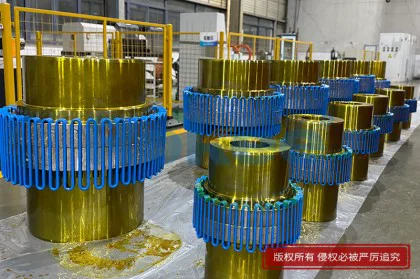
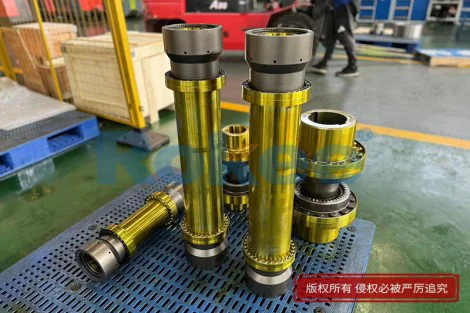
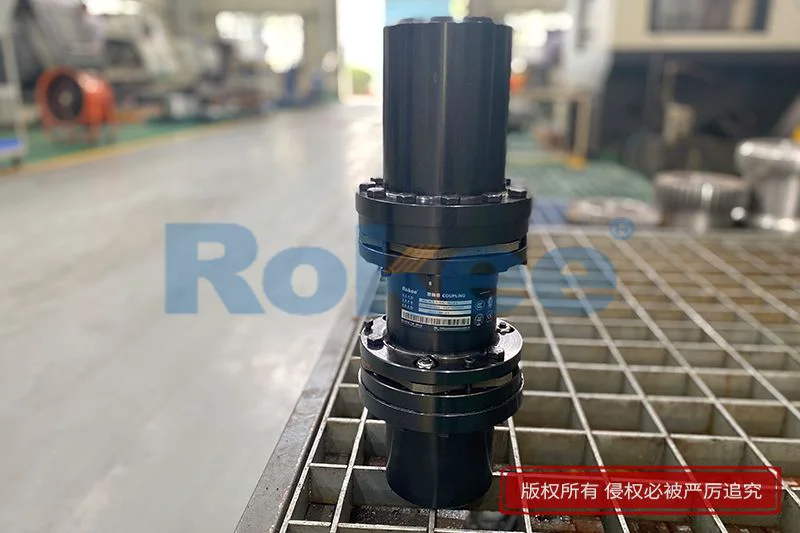
Diaphragm couplings, as a type of high-performance metal elastic flexible coupling, are mainly composed of two hubs and a group of diaphragms stacked by multiple thin stainless steel plates, which are connected by bolts in a staggered manner. Unlike traditional couplings that rely on rubber elastomers or lubricating oil to achieve flexibility, diaphragm couplings rely on the elastic deformation of the diaphragm to compensate for the relative displacement between the two connected shafts, realizing efficient and stable power transmission. This unique structural design endows diaphragm couplings with a series of performance advantages that are highly compatible with the working needs of continuous phenolic insulation board production lines. Firstly, diaphragm couplings have high transmission accuracy, with no rotational clearance and transmission efficiency as high as 99.86%, which can accurately transmit the speed and torque of the motor to the driven equipment. This is particularly important for continuous phenolic insulation board production lines, because the mixing speed of raw materials, the conveying speed of the production line, and the cutting speed all need to be kept stable and consistent. The high transmission accuracy of diaphragm couplings can ensure that each equipment in the production line operates in a coordinated manner, avoiding the problems of uneven mixing of raw materials, inconsistent board thickness, and irregular cutting caused by speed fluctuations. Secondly, diaphragm couplings have excellent misalignment compensation capacity, which can effectively compensate for axial, radial and angular displacements between shafts caused by installation errors, equipment vibration, thermal expansion and other factors. In the continuous phenolic insulation board production line, due to the long-term operation of equipment, the temperature of each part will change, resulting in thermal expansion of the shaft, which will cause misalignment between the motor shaft and the equipment shaft. In addition, the vibration generated during the operation of mixers and conveyors will also lead to slight displacement of the shaft. The misalignment compensation capacity of diaphragm couplings can avoid the additional stress generated by shaft misalignment on the equipment bearing, reduce the wear of the bearing and the shaft, and ensure the stable operation of the equipment.
Another important performance advantage of diaphragm couplings is their excellent environmental adaptability, which is highly consistent with the working environment of continuous phenolic insulation board production lines. The production process of phenolic insulation boards involves the mixing and foaming of phenolic resin and other raw materials, which may generate a small amount of corrosive gases. At the same time, the curing link of the production line needs to be carried out at a certain temperature, and the working temperature of the equipment is relatively high. Diaphragm couplings are usually made of high-strength stainless steel or superalloys, which have good corrosion resistance and high temperature resistance, and can work stably in environments with corrosive gases and temperature changes between -80°C and +300°C. Unlike rubber couplings, which are easy to age and degrade under high temperature and corrosive environments, diaphragm couplings do not have such problems, and their service life is longer. In addition, diaphragm couplings do not need lubrication during operation, which avoids the pollution of lubricating oil to the production environment and the product. For continuous phenolic insulation board production lines that have certain requirements for product cleanliness, this is an important advantage. The no-lubrication design also reduces the maintenance workload of the coupling, saves maintenance time and costs, and is suitable for the long-term continuous operation needs of the production line.
The vibration absorption performance of diaphragm couplings also plays an important role in improving the adaptability of continuous phenolic insulation board production lines. During the operation of the production line, the mixer, foaming machine and other equipment will generate a certain amount of vibration. If the vibration is not effectively absorbed, it will be transmitted to the motor and other equipment through the coupling, affecting the stable operation of the equipment and reducing the service life of the equipment. The metal diaphragm of the diaphragm coupling can absorb and buffer the vibration generated during the operation of the equipment through its own elastic deformation, reduce the vibration amplitude, and reduce the noise generated by the equipment operation to below 65dB(A). This not only protects the motor and other key equipment, but also improves the working environment of the workshop. At the same time, the reduction of vibration also helps to improve the stability of the production process, reduce the occurrence of product defects caused by vibration, and ensure the quality of phenolic insulation boards.
In practical application, the adaptability of diaphragm couplings and continuous phenolic insulation board production lines is also reflected in their matching with the load characteristics of the production line. The continuous phenolic insulation board production line has different load requirements in different production links. For example, the mixer needs a large starting torque when starting, and the load during normal operation is relatively stable; the cutting machine needs a stable torque during operation to ensure the smoothness of the cutting surface. Diaphragm couplings have strong impact resistance, and their peak torque carrying capacity can reach twice the rated value, which can meet the large starting torque requirements of equipment such as mixers. At the same time, the torque transmission of diaphragm couplings is stable, which can maintain a constant torque output during the operation of the production line, ensuring the stable operation of each equipment. In addition, diaphragm couplings have a compact structure and light weight, which can save installation space. For continuous phenolic insulation board production lines with complex equipment layout and limited installation space, this is an important advantage. The compact structure also reduces the moment of inertia of the coupling, which is conducive to the rapid response of the equipment and improves the dynamic performance of the production line.
However, to fully exert the adaptability of diaphragm couplings in continuous phenolic insulation board production lines, it is also necessary to pay attention to the rational selection and correct installation and maintenance of couplings. In the selection process, it is necessary to comprehensively consider the power of the motor, the speed of the equipment, the load characteristics, the working environment temperature and other factors, and select the diaphragm coupling with appropriate specifications and models. For example, in the high-temperature section of the production line, such as the curing oven, it is necessary to select a diaphragm coupling made of high-temperature resistant materials to ensure its stable operation at high temperatures; in the section with large vibration, such as the mixer, it is necessary to select a diaphragm coupling with strong vibration absorption capacity. In the installation process, it is necessary to strictly control the installation accuracy, reduce the initial misalignment between the shafts, avoid the additional stress caused by excessive misalignment on the diaphragm, and extend the service life of the coupling. At the same time, it is necessary to apply molybdenum disulfide coating on the bolt threads to prevent micro-motion wear and ensure the connection reliability of the coupling.
In the daily operation and maintenance of the production line, regular inspection and maintenance of the diaphragm coupling are also important links to ensure its adaptability. It is necessary to regularly check the wear of the diaphragm, the tightness of the bolts, and whether there is corrosion or deformation. If the diaphragm is found to be damaged, cracked or severely worn, it should be replaced in time to avoid the failure of the coupling during operation, which will affect the normal operation of the production line. For the bolts, it is necessary to regularly check their tightness and re-tighten them if necessary to prevent the bolts from loosening due to vibration, which will lead to the failure of the coupling. In addition, it is necessary to keep the coupling clean, remove the dust and dirt on the surface of the coupling in time, avoid the corrosion of the coupling by dust and corrosive substances, and ensure its performance stability.
With the continuous development of the phenolic insulation board industry, the continuous phenolic insulation board production line is developing towards higher speed, higher efficiency and higher quality, which puts forward higher requirements for the adaptability of diaphragm couplings. In the future, the optimization and improvement of diaphragm couplings should focus on the following aspects to further improve their adaptability to the production line. Firstly, optimize the material selection and structural design of the diaphragm, use more high-strength, high-temperature resistant and corrosion-resistant materials, and improve the fatigue resistance and service life of the diaphragm. For example, using superalloys such as Inconel in high-temperature environments can further improve the high-temperature resistance of the coupling. Secondly, develop a diaphragm coupling with adjustable stiffness, which can adjust the stiffness of the coupling according to the load characteristics of different production links, so as to better adapt to the changes of the production line load. Thirdly, integrate intelligent monitoring functions into the diaphragm coupling, install sensors to monitor the operation status of the coupling in real time, such as vibration amplitude, temperature, torque and other parameters, and timely warn of potential faults, so as to realize predictive maintenance of the coupling, reduce the downtime of the production line, and improve the overall operation efficiency of the production line.
In conclusion, diaphragm couplings have excellent adaptability to continuous phenolic insulation board production lines, which is mainly reflected in their high transmission accuracy, excellent misalignment compensation capacity, good environmental adaptability, strong vibration absorption performance and load-bearing capacity, which are highly compatible with the working characteristics and requirements of the production line. The rational application of diaphragm couplings can effectively improve the stability and efficiency of the production line, reduce equipment wear and maintenance costs, and ensure the quality of phenolic insulation boards. However, to fully exert the role of diaphragm couplings, it is necessary to do a good job in selection, installation and maintenance, and continuously optimize the performance of diaphragm couplings according to the development needs of the production line. With the continuous progress of technology, diaphragm couplings will be more closely matched with continuous phenolic insulation board production lines, providing stronger support for the high-quality development of the phenolic insulation board industry.