Efficient Continuous PU Insulation Board Production Line Cannot Do Without High-quality Plate Coupling
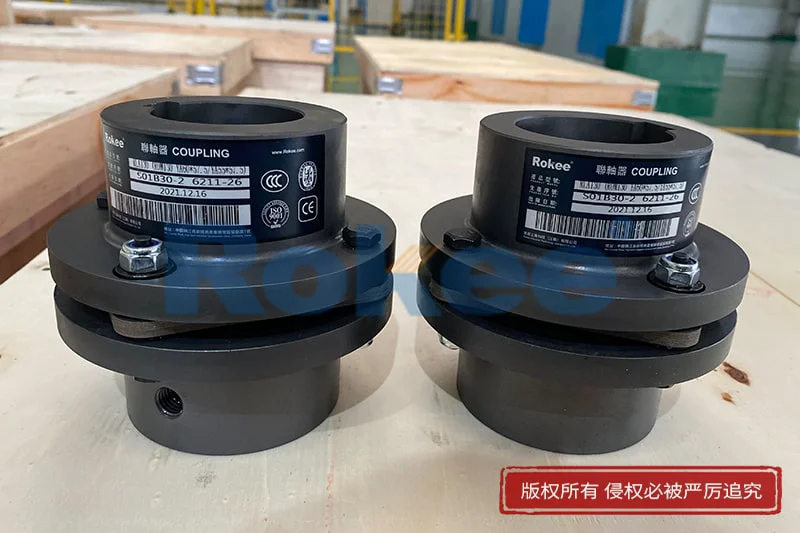
In the modern construction and manufacturing industries, the demand for efficient, energy-saving, and high-performance building materials has been on a steady rise. Among the various materials that meet these requirements, PU insulation boards have emerged as a popular choice due to their excellent thermal insulation, soundproofing, and structural stability. These boards are widely used in industrial workshops, warehouses, cold storage, residential buildings, and public facilities, playing an irreplaceable role in improving building energy efficiency and comfort. Behind the mass production of these high-quality panels lies a complex and systematic continuous production line, which integrates multiple processes such as material feeding, foam mixing, lamination, pressing, and cutting. Each component in this production line is closely linked, and any link failure or performance defect may affect the overall production efficiency, product quality, and even the service life of the entire equipment. Among all these components, the plate coupling, as a key part of the power transmission system, undertakes the important task of connecting the motor, reducer, and various working components, transmitting torque stably and compensating for axial, radial, and angular displacements between shafts. It is no exaggeration to say that an efficient continuous PU insulation board production line cannot do without the support of high-quality plate couplings; they are the "joints" that ensure the smooth operation of the entire production line, and their quality and performance directly determine the operational efficiency and stability of the production line.
To understand the crucial role of high-quality plate couplings in continuous PU insulation board production line, it is first necessary to clarify the working principle and operational characteristics of the production line itself. A continuous PU insulation board production line is a highly automated equipment system that integrates mechanical, electronic, and chemical technologies, designed specifically for the mass production of PU insulation boards. The production process starts with the material preparation stage, where the raw materials required for production are prepared and inspected. The outer skin materials, usually metal coils such as color steel plates or aluminum alloy plates, are uncoiled and leveled to ensure a flat surface free of wrinkles, laying the foundation for the subsequent lamination process. At the same time, the raw materials for the PU core layer, including polyol, isocyanate, foaming agent, catalyst, and other additives, are stored in special tanks and preheated to the appropriate temperature to ensure the stability of the foaming reaction. Next, in the feeding and lamination stage, the leveled outer skin materials are conveyed to the lamination zone through the conveying system. Meanwhile, the PU raw materials are accurately measured by metering pumps and injected into the mixing head, where they are fully mixed under high pressure to initiate the foaming reaction. The mixed raw materials are then continuously coated between the upper and lower outer skin materials, which then enter the double-belt machine to complete foaming and curing between the heated upper and lower track plates. After curing and forming, the insulation board passes through the trimming devices on both sides of the production line to obtain accurate width dimensions, and finally, the finished product is obtained by cutting according to the set length using a fixed-length tracking saw. Throughout this entire continuous production process, each link requires stable power transmission and precise speed control; any fluctuation in power or speed will lead to defects such as uneven foam density, inconsistent board thickness, and poor bonding between the core layer and the outer skin, seriously affecting product quality and production efficiency.
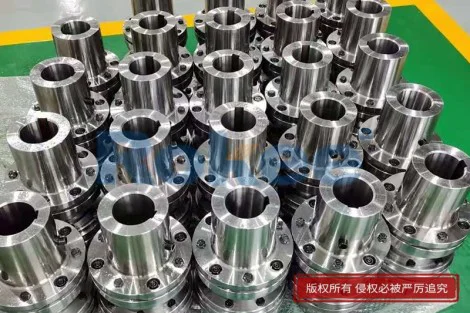
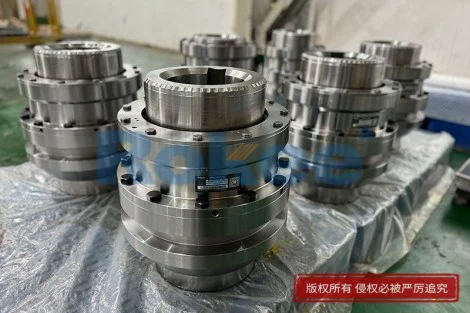
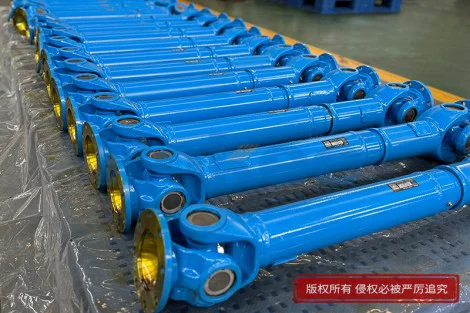
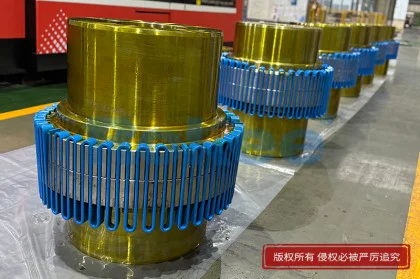
The plate coupling, as a core component of the power transmission system in the PU insulation board production line, is mainly used to connect the motor and the reducer, as well as the reducer and various working components such as the conveying roller, mixing head, and cutting machine. Its core function is to transmit the torque generated by the motor to the working components efficiently and stably, while compensating for the axial, radial, and angular displacements that may occur between the shafts during operation. Unlike other types of couplings, the plate coupling is composed of a laminated diaphragm group of stainless steel thin plates, high-strength bolts, and two half couplings. Its core principle is to compensate for the displacements of the two axes through the elastic deformation of the diaphragm, which makes it particularly suitable for high-precision and high-stability transmission scenarios such as continuous PU insulation board production lines. In the continuous production process of PU insulation boards, the production line operates 24 hours a day for a long time, and the working environment is relatively complex. The equipment is often subject to factors such as vibration, temperature changes, and material impact, which put high requirements on the performance of the plate coupling. High-quality plate couplings can not only withstand long-term high-load operation but also maintain stable transmission performance under harsh working conditions, ensuring the continuous and efficient operation of the production line.
The importance of high-quality plate couplings in continuous PU insulation board production lines is reflected in many aspects, the most prominent of which is ensuring stable and efficient power transmission. The continuous production line of PU insulation boards requires that each working link maintains a consistent speed and torque. For example, the conveying system needs to stably transport the outer skin materials and the formed insulation boards at a uniform speed to ensure the continuity of the lamination and cutting processes; the mixing head needs to maintain a stable rotation speed to ensure the uniform mixing of PU raw materials and the stability of the foaming reaction; the cutting machine needs to have precise speed control to ensure the accuracy of the cutting length. All these require the plate coupling to transmit torque efficiently and without loss, and to maintain a stable transmission ratio. High-quality plate couplings have the characteristics of high transmission efficiency, with a torque transmission efficiency of up to 99.86%, no rotational clearance, and precise speed control, which can effectively avoid power loss and speed fluctuation during the transmission process. In contrast, low-quality plate couplings often have problems such as large transmission clearance, low transmission efficiency, and easy wear, which will lead to unstable speed of the working components, uneven operation of the production line, and even frequent shutdowns, seriously affecting production efficiency.
Another key role of high-quality plate couplings is to compensate for shaft displacements and reduce equipment vibration, thereby protecting the production line equipment and extending its service life. In the actual operation of the continuous PU insulation board production line, due to factors such as equipment installation errors, thermal expansion and contraction during operation, and uneven stress on the equipment, it is inevitable that axial, radial, and angular displacements will occur between the motor, reducer, and working components. If these displacements are not effectively compensated, they will cause additional stress on the shafts, bearings, and other components, leading to increased equipment wear, reduced service life, and even component damage. High-quality plate couplings can effectively compensate for these displacements through the elastic deformation of the diaphragm, reducing the stress on the shafts and bearings, and avoiding mechanical damage caused by misalignment. At the same time, the diaphragm of the plate coupling can also absorb vibration generated during the operation of the equipment, play a role in vibration reduction and noise reduction, and reduce the impact of vibration on the production line equipment and product quality. It is reported that high-quality plate couplings can reduce noise by more than 90% compared to gear couplings, creating a more stable and quiet working environment for the production line.
In addition, high-quality plate couplings also have the characteristics of maintenance-free, corrosion resistance, and high temperature resistance, which are highly compatible with the working environment of the continuous PU insulation board production line. The production process of PU insulation boards involves the use of various chemical raw materials, and the production site may have certain corrosive gases and dust. At the same time, the foaming and curing process of PU raw materials will generate a certain amount of heat, leading to an increase in the ambient temperature of the production line. Low-quality plate couplings are easily corroded by corrosive gases, and their performance will be significantly reduced under high-temperature conditions, requiring frequent maintenance and replacement, which increases the maintenance cost of the production line and affects production continuity. In contrast, high-quality plate couplings adopt high-quality stainless steel diaphragms and corrosion-resistant materials, which have good corrosion resistance and high temperature resistance, and can adapt to the working temperature range of -80 ℃ to 300 ℃. They do not require lubrication during operation, realizing maintenance-free operation, which not only reduces the maintenance cost of the production line but also ensures the continuity of production. For example, in some large-scale continuous PU insulation board production lines that operate 24 hours a day, high-quality plate couplings can operate stably for several years without maintenance, greatly reducing the downtime caused by coupling maintenance and replacement.
The impact of low-quality plate couplings on the continuous PU insulation board production line should not be underestimated. If low-quality plate couplings are used, various problems may occur during the production process, which will bring huge losses to the enterprise. First of all, low-quality plate couplings have poor transmission stability, which will lead to unstable speed of the working components, resulting in defects such as uneven foam density of the PU insulation board, inconsistent board thickness, and poor bonding between the core layer and the outer skin. These defects will reduce the product qualification rate, increase the waste of raw materials, and increase the production cost of the enterprise. Secondly, low-quality plate couplings have poor wear resistance and short service life, and are prone to failure such as diaphragm damage and bolt loosening during long-term operation, leading to production line shutdown. Each shutdown will cause huge economic losses to the enterprise, especially for continuous production lines, where even a short shutdown may result in the waste of a large number of semi-finished products and the delay of delivery time. In addition, low-quality plate couplings cannot effectively compensate for shaft displacements and reduce vibration, which will accelerate the wear of the motor, reducer, bearings, and other key components of the production line, shortening the service life of the entire production line and increasing the equipment replacement cost of the enterprise. According to relevant statistics, 32% of transmission failures in industrial production are caused by incorrect coupling selection or the use of low-quality couplings, which is also applicable to the continuous PU insulation board production line.
To ensure the efficient and stable operation of the continuous PU insulation board production line, it is not only necessary to select high-quality plate couplings but also to pay attention to the correct selection, installation, and daily maintenance of the couplings. In terms of selection, it is necessary to comprehensively consider the working parameters of the production line, such as torque, speed, and working environment, and select the appropriate type and specification of plate couplings. For example, for high-power transmission systems in the production line, double-diaphragm couplings should be selected, which can simultaneously compensate for multi-directional deviations and have stronger load-bearing capacity; for production links with high precision requirements, zero-backlash plate couplings should be selected to ensure the accuracy of power transmission. In terms of installation, it is necessary to strictly follow the installation specifications, ensure the correct alignment of the shafts, and tighten the bolts in stages in a diagonal order to avoid installation errors leading to coupling failure. At the same time, it is necessary to control the gap between the diaphragm and the flange to ensure that the axial deviation is within the allowable range. In terms of daily maintenance, it is necessary to regularly inspect the plate coupling, check for loose bolts and diaphragm deformation every 500 hours of operation, and shut down for calibration if there is any abnormal vibration. In addition, coating the surface of the diaphragm with molybdenum disulfide lubricant can reduce micro-motion wear and extend the service life of the coupling.
With the continuous development of the construction industry, the demand for PU insulation boards is increasing, and the requirements for the efficiency and quality of the continuous production line are also getting higher and higher. As a key component of the power transmission system, the plate coupling plays an increasingly important role in ensuring the efficient and stable operation of the production line. High-quality plate couplings not only can improve the production efficiency of the production line, ensure product quality, and reduce production costs but also can extend the service life of the production line equipment, creating greater economic benefits for enterprises. In contrast, the use of low-quality plate couplings will not only affect the normal operation of the production line but also bring huge economic losses to enterprises. Therefore, for enterprises engaged in the production of PU insulation boards, it is crucial to attach importance to the role of plate couplings and select high-quality plate couplings that meet the production needs. Only in this way can the continuous PU insulation board production line operate efficiently and stably, meet the market demand for high-quality PU insulation boards, and gain a competitive advantage in the fierce market competition.
In conclusion, the efficient continuous PU insulation board production line is a complex system that relies on the close cooperation of various components. The plate coupling, as a key part of the power transmission system, is an indispensable component for the efficient and stable operation of the production line. High-quality plate couplings ensure stable and efficient power transmission, compensate for shaft displacements, reduce equipment vibration, and have the characteristics of maintenance-free, corrosion resistance, and high temperature resistance, which can effectively improve production efficiency, ensure product quality, reduce production costs, and extend the service life of the production line. On the contrary, low-quality plate couplings will bring various problems to the production line, affecting production continuity and product quality, and causing huge economic losses to enterprises. Therefore, enterprises must pay full attention to the selection and application of plate couplings, choose high-quality plate couplings that meet the production needs, and do a good job in the installation and daily maintenance of the couplings to ensure the long-term efficient and stable operation of the continuous PU insulation board production line. With the continuous progress of technology, the performance of plate couplings will be further improved, and they will play a more important role in the continuous production of PU insulation boards, promoting the sustainable development of the PU insulation board industry.