Cardan Coupling Ensures Stable Operation Of PUR Sandwich Panel Equipment
In the modern construction and manufacturing industry, PUR sandwich panels have become an indispensable material due to their excellent thermal insulation, structural stability, lightweight properties, and corrosion resistance. These panels are widely used in external walls, roofs, cold storage facilities, prefabricated buildings, and various industrial workshops, driving the continuous development and upgrading of PUR sandwich panel equipment. The stable operation of this equipment is the core guarantee for ensuring production efficiency, product quality, and production safety. Among the numerous components that make up the equipment, the cardan coupling, also known as the universal joint coupling, plays an irreplaceable role. It serves as a key connection and transmission component in the power system of PUR sandwich panel equipment, effectively solving the problems of shaft misalignment, torque transmission instability, and vibration during equipment operation, thereby ensuring the long-term, stable, and efficient operation of the entire production line.
To understand the important role of cardan coupling in PUR sandwich panel equipment, it is first necessary to clarify the working characteristics and operational requirements of the equipment. PUR sandwich panel equipment is a complex integrated system that involves multiple continuous processes, including uncoiling of surface materials, roll forming, preheating, PUR foam mixing and pouring, lamination, curing, and cutting. Each process is closely connected, and the coordination and stability of power transmission between various components directly affect the consistency of product quality and the smooth progress of the production process. For example, the uncoiling mechanism needs to stably transmit power to ensure that the surface material is unfolded at a uniform speed without wrinkles or breakage; the roll forming device requires precise torque transmission to shape the surface material into the required specifications; the PUR foam pouring system needs stable power support to ensure uniform mixing of raw materials and accurate pouring volume, which is crucial for the density and bonding strength of the panel core; the lamination and curing process relies on stable power transmission to maintain uniform pressure and temperature, ensuring that the surface material and foam core are firmly bonded and fully cured; finally, the cutting device needs stable and accurate power to cut the formed panels into the required size without burrs or dimensional deviations. Any link with unstable power transmission will lead to production interruptions, unqualified products, and even equipment damage, bringing unnecessary economic losses to enterprises.
The core challenge faced by the power transmission system of PUR sandwich panel equipment is the misalignment between the driving shaft and the driven shaft. Due to the limitations of equipment structure, installation space, and long-term operational wear, it is difficult to ensure absolute coaxial alignment between the motor, reducer, and various functional components (such as uncoiling rollers, forming rollers, and conveyor belts) in the equipment. This misalignment may be angular, radial, or axial, and if not effectively compensated, it will cause serious problems such as uneven torque transmission, increased equipment vibration, excessive wear of components, and even shaft breakage. Traditional rigid couplings can only transmit power when the two shafts are perfectly coaxial, and they have no compensation capacity for any form of misalignment. Using rigid couplings in PUR sandwich panel equipment will not only affect the stability of power transmission but also accelerate the wear of bearings, shafts, and other components, reducing the service life of the equipment and increasing maintenance costs. In contrast, the cardan coupling has a unique structural design that can effectively compensate for various forms of shaft misalignment, making it the ideal transmission component for PUR sandwich panel equipment.
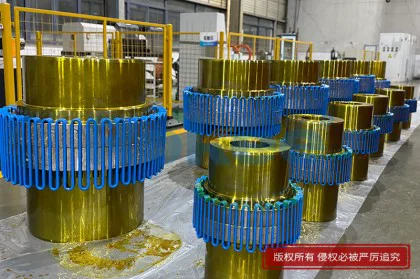
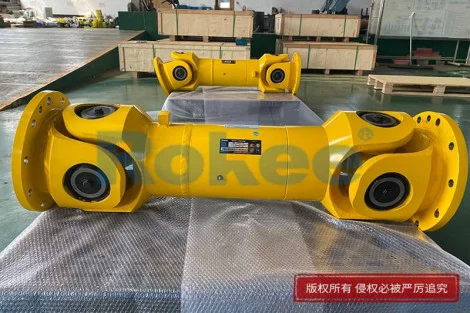
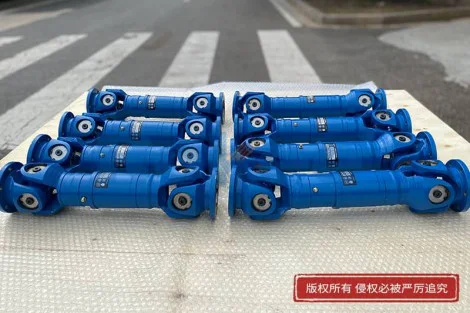
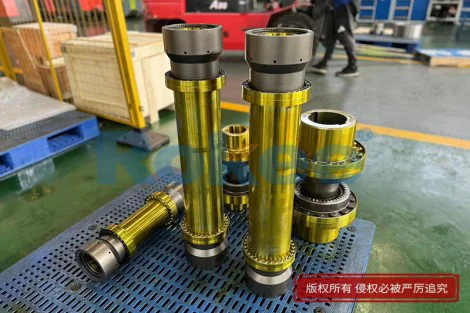
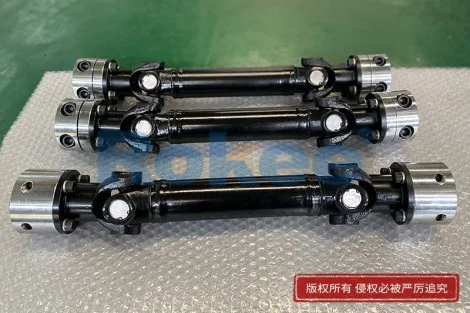
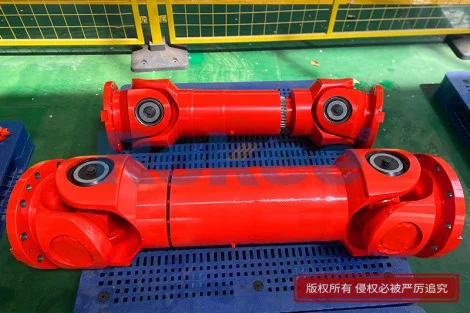
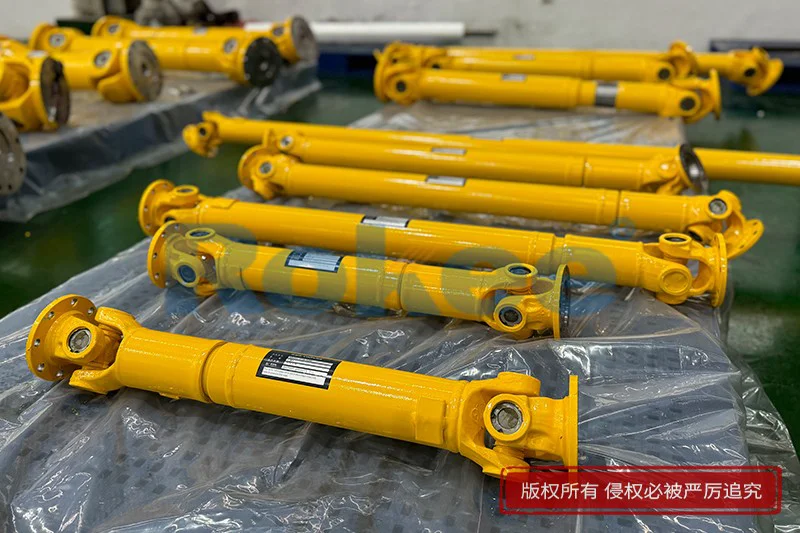
The working principle of the cardan coupling is based on the clever combination of mechanical geometry and dynamics. It usually consists of two fork-shaped joints and a cross shaft, with bearings (often needle rollers or sliding bearings) installed at the connection of the cross shaft and the fork joints to ensure flexible rotation. When the driving shaft rotates, the special articulated structure of the cardan coupling allows the two connected shafts to deflect within a certain angle range (usually 5° to 45°) while maintaining the continuity and stability of rotational motion and torque transmission. This means that even if there is angular deviation, radial displacement, or axial movement between the driving shaft and the driven shaft due to equipment installation errors, operational vibration, or thermal expansion, the cardan coupling can adapt to these changes in real time, ensuring that the power is transmitted smoothly and evenly to each functional component of the PUR sandwich panel equipment. In addition, some advanced cardan couplings, such as double cardan couplings, adopt a modular and detachable intermediate shaft design, which not only eliminates the speed fluctuation problem of single cardan couplings but also is more suitable for long-distance power transmission in large-scale PUR sandwich panel production lines, further improving the stability of equipment operation.
The stable torque transmission capacity of the cardan coupling is another key factor in ensuring the normal operation of PUR sandwich panel equipment. PUR sandwich panel equipment needs different torque outputs in different production processes. For example, during the roll forming process, a larger torque is required to shape the surface material, while during the foam pouring and conveyor belt operation, a relatively stable and uniform small torque is needed. The cardan coupling has excellent load-bearing capacity and torque transmission efficiency, which can transmit the torque generated by the motor to the driven components efficiently and stably according to the operational needs of the equipment. Its transmission efficiency can reach 98% to 99.8%, which not only ensures the sufficient power supply of each functional component but also reduces energy loss, achieving the effect of energy saving and emission reduction. Compared with other types of couplings with the same rotation diameter, the cardan coupling can transmit greater torque, making it particularly suitable for heavy-duty working scenarios of PUR sandwich panel equipment, such as the transmission of large-scale uncoiling rollers and forming rollers.
Vibration reduction and noise reduction are also important advantages of cardan coupling in ensuring the stable operation of PUR sandwich panel equipment. During the long-term continuous operation of PUR sandwich panel equipment, the motor, reducer, and various rotating components will generate vibration due to high-speed operation. If this vibration is not effectively damped, it will not only affect the stability of the equipment but also cause noise pollution, damage the precision of the equipment, and even affect the physical and mental health of operators. The cardan coupling has a certain buffering and vibration absorption capacity due to its structural characteristics. The bearings and articulated structure between the cross shaft and the fork joints can effectively absorb the vibration generated during the operation of the equipment, reduce the transmission of vibration between the shafts, and thereby reduce the overall vibration and noise of the equipment. This not only improves the stability of the equipment but also extends the service life of other components, such as bearings, gears, and rollers, reducing the frequency of equipment maintenance and the cost of spare parts replacement.
In addition to the above advantages, the cardan coupling also has the characteristics of compact structure, easy installation and maintenance, and strong adaptability, which further ensures the stable operation of PUR sandwich panel equipment. The compact design of the cardan coupling makes it suitable for installation in the narrow space of PUR sandwich panel equipment, without occupying too much installation space, which is crucial for the rational layout of the equipment. At the same time, the structure of the cardan coupling is relatively simple, the number of components is small, and the installation and disassembly process is convenient. When the equipment needs maintenance, the cardan coupling can be quickly disassembled and inspected, which shortens the maintenance time and reduces the impact of maintenance on production progress. In terms of adaptability, the cardan coupling can work normally in different environmental conditions, such as high temperature, low temperature, and dusty environments, which is consistent with the working environment of PUR sandwich panel equipment (such as the high temperature generated during the curing process and the dust generated during the cutting process). It can maintain stable transmission performance without being affected by the external environment, ensuring the continuous operation of the equipment.
The practical application effect of cardan coupling in PUR sandwich panel equipment fully verifies its important role in ensuring stable operation. In many large-scale PUR sandwich panel production lines, after adopting cardan coupling, the stability of the equipment has been significantly improved, the frequency of production interruptions caused by power transmission failures has been greatly reduced, and the qualification rate of products has been increased by 10% to 15%. For example, in the uncoiling process of surface materials, the cardan coupling can effectively compensate for the angular deviation between the motor and the uncoiling roller, ensuring that the surface material is unfolded at a uniform speed, avoiding wrinkles and breakage caused by uneven speed. In the roll forming process, the stable torque transmission of the cardan coupling ensures that the surface material is formed accurately, and the dimensional deviation of the formed profile is controlled within a small range, laying a good foundation for the subsequent lamination process. In the PUR foam pouring process, the stable power transmission of the cardan coupling ensures that the mixing device of the foam raw materials operates stably, the raw materials are mixed evenly, and the pouring volume is accurate, which effectively avoids the problems of uneven foam density and poor bonding strength of the panel core. In the cutting process, the accurate and stable power transmission of the cardan coupling ensures that the cutting device operates smoothly, the cutting surface is flat, and there are no burrs or dimensional deviations, improving the quality of the final product.
However, to ensure that the cardan coupling can continuously play a role in ensuring the stable operation of PUR sandwich panel equipment, proper installation, use, and maintenance are crucial. During installation, it is necessary to ensure that the cardan coupling is correctly aligned with the driving shaft and the driven shaft, and the installation error is controlled within the allowable range to avoid excessive stress on the coupling due to incorrect installation, which affects its service life and transmission performance. At the same time, it is necessary to select the appropriate type and specification of cardan coupling according to the actual working conditions of the equipment, such as torque requirements, misalignment range, and operating speed. For example, in high-speed operation scenarios, ball cage cardan couplings with smooth transmission and high-speed adaptability can be selected; in heavy-duty low-speed scenarios, cross-axis cardan couplings with strong load-bearing capacity can be selected. During the operation of the equipment, it is necessary to regularly check the operation status of the cardan coupling, including whether there is abnormal noise, vibration, or oil leakage, and timely find and solve potential problems. Regular lubrication of the cardan coupling is also essential. Adding an appropriate amount of lubricating oil to the bearings and articulated parts can reduce friction and wear, improve the transmission efficiency of the coupling, and extend its service life. In addition, it is necessary to regularly check the wear of the components of the cardan coupling, such as the cross shaft, fork joints, and bearings. If severe wear or damage is found, they should be replaced in time to avoid equipment failure caused by the damage of the cardan coupling.
With the continuous development of the PUR sandwich panel industry, the requirements for the stability, efficiency, and intelligence of equipment are getting higher and higher. As a key transmission component, the cardan coupling is also constantly developing and upgrading to adapt to the new operational needs of equipment. For example, the application of new materials (such as high-strength alloy steel and corrosion-resistant materials) has improved the load-bearing capacity, wear resistance, and corrosion resistance of the cardan coupling, making it more suitable for the harsh working environment of PUR sandwich panel equipment. The optimization of structural design, such as the integration of intelligent monitoring devices, allows real-time monitoring of the operation status of the cardan coupling, such as temperature, vibration, and torque, and timely alarm when abnormalities occur, helping operators find and solve problems in time, further improving the stability and reliability of equipment operation. These technological upgrades of the cardan coupling not only provide a stronger guarantee for the stable operation of PUR sandwich panel equipment but also promote the technological progress of the entire PUR sandwich panel industry.
In conclusion, the cardan coupling is an indispensable key component in the power transmission system of PUR sandwich panel equipment. Its unique structural design and excellent performance, including the ability to compensate for shaft misalignment, stable torque transmission, vibration reduction and noise reduction, compact structure, easy installation and maintenance, and strong adaptability, effectively solve the problems of unstable power transmission, excessive vibration, and component wear in the operation of PUR sandwich panel equipment. It ensures the long-term, stable, and efficient operation of the equipment, improves production efficiency and product quality, reduces maintenance costs and production losses, and provides a strong guarantee for the healthy development of the PUR sandwich panel industry. With the continuous progress of technology, the performance of the cardan coupling will be further optimized, and its role in ensuring the stable operation of PUR sandwich panel equipment will be more prominent, making greater contributions to the development of the industry.